journal/

on-going mostly unedited stream of thoughts

the uncomfortable phase of learning

I have begun strength training for the first time in october last year. I had three personal training sessions before I traveled to japan, and when I got back there was a huge covid wave so I decided to train on my own instead. I just put on a n95 mask and use the machines, progressively adding weight along the way. It has been quite mind-altering to see my progress as a beginner – the sense of wonder I feel when the same weights that were a struggle the previous week became manageable the following week.

But just like when I started out running, I feel totally wiped out after the training sessions, especially after eating breakfast. It is like my body goes straight into comatose repair mode after receiving some food. Then it feels like I have to spend the rest of the day in pretty fatigued in recovery mode.

I don’t know about other people, but when I am physically fatigued it is difficult for me have mental energy as well. So I feel creatively flat, and it gnaws at me that I can’t seem to do much creative work. At the very least I am fatigued due to exercise, not because I am debilitated by the pain of my migraines.


I went through similar phases when I started to run. In recent years I often write about how much I love running on this blog, but the truth is I tried running several times in my life before, and I hated it because it was painful, uncomfortable and tiring. It only became enjoyable because I was obsessed with streaks and one year I made myself run every day for 60 days (an actual bad idea for a beginner runner but I didn’t know it back then). The desire to upkeep my streak overcame all my negative feelings, so I gathered enough momentum after a while to start enjoying it. It was also midway through the streak that I had learnt that I needed to run slower.

But somehow after that 60 day streak I went travelling, and when I got back I could never muster the same momentum again. My fitness and health were bad back then, so running often triggered migraines and burn outs. For a long time I avoided any type of strenuous exercise because I was so afraid of triggering a migraine.

Some time in 2022 I decided to go on traditional chinese medicine (tcm) regularly in order to build my baseline health. I had a hypothesis that my body was caught in a perpetual chronic stress loop, so regular strenuous exercise simply added to that chronic stress, and my body could never recover enough to make positive adaptations to exercise. Probably instead of building mitochondria I was killing more of them, so I kept getting more fatigued. TCM is known to help restore the body to homeostasis, so I took a leap of faith to see a physician regularly. Because of tcm I could start running regularly again. Then, I attempted longer and longer distances, till I hit 10km.


I was often very fatigued due to my runs back then, similar to the level of fatigue I feel now after my strength-training sessions. Prior to running I didn’t like going out because I would be severely depleted after merely 2 hours of being out. I know it sounds like I am exaggerating but my face would turn so ashen that my partner would notice it. But after months of regular running I noticed my overall energy and stamina getting better. I was able to be out for hours without feeling a sudden dramatic dip in my energy.

Then of course covid derailed everything.

But because I already had a baseline of regular exercise, even though I tried to recover as slowly as possible in order to avoid post-covid damage, I was able to resume walking more than 10,000 steps a day a few weeks after turning negative. I cannot imagine how it would have been if I had gotten infected while my fitness was poor.

Covid is known to cause mitochondrial damage, so I am somewhat glad I had more reserves of mitochondria to withstand any potential damage versus being in an already-depleted state. When I got back to running again it didn’t feel like I was starting from zero. Till now it doesn’t feel like I’m as aerobically fit as pre-covid, but I am just glad to even be able to walk long-enough distances. Running and being able to strength-train are bonuses.


I often try to pick up new lifestyle changes and often don’t stick to them. I think it is because I have a very low tolerance for the discomfort that comes with learning something new.

In most cases of learning something, there is bound to be phases where we feel dumb, slow, and as though nothing ever happens like no progress is being made. We have to fumble, keep making mistakes, keep having to repeat the same steps over and over again.
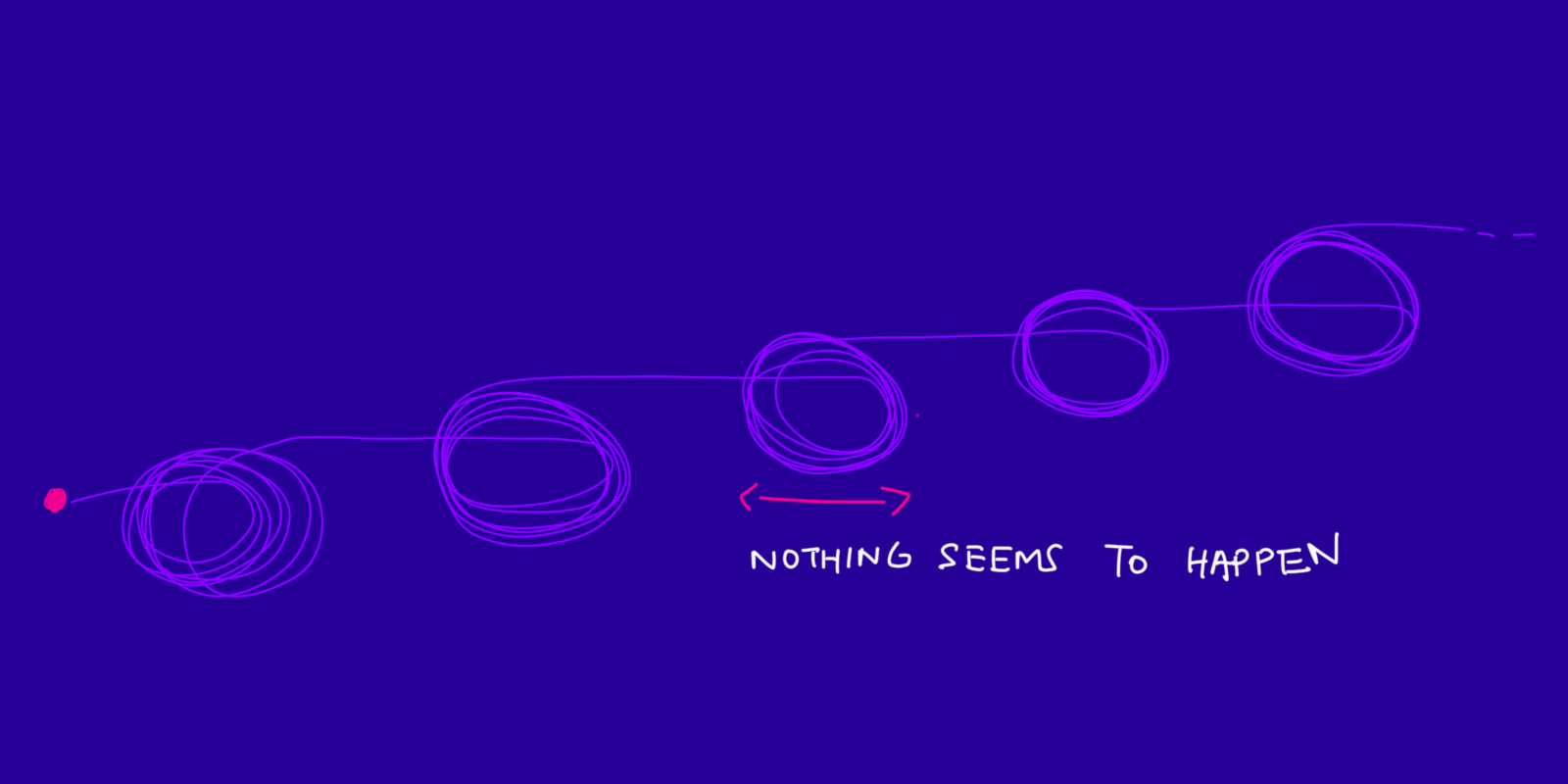
illustration showing how learning something can often feel stuck and as though nothing is happening

Sometimes in my life I go through periods of extreme hyperfocus and obsession, and that hyperfocus is able to tide me through these uncomfortable feelings. That is how I learnt to design and program.

But these periods of hyperfocus are unstable, unpredictable and fleeting. I have no idea when they would appear. Yet for much of my life I relied upon them, which is probably why sometimes I feel like I cannot rely on myself to follow through with things. Without the hyperfocus I find it difficult to feel motivated, learn or progress.

However there are a lot of useful things in life that are just not that interesting or motivating, at least at first. Let’s be honest – exercise is not that interesting to most of us. With my depressed brain, almost nothing ever feels interesting to me. So if I want to continue making the most out of the short time I have on this earth, I cannot rely on the interestingness of things to do something.

So I am trying to build up the appetite to do uninteresting things, and the tolerance to endure the uncomfortable feelings that comes long with learning anything.


I guess this is another longwinded post to try to tell myself that whatever uncomfortable feelings I am feeling now is just a phase. One day I’ll be strong enough to pick up my partner with one arm and feel extremely alive. I kid. I just want to be strong enough to feel strong enough. I had so much difficulty in my bicycle mechanic class simply because I didn’t have enough physical strength. I struggled with holding my frying pan with one arm. I didn’t consider that the lack of strength can be a limiting factor in living.

It is difficult to remember phases are just phases. And to believe there will be a new phases after the current one. Sometimes it just feels like things will be the way they are forever. But both the good and bad thing about the impermanence of life is that nothing sticks around much.

I have this hypothesis that improving both my strength and aerobic fitness will eventually lead me to more feelings of aliveness, and therefore a wider range of creativity. I have never been there, so I am not sure if I’ll be right. But once in a while I catch a glimpse of what it is like to feel energetic even after running long distance. I have always associated myself with a low-energy type of person, and I wonder if this perception of myself with eventually change.

I hope I have enough time and freedom to get to know a physically stronger side of my self (because I’m always paranoid that some shit is going to hit the fan again), that my body is just in an uncomfortable phase of learning how to damage and rebuild itself again and again. It must feel weird after decades of not having to endure much challenge. Isn’t it amazing the body will eventually how to adapt once it encounters a challenge, even if it has never experienced one before?
the amazing tools and research we now have for our metabolic health

[cw: metabolic health, diet] My paternal grandmother died before I was born, apparently of diabetes complications. When I was younger I couldn’t understand what it meant to die of diabetes complications – isn’t diabetes a condition that can be managed? She passed in the 1970s, so I have no idea how healthcare was like back then. Were insulin injections already common? Was she in denial about her condition and refused to get treatment?

It is the 2020s and despite modern treatments, government education and healthcare programs, Singapore still ranks the 1st in diabetes-induced kidney failure. This demonstrates that the prevalence of metabolic conditions like diabetes is not about the availability of treatments or the awareness of it. It is very much about the complicated relationships we have with food, our psyches and our bodies.

However, I am grateful and optimistic about the range of tools and research we now have when it comes to our metabolic health. With these tools and research, managing our metabolic health is no longer so rudimentary like avoid sugar to prevent diabetes. I can imagine people’s confusion when they avoided all the sugar they can see, and still experienced their metabolic health worsen year after year.

I was taught to believe as a child that it is normal to have worsening metabolic health as we age. It is just part of ageing. Not a single middle-aged person I knew then had normal blood pressure. It isn’t surprising at all because as a small dense city-state we probably have higher levels of chronic stress, and we believe that food like porridge, rice, noodles, cereal, etc are healthy. One of the supposed healthiest food we eat especially when we are sick is asian rice porridge.

I think this belief is not entirely wrong because in Singapore it is typical to eat rice cooked in coconut milk and fried chicken for breakfast. Or fried dough, fried carrot cake, toast with coconut jam, etc. Comparatively, asian rice porridge feels really healthy because it is so plain. There was a time when eating a high-carb breakfast was necessary because people expended a lot of physical energy during work, compared to our mostly-sedentary lifestyles now. Our times and lives have changed, but the way we perceive the healthfulness of our food has not.

But thanks to modern research I now know that high-glycemic carbs like rice, no matter how plain they taste (there is so much association with plainness and how healthy it is), can induce metabolic damage if we are not careful. I also know that as a short small woman my metabolic needs are a lot lower than the average person, but the portion sizes and dietary macros are catered towards them. A man can probably ingest half a bowl of rice with not much issue, but the same amount would send my blood sugar rocketing. But we don’t think about these metabolic differences when we dine with people. A macdonalds meal is a macdonalds meal. People of different genders, young, old – most people eat the same meal, even if the metabolic effects of that meal is vastly different.

Unlike people of earlier times, I don’t have to rely only upon the advice of doctors and outdated mainstream guidelines like the food pyramid. The latest research on metabolic health is just a click away. I can also search for other people’s real world experiences instead of data based on the general average population.

There is also a problem of having too much data, of course. Nutrition and health research can often be contradicting and in conflict. Eating more vegetables is supposedly obviously more healthy, but some people think plants are toxic because they have natural built-in defences so we should avoid all of them. Pick any so-called nutrition “fact”, and we can probably find research that is for and against it.

But for me, having more knowledge is better than less. At least there is an opportunity to make choices, even though there is an additional responsibility felt when making those choices. Previously we could simply do what the doctors told us, now that there is a realisation that doctors can be extremely backwards, so if we choose to act upon newer research we have to shoulder that responsibility ourselves instead.

Still, every now and then it occurs to me that I am so grateful for these advances in both research and technology. If not I would be flying blind when it comes to my metabolic health. I could only rely upon those annual blood tests to give me some picture of it.

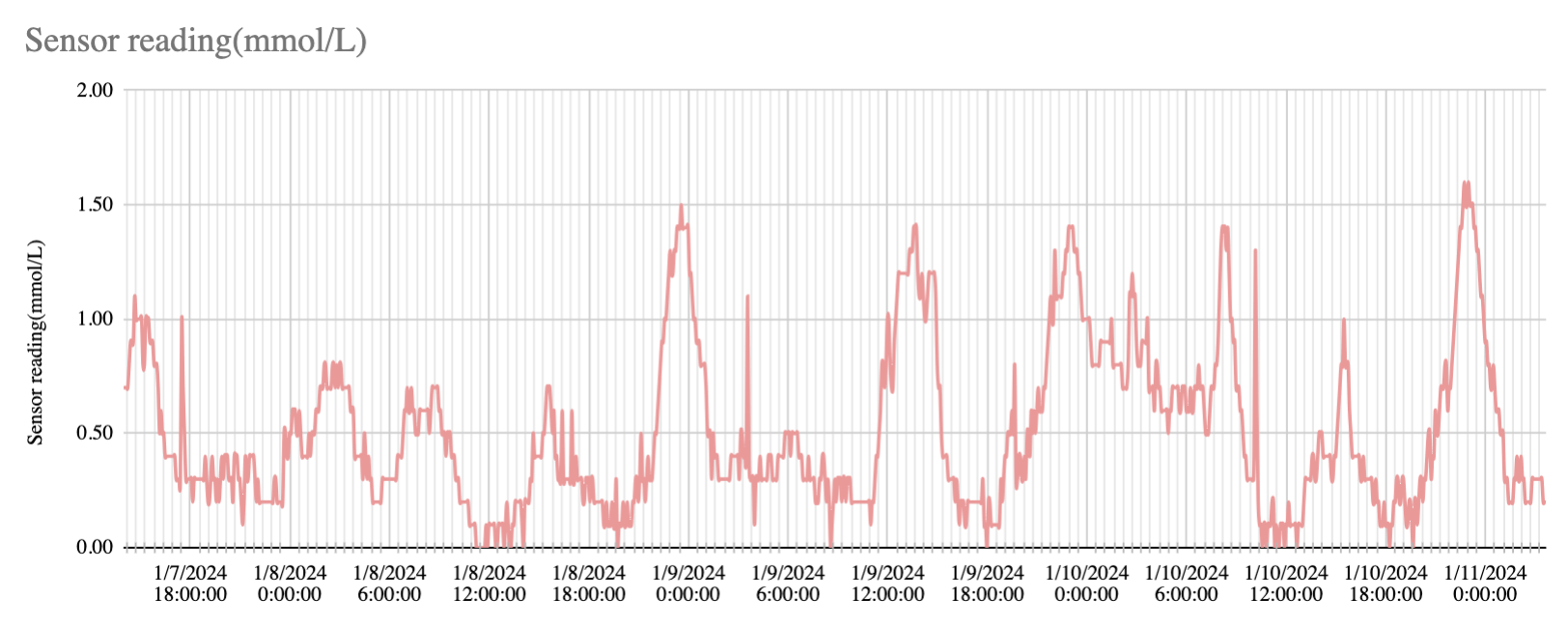
Now, I can freely prick my fingers to see how dietary choices affects my blood glucose, if I want to and can afford it I can wear a continuous glucose monitor, these days there is even a continuous ketone monitor. In learning to improve my metabolic health I have learnt the pros and cons of eating low carb, learnt more about cholesterol than the average doctor, understood how my lifestyle choices can affect my heart rate during sleep, and how in turn that impacts my overall health. I wear a tiny ring that tells me metrics that was previously only available in a sleep lab.

screenshot of a graph showing readings from my continuous ketone monitor
readings from my continuous ketone monitor

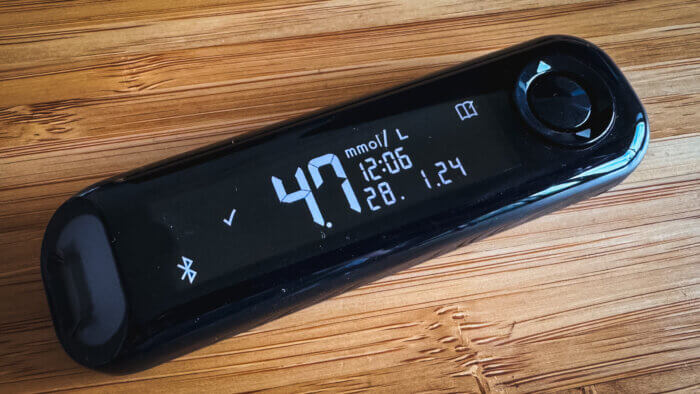
Some tools are free and potentially easy. If my blood glucose is stubbornly high I can intermittently fast to bring it down. If I want to I can only choose to ingest food only when my blood glucose is low enough, so I know I am only eating because I am truly hungry. Something as simple as a 15 minute walk can dramatically bring down blood glucose levels after a meal.

photo of my blood glucose monitor showing my blood glucose number 3 hours after breakfast
glucose level 3 hours after breakfast

Since I have a family history of type 2 diabetes I have to be careful if I want to avoid the same fate. Without these tools I would feel like I have to be more “all or nothing” with my dietary choices. But because I have these tools I can now continually experiment with exercise, diet, food order, etc to have a wider variety of food. I used to believe that cake and pasta are terrible and avoided them for years. But after some experimenting I learnt that they don’t spike my blood glucose as much as I would have thought. I still don’t eat them regularly, but once in a while I have them as a treat.

Having high blood glucose is mostly invisible. By the time it is bad enough that symptoms show, the pancreas is already in a state of damage. Previously it was believed that this damage is irreversible, but again with the wonders of modern research it is now argued that such damage can be reversed, though it is not clear how far is the actual reversal. There are also previously diagnosed type 2 diabetic people who go into remission by simply going on a low carb diet.

With regular monitoring of my blood glucose level, I can ensure that it doesn’t ever get to the stage where it is slowly piling up into a chronically unhealthy state. It is one thing to have temporarily high fasting blood glucose levels for a few days because of festivities, but it becomes concerning when it refuses to budge even after. I try to ensure both my fasting and post-meal glucose levels don’t get too crazy too often. It is not just about developing diabetes, but temporary spikes can also cause endothelial damage. The data makes it difficult for me to be in denial.

I have also learnt that zone 2 exercise and strength-training can have several amazing metabolic benefits. Many people don’t even know what is zone 2 training. But it feels amazing to me that all of these is out there if we want to learn and know. We can now perform zone 2 exercise with a heart-rate monitor, which is a gadget that is only widely available in recent times. Again, people of earlier times wouldn’t be equipped with such knowledge to improve their metabolic health. There is this passive resignation to the weakness and ill health that comes with age. Isn’t it amazing we now have simple enough tools to improve our metabolic health, should we choose to?


Having a chronic illness can make a person feel very helpless. For years I have struggled with my migraines and they did not improve despite several drastic interventions, including quitting my job so I can properly heal. I chanced upon some information that migraines may be related to impaired glucose metabolism and electrolyte imbalance, thus setting me off this entire learning journey. My chronic migraines significantly improved once my metabolic health improved, especially when I started to become fit enough to perform zone 2 exercise.

But the truth is I didn’t immediately act upon these newly acquired information. It took me a few more years until I was desperate enough. I love to eat, and it was very difficult for me to make changes to my diet. Would I have been this interested in improving my metabolic health if it wasn’t for my migraines? If I was a migraine-free person, would a diagnosis of pre-diabetes be enough for me to make significant lifestyle changes? I honestly do not know, because there is no discomfort being pre-diabetic except for the intellectual discomfort that one is now having an impaired health. The pain of my migraines are horrendous, disabling and life-draining.


Would my grandmother be still alive had she had access to these things? The reality is that many people find it extremely challenging to make lifestyle changes even with the tools and knowledge available, myself included. But I think it is amazing that they are available with low barriers of entry of one wants to make a change. One can go very far with their metabolic health with simply walking more, intermittent fasting and reducing some carb intake. It can be half a bowl of rice and more protein, for example. It doesn’t have to be all or nothing (though I can’t eat rice at all, sadface). There are also carb substitutes that aren’t too bad, like cauliflower rice – we can buy ready-made cauliflower rice in frozen packages now, something that is also only an outcome of modern times. Protein is also more widely available and affordable, compared to older times when eating protein is a sign of wealth.

The world depresses me in general, but this is one area that I am constantly amazed with. There are companies like Levels which is trying to make monitoring our metabolic health more mainstream. Athletes and bio-hackers are measuring and monitoring all sorts of biometrics to optimise their health. We don’t have to accept being in a vague state of weakening health. We can now consciously improve it with research, tools and data.

Some people may think this is all too much, but I guess I have that sort of personality that finds all of this empowering. I am acutely aware that I am only able to do these things at this point in time. I am glad that this has allowed my life to be more flexible: I can tolerate a wider variety of food without going into food comas, I am used to not eating for 16 hours a day and no longer get hangry so taking a flight without eating to avoid covid doesn’t faze me a single bit, I can walk and run longer distances without tiring – previously even walking 500 metres felt tiring – and in my latest development, I can now lift heavier weights.

There are a lot of things in reality that we do not have the power to change, but it has been fascinating for me to experience the very obvious changes with my body after applying what I’ve learnt, especially after being so unfit for most of my life. I like that at the very least improving my fitness is actionable and has visible positive feedback loops. With biometric data, the feedback can be pretty immediate and obvious (it is quite interesting how many people have quit or lessened their alcohol intake after wearing an oura ring).


I can only hope that we make similar strides and advancement in other areas, like post-viral conditions. There are so many people suffering, so much so that some of them are choosing euthanasia – I just wistfully and unrealistically wish that the human species can be less preoccupied with power, and be more concerned about the overall well-being of our people.

the experience of completing a sketchbook for my japan trip

Last year I started sketching, and for the first time in my life I started bringing art materials on my travels. I did the same when I went to Japan, except a couple of days into the trip at a Maruzen I stumbled upon a reasonably priced traveler’s notebook with watercolour paper. So this is the first time I used a dedicated sketchbook for a trip – thought it is quite apt that I am using a sketchbook from a japanese company on a trip in japan.

I like this particular notebook because it is very lightweight and it has this unique tall portrait format which opens up to a squarish spread. Discounting the first and last page it allows for 11 spreads, which is a pretty good number for a trip. The limited number of available spreads also felt like I could make a good attempt to complete it.

photo of sketchbook cover from my japan trip

Then while visiting a museum I discovered eki stamps – “eki” means train so these stamps originated from railway stations but now they are also available at tourist spots and some subway stations. I knew vaguely about the existence of eki stamps before but I was never the sort of person to bother with something like this.

Since the museum had it openly lying around I decided to stamp my sketchbook for fun, and before I knew it I was obsessed with hunting them down at every possible location we had been to.

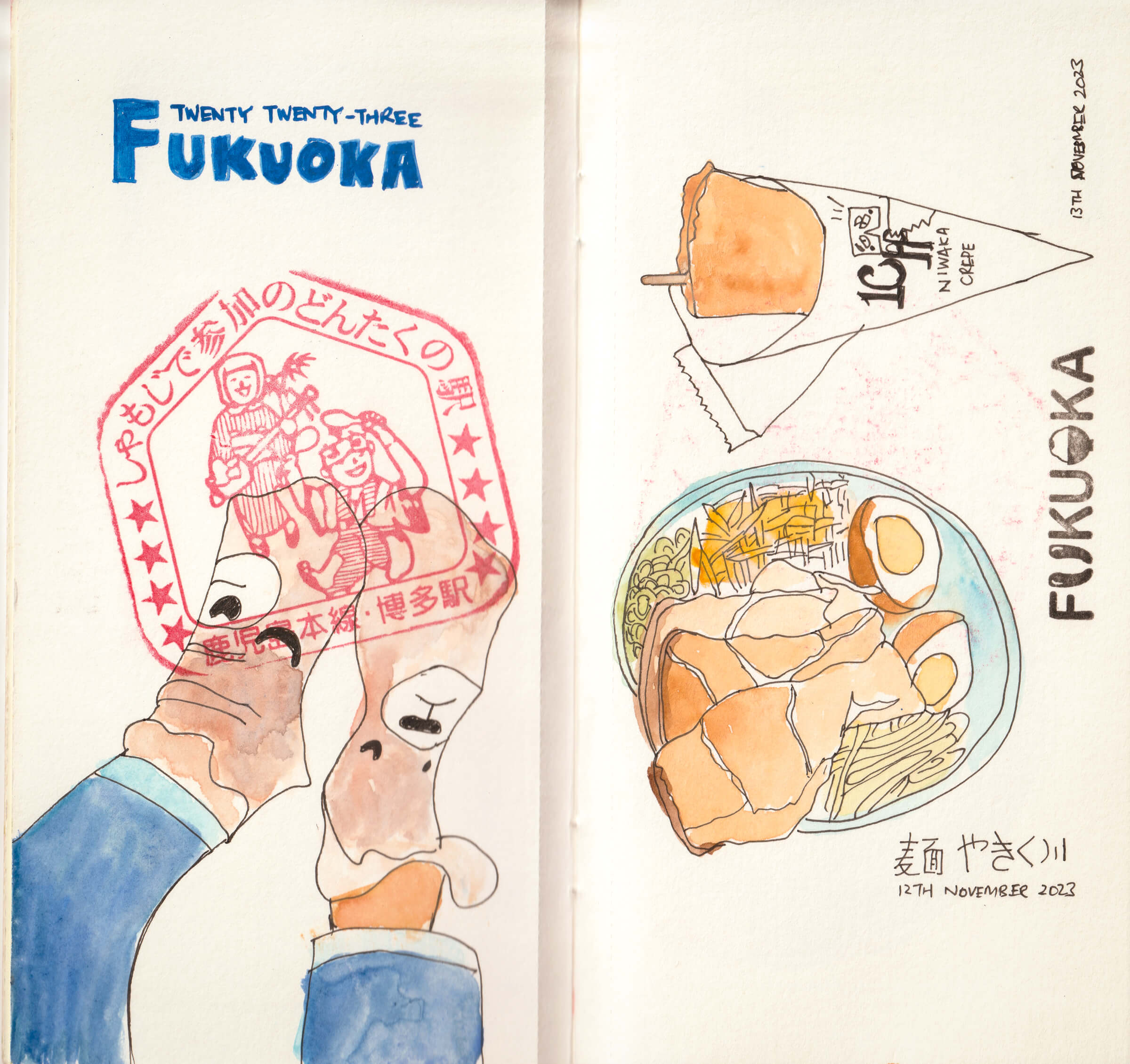
scanned image of my sketchbook spread from my japan trip: Fukuoka

Some of the ink pads available at the stations were quite faded, I reckon serious enthusiasts would bring their own.

photo of my sketchbook spread from my japan trip: Hiroshima

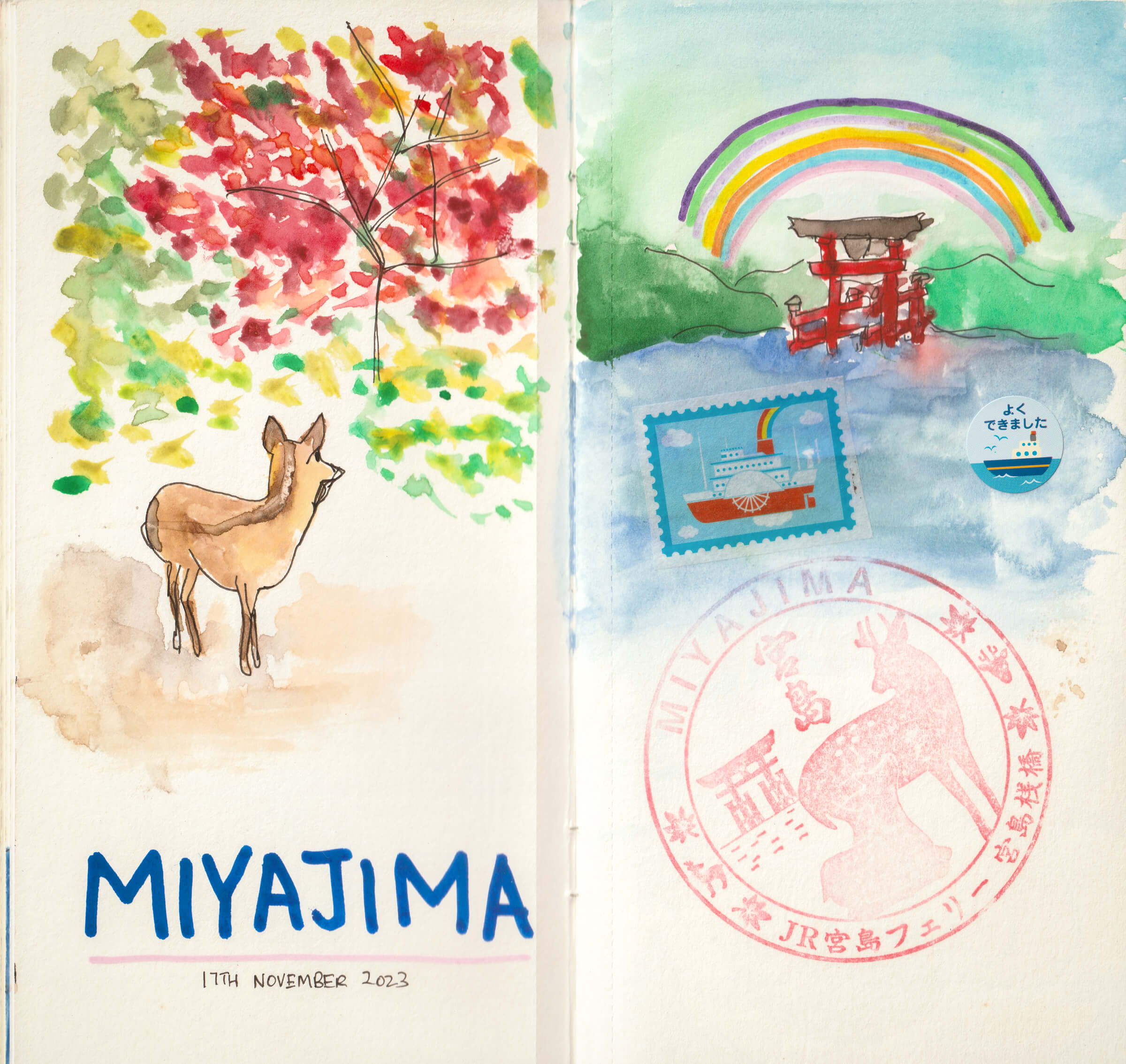
I usually sketch food because I love food and they are relatively easy to draw, but at Miyajima we didn’t eat anything I wanted to draw so I decided to try drawing their famous deer, autumn foliage and and torii gate:

scanned image of my sketchbook spread from my japan trip: Miyajima

I wouldn’t say my drawings are any good but I think what means more is that I recorded an impression. My sketchbook quickly became the most precious thing I was carrying around, so precious that I kept checking that it is still inside my backpack.

Even as of today as I flipped it to write this post, and it still evokes such complex feelings in me. Like wow, I actually did this.

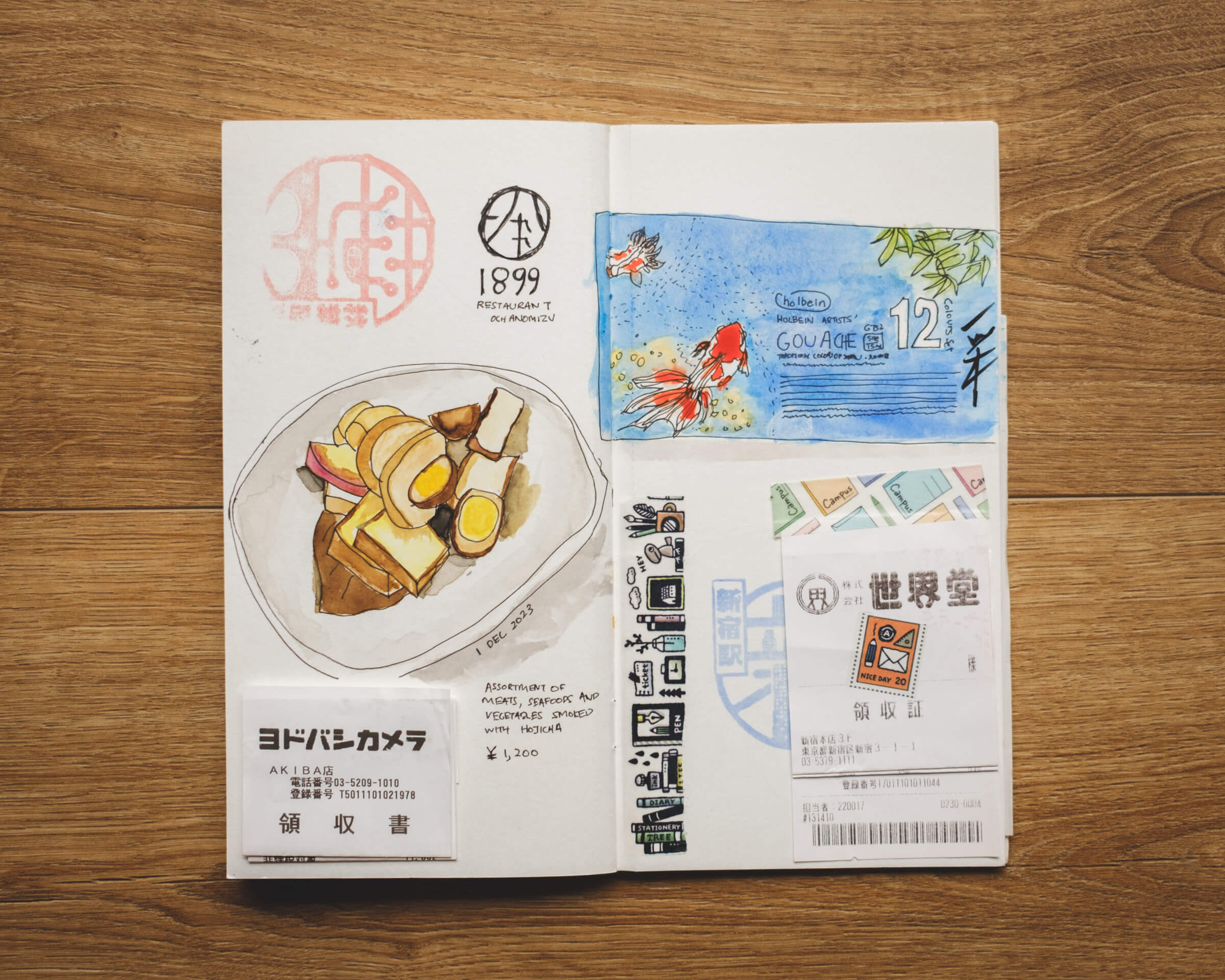
Sometimes it is fun to work on a spread as though I am designing a layout. I also enjoy replicating the logos of the places I’ve been to. They are nowhere near the original but I liked that I even tried. Since I draw with a pen directly instead of a pencil I made mistakes frequently, but even if they are just 50% representative of the originals they still become powerful impressions to me. Like when I see my drawings they immediately take me back to the actual vivid memories.

scanned image of my sketchbook spread from my japan trip: Osaka
photo of my sketchbook spread from my japan trip showing eki stamps
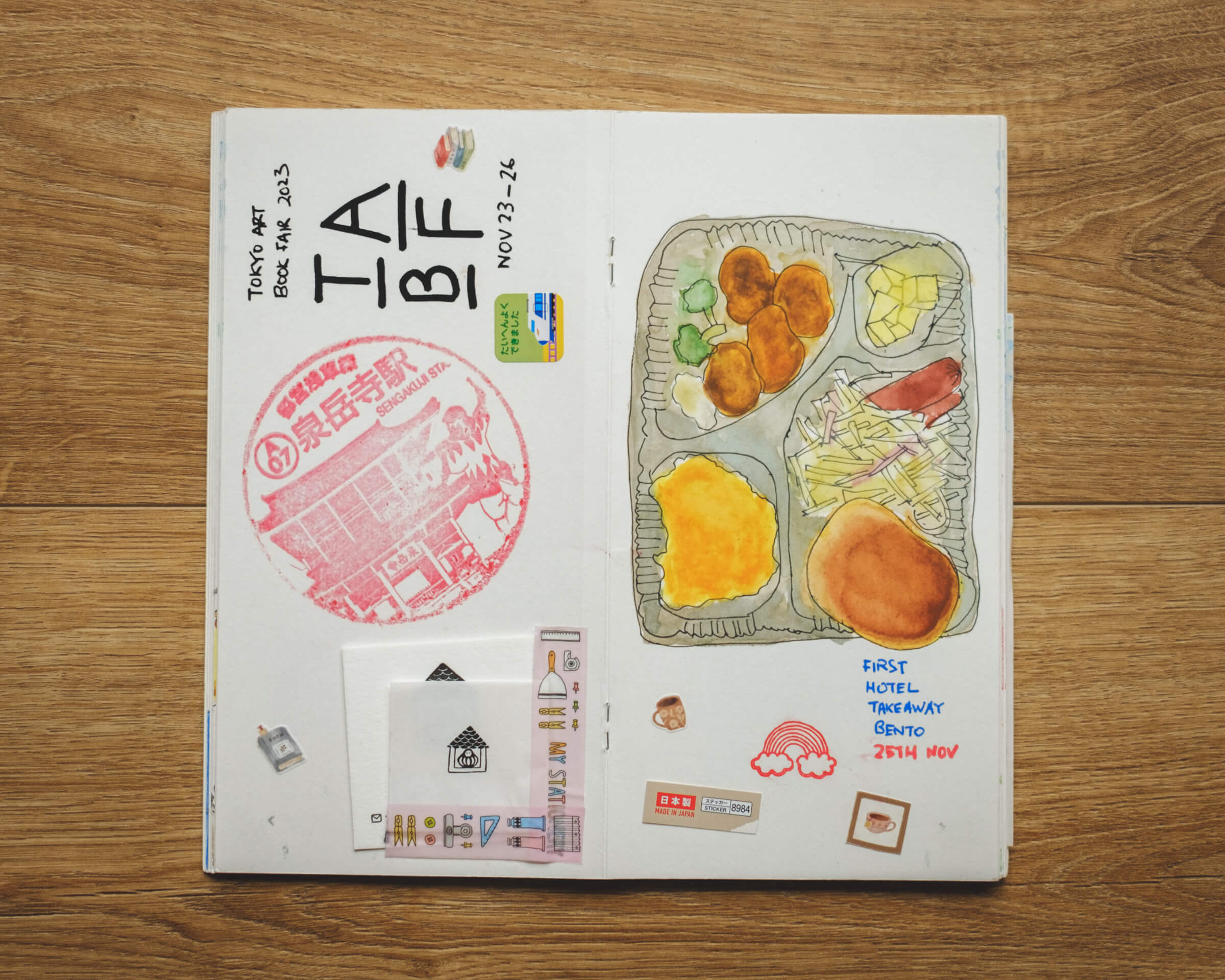
photo of my sketchbook spread from my japan trip: tokyo

Midway through the trip I started collecting/buying stickers, washi tapes and things that I can later stick in my sketchbook – scrapbook style. I stuck most of them when I got back to Singapore.

photo of my sketchbook spread from my japan trip: tokyo

Sometimes the drawings start out terrible and disproportionate but I still trudge on, and they end up becoming something memorable. Other times we have to keep our sketchbooks before they dry, so paint gets smudged etc and I just think it is all part of the sketchbook’s becoming.

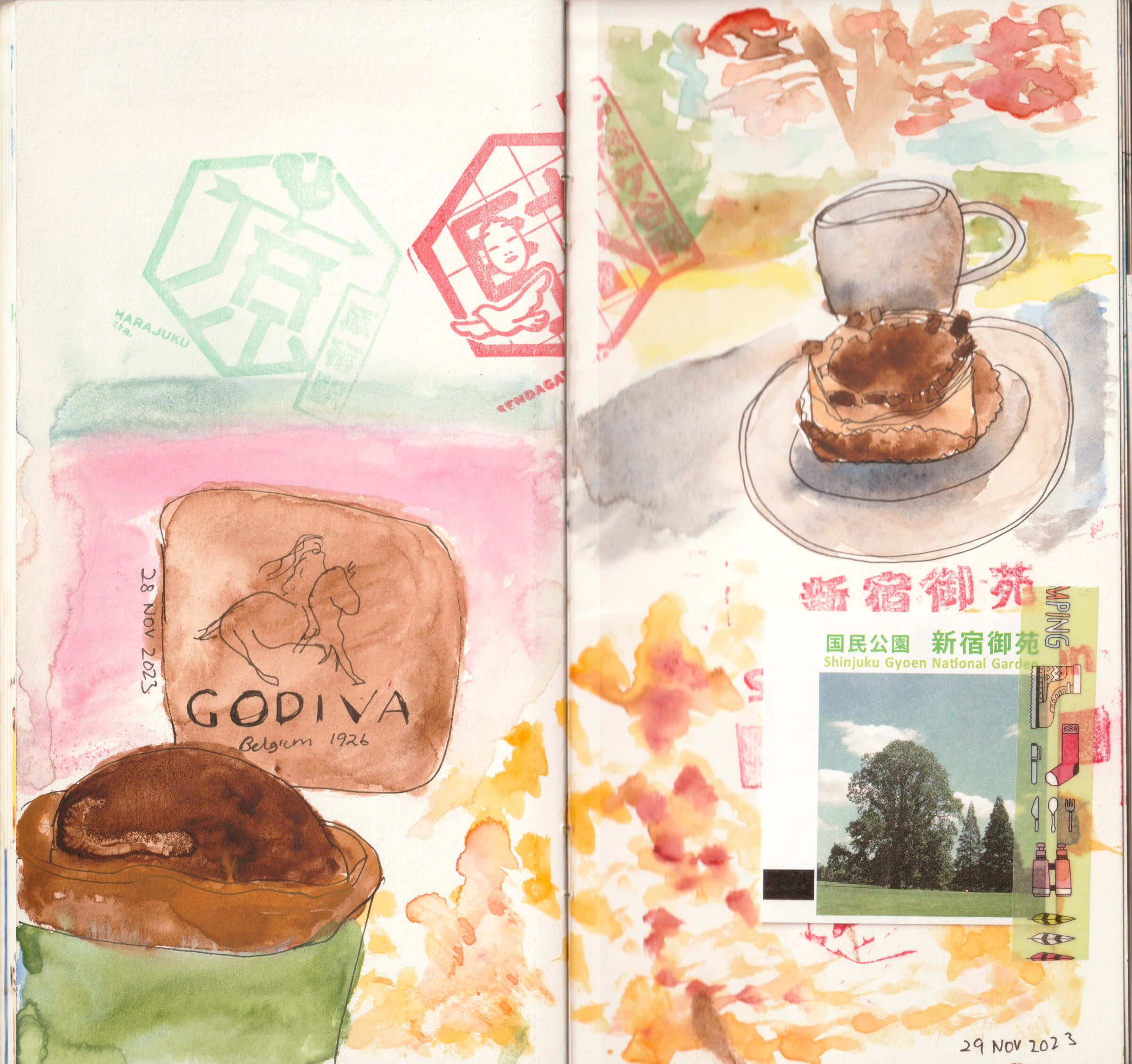
scanned image of my sketchbook spread from my japan trip: tokyo
photoof my sketchbook spread from my japan trip: tokyo

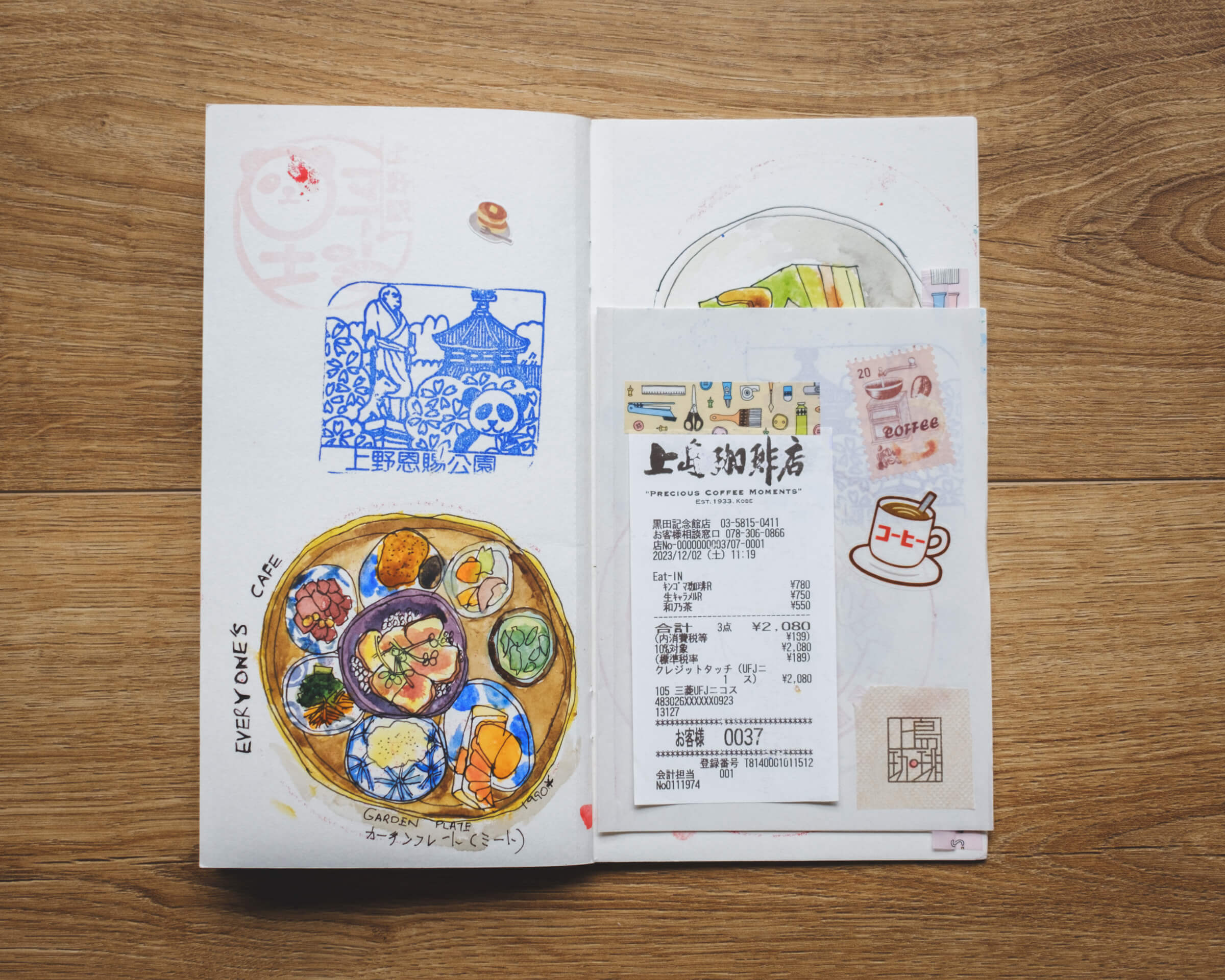
Thankfully I also kept most of my receipts:

photo of my sketchbook spread from my japan trip: tokyo

By the end of the trip my sketchbook became really smudgy and weathered, especially because I am not careful when handling the eki stamps. Yet I really love how it feels – ageing something with use is not something that can be actively replicated or reproduced.

Because I was actually busy writing blog posts while travelling on this trip I didn’t really have time to draw, so probably half of the sketchbook was completed retroactively when I got back. I think it is now one of my most precious possessions, because it symbolises a growth in me that I’ve never experienced before. I didn’t think I had it in me to complete a sketchbook, especially because I didn’t complete it while drunk on the romance of the trip. My past self would just have forgotten about it once I was back to the intoxicating familiarity of my home.

I feel like I’ve found a part of myself that was lost a long time ago or was never there to begin with. I am not very good at having fun, being crafty, or doing things that have no obvious value in this reality.

What is the point of working on and completing a sketchbook? In practical terms – none. But the entire process enriched my soul deeply. Each time I completed a spread it feels like I painted another layer of my soul. It is a full circle: having an experience that becomes a memory, pulling out that memory to make art out of it, then holding that creation in my own hands and seeing that memory take a concrete form – it enhances and solidifies the original experience that would otherwise have been quickly forgotten. But now I get to recollect it like a memory with tentacles. We could probably do something similar with photos, but somehow there is alchemy in the act of drawing, as though etching the memory deeper in a bodily manner. It is no longer merely visual, I have used my body and breath to record this.

pandemic grief and sadness

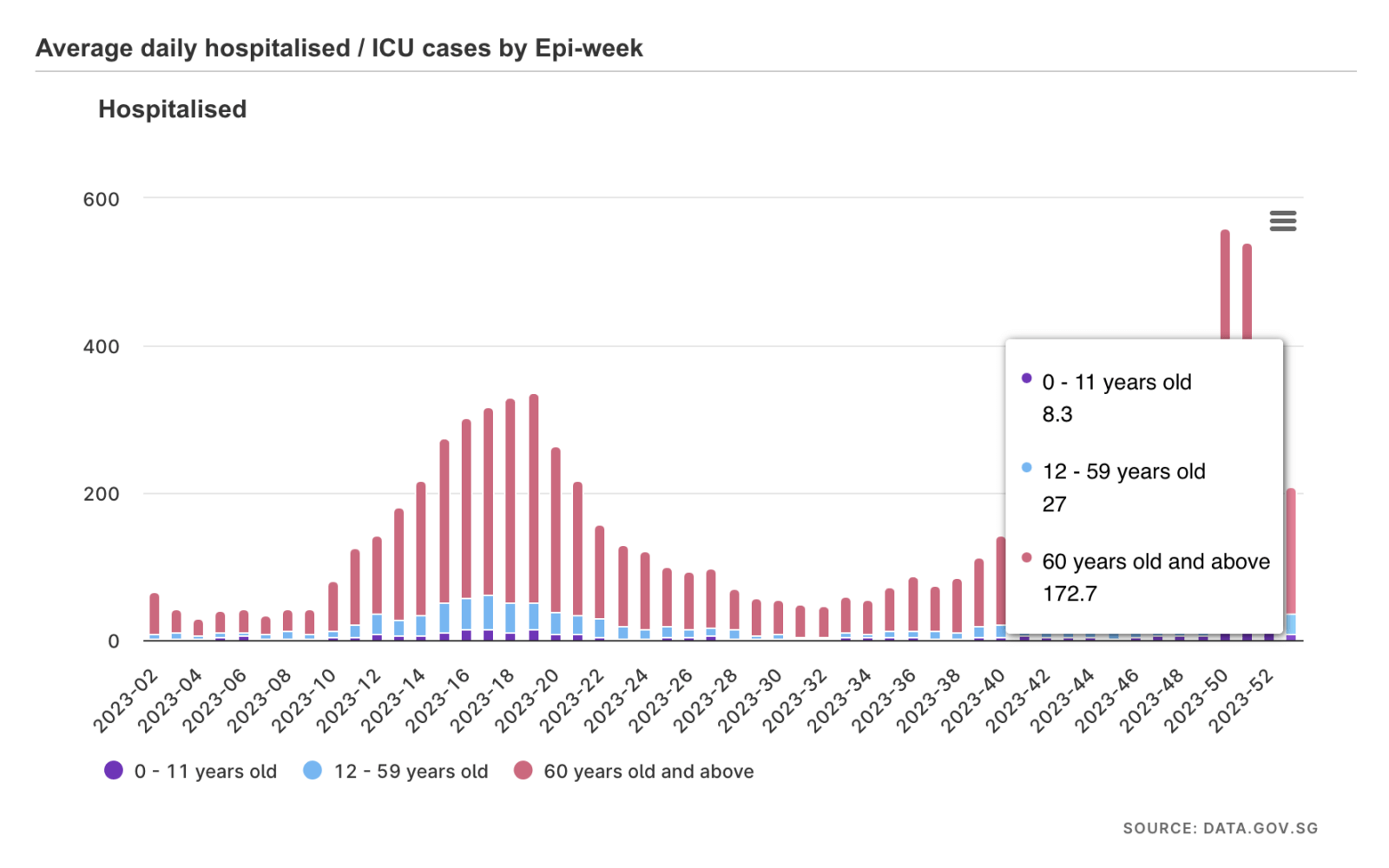
One of the biggest cognitive dissonances I’ve had in this pandemic is seeing almost everyone I know – including the most intelligent and the most socially responsible – throw away all covid precautions and live like the pandemic is over. People like to use the word endemic as though a virus being endemic means it has become harmless. Putting long covid aside for now, people are still dying in large numbers across the world (probably under-reported). As of last week in Singapore, roughly 200+ people including 8 children under the age of 12 are hospitalised every day on average:

screenshot of moh.gov.sg showing average daily hospitalised cases
Ministry of Health, Singapore

They make a big fuss when 1-2 people die from dengue fever in Singapore, but somehow when it is covid everything is magically okay?

no one cares about the vulnerable

Say an individual thinks they are healthy and they are able to survive all the infections that come their way. What about the vulnerable then? If we are contagious but unaware, who knows who we’re infecting? Who are we disabling or killing? Each time we are recklessly getting infected, do we think about people who are elderly or immunocompromised?

…or the potential for deadly mutations

Let’s argue that we don’t care about the vulnerable and that healthy people will survive. What about the risk of further mutations? The latest variant JN.1 is highly immune evasive – the latest monovalent vaccine barely works against it, which probably means whatever we had before the monovalent is ineffective. The speed at which we produce the current generation of vaccines means we are always too late for the vaccines to work on a systemic level in order to prevent more mutations. There is a considerable risk that the virus will mutate to be capable of wrecking more damage.

the role of governments and the media

Perhaps one of the reasons why there is such a wide chasm between my level of cautiousness and most other people is that they simply do not know. I am active on twitter and reddit so I get updates on the latest research everyday. Every time covid is being brought up on the local media here there is a concerted effort to dismiss it as mild and just like “the flu”, which by the way they mean actual influenza which can be deadly too and not the common cold as we commonly associate with. When they say it is “mild” they mean we probably don’t have to get hospitalised, and they also mean the acute sickness, but no one cares about the long-term effects of the illness. 

I do have some sympathy for the governments and various institutions. First of during the initial phase of the pandemic people in many countries were not compliant with the vaccine program, so any chance of herd immunity was lost. Then we have to acknowledge that the pandemic measures was affecting the economy and people’s livelihoods badly. In Singapore we tried to hold out for almost 3 years before we opened our borders, but we are reliant on international trade for our survival. Even China being the last hold out had to wave the white flag because it became almost impossible to stop the omicron variant from spreading, their citizens were becoming non-compliant, and which country in the right mind is wiling to accept other countries progressing economically while they are left behind?

Does it mean that the virus is no longer dangerous because we can no longer hold out economically? No, it just means the unfortunate subset of the population who would go on to suffer negative consequences have to be the statistical sacrifice. If we think in the minds of politicians, I guess 10-20% damage is acceptable if 80% of the economy is thriving.

In our daily lives, we are not capable of thinking about the long-term as well. Most of us continue to indulge in unhealthy habits – who wants to think of potential diabetes and heart disease decades down the road? We put too much faith in our governments when they are made up of humans like us. When faced with pressing issues we don’t have the bandwidth to also try to protect the long-term. I am not absolving the responsibility of governments here, but I have to be realistic about the environment we are facing.

the potential cumulative damage

If I were them I would hope and pray even if I am not religious that the research demonstrating that cumulative infections can cause cumulative damage turns out to be untrue. Because it is one thing to have your 10% of your population disabled, and another thing to have this 10% grow over time. A study in Canada showed that people with 3 or more infections are way more likely to report long-term symptoms. Say most of us get infected once a year, we could see dire consequences in 3-5 years. 

And that’s just for the visible long covid symptoms. The virus can cause endothelial damage and blood clots, leading to heart attacks and strokes. It is also known to induce damage in the immune system. Our immune system is supposed to fight off shit like cancer cells, other viruses, bacteria and fungus. Till now it is not known whether this damage is permanent. With HIV the damage becomes obvious 5-10 years down the road. What is going to happen to us in the next 5-10 years? I shudder to think, even for myself. But will they link these incidences to covid? We don’t even want to acknowledge the excess mortality for the past few years.

I belong to various health communities around the internet because of my chronic health issues, and it is astounding how people can be considered experts in a specific domain, be ultra-cautious about their personal health in myriad of ways, but pay zero attention to the dangers of covid. Why? What is the point of eating a clean diet and being ultra fit, to the point of going for several blood screenings a year, only to invite the virus into our respiratory system? Yes there is a chance that our immune systems are healthy and may fight off the virus, but why take that risk at all if it is preventable? I have lost count of how many accounts I’ve seen of previously-fit people being bed bound now due to long covid. How many of them saying they did not know prior.
We are only knowing about the severe long-term effects of “milder” viruses now, decades after believing they were mild. Even for HIV it took years for the US government to take it seriously. Why are we being so cavalier about a virus that we still don’t know very much about?

grief, loneliness and alienation

I have to admit it is easier for me to be covid cautious. I don’t have kids that will bring home weird stuff from school, and I am able to stay at home if I want to. I don’t live with any non-compliant people. I can afford the precautious I need, such as n95 masks. 

At this point I am not sure what can be done on a systemic level. The disinformation is too wide and deep, people are too traumatised and fatigued. We can’t have any more lockdowns, and people are no longer getting vaccines. The current vaccines are not even that effective. Personally I cannot bring up and share the latest research of covid damage with people I care about without meeting great resistance and unhappiness. So I feel like the only choice left for me is to continue doing whatever I can individually, and accept the potential grief if terrible things truly happen in the years to come. It is not like I can force people to wear masks everywhere and avoid indoor dining. Or even warn others to wear masks when visiting their elderly relatives. They believe the government that it is mild, and I am the hypochondriac. 

For their sake, I hope I am the hypochondriac. I’ll rather be proven wrong than to suffer that deep grief. It is not just the grief from loss, but the fact that so much of this can be prevented but I am realistically and practically helpless in this situation. It is like seeing people walk off a cliff in front of them but I have to respect their choices, even if their choices may be terribly misguided. This pandemic has taught me that there is no way to speak of truth to people when they need to be in denial, or that it doesn’t matter what the science says if the government is not saying it. 

I am trying to accept this new, lonelier life. I was already lonely before, but now it is much worse. I am immensely thankful that my partner is on the same page as me. 

I still try to share whatever research I’ve come across on some of my social media accounts. I hesitate a lot, because I know I risk further alienation each time. But do I think it is more important to be liked and accepted, or do I think it is more important to raise awareness about the actual risks of getting covid? If not for the early covid-cautious advocates all the way back in 2020 I would probably a lot less cautious back then too. And if they didn’t keep sounding the alarm bells for the past few years even as the world moved on it is also likely I would have relaxed my own precautions – to an extent maybe I did (dined at a few places with dodgy ventilation, thinking that I am safe as long as it looks like it has adequate ventilation), that’s why I got infected in April 2023. 

It is very stressful and tiring to be constantly vigilant for the past four years, and now we’re going into the fifth year. Instead of being more at ease it has become the opposite – my partner and I are more vigilant than ever because of the apparent increased contagiousness of JN.1. For the first time ever in the pandemic we are wearing n95 masks on public transport in Singapore, when previously we had felt relatively okay with good quality kf94. Every now and then I go into a depressive pit thinking about the hopelessness of the situation. I have no positive coping strategies to share here, I still harbour no hope. Where is the hope, when the issues of human psychology is so deep rooted? 

We feel alienated from most people, we’ve isolated ourselves from our own families because they do not take the same level of precautions – what is the actual choice here: kinship, or permanent health damage? It is a fucked up choice. 

Fortunately or unfortunately I am used to being the alien from a very young age. So many times in my life I had to resist social pressure to keep myself sane. I had to keep choosing my own life or social acceptance. This is not new to me. It is definitely a whole new level, but not foreign. So I am not starting from zero, there is already some accumulated resilience. In exchange for that sort of resilience there will be scarring of course. But the choice is either scars that I get from other people, or scars that I will give to myself if I cannot be true to how I really think and feel.

what this tells me about hope and the future

Looking at the growing body of research we have of the harmful effects of covid and humanity’s response to it – I have given up any remaining optimism about humanity’s future. Our efforts at educating the mass population is a failure. We. Do. Not. Respond. To. Science. Human lives are mere statistics. The political and economic system we have built do not allow for us to protect our health.

I just don’t see a way out. Even if we manage to magically produce a true neutralising soon enough, I cannot imagine how can we navigate ourselves out of future crises like climate change and other pandemics.

Again, I hope it is truly my lack of imagination and that I will be proven wrong. I genuinely hope so. Because the alternative will be too difficult to bear.


courage & discomfort

I know I am writing a post that wouldn’t be read much. But this has always been the essence of my writing. I write because I need to write, not because I want my writing to be socially accepted. 

For me, this is a form of documentation that is evidence that I am still standing firm here on my ground. I am not shying away from this unpopular controversial topic, and I am making the conscious choice not to avoid and deny this like the rest of the world.

I hope by continuing to make these conscious choices over and over again, I am developing the courage to be the person I wish to be. I am nowhere near though, and publishing this makes me feel extremely uncomfortable. But one can learn to be better at doing uncomfortable things, and this is what I wish to teach myself. At least before the virus potentially destroys me, and the world I live in.


2024: one pull up

One of my biggest goals last year was to run 10km – for me it is not just a distance goal for the sake of having a distance goal, but rather cultivating the health and fitness required to complete the goal. Prior to last year my chronic migraine episodes kept setting me back, and in 2023 apart from the few months of managing my covid infection I managed to run regularly enough. That kind of regularity: the capacity to go out of the door before sunrise and do something exerting for an hour or so – it is really not about the metrics I’ve managed to accomplish but the underlying baseline that is very precious to me. It is both physical and psychological, to keep on wanting to do something that is immediately exhausting but only rewarding in the long run.

So bearing the mindset that it is the improvement to this baseline that I wish to seek, I would like to aspire to do just one pull up in 2024. I can barely lift 5kg of weight with one arm right now, so it feels a somewhat unattainable goal for me. But one can aspire right?

Being able to do one pull-up would mean

  • I am healthy enough to have regular weight-training sessions – no migraines and covid
  • I have become much physically stronger than I am now, or ever
  • psychologically I am able to maintain the consistency of training
  • I am training well enough to have enough momentum and progression
  • I still care enough about my body to work towards this goal
  • no dramatic events with my loved ones or the world

Perhaps these things sound easy but I have gone through long dark periods of my life when I simply gave up on my self and my life. Also getting covid is like a piece of cake in this world even with all the precautions I can do, so it would be a huge stroke of luck to my covid-free for this year.


Other nice-to-haves

Age has taught me not to be too ambitious in terms of setting goals, or else it is just setting myself up for feelings of defeat. So I’ll be happy enough if at the end of 2024 I’ve managed to accomplish one single pull-up, since that will mean the system underlying my health is healthy. But I’ll just write down some nice-to-haves for the record, so I can review them at the end of the year without judgement.

improve my psychological state

Last year I wrote:

I think one of the greatest skills in life is to be able to switch contexts and psychological states quickly: not holding on to the past or dwelling on things longer than we should, being able to recognise a rut and know how to dig our selves out of it

I think I am still very early on this journey. Due to my personal historical baggage I tend to dwell a lot, but I want to get better at digging myself out of ruts. One of the biggest mindsets shifts I have had in recent years is to see such internal shifts as a matter of practice. I am getting better at generating mini turning points when I am in a rut, but once in a while I get swept into a deep pit of depression where I lose all will to live. Sometimes losing the will to live is not just about actively seeking to die, but rather passively dying inside without being capable of doing anything that would inject just that necessary bit of aliveness. I am learning to go through the motions of doing things I think will enrich me even if I feel dead inside. During these times I think I just need to ignore my depressive feelings a bit and focus on shaping the my brain instead. My soul could be dead, but my brain is always willing to learn. I just need to remember this.

cultivate my creative spirit

Apart from writing I struggle with having any sort of creative output. I feel like a lot of it is due to fatigue and the fact that I have very little life force or spiritual energy. My partner has this huge bonfire driving her every single day, whereas I have this tiny little flame that is threatening to go out at any given time.

I don’t really know how to stoke this fire or if it is even possible. Should I accept that I am just built differently or rather had too much trauma to be any other way?

For now I choose to believe that the creative spirit can be cultivated. I think it is very important to have that sort of creative capacity to fall back upon, because being creative is not just about artistic output but having the creative resourcefulness to meet life’s challenges.

So I continue to practice – in zen they teach it is all about taking just one more breath – I try to do small little creative acts to pepper my day and my life. Even if they amount to nothing there is a reservoir of me trying.

have an uneventful year

These days before I sleep I whisper to my partner – hope tomorrow is an uneventful day. As I age I learn to really appreciate the days that pass without drama. I hope there will not be unwanted sudden phone calls, new wars breaking out, new viruses running rampant. It seems like such a simple wish but based on current trends it seems impossible. I’ll still hope for it though.

But just like last year, if there are any unexpected events that may occur, I hope to meet them with as much equanimity as I can muster.


everything feeds into the other

If I’m lucky enough to have everything develop in tandem, I believe I’ll start to see creative breakthroughs in my life. Again this is not about creative output but I tend to be stuck in chronic unhealthy loops, so I hope to discover new ways of perceiving the world and my self. It all seems haphazard and scattered now, and whatever wins I manage to accumulate seem minuscule and insignificant, but I want to believe I am gathering different pieces of myself towards a sense of integrated wholeness.

abstract illustration of how overlapping areas of my life can cumulate

But life often doesn’t seem to work the way we want it to be, so I am glad to settle for just one pull-up. At the very least it is not too abstract of a goal and has actionable steps towards it.


One of the most interesting things about writing yearly posts like these is going back to look at what I had written for the last year. Did I manage to do some of those things I had hoped for? Were there things I had aspired for but changed my mind along the way? Am I still stuck at where I was last year? Did I regress? It is also helpful to reminded of who I was and who I wanted to be. Sometimes I forget that my previous selves were different from me, sometimes they have lessons to teach me.

If I am still alive this time next year, it will be an enriching experience to review this post, once again.

looking back at 2023

I write these every year for the purpose of documenting my life. The caveat is that this is written with some recency bias and that the act of recollection is always faulty:

ran my first and only 10km

I had a list of aspirations for 2023, which I have almost totally forgotten about. But I remembered that the only thing that I really wanted to do was run my first 10km, and thankfully I was prescient enough to make a serious push for it, and I completed the goal on the 14th of march this year.

caught covid for the first time

Shortly after my 10km run I went to hanoi, and I either caught covid there, on the way back or the few days after. It was a very unpleasant experience – definitely wouldn’t call it mild, and I lost a lot of my fitness. Till date my cardiac biometrics have not recovered to my pre-covid state, and I am not sure if it ever will. I still get bouts of dysautonomia at times. I am just grateful I am still able to write, and I resumed running 3-4 months later. I would rather not have stopped though.

travels and risk calculus

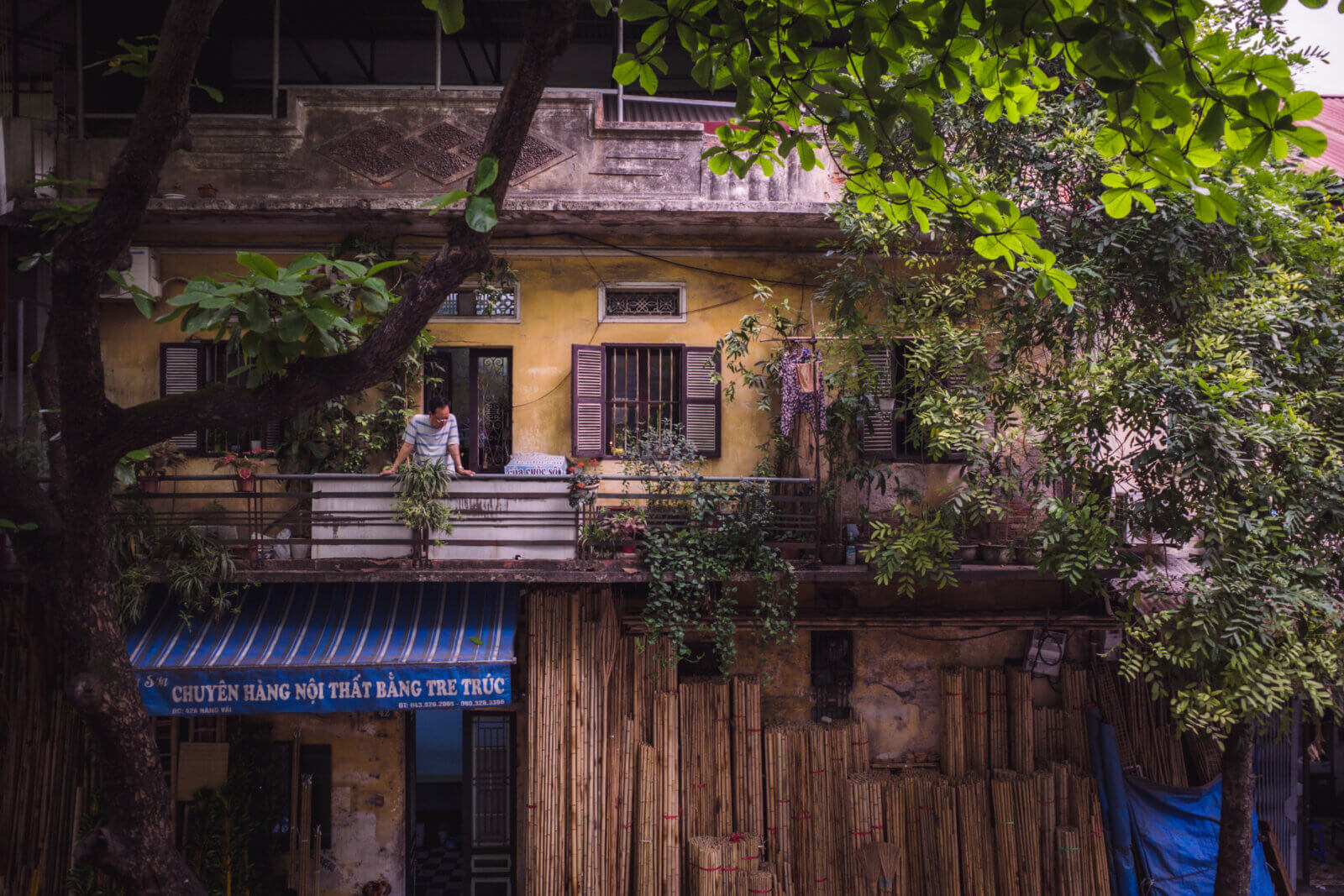
I thought I would lose my appetite for travelling after probably catching covid in hanoi, but I reckoned apart from the flight itself being overseas is not more risky than being here since we do not have mask mandates anymore in singapore anymore. So for my partner’s birthday we travelled to penang since it was just a short one hour flight away, resolving not to take off our n95 masks at all on the flight, even to drink water.

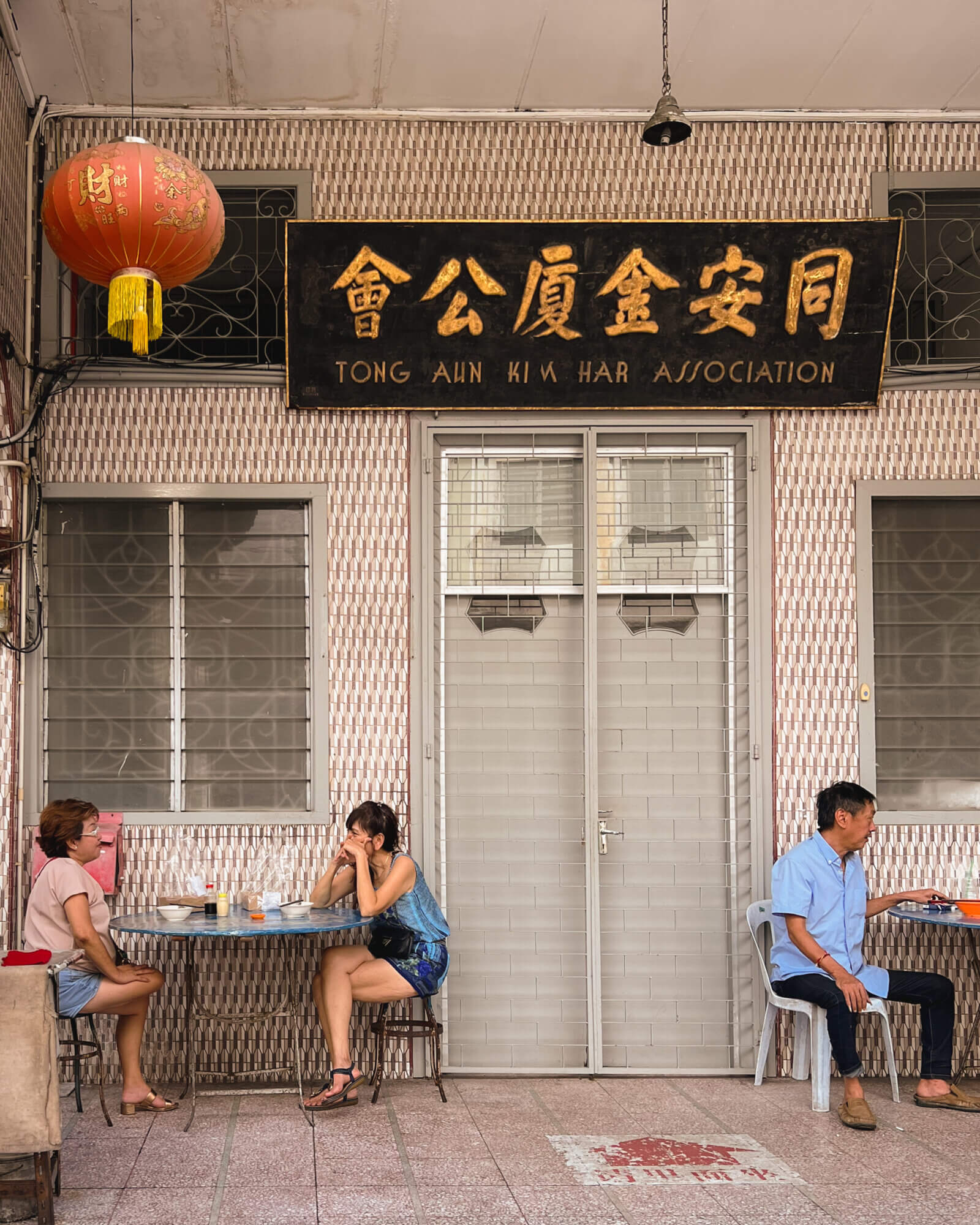
photo of people dining outdoors in penang
penang
hanoi

My risk calculus has also changed because I started getting seriously depressed, and I started to wonder what is the point of living life like a hermit trying to protect my health if I was starting to lose my will to live? I was also worried that non-covid related life-changing events may happen, and I am no longer optimistic about the world’s stability or progress. I may have my health intact if I stay at home 100%, but the world may continue to suffer dramatic changes – wars, climate change, food security issues, new pathogens, etc. One fine day, we may lose the ability to travel even if covid no longer exists. Covid is not the only thing that threatens the stability and open borders of this world, and the survival of my world. My loved ones or my self could suffer a terminal illness, etc.

So yes we are going to take all the precautions we can, but we’re not going to live life totally home bound, at least for now. We both wanted to knock off some bucket-list items just in case the world changes again. Hence, we travelled to seoul and japan, both places we have been before individually but not since we had met. For both trips on the flight we wore the 3m aura n95 masks with sip masks installed, we didn’t take them off apart for immigration purposes. We also avoided indoor dining. Both trips were completed safely, but I wouldn’t bet my life on it. I know I am playing the roulette, but the odds are close to being out and about in singapore anyway.

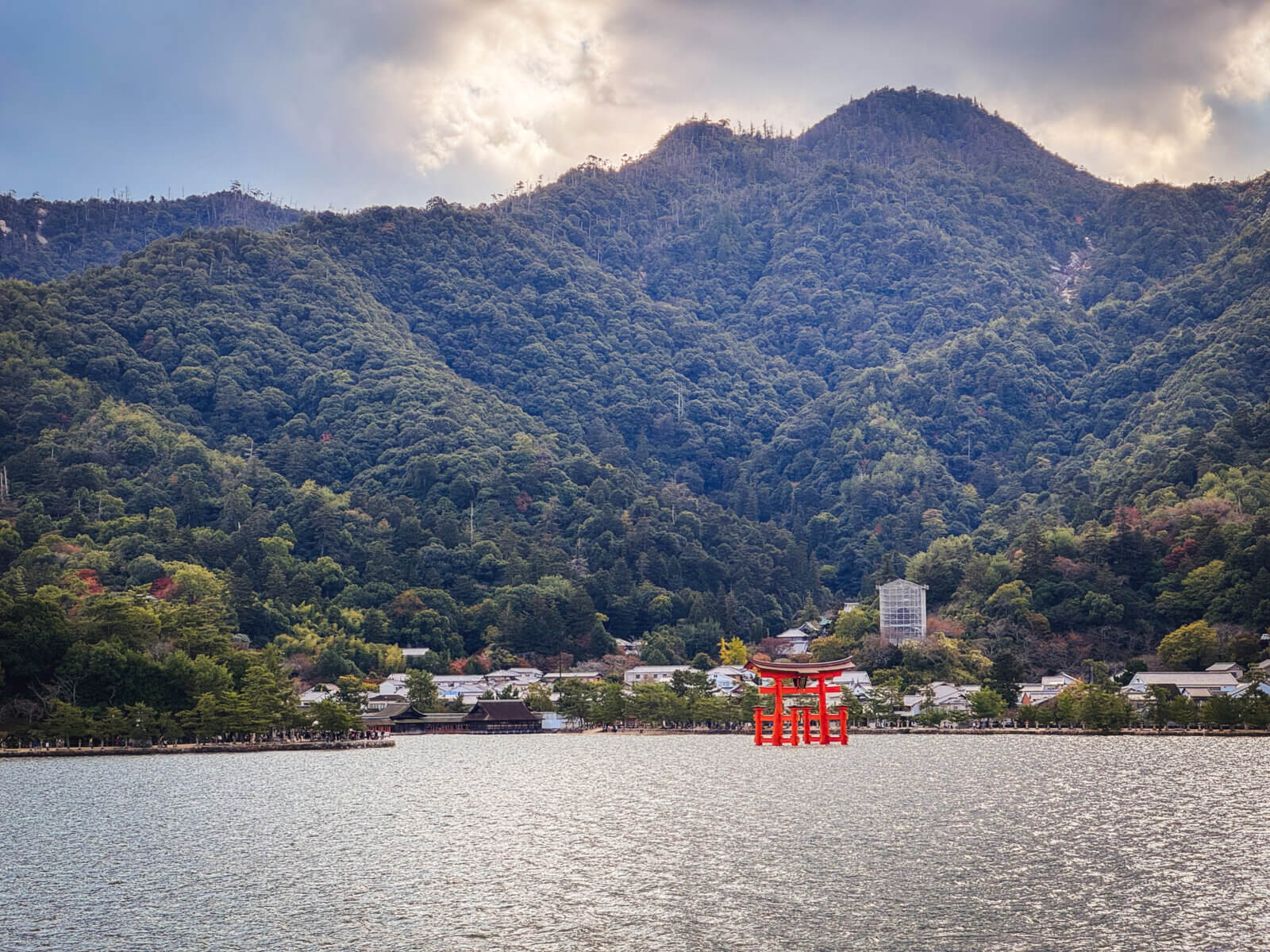
photo of the torii gate of miyajima
miyajima, japan
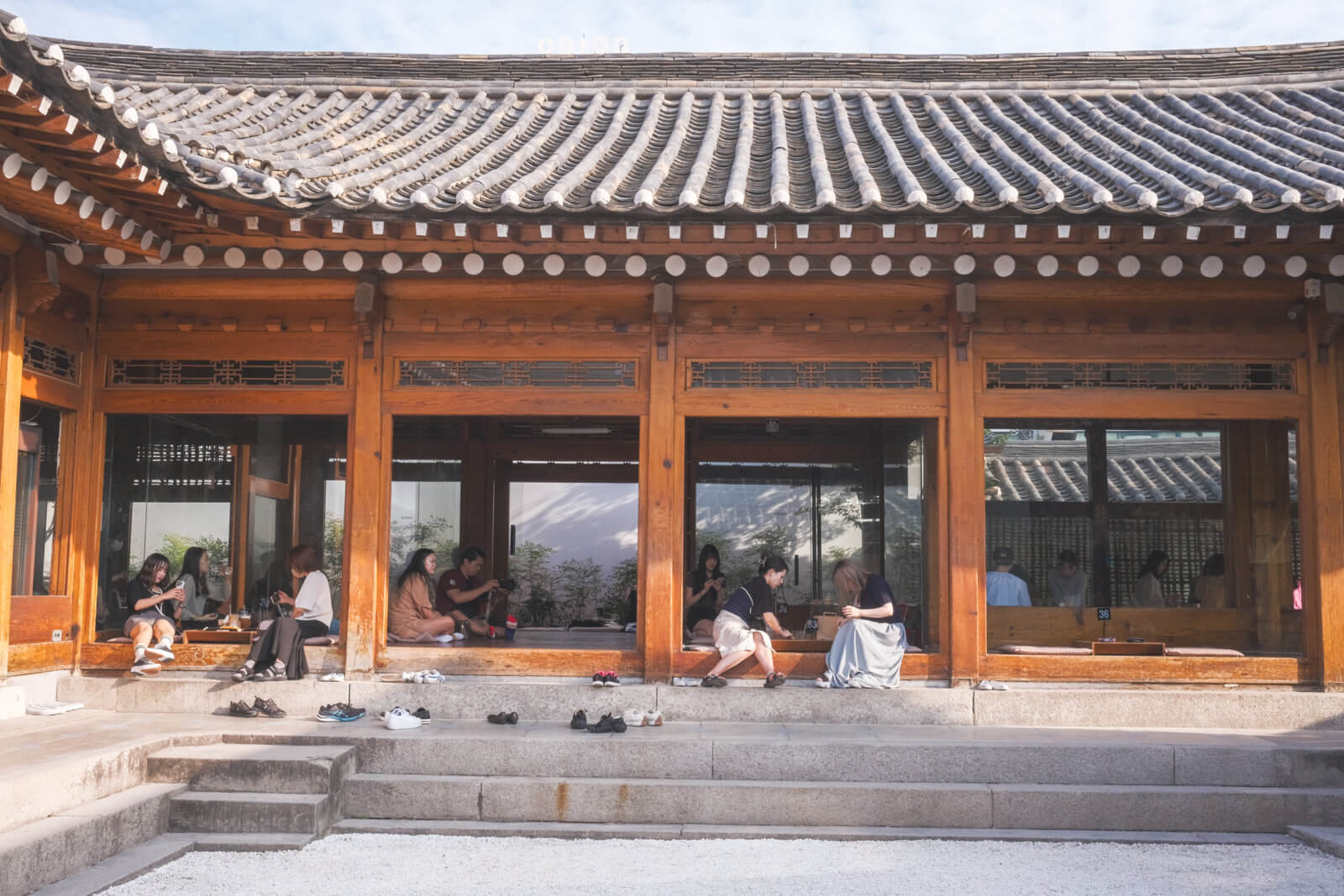
photo of cafe onion anguk
cafe onion anguk, seoul

Travelling revived my spirit. Before the pandemic I took my travel experiences for granted, now every trip is experienced with heightened awareness and longing, as though each may be our last trip.

finally started drawing

Because of covid there were things that were part of my regular routine that I couldn’t do, so I had to start doing new things to fill up my time while in recovery. I decided to pick up drawing, something I had wanted to do for decades but never had the belief, time, space, energy, patience, stillness to do so. I believe running regularly has cultivated my capacity for monotony, and that sort of tolerance for monotony is necessary for the stillness required to sit down and draw.

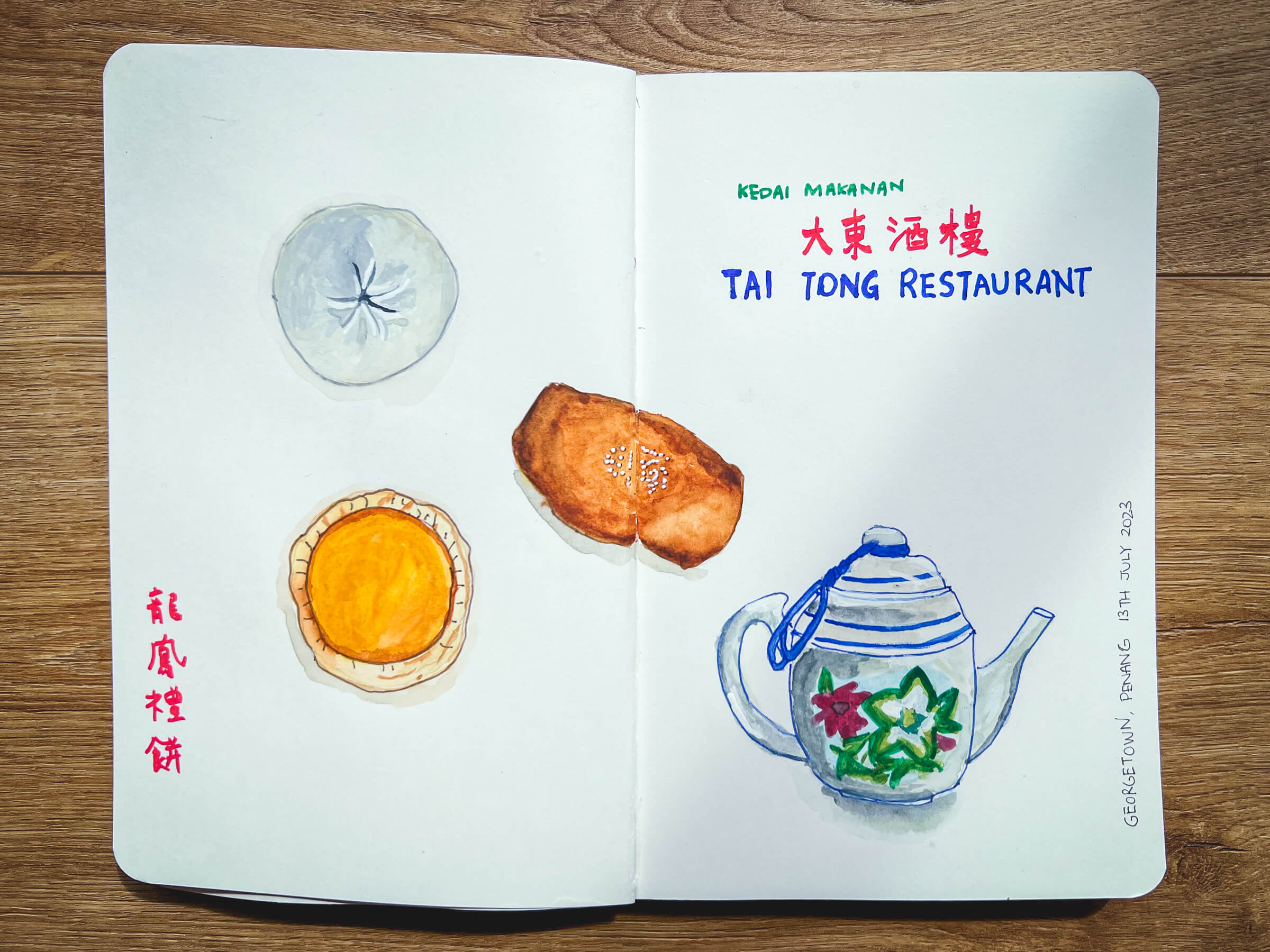
photo of a sketchbook spread of some dimsum items from Tai Tong Restaurant, Penang

Drawing is still not something I actively or consciously enjoy, but it is a meditative experience, and the outcomes are satisfying no matter how ugly or deviated they may be. It is difficult for me to start, so I am trying to make it a regular practice versus waiting for my self to desire drawing. I see it not just as a creative endeavour but as an exercise for my brain, hand-eye coordination, and my capacity to tolerate discomfort.

finally started strength-training

This was another thing I wanted to do for years but just didn’t have the courage or will. But I finally had my first ever training session sometime in end october. Because of travelling I haven’t had the chance to build up some cadence, but I am starting to get back to it again. Hopefully I’ll get to experience some differences.

change in carb intake

For most of last year I was on a low carb diet, but with the depressing state of the world I started eating more carbs. Previously I had plenty of motivation to protect my health, but these days I keep feeling like I am not sure when life as I know it is going to end, so I wanted to allow myself to have one of the few remaining pleasures I can have in life. It is being mitigated by a lot of activity and almost-daily intermittent fasting. I still check my blood glucose levels at least 5x a day most days so I try to keep it within a wider acceptable range. This is part of me learning to be more flexible.

less migraines

My chronic migraines seem to have improved dramatically this year. Eating too much carbs used to trigger migraines for me immediately, but now I am able to tolerate quite a bit with no development of symptoms. I am not sure if it is the regular visits to the traditional chinese physician – I have been seeing her for 1.5 years so far – or the improved fitness or both. I am also more mindful with avoiding inflammatory foods like PUFAs as much as possible so that could contribute too.

Thankfully, covid did not worsen my migraines. For now.

got certified as a bike technician

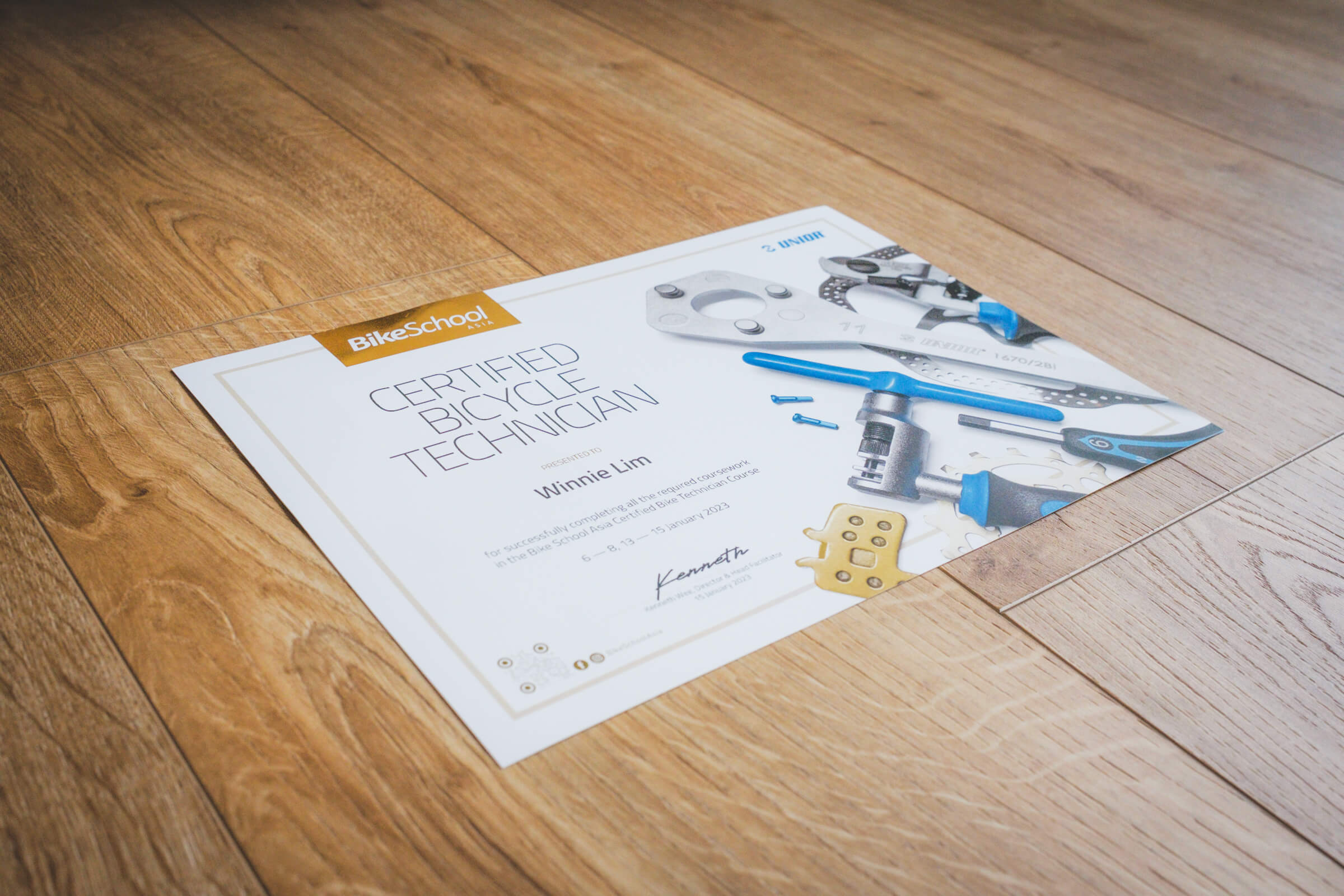
I started having a deep interest in fixing bikes during the start of the pandemic, registered for a class in 2021, but postponed it several times to due covid waves. I finally completed it jan of this year.

photo of a paper certificate for a certified bicycle technician

Unfortunately this is something that requires a ton of practice, so I wouldn’t be fixing any bikes soon. But I did manage to solve a couple of persistent issues my bicycles were having, so that was very satisfying. I also learnt that tuning gears are not as complicated as I thought they were. However building and fixing bicycles really requires strength – there are some manoeuvres that need sheer brute force. I guess taking the class really drove in the point that I need to be physically stronger.

I really like picking up extra skills I never thought I would have.

pandemic-influenced psyche

Pandemic fatigue has really gotten to me this year. My chronic depression noticeably worsened post-getting-covid and I am not sure if part of it is neurological since the virus damages our brains, or from the feelings from the hopelessness of it all.

I haven’t had a meal with my family or friends since Omicron. I call myself anti-social, but it would be nice to have coffee with a good friend (if I still have any) once in a while.

I resent that I have to keep choosing between my physical health and psychological health. But not being able to exercise really impacted my psychological health anyway, so either way I am fucked. I also resent that I have to be constantly vigilant.

The dissonance has also been messing with my mind – that my level of cautiousness is backed up by the increasing research, but almost everyone else believes the virus is “mild” because of the public messaging versus the actual science.

I don’t see things changing much the next year. A truly sterilising vaccine would be a game changer, but if there are any significant developments that could be in effect next year we would know it by now.

Reading Station Eleven made me feel thankful for everything I still have, but I can be thankful and resentful at the same time.

I tell myself people have lived through worse, but I also resent that this is a world that needles you into being grateful by comparison with the less fortunate.

read 52 books

I was reading so many books in the first half of the year that I was very certain that I was going to exceed my reading goal of 52 books by a long stretch. Somehow other parts of life just happened and probably coupled with some depression I started reading a lot less in the second half, but still managed to complete my goal to read at least one book a week on average. I know some people think we shouldn’t set goals for an activity like reading but I am the sort of person who needs this sort of challenge to actually remember to do the things I want to do.

I would share a list of my favourite books but I honestly cannot remember much of them. I guess I should put more effort in writing short reviews of books right after I read them. I also didn’t feel like I’ve read any non-fiction book that radically changed the way I saw the world.

wrote 63 posts

I strive to write at least 52 posts each year, so 62 is definitely satisfying, though most of it is probably published while I attempted to travel blog in japan.

significant posts

celebrated 7 years of being together

My partner made me a handbound booklet to celebrate 7 years together, and I responded by writing a post about it.

booklet made by launshae for our 7th year anniversary: cover

In total we’ve celebrated 91 months this year.

photo of my partner and I celebrating 81 months together

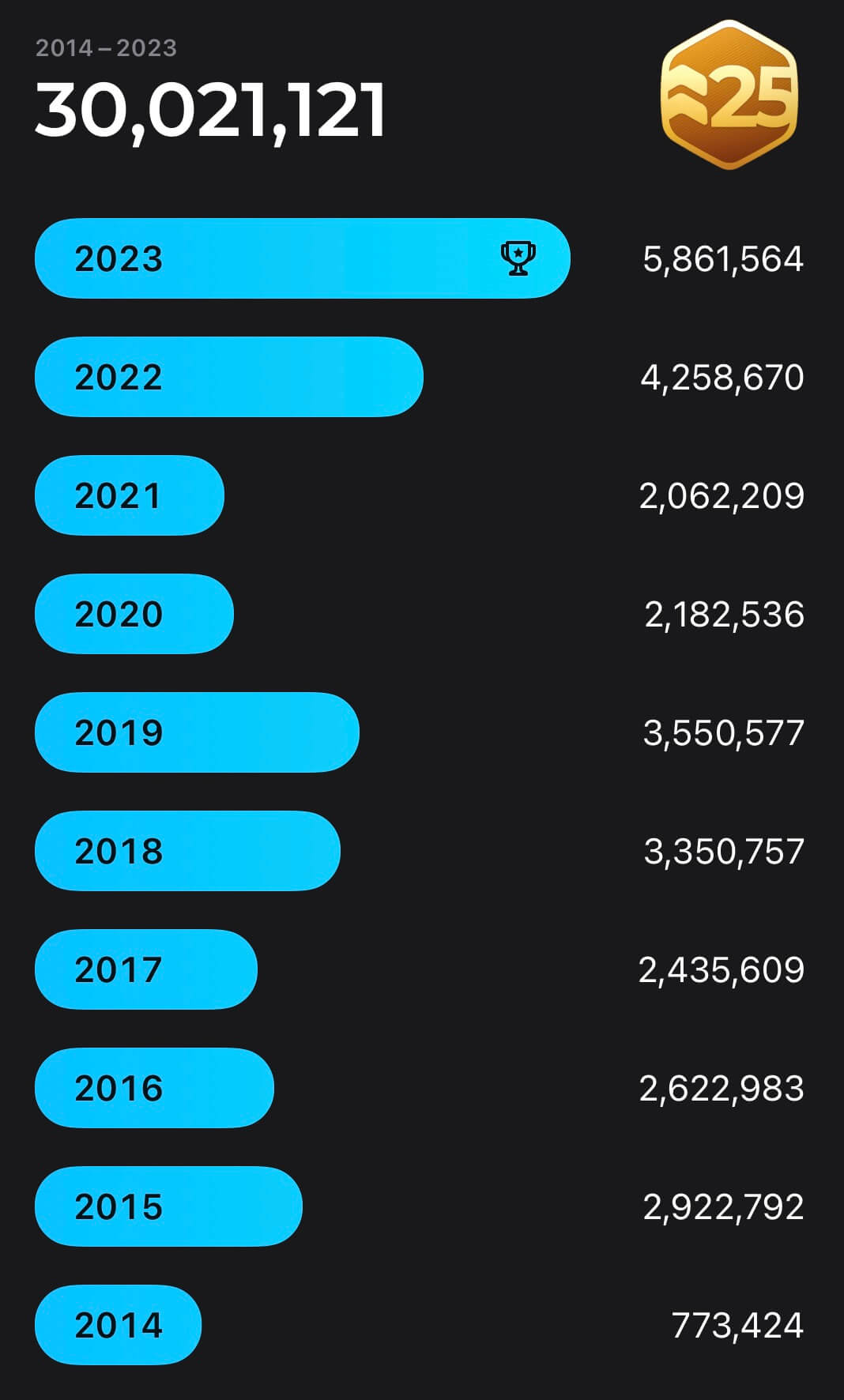
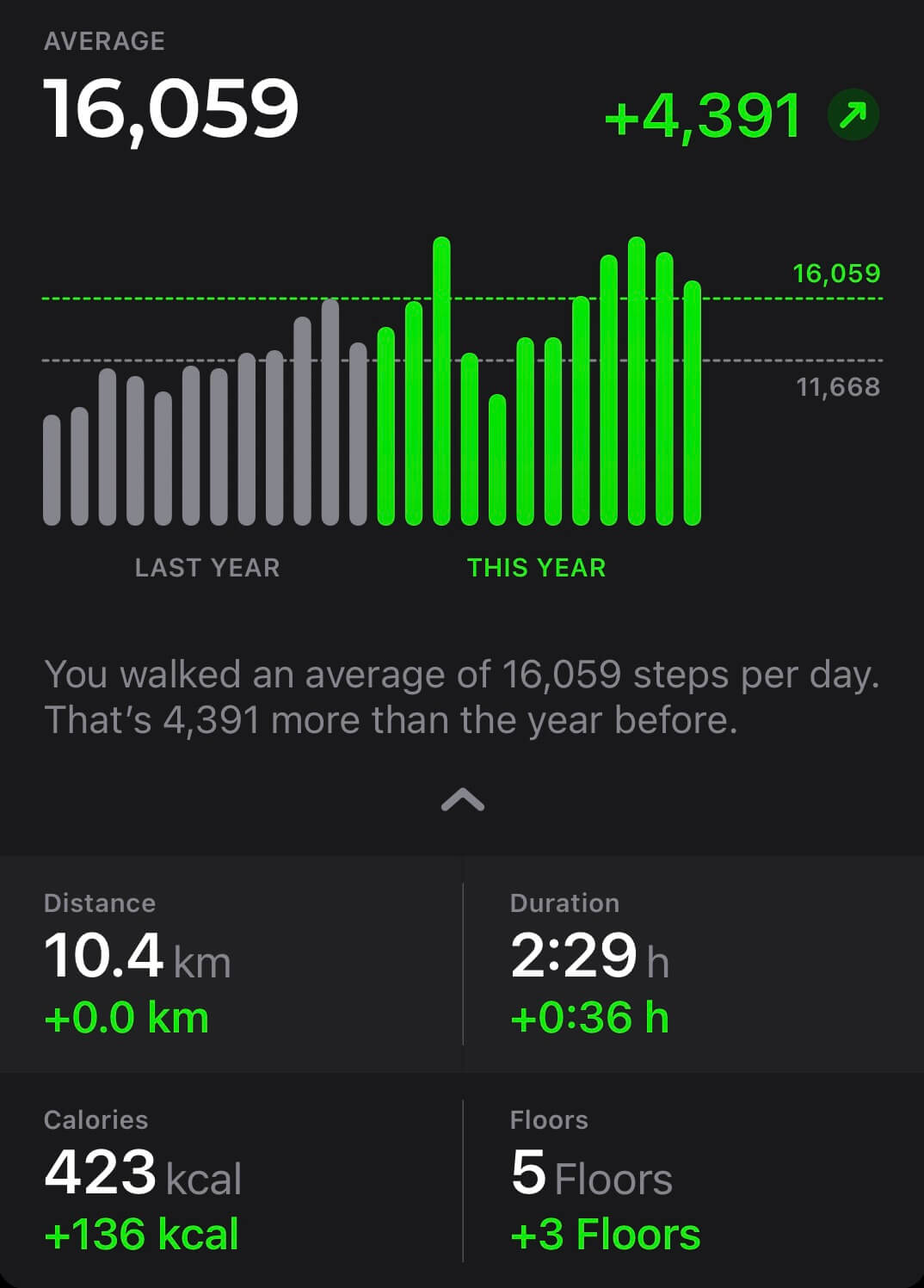
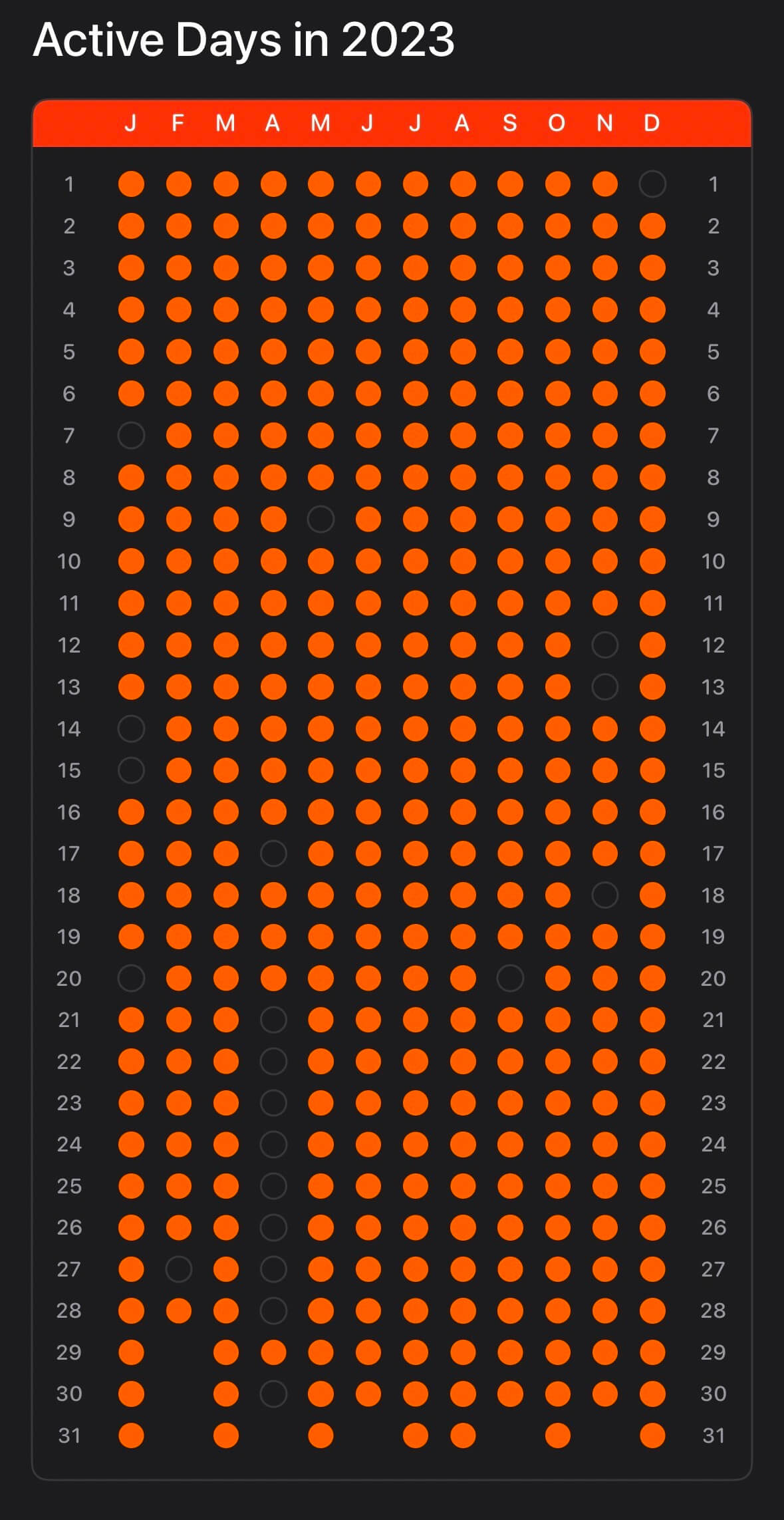
5.8 million steps walked

…versus 4.2 million steps in 2022. Despite the time I took off exercise because of covid I still managed to have my most active year so far:

photo of yearly steps count from 2014-2023
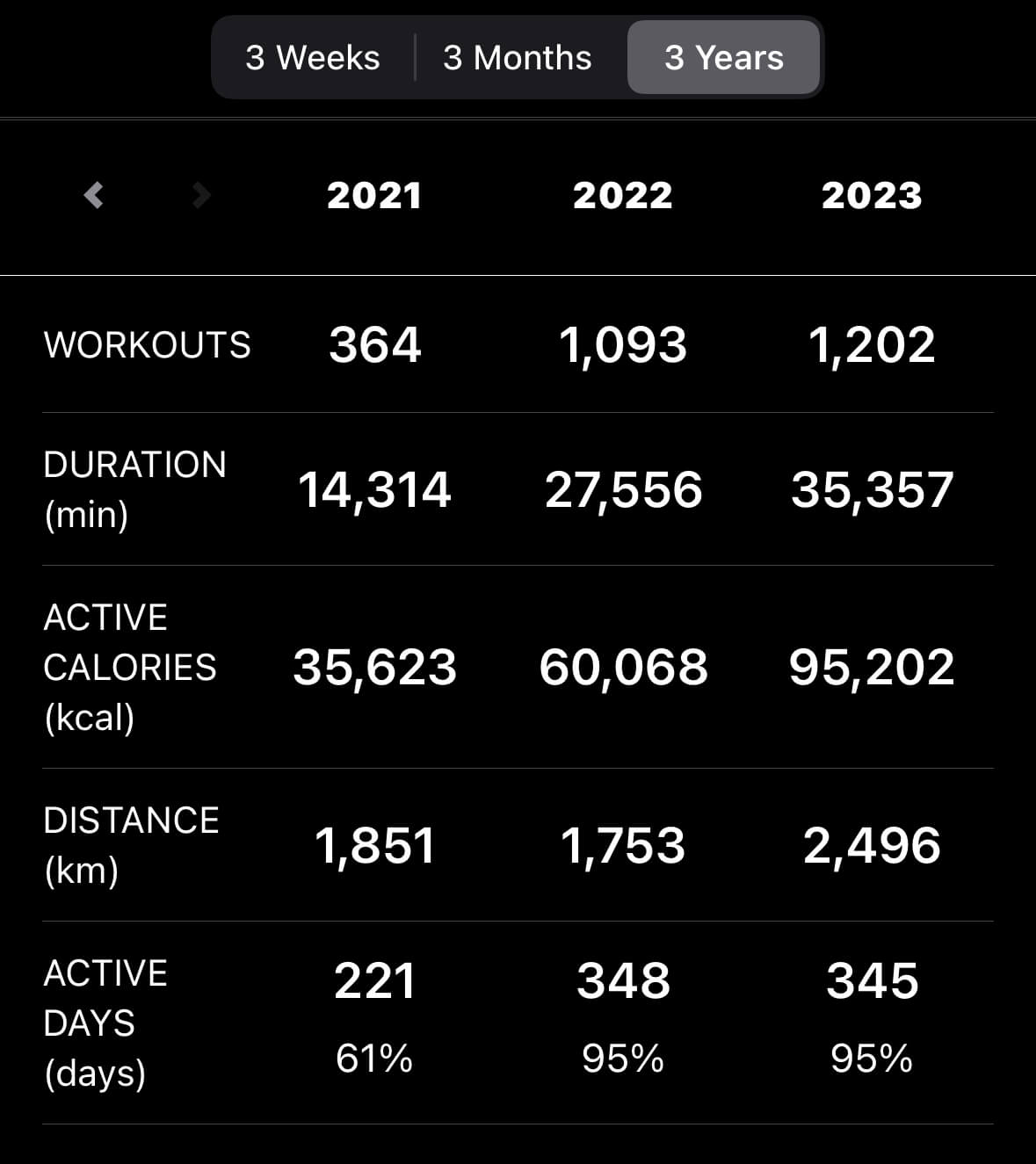
screenshot of an app comparing activity metrics for the past 3 years
screenshot of an app showing an increase in the average number of steps walked per day
screenshot of an app showing active days in 2023

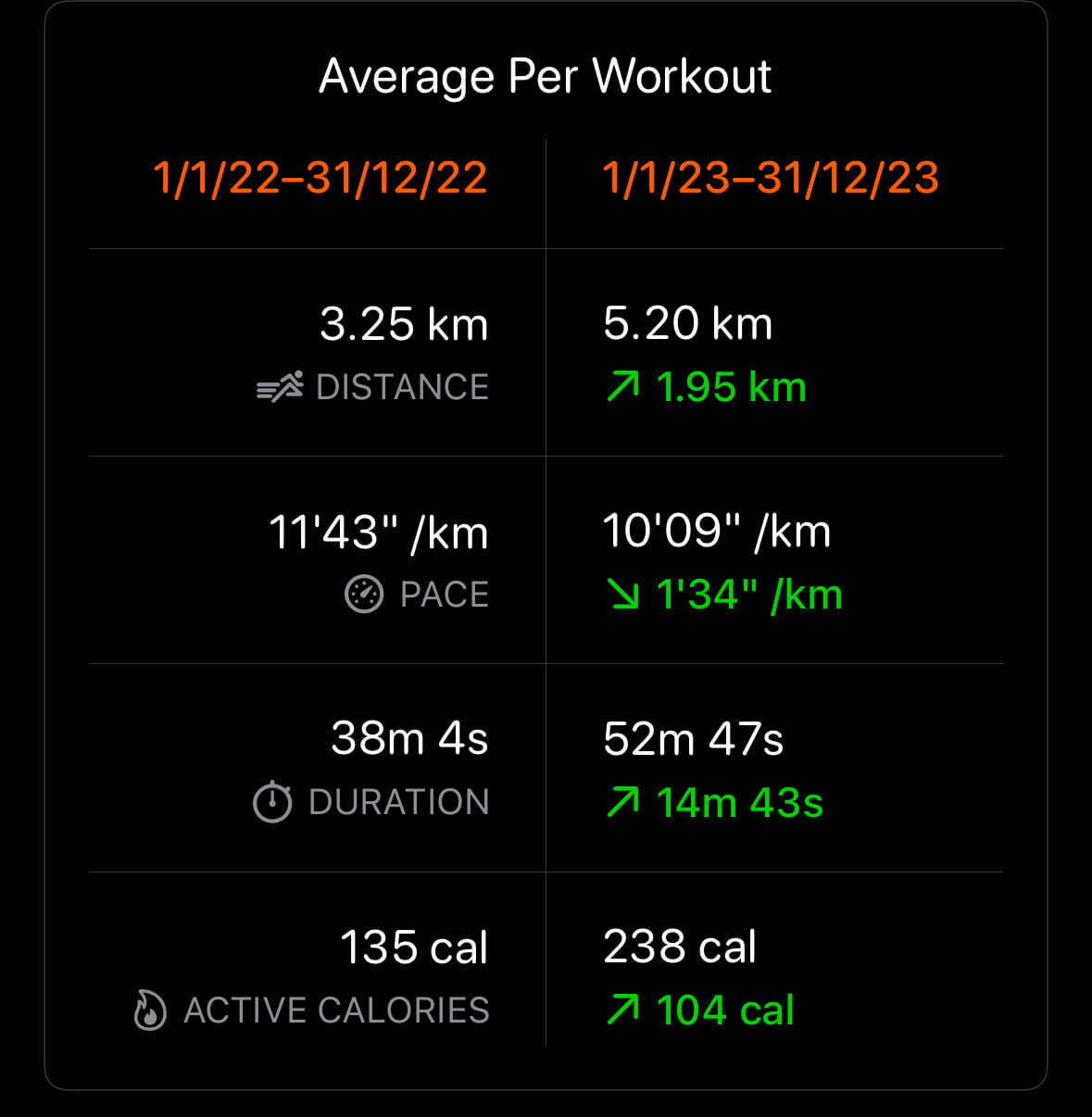
619km ran

versus 201.72km last year. Would have been dramatically different if covid did not derail my progress, but at this point I am just glad to be running again.

screenshot of app showing running stats from 2023 vs 2022

took a ton of photos

…but probably not as many as I would have liked. Again I have to blame it partially on covid, which took the already-faint budding creative spirit out of me.

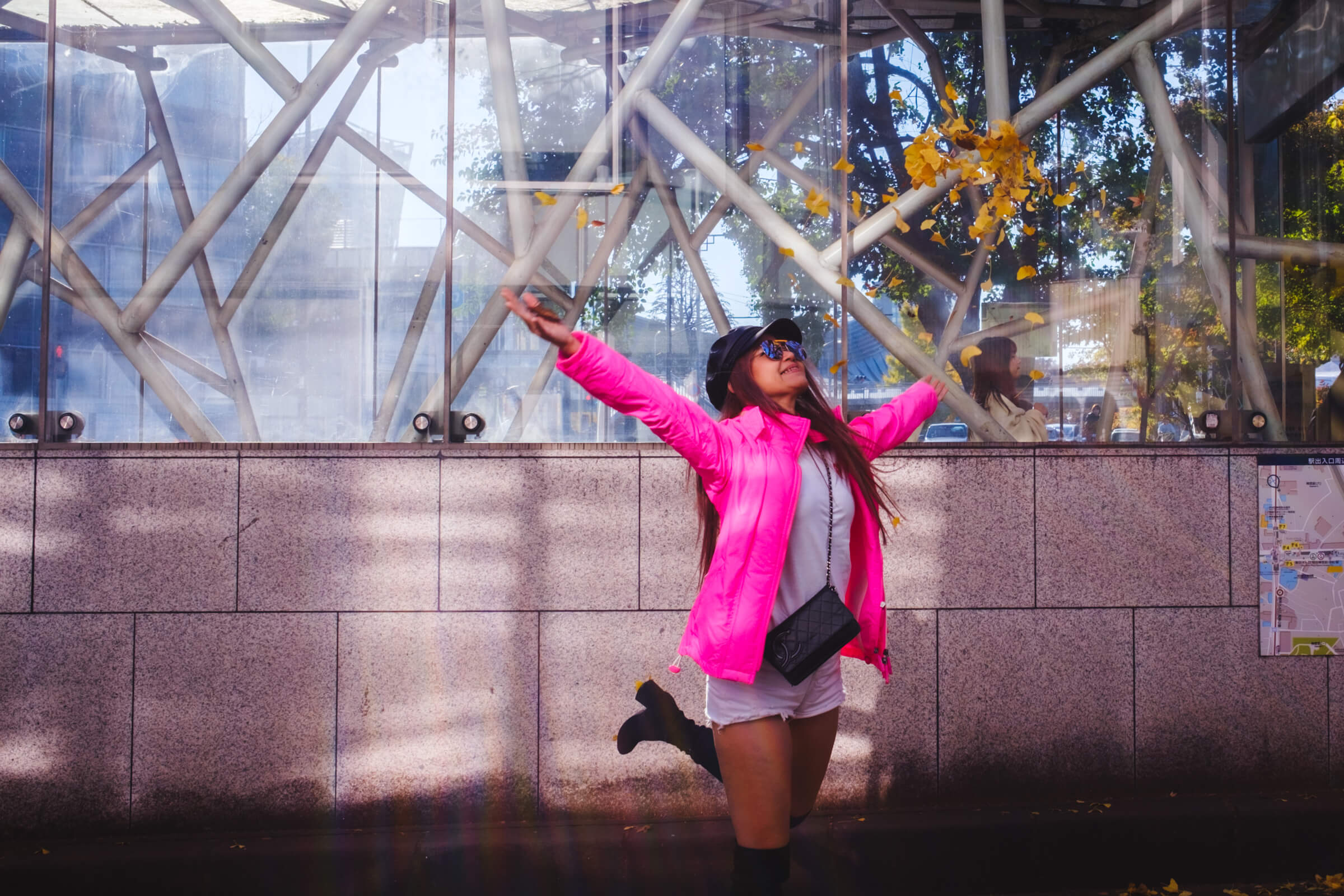
Maybe it is a recency bias, but this would have to be my favourite photo due to the lucky timing of it:

photo of a woman throwing autumn leaves in the air

I have to share my favourite portrait of my partner too:

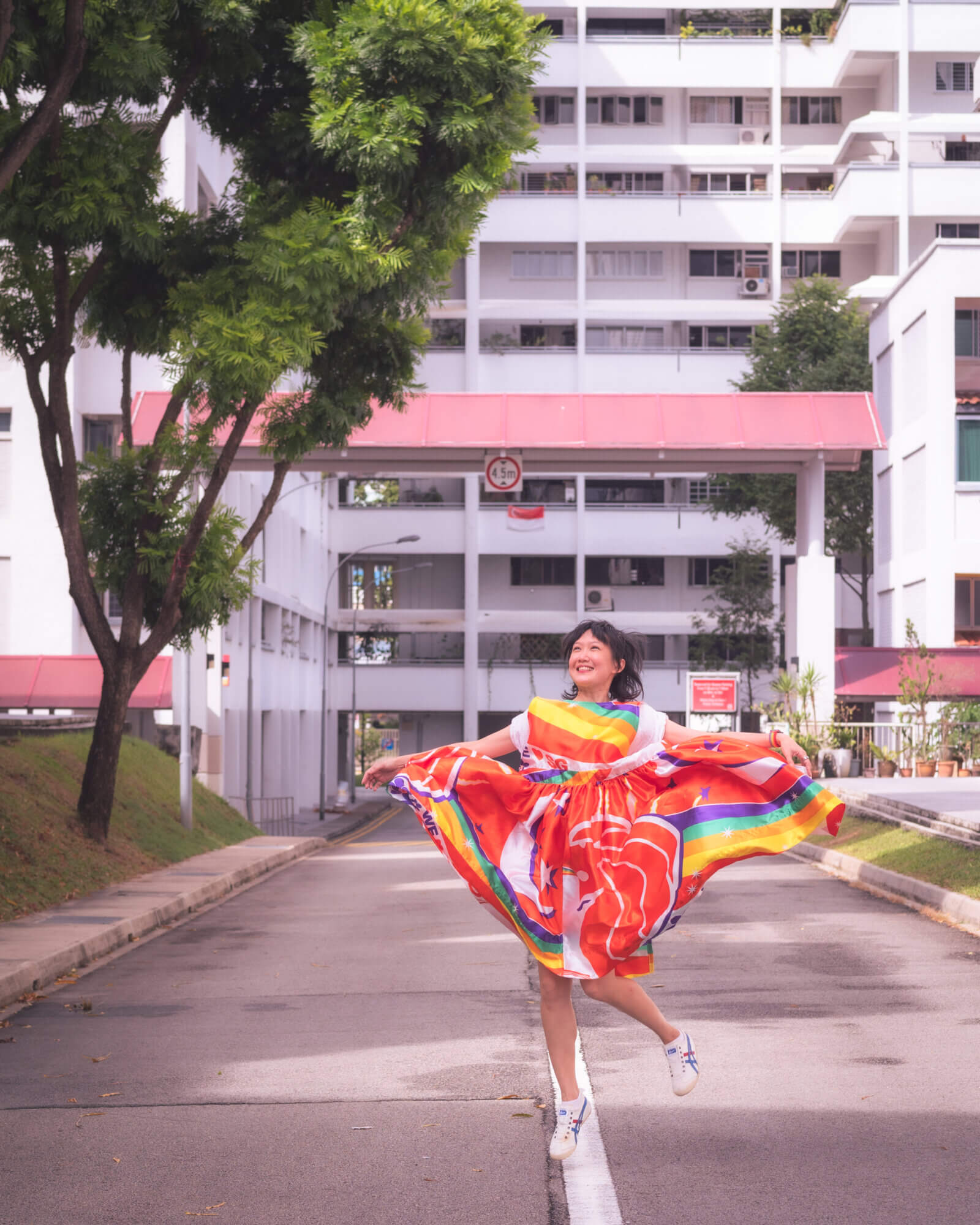
photo of my partner leaping into the air

I guess I just like exuberance because I have none.

other notable mentions

  • started using obsidian, and I am still using it regularly till now
  • joined an online covid-cautious group in Singapore
  • got tested for adhd
  • journalling streaks: 1369 days of bullet journalling & 811 days of morning pages
  • 12 movies logged on letterboxd – mostly korean films. The first movie was only logged in april

website updates

overall sentiment

Though through this post it does seem like a lot of positive things happened objectively, but 2023 is a year of difficult emotions for me. I had to do a lot of letting go, a lot of accepting that there will be inevitable loss and grief. I just see it as the inherent nature of life. Nobody ever promised that life will be kind, in fact historically speaking life has never been kind, but we’ve somehow been conditioned by the relative peace of the last few decades to believe so.

Accepting that life can be cruel and random makes the actual living for me easier – it changes the baseline of what I expect and hope out of it. Is this a psychological trick or is this my most objective view of reality? I cannot discern. But I have learnt that in life it doesn’t matter what is the objective reality, we just have to live with a reality that makes life bearable.

I do truly have to be very thankful I am lucky enough to have a partner who has been steadfastly here with me throughout all the covid trauma, deep depression, and attempts – failed or successful – to come alive again and again. I am not very attached to most parts of life, but her love is what that keeps me alive, and as much as I would hate to admit it, it is life and the existence of human beings that makes this love possible.

the interestingness of our thoughts

I started watching this kdrama titled “recipe for farewell” recently. The male protagonist would cook for his terminally-ill wife, then post the recipe and his thoughts on his blog. It made me feel that blogging could be so simple. Something as mundane as the process of cooking a meal can be made to be so interesting when we accompany it with our inner monologue. 

We don’t think much of cooking that meal, our inner monologue, and capacity to eat that meal. Writing this reminds me of a passage I’ve read in Station Eleven recently:

Clark was thinking about how lucky he’d been. Not just the mere fact of survival, which was of course remarkable in and of itself, but to have seen one world end and another begin. And not just to have seen the remembered splendors of the former world, the space shuttles and the electrical grid and the amplified guitars, the computers that could be held in the palm of a hand and the high-speed trains between cities, but to have lived among those wonders for so long. To have dwelt in that spectacular world for fifty-one years of his life. This was how he’d told Miranda Carroll of her ex-husband’s death: he’d pressed a series of buttons on a device that had connected him within seconds to an instrument on the other side of the world, and Miranda—barefoot on a white sand beach with a shipping fleet shining before her in the dark—had pressed a button that had connected her via satellite to New York. These taken-for-granted miracles that had persisted all around them.

Most of us have grown up surrounded by so much modern comfort that it would take extraordinary effort to pause and reflect on how much it takes for it to be delivered. I have spent so much emotional energy being sad about the current state of the world, but reading Station Eleven made me feel thankful that despite that the current pandemic virus being insidiously destructive, at the very least I can be here typing this because I can still charge the battery on my laptop and the internet still works. That’s the power of reading fiction I guess: imagining other worlds enable a contemplation of our relationship with the one we’re in.


I’ve always aspired to be a proficient note-taker but I am still terrible at it. It is also a practice I guess, to be mindful enough to document those passing thoughts. We have so many thoughts passing through our brain that we take them for granted thinking that they are so plentiful and typical. Now that everyday we’re living with a pathogen that can cause brain fog and other neurological deficits, I try to be more appreciative on my longwinded thoughts and ability to form coherent sentences with reasonable spelling skills. During my infection one of my greatest fears was to lose my ability to write. Writing – another one of those things we do so often that we don’t think much of it.

I think about why I don’t take down notes or blog as often as I would have liked. I think there is a subconscious belief that my thoughts and lived moments aren’t that interesting. To capture them there must be a belief that they are worth capturing, and to develop the habit and workflow to capture them. Then we have to develop the awareness to activate that workflow whenever something potentially interesting pops up. I often notice interesting thoughts during runs, but I don’t have something that could easily capture these thoughts. Being able to record voice memos during the run would help, but I still struggle with using my voice.

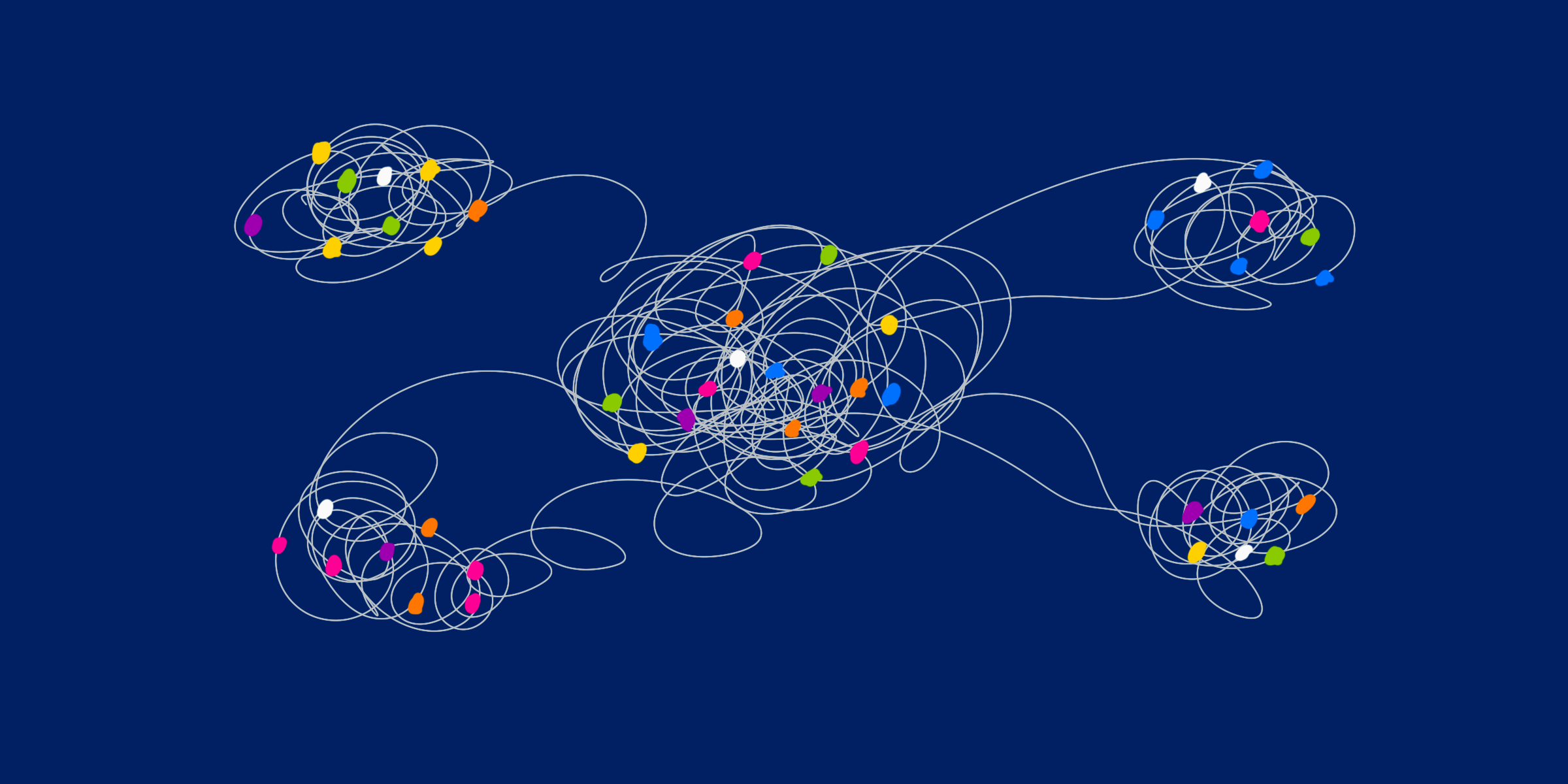
Maybe some people think that it is somewhat narcissistic to develop such an interest in our own thoughts. But I think it is a sort of respect to the complex network that exists in our brains, and this complex network is connected to a much more complex network that is this world. The interestingness forms when we consume something in the external world and process it with our inner selves.

abstract illustration of the complex network of thoughts connecting to the greater complex network that is our world

The magic occurs when we put that intricately formed thought out in the world, and then someone else takes that and form their own intricately formed thought. Perhaps some people think self-expression is selfish, but I think it is one of the ultimate forms of participating in the world. It is not easy to give that time, space and respect to our inner selves, to believe something beautiful can emerge.

What is it like to have that much respect for one’s inner world? To keep on having a sort of anticipatory vigilance for something that could emerge out of our selves? Like let’s always carry a note/sketchbook with us in case something meaningful comes along? To me it is like having faith that it is a matter of time that something interesting will be captured. There are no questions, no doubt, no what ifs, no am I good enough. Just a knowing of an almost primal quality.

I can’t imagine having such confidence, and I am almost always dismissive of the messy world that lives in my head. But I would like to cultivate this capacity to anticipate, capture, and then truly appreciate the captured thought or moment. Because it takes a lot to be able to see all the connections of the nodes that must take place before a particular thought or moment can come by.

To have that sort of awareness underlying my consciousness, perception and existence – would that be a blessing or a curse? I want to be a person who is capable of being excited of the potential that exists in every moment, who eagerly takes out her creative tools because who knows what can emerge?


At this point I am just so tired of everything. It feels incredible that I can even convince myself to type this. I feel like this stems from a lifelong dismissive attitude of myself, which stems from a lifelong dismissive attitude from my environment. It seems so impossible that I can be any other way. But sometimes we set off on a journey not because we think we will make it to where we want to go, but because we can no longer stay where we are.

practicing is also a practice

Most skills if not all requires practice. Recently I realised to be capable of the discipline and regularity that practicing needs, is a practicable skill too. We think of discipline as some inherent character trait, and I do think there is some merit to the idea that some brains are simply neurologically wired to favour the sort of temperament discipline requires, but based on the fact that our brains are plastic I believe it is possible to nudge them in one direction or the other. Maybe more things would make sense if we think of it as our body upregulating our hormones and neurotransmitters when they are constantly in use, and downregulating them when they are not. So in general, use it or we’ll lose it, and as with almost everything, overuse tends to be a problem. 


I’ve always had problems trying to get myself to do anything. I was always the kid who would do homework at the very last minute, the morning it was due. I couldn’t understand why I had to put myself through that sort of anxiety and fear when I could simply do it earlier. I just believed I was inherently lazy, like everyone else told me. Sometimes I just couldn’t do it and it seemed that I was unafraid to be punished – teachers were scary back then – but the truth is I was always terrified but I just couldn’t make myself do it. 

Only now upon reading tons of other people’s experiences that I know this is a adhd symptom. 

If adhd is a spectrum I probably fall into the milder side of it. Mild enough to not be so obvious that my family would notice it enough to bring me to a psychiatrist (which would have been useless anyway because those days they were simply unequipped), but somehow it has a pervasive impact on my life. Coupled that with depression I was just a walking mess for at least half of my life. I was probably self-medicating with a ton of coffee and food, and probably alcohol too if I wasn’t allergic to it. 


When I started working the fear of disappointing people and facing potential abandonment/rejection was great, so I mostly managed to meet my deadlines. Still, I would only complete my work at the very last minute. Again unknown to me I was causing myself a lot of stress because this would simply occur regularly: trying to goad myself into doing something because there is a deadline, and my body would refuse to do anything until the fear caused enough adrenaline to surge (this did get better as I got older because I got better at coercing myself but it probably was the reason why I am always fatigued and burnt out). 

The only other way to get myself to do anything is a deep sense of curiosity or excitement, which would also cause adrenaline surges but without the fear. As we know a large part of life is simply not that interesting or exciting, so I lived with a lot of dread and fear. 

With hindsight, it wasn’t at all surprising that I would develop a chronic illness at 35. We can’t keep shocking ourselves with stress hormones without consequences, and then keep drinking caffeine to mitigate the fatigue that is an inevitable outcome from all that adrenaline. Then, the fear of being sicker was what that propelled me to have that discipline to exercise, eat better, have better sleep hygiene, etc.

This is my relationship with the concept of discipline.


Now, I have issues trying to do anything at all because the thought of making myself do something is associated with all that dread, fear and fatigue. But if I can push through some invisible threshold I may end up being obsessed with the thing I am trying to do, like running. It doesn’t take any discipline for me to run these days because I simply crave it. 

I started to wonder if I could practice being good at practicing. A psychological muscle that can be made stronger with increased usage. I catch glimpses of it: during times when somehow I could gather some momentum to do something daily around the same time, it seems easier to maintain a practice, like my drawing. There are practices in my life that are already deeply ingrained, like my daily morning pages and weekly writing. Sometimes I read old entries of my journal and it surprises that not too long ago I used to read reddit once I woke up. I cannot fathom that now. 

But now as I contemplate developing a new practice it just seems too difficult and unattainable, forgetting that I have been successful before. I wonder if it is about acquiring enough subconscious knowledge that I have done this before and it works, so the next time I start a new practice it wouldn’t seem so daunting.

It is not just about the regularity of a practice that makes it successful. I think less people talk about this, but knowing how to pace oneself and break down something challenging into consumable pieces is also a skill. So the act of practicing also involves knowing when to start, when to end, and how much to do. Then there is also the skill of knowing how to scaffold: how to conquer the easier parts to get positive reinforcement before delving into the challenging parts. Too difficult, we’d burn out or give up. 

I guess that is why most people take classes to learn something. The class solves the problem of showing up and regularity, and the instructor is supposed to do the pacing and scaffolding for us. But that also means in a class we’re limited to that particular structure, and it can also diminish the joy of learning because there is something joyful about naturally following where our curiousity, intuition and natural progress leads.


I am still very bad at maintaining a practice – on top of all the accumulated trauma and fatigue involved, there is also the deeply ingrained behavioural loops of a 42-year old. I am very set in some of my ways, and everything feels like a tall wall to climb. I wish I can approach things like the innocence of a kid. 

But with every learning curve there will always be this phase where everything seems impossible, and most of the time all we needed to do is just to tolerate the discomfort until we break that invisible threshold. I think some people are just very good at that positive reinforcing self-talk in the head, whereas mine is just either a wet-blanket or tired or both. 

I feel like if I get better at the skill of practicing, it will be very life-changing. It is not only about picking up skills like drawing or playing the piano, but also skills like maintaining equanimity in turbulent times. Being able to sort my thoughts out analytically is also a skill, regulating my emotions is also a skill. So much in life is a practice – living in itself is one. 


Maybe it is time for me to incorporate a schedule into my life again. I have always been the sort of the person who believes in being free, whatever that means, and that includes being able to use time freely, to do things when I wish to and not out of enforcement. I’ve been so trapped in schedules all my life that I dread them. But the rational part of me knows that it is simply just easier to do things when it is time to do them, instead of relying on something so ephemeral like desire and motivation. Sunday is my writing day, so I write. Every day I write my morning pages after I wake up, and I exercise right after I finish my morning pages. There is no hesitation, no guess work, no do I feel like doing this?

I am not sure if it’ll work or backfire, or if I’ll even implement it. But it is the most rudimentary way to get a practice started I guess. I can only work with what I know. There is so much I hope to do, but I just cannot seem to overcome all the psychological blocks I have within myself. A schedule only works if I adhere to it. That would require practicing another psychological muscle. There’s no harm to trying?

I very much wish I can be like my partner. She does things because she loves doing them – she doesn’t need a schedule. Her problem is knowing when to rest. But I think there’s just too much psychological baggage in me to be like her – with the exceptions of times when I have hyperfocus on things that can truly engage my brain’s reward systems, but they are rare.

I have to practice changing my mindset too, to do things not only because I enjoy them since I am quite incapable of enjoyment most of the time, but to do things because they enrich me in a multitude of ways. 

It all feels so out of reach, but I remind myself once again that I was once a person who wouldn’t even run 50m, and now I have to stop myself from running 5km every day.

gathering different pieces of myself

I’ve been back home for a few days now. It feels good to be where I feel the safest, slowly working to get back to the routine I had before. Yesterday I ran my first 5k since japan. I didn’t lose too much of my aerobic fitness, but it still felt obvious that it would take some effort to get back to where I was.

Previously I wrote that I feel like I have to choose between my physical health and psychological health. I couldn’t help but feel like I wanted to stay longer in japan because it was doing so much good for me psychologically. But as the trip went on, I slowly became aware for every day I thrived there, I was also taking away time I could have had to work on my self and my health. I love to travel and explore, but it is the rigidity of my routine, the resources I have at my home, and the slowness of domestic life which allow me to introspect, get physically stronger, and hopefully find ways to output myself creatively. Perhaps the answer is not to travel like a tourist, but to actually live in a foreign place for a while like a resident. I am not sure how feasible is that, especially now that I am quite reliant on my full suite of health supplements and traditional chinese medicine – am now old enough to need all of these to sustain me.


My partner is already excitedly working on the fabric she has gotten from japan. She tells me she has several ideas in store. That’s how she gets from our trips: she absorbs all the stimuli, and she comes back to express it all out. I can only envy her – my brain and body feels too messed up. I do feel inspired too, it is just that I find it difficult to bring my self together in one piece. I am like a bunch of scattered puzzle pieces strewn on the floor.

I don’t know if it is the magic of japan, but I do feel this trip is different from the rest. There is a change in my internal state though I can’t quite articulate it yet. I strangely feel hopeful of slowly being capable of putting myself together, but I am not sure. I am working on finishing my travel sketchbook so I can share it here. There are many elements of it that are japanese and didn’t exist previously in my life, so I find it interesting to observe.


Each time I go through similar phases like this I feel like Sisyphus. I try, and I fail. I get back up and I try again. And fail again. Rinse and repeat to infinity. It feels like I am doing the same thing over and over again, having that misplaced hope only to feel the same despair over and over again. But as I get older I am starting to realise I have been mistaken. I am never doing the same thing even though the process feels like the same. I am simply gathering different pieces of myself. Like puzzle pieces strewn on the floor they look severely incoherent and make no sense, they look broken, lost, scattered. But maybe one day they will make a picture. I am not optimistic about it, but at the very least through each process I’ll get to find a piece of myself. Even if on my deathbed I’m still an incoherent mess, perhaps I can be glad that I’ve collected more pieces of me versus being a single solid stable piece that has neither colour or soul.

nostalgia in akihabara

I’ve been to akihabara twice – once in 2008ish and another in 2018 – but back then I was more interested in looking at the massive electronic stores like yodabashi and bic. But a long while ago Marcin shared a youtube documentary on akihabara’s smallest shop and it never left my memory. I knew it has since been closed and torn down (and rebuilt), but I still wanted to visit the building that had housed it.


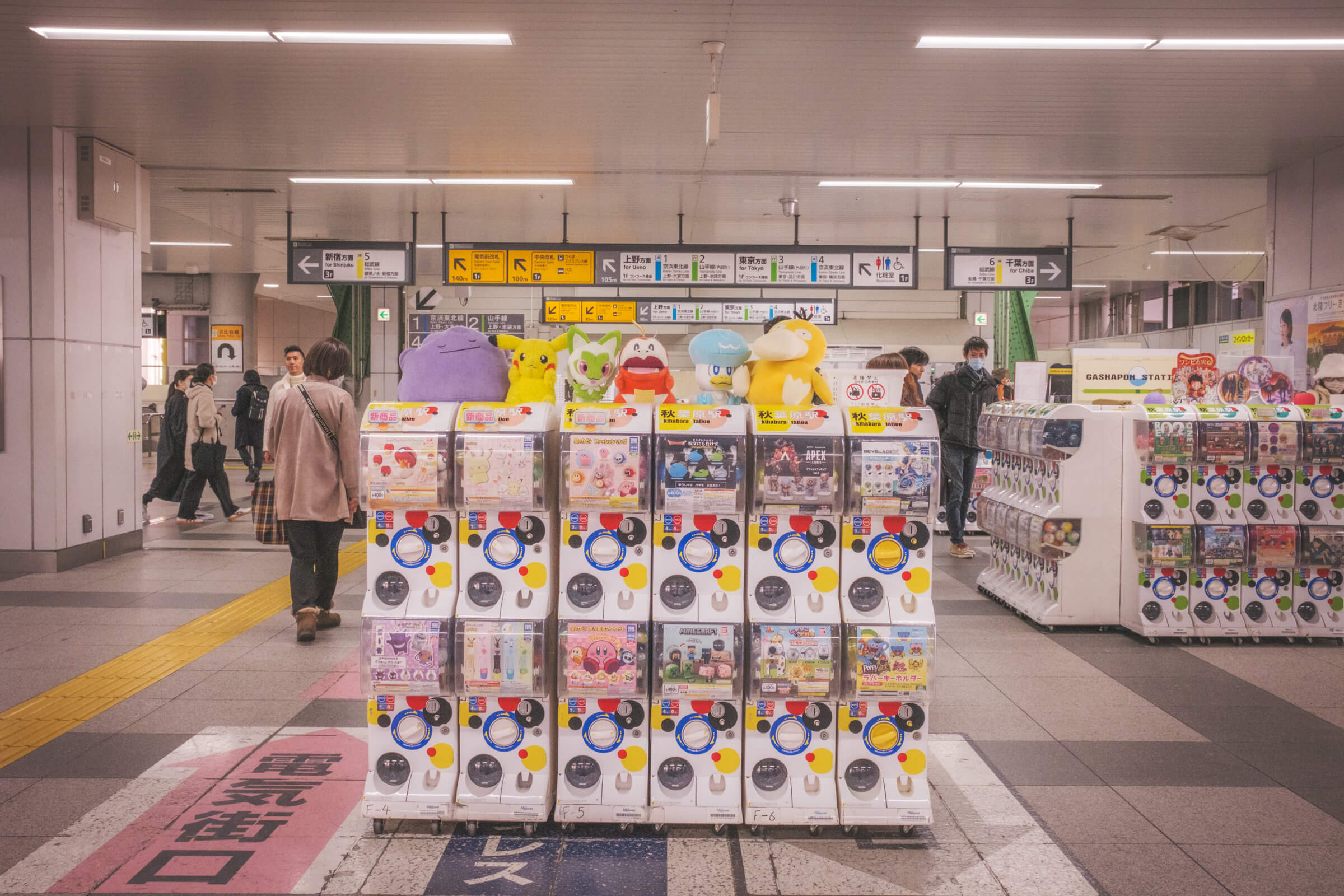
Even the train station at akhibara is different:

photo of gapachon machines at akihabara train station

akihabara radio center

This place is under train tracks, so it feels more compressed than usual even for tokyo standards. Practically it wouldn’t take more then 30 minutes to walk through the entire place with 2 levels, but one can get caught up just looking at all the retro electronics.

photo of elderly man squatting to squint at electronics at akihabara radio center
photo of an 1951 photo of akihabara radio center

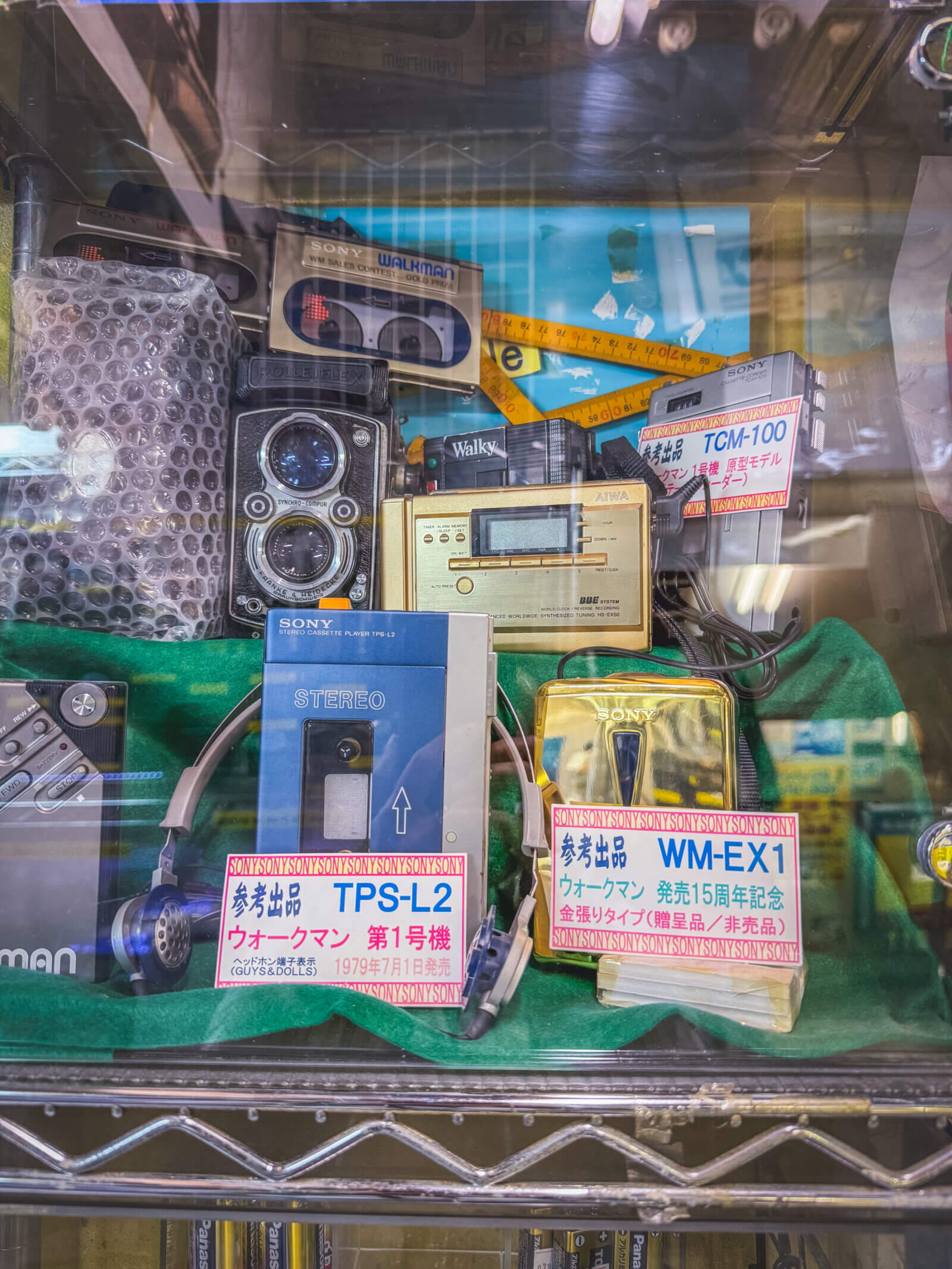
So much nostalgia for walkmans, cassette tapes, discmans and even mini discs – I half wish I didn’t get rid of mine (never had a mini disc player because they were so expensive):

photo of a display of walkmans
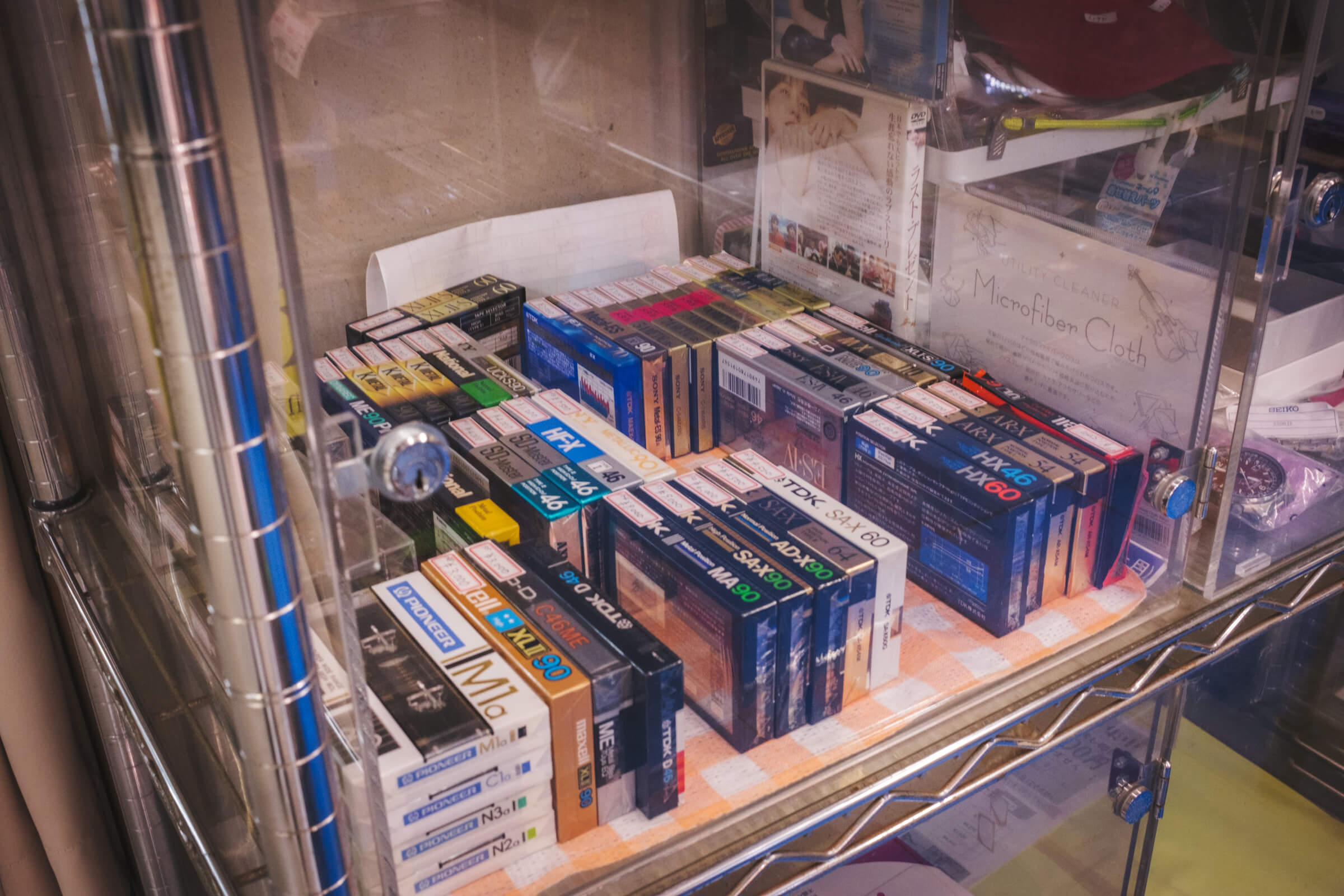
photo of cassette tapes on display at akihabara
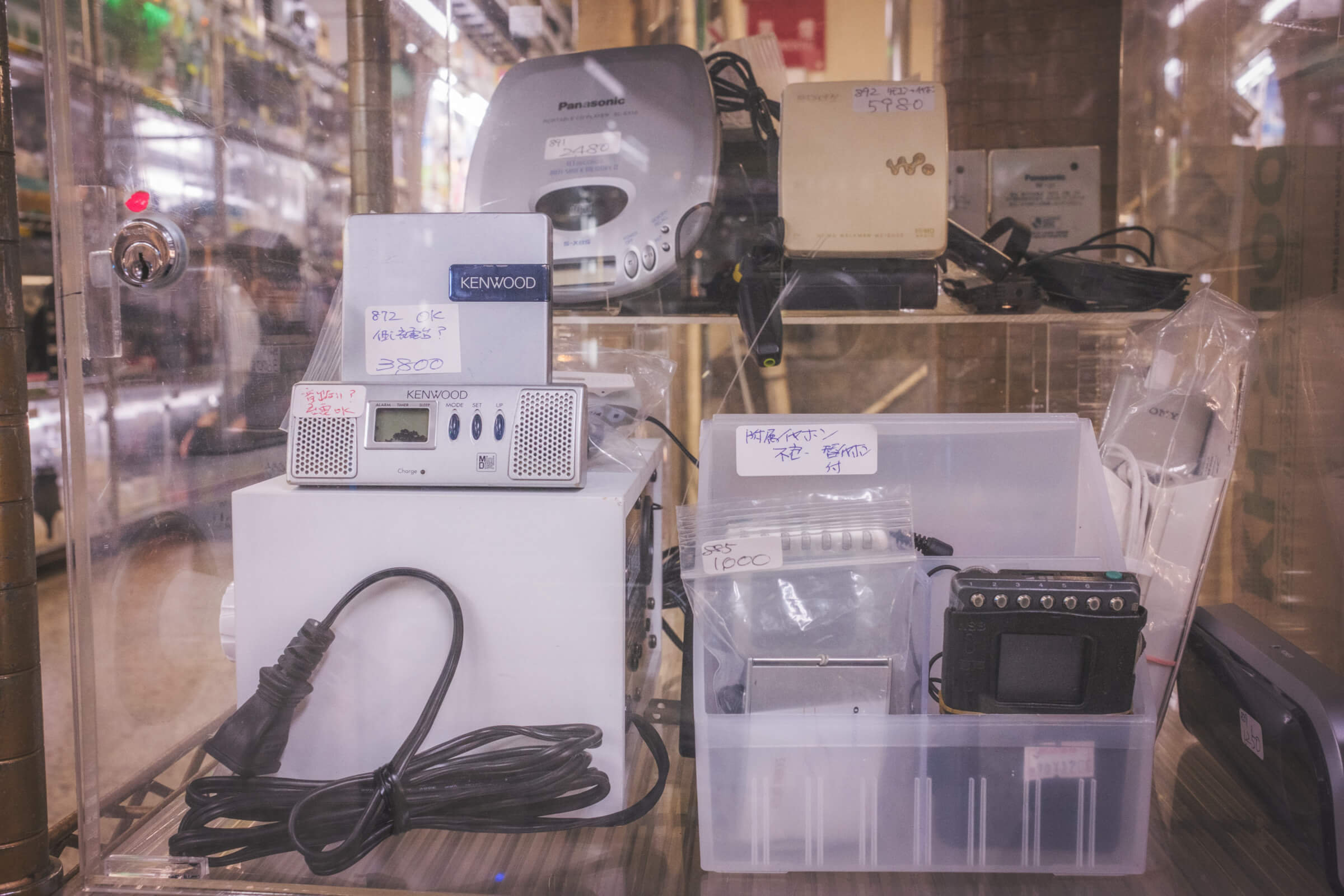
photo of a showcase at akihabara radio center displaying portable cd players and mini disc players

This shop was reminiscent of the shop featured in the youtube documentary. The space inside the shop is tiny and she would have to crawl in and out of the shop. She happened to look up while I was taking the shot:

photo of a tiny book store at akihabara radio center

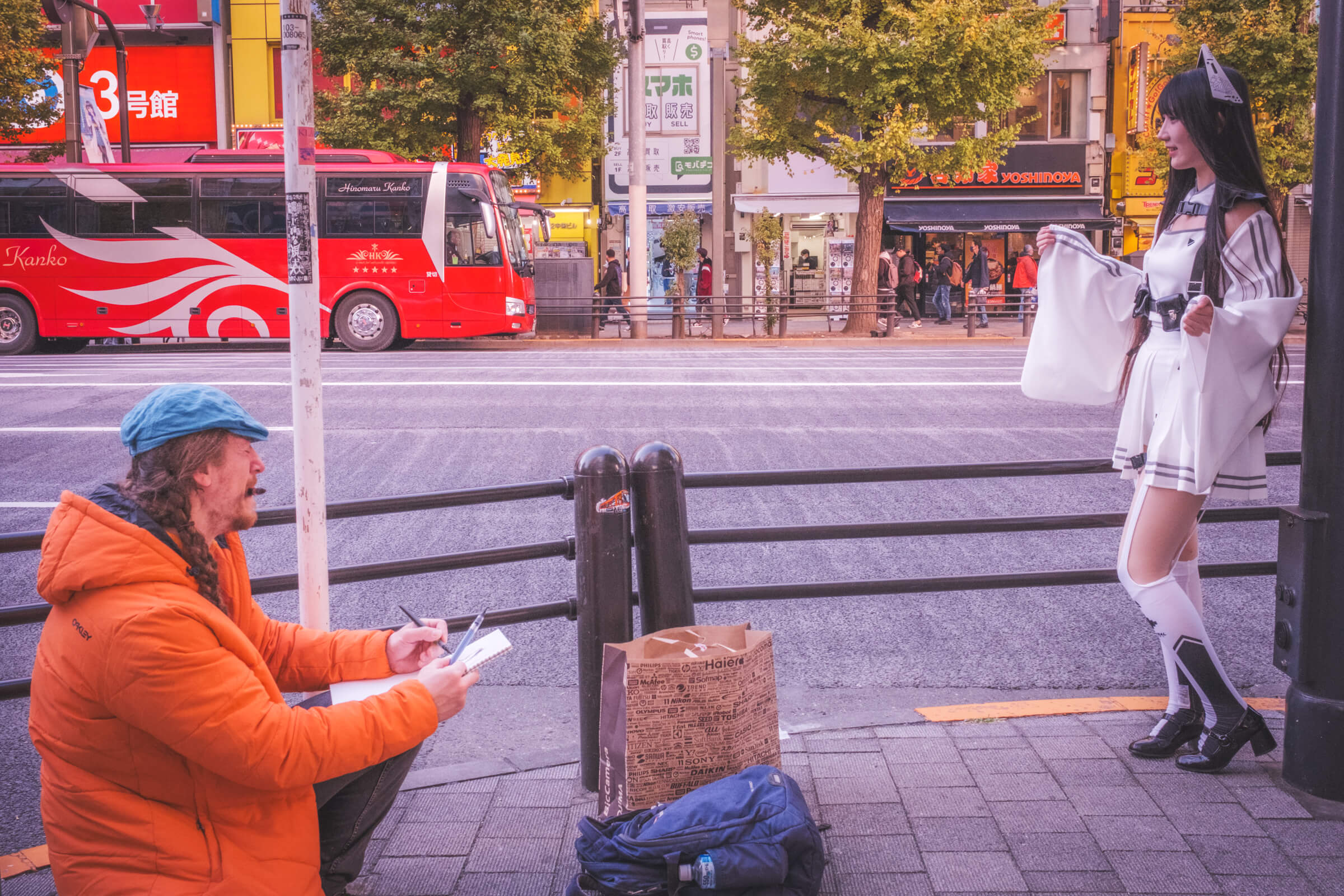
photo of someone live drawing a person in cosplay

book-off

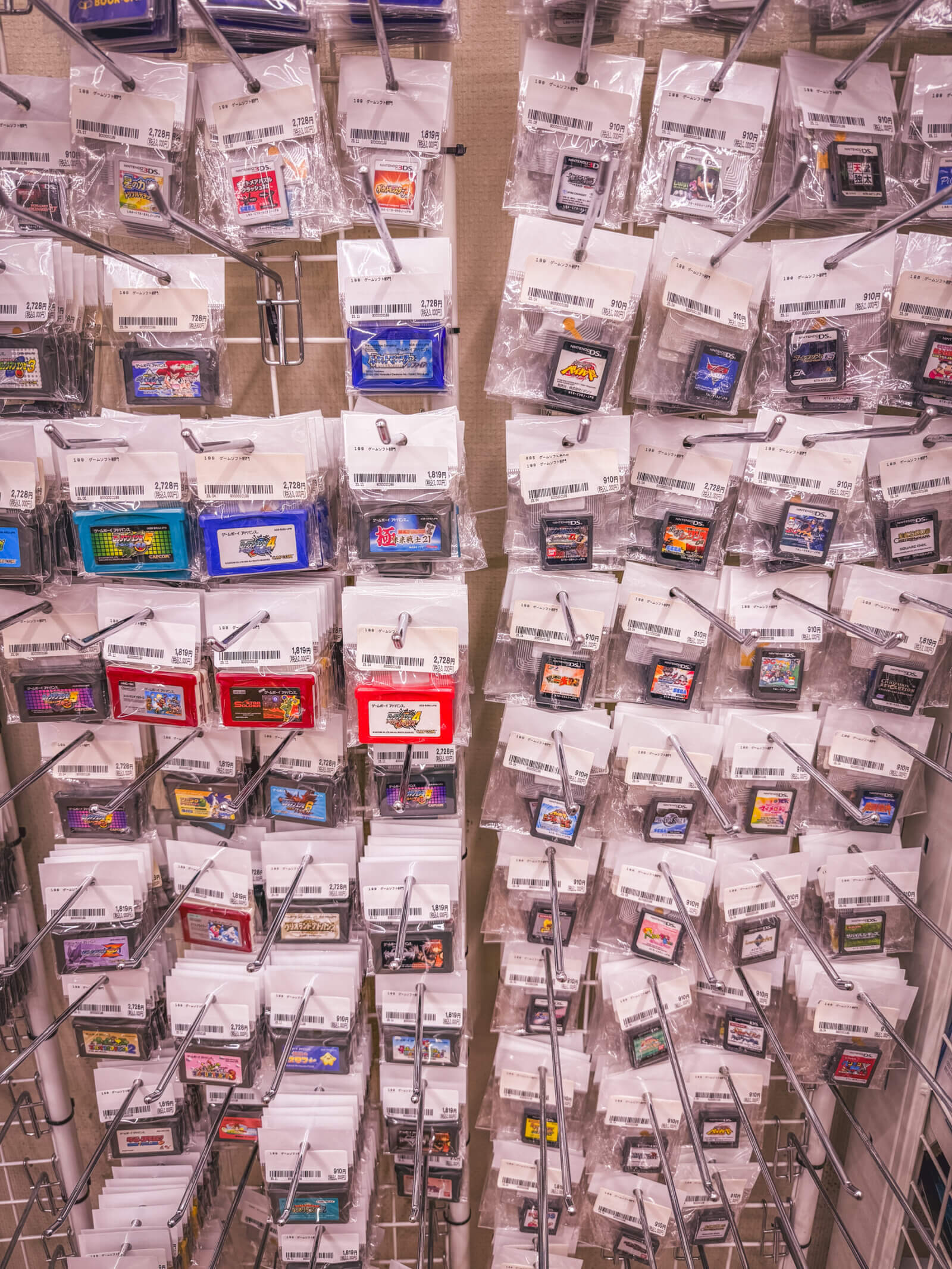
I also visited book-off akihabara – they are a chain selling second-hand books in general, but the one at akihabara has games, cds, etc:

photo of retro games at bookoff
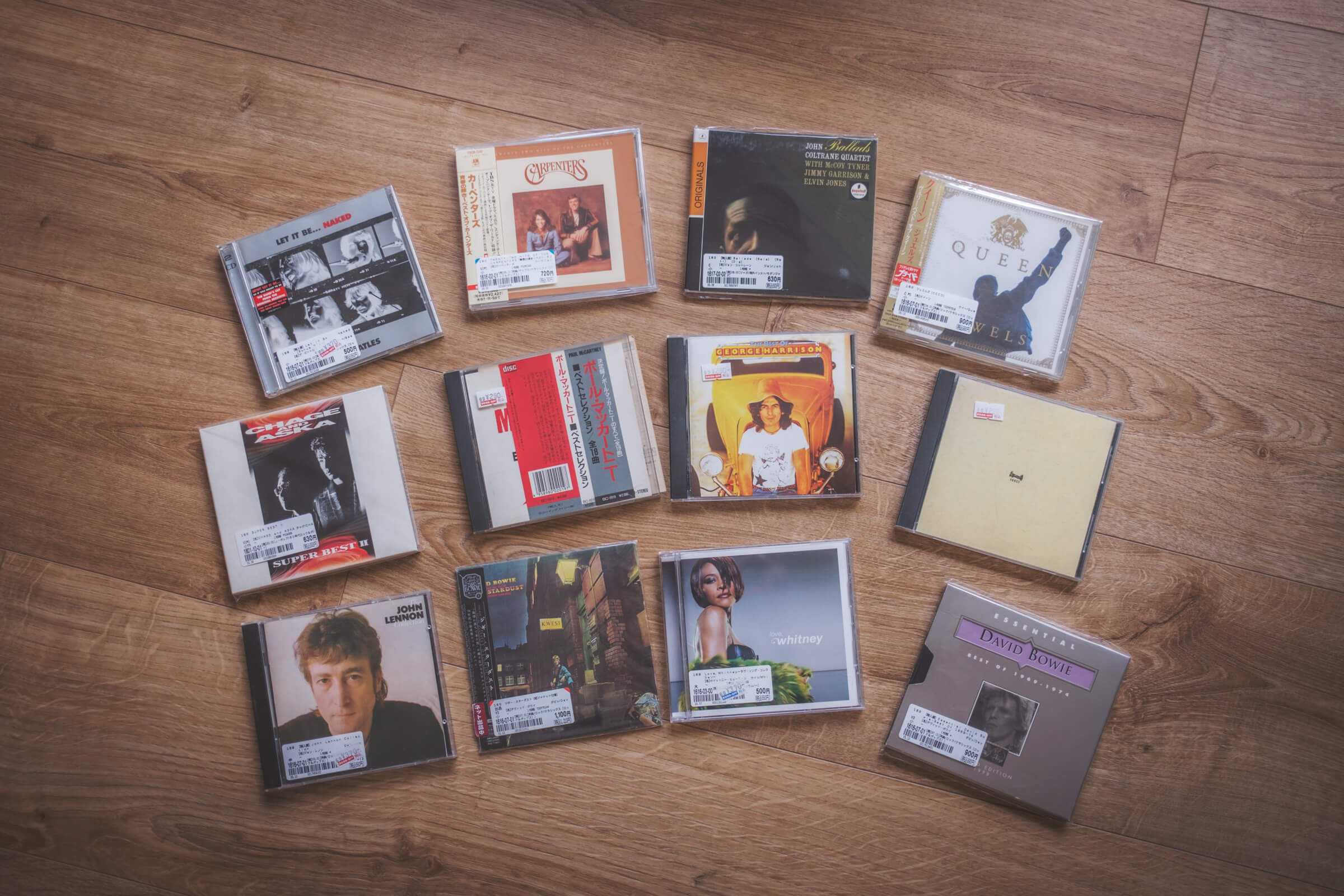
photo of used cds at book off

I got a stash of cds. Some were 200ish yen (about $1.5 usd), and there is a further 10% off above 5000 yen for tax-free shopping.

photo of my stash of cds bought at book off

I spent long swaths of time just gazing longingly at old electronics. I guess I’m just at that age when nostalgia hits hard.