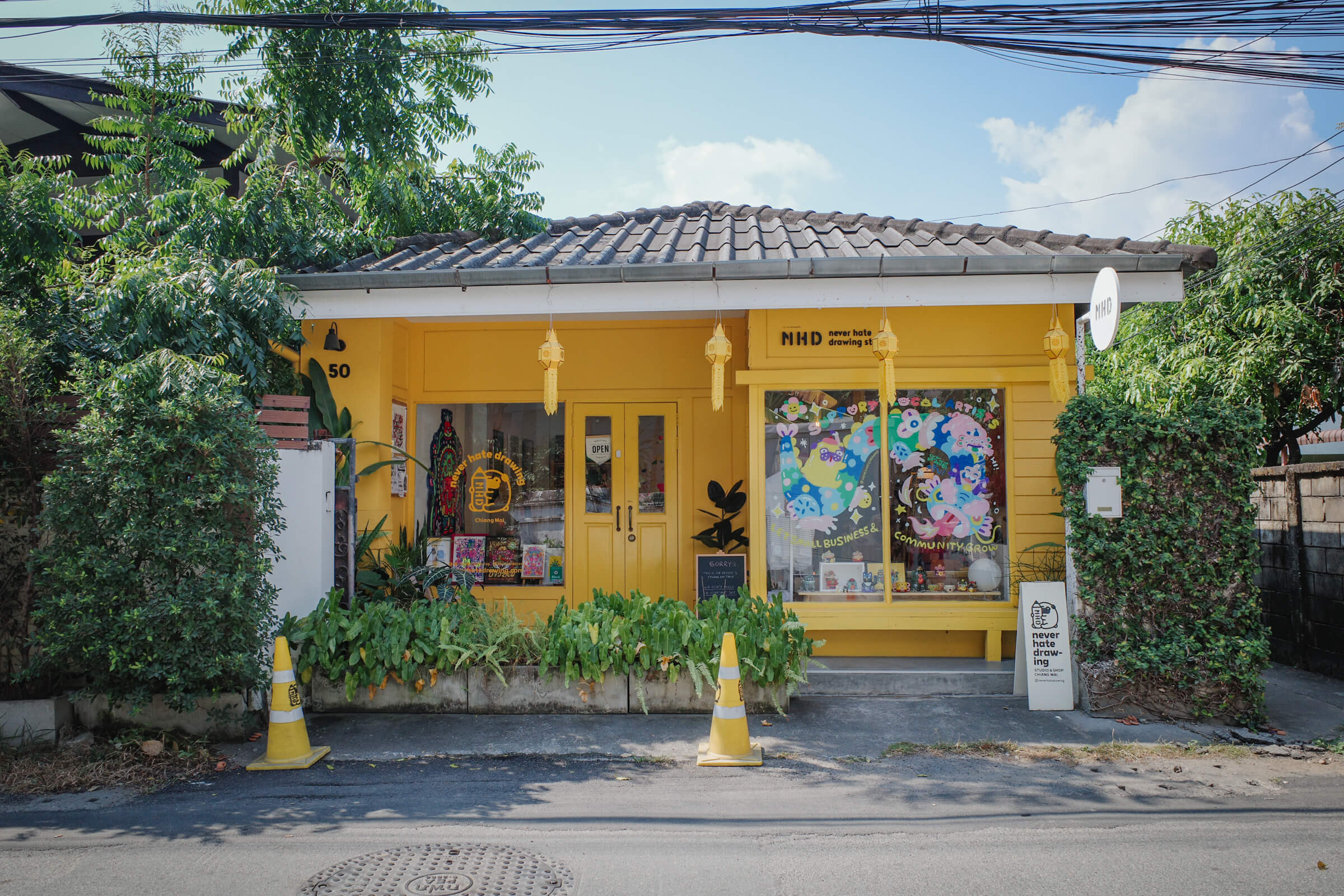
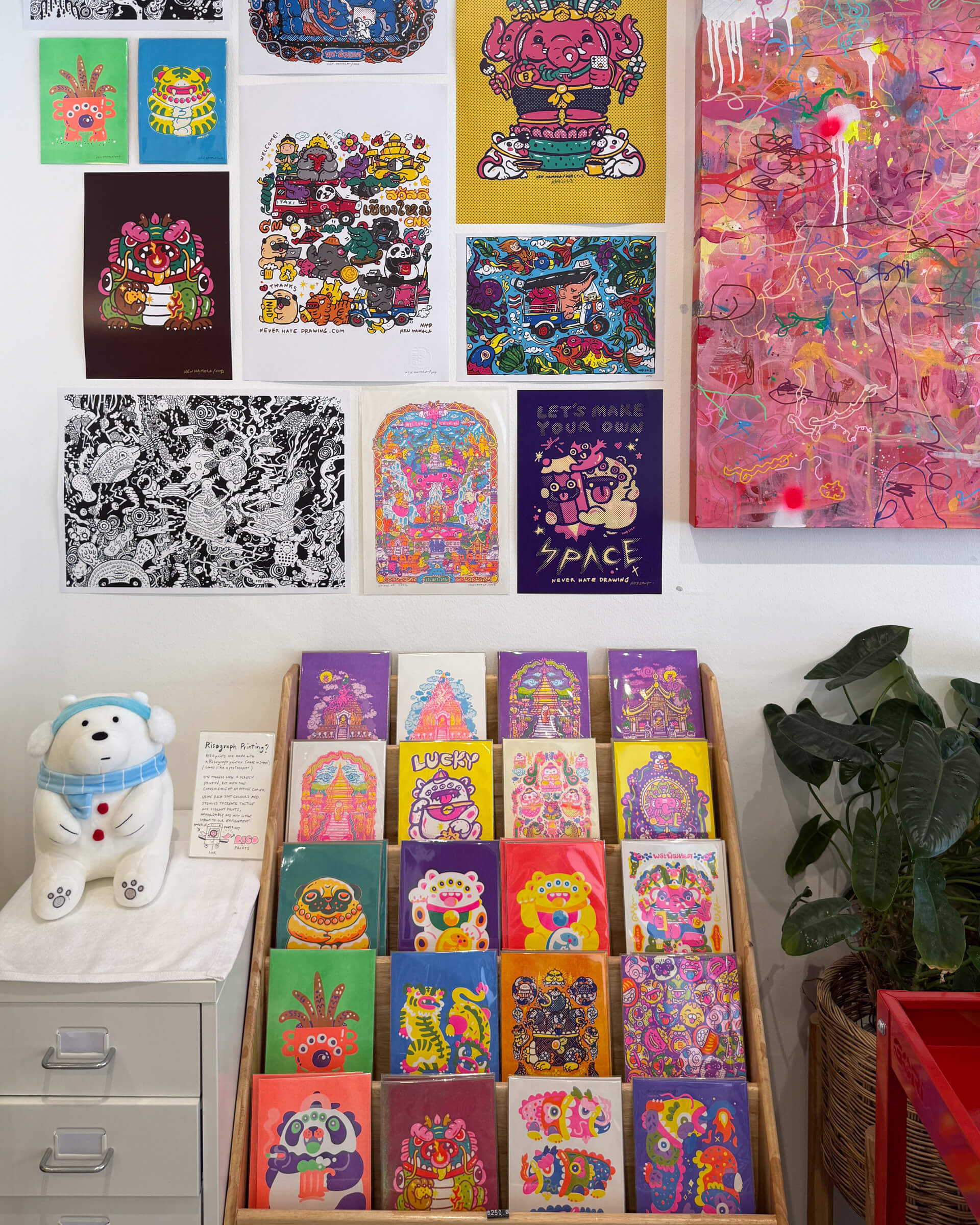
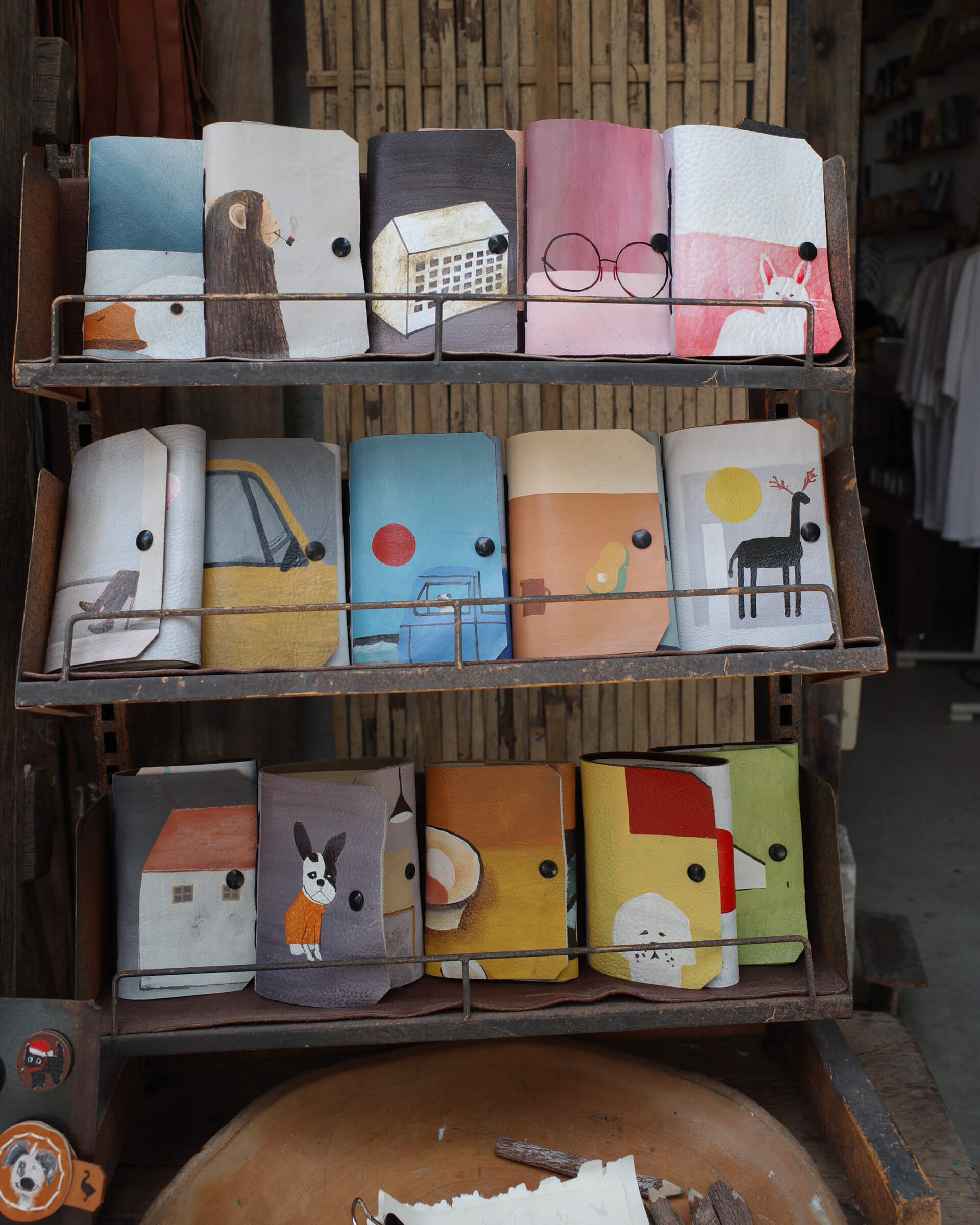
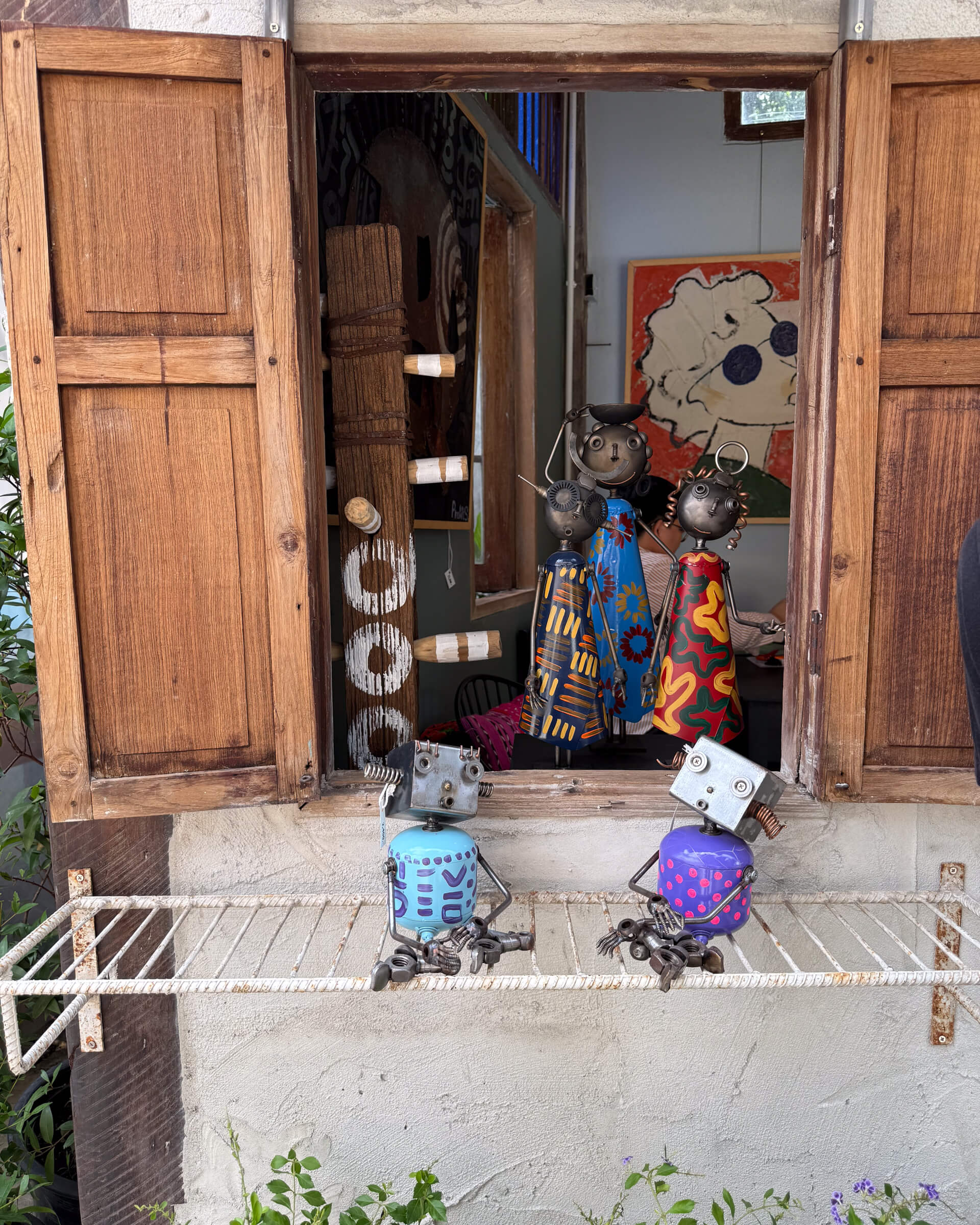
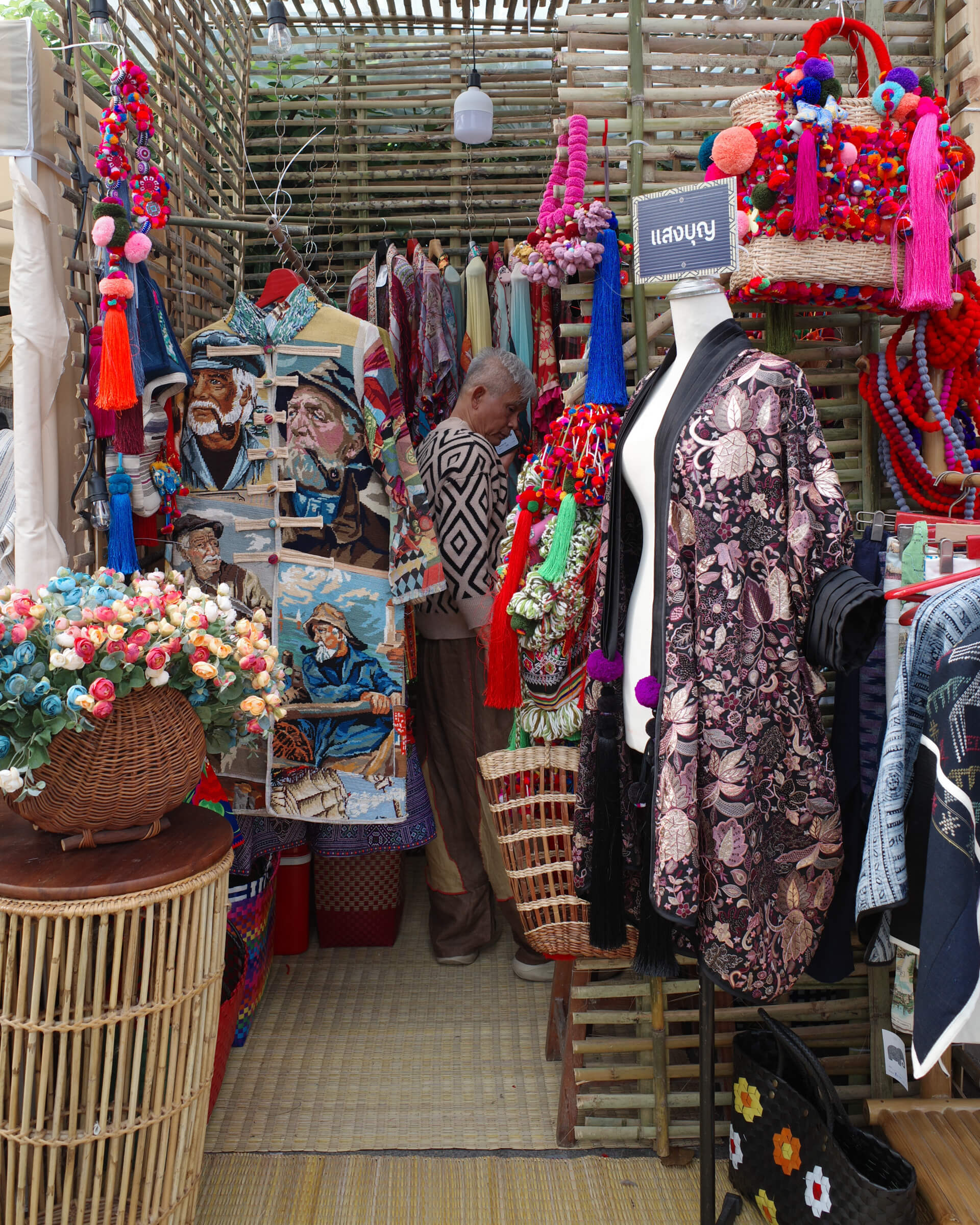
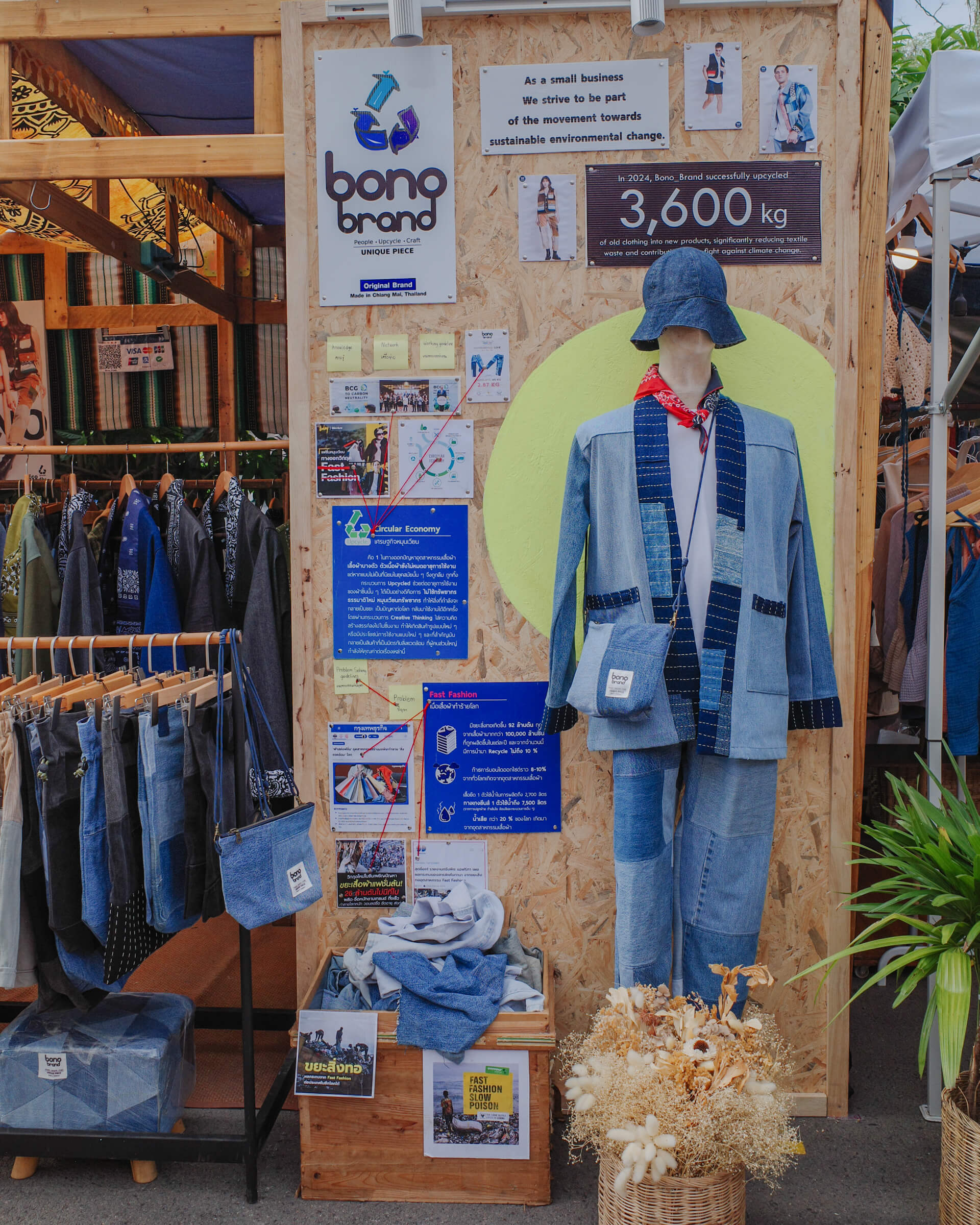
Chiang Mai is a city that is buzzing with creative energy, though I am not sure why. Is it the long history of their hill tribes and their crafts? I thought I’ll share some of the scenes that caught my eye:
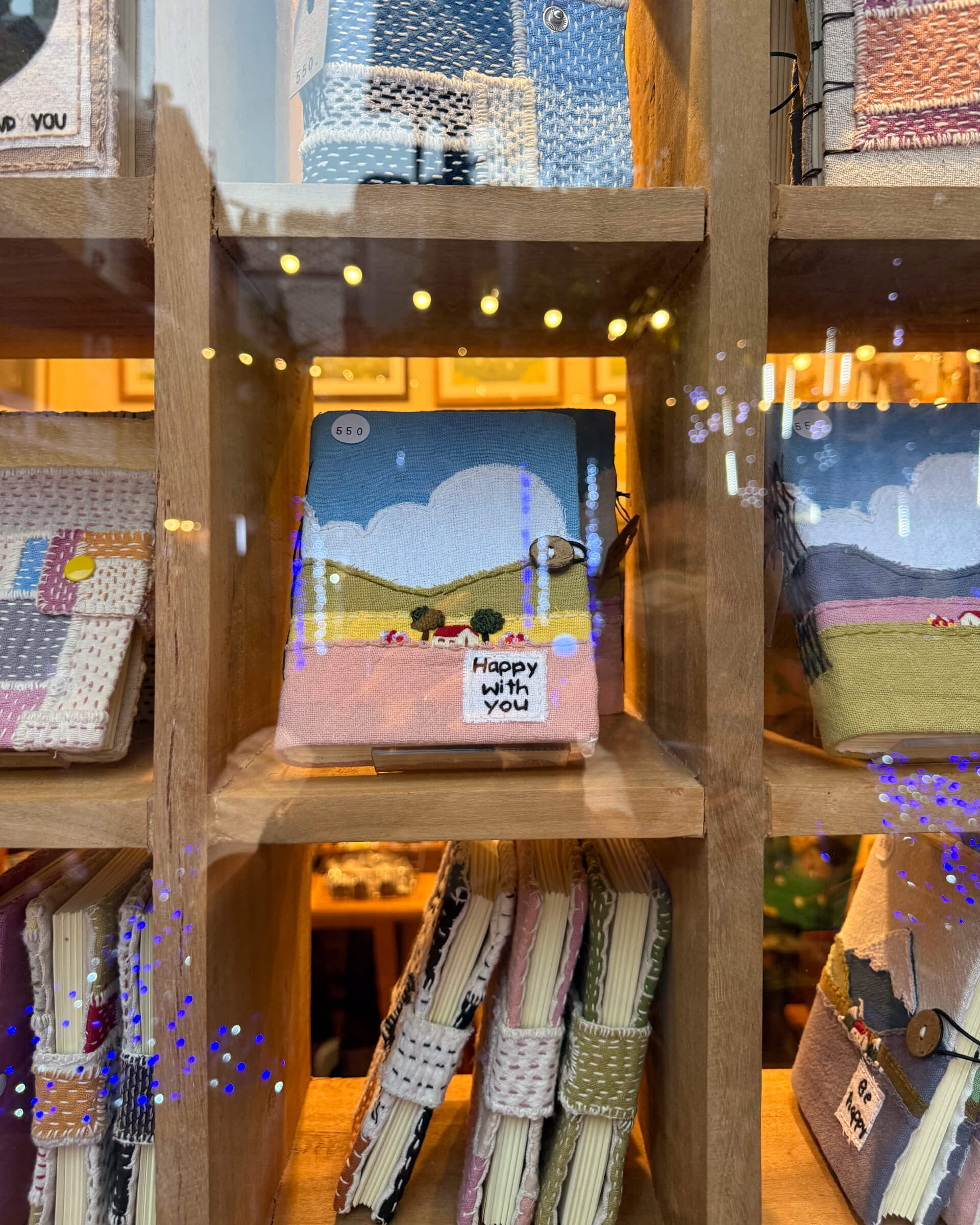
Apart from selling these beautiful handpainted journals, one can paint their own at the shop with the materials provided. There are also a ton of other fun craft workshops one can do at this artists’ village:
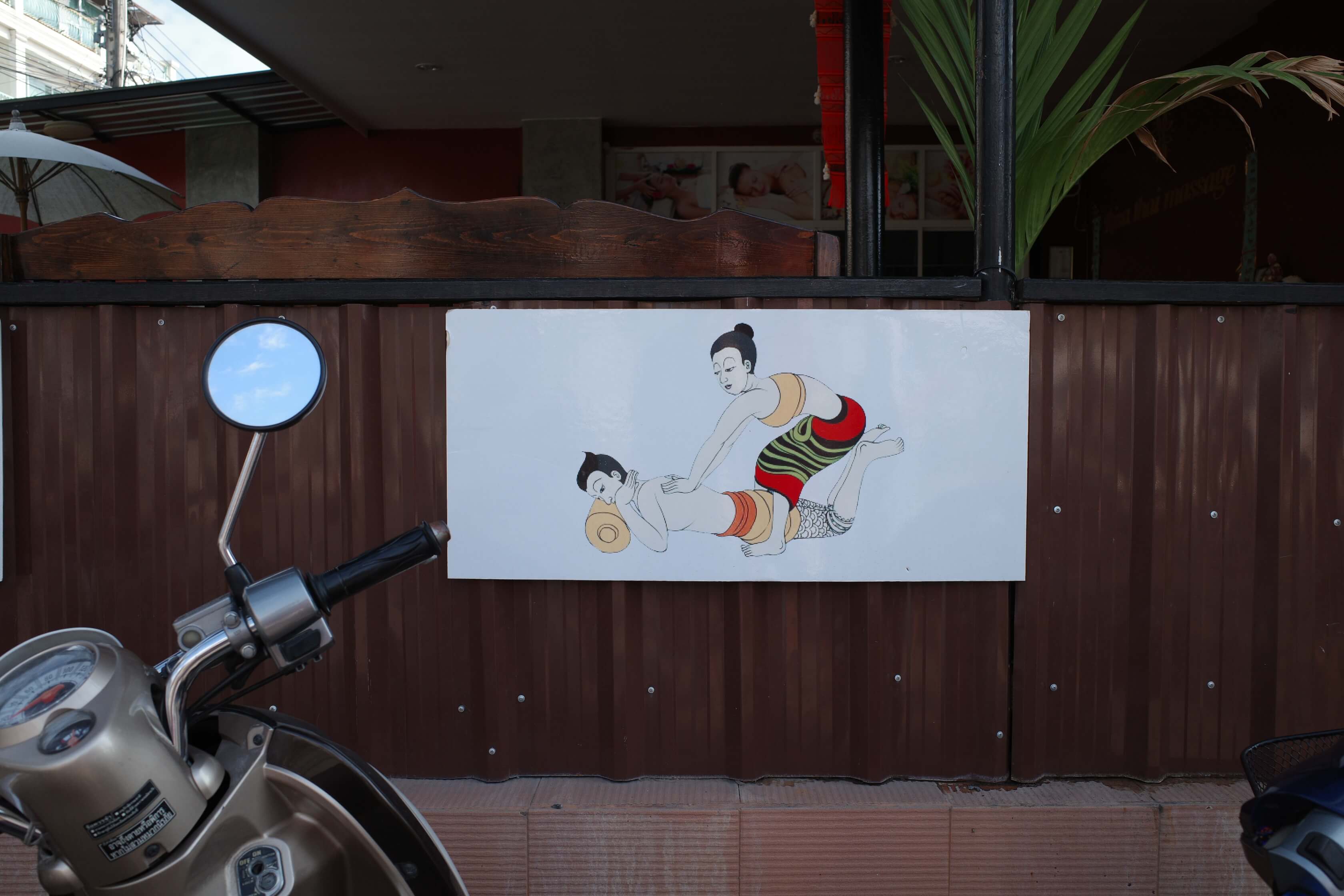
Sometimes I’ll come across some random unexpected art while walking on the street:
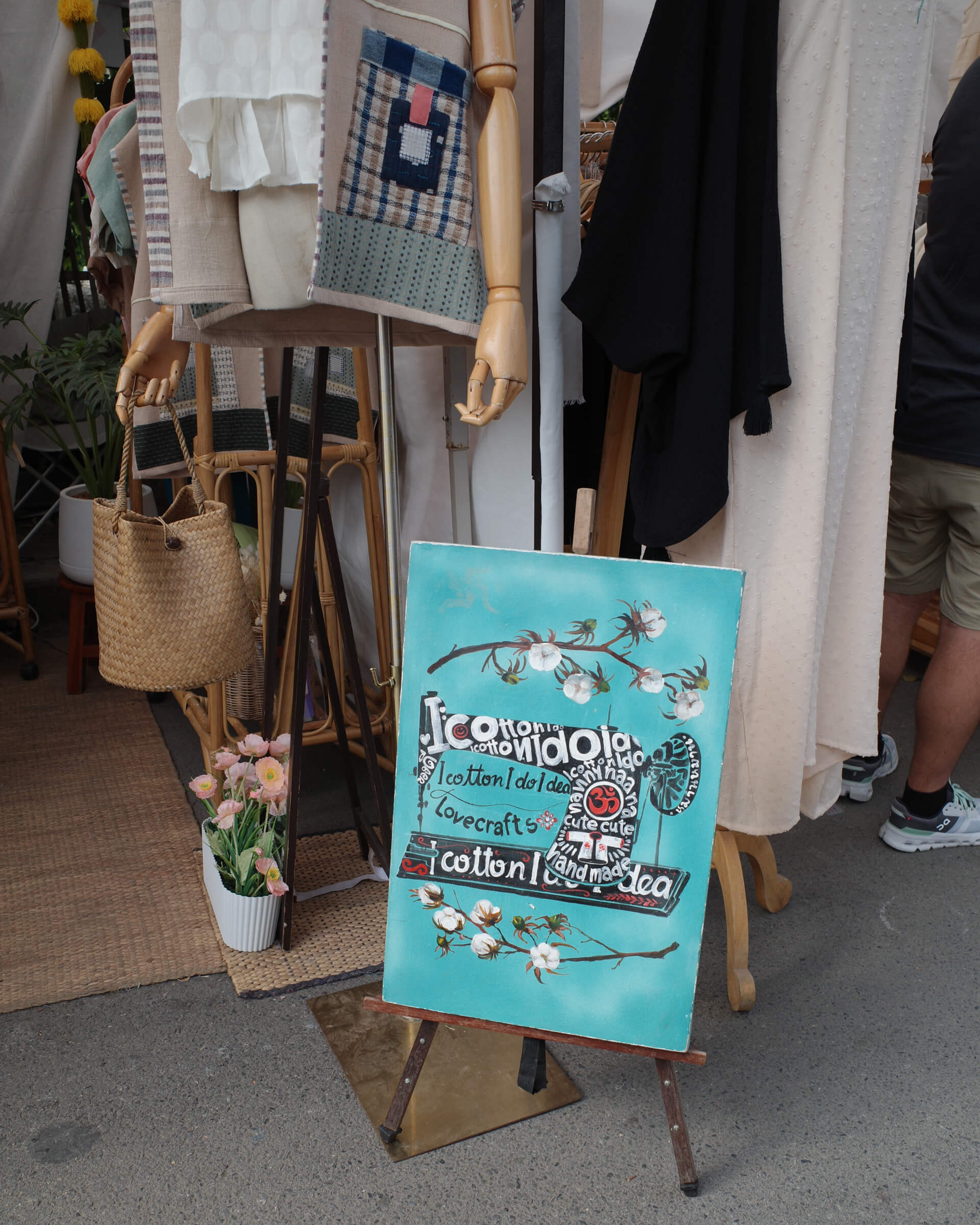
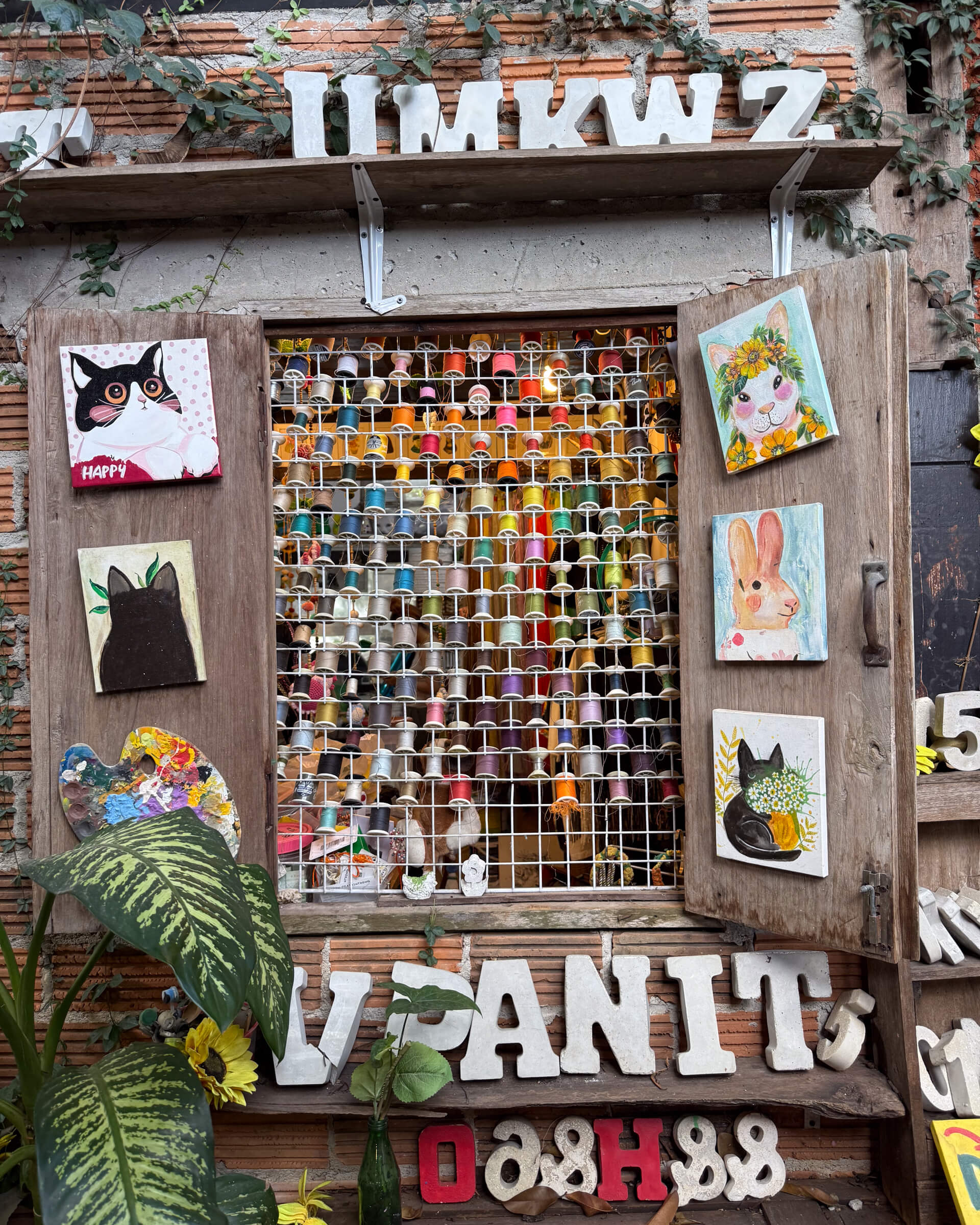
I love handpainted signs like this:
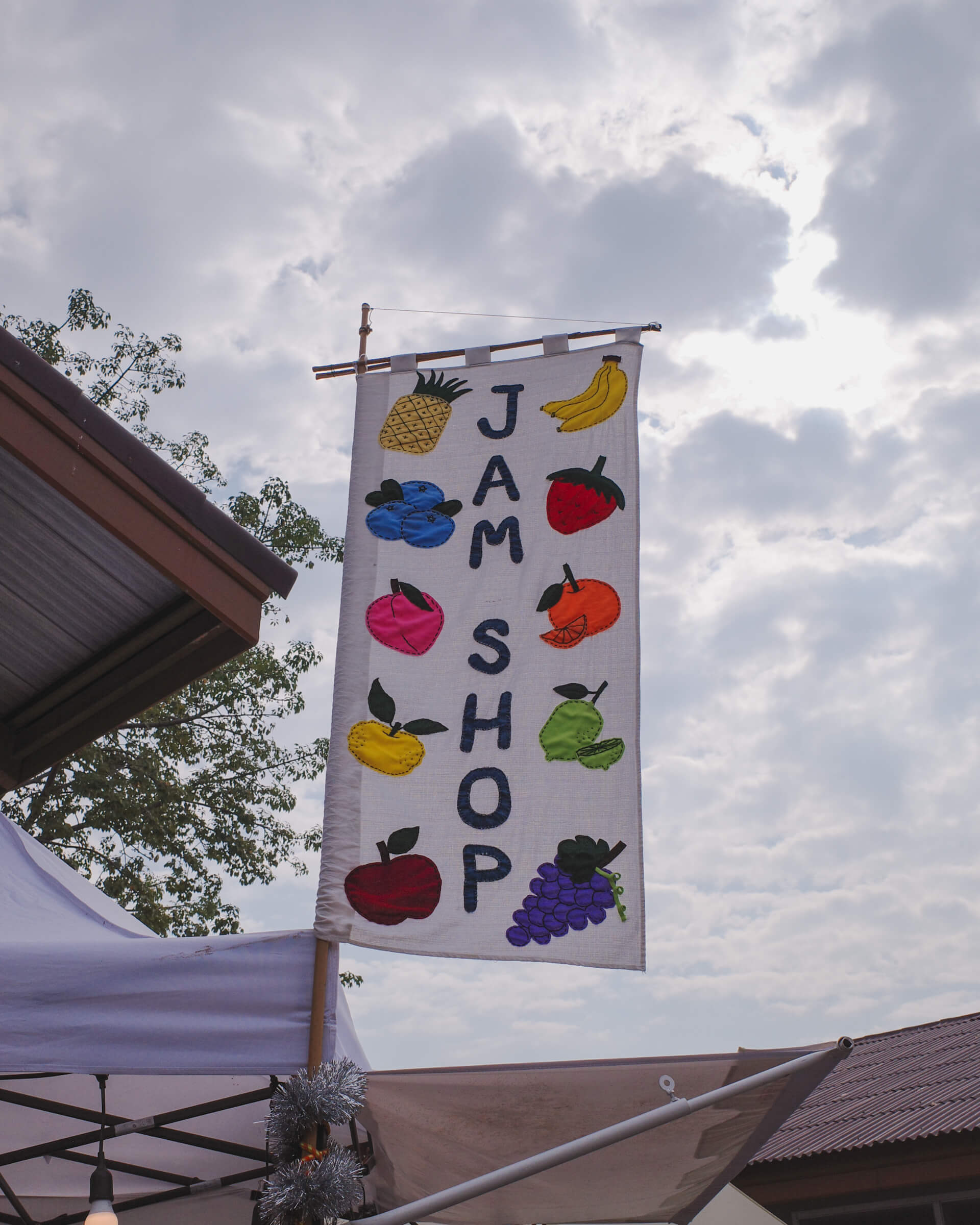
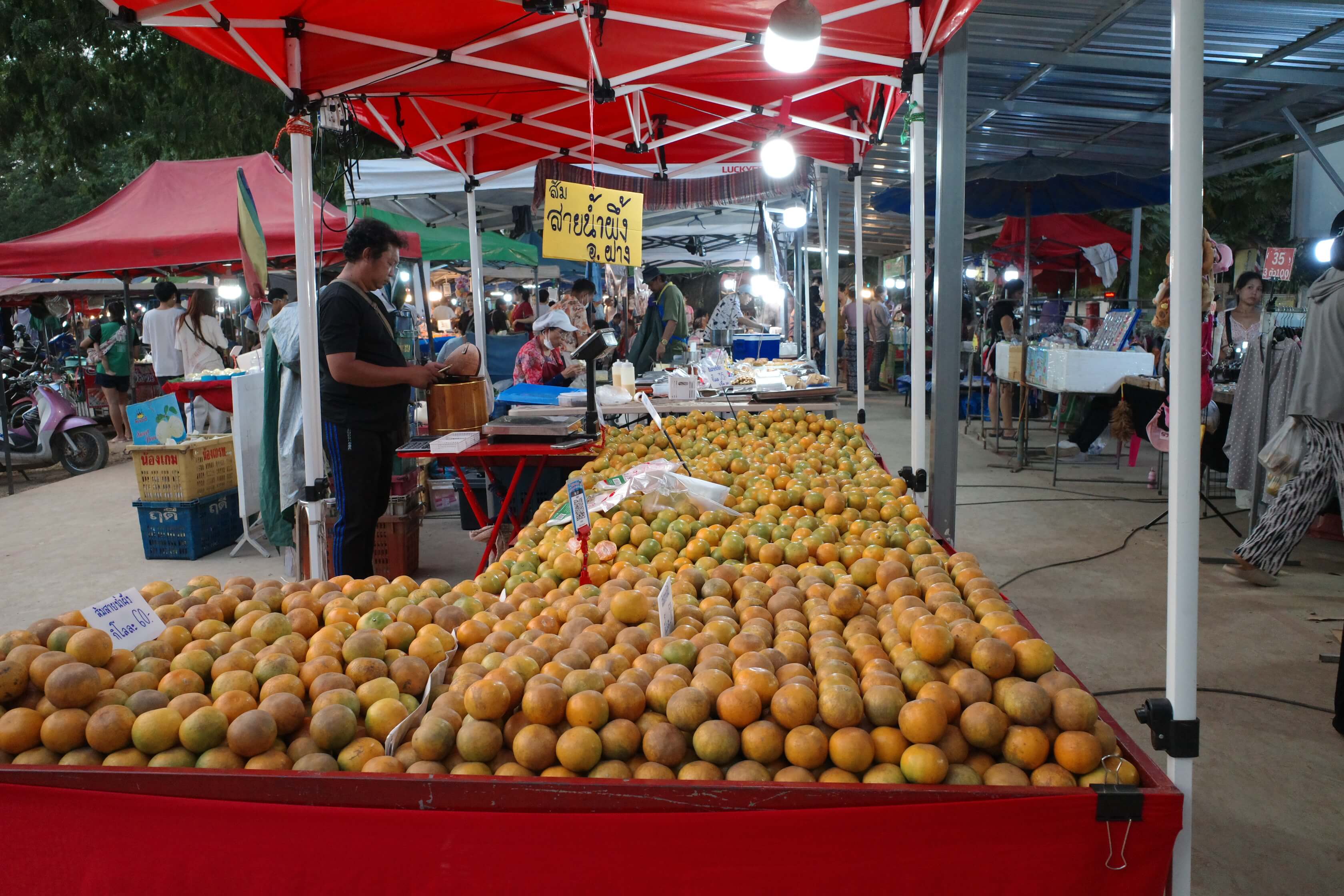
This market i known for fabric crafts, so it was very interesting to see a fruit jam seller using sewing for his signage:
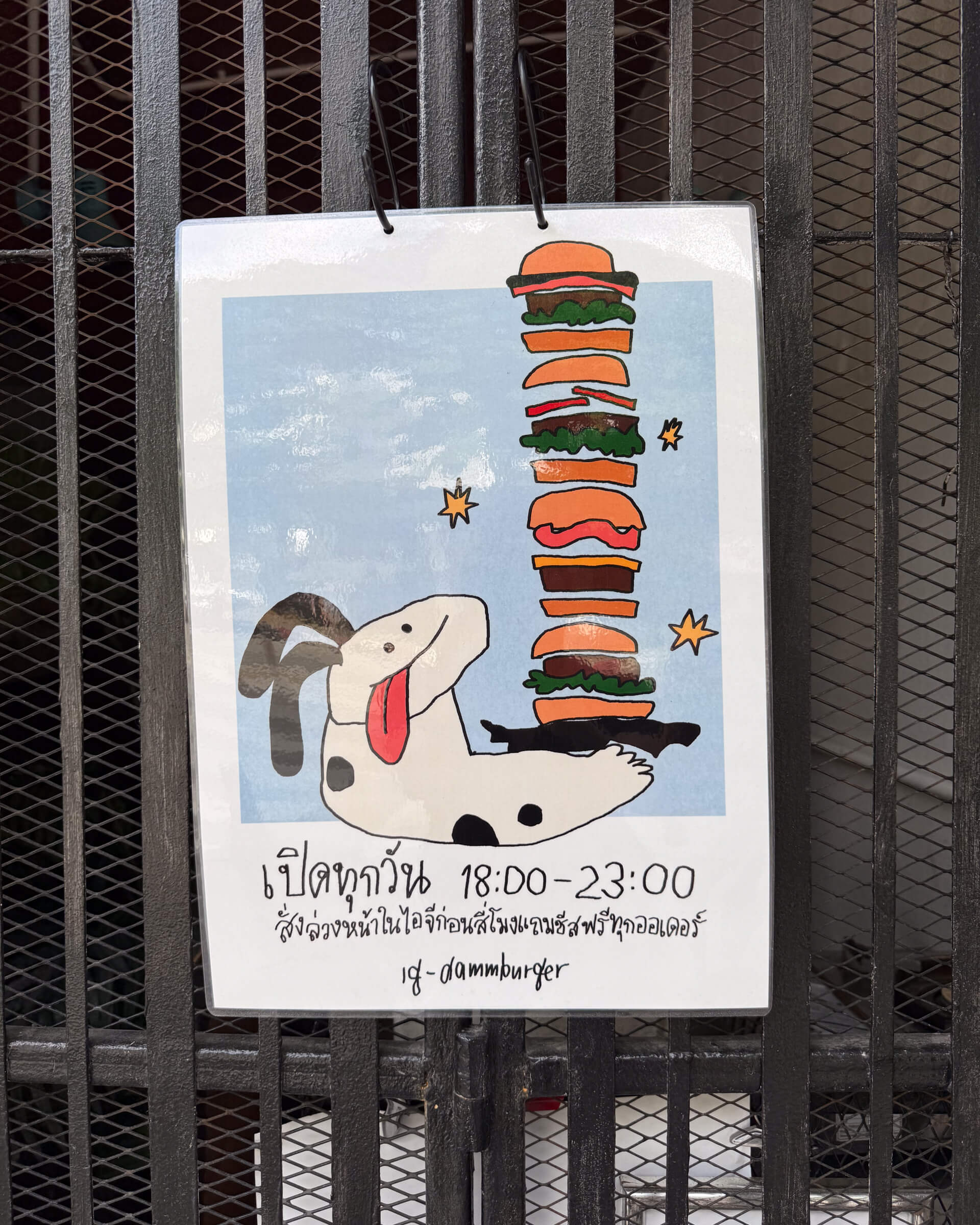
This is reminiscent of korea’s ugly drawings — there is something about ugly art that is very attractive. Does it appeal to the primal part of us:
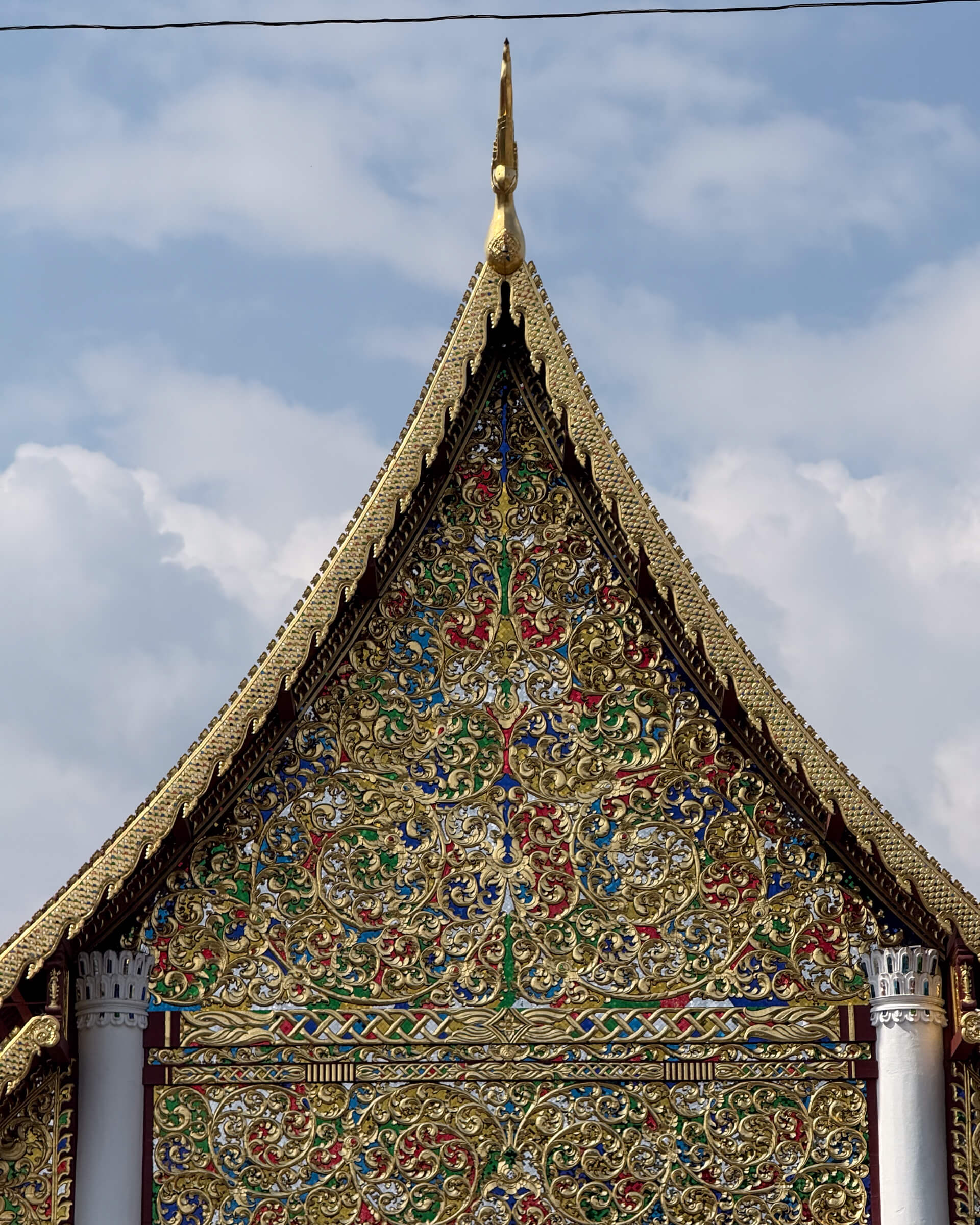
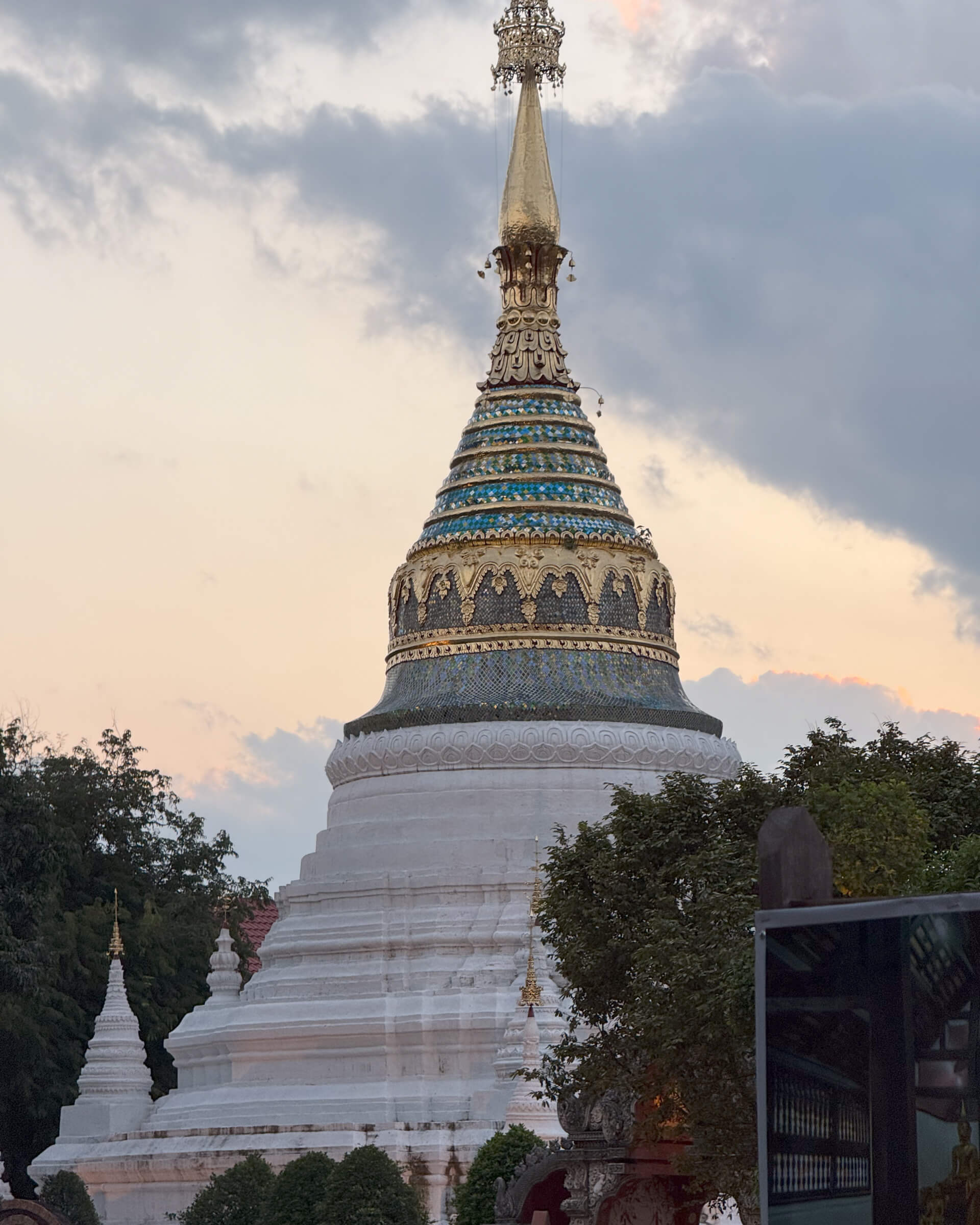
Of course, everywhere we go there are beautiful intricately crafted temple buildings:
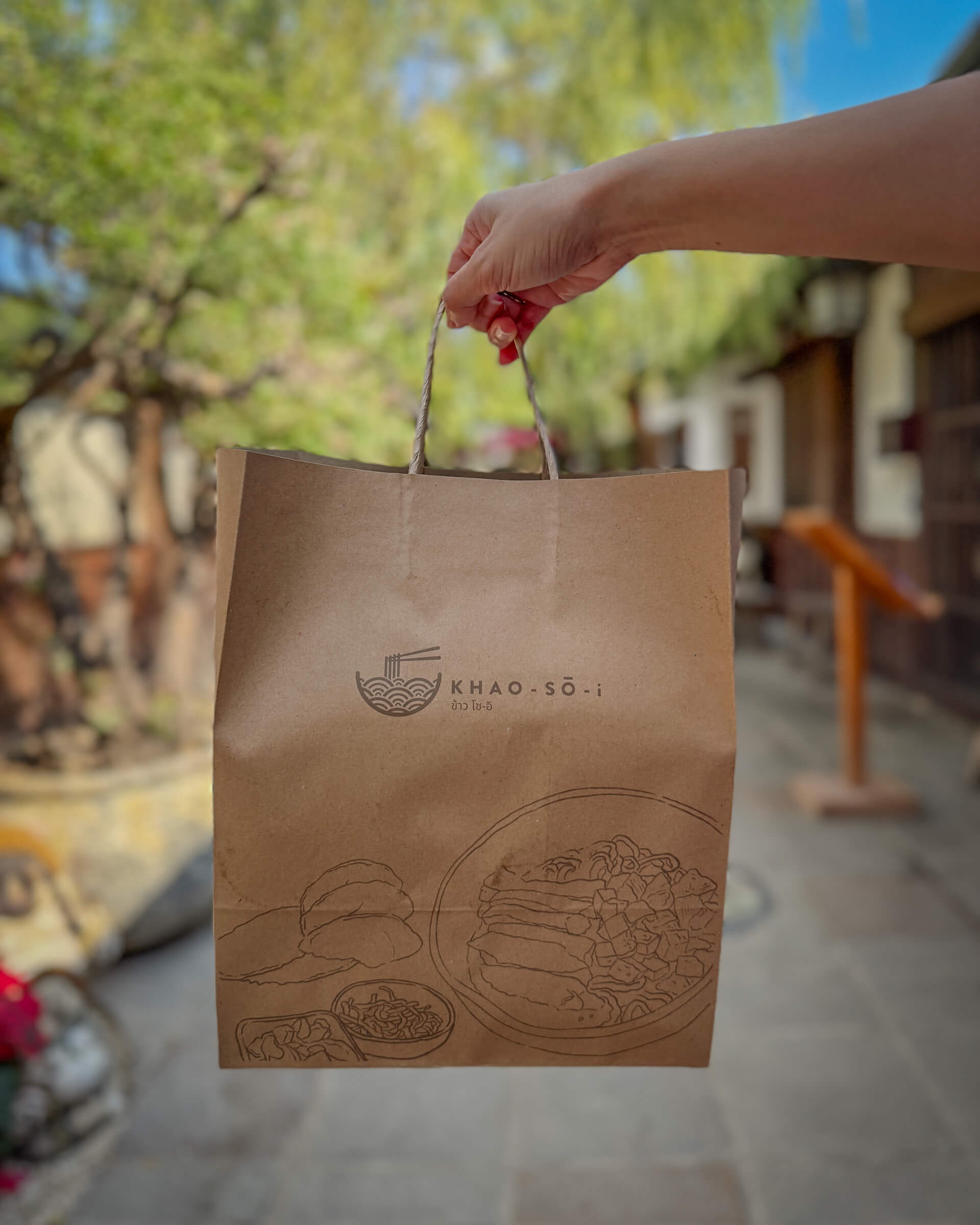
I loved the simplicity and modernity of this logo, and also the accompanying illustration on the bag:
It is interesting to observe how art and design is strongly influenced by a city’s culture. I went to Chiang Mai to chill without much expectations and was pleasantly surprised with the creative energy of the place.
I feel like each time I visit a foreign city the experience fills up an unconscious well of creativity. They make me feel like I want to make a ton of art when I get back home. But once home, I am caught in an endless cycle of paralysis. Will my unconscious well fill up one day and overflow into something? Or will I always be at the mercy of my broken brain?
But at the very least, taking photos of what I find creative and inspiring is also an act of creativity and enrichment, and I get to share them with you. Perhaps some of these may be inspiring to some stranger out there, or bring some additional colour to someone’s day.
A few weeks ago my host emailed me that for some reason google bot was hitting my site so much that it slowed down the entire server – since it was affecting other people they had to stop google bot from crawling my site.
I thought about trying to fix it for a while, but then I thought it wasn’t so bad if my site became unsearchable. My site could just exist through rss, mastodon, instagram, and the generosity of the occasional link from other people’s sites. There have been times when I don’t even feel like posting on whatever social networks I am still on. I still do instagram because my non-tech-inclined connections are there, and let’s be honest: mastodon is just too confusing for the mainstream.
I am also uninterested in joining new social networks like bluesky or threads, even if my entire social graph is now on those places. I am tired of what they make us go through. A change of ownership, a change of product direction, a change of principles – all of a sudden we can no longer each other’s posts, because the algorithm favours trends.
This is the extreme opposite of my younger self. I was always the early adopter, and I like signing up on new social networks so I can secure my username. I no longer care about that either.
It is a pity about the google search thing because fellow covid cautious people were finding my open-air dining posts through google. It would be nice for them to know that there are still people like me. I guess this is also a cautionary tale about the disproportionate power of google. Suddenly, almost our entire internet presence can be wiped out.
Perhaps it is not so bad if I become part of the secret web. If you know, you know.
I guess this smallness also applies to my physical life. I don’t have much of a social life these days – it started because of covid cautiousness, but I am now used to this. I am just contented to share my life with my partner, but I think without her I would still remain in my own company. I just don’t have much space in my self to accommodate other people, and I don’t know why but I don’t have much social needs either. Writing on this blog and having a small presence on some social networks is my way of being social. They allow me to disconnect whenever necessary. I enjoy receiving messages and comments online, so to an extent I still like interacting with people.
Maybe part of it is because I have sensory difficulties which has become more apparent to me ever since I started considering myself as autistic. Verbal communication exhausts me – it has always exhausted me, that is why even when I was a freelancer I preferred email. (Which is the opposite of most people – communication norms have changed but in my time people liked picking up the phone whenever they can over written communication.) Video calls exhaust me too – I always have to strain to listen to people, and prolonged calls are a migraine trigger. I need subtitles when watching tv.
I think it is nice that I have reached the level of self-acceptance where I no longer feel shame or indignation about my peculiarities. This is what it is, and I am glad I have done the work of trying to know myself enough so I can stop making my self be like the fish who kept trying to climb a tree.
My world has probably become a lot smaller because of the smallness of both my online and offline presences. But part of it is also larger in other ways, because I now have the energy to explore it in ways I can and want to.
The point is not whether small or large is better, but it is important to know which we prefer. It is very easy to get swept up by mainstream currents because no matter how hermit-ish we become, we are still susceptible to social pressure. It is a survival mechanism. But I envy people who truly exists as themselves and they feel zero sensitivity about social judgment (and not harming anyone around them). I used to believe I need a lot of friends or I needed to write posts that could go viral (yes I was once like that). But now I feel a certain sense of enrichment and peace in my little world. There are other things to notice and listen to, that are not human voices.
I could prefer the sound of swaying trees, or even the sound of silence. I prefer reading online longform and shortform posts to talking. Reading your posts allow me to know and understand you way more than a conversation ever does, or at least for me. How many people can truly listen to what we have to say and understand what we actually mean, and how many of us are capable of saying what we actually want to say, and say what we actually mean? How much of a verbal conversation are interruptions, digressions, monologues, or not actually even on the same wavelength?
I guess maybe I am just the weird one. And if so, how can I construct a life that is liveable for me instead of my entire life just forcing myself to adhere to social norms?
Sometimes smallness is a necessity for some people, because it is simply too exhausting otherwise.
After spending a while in the city we moved to the mountains for a bit. Previously I had avoided any trips that involved long vehicle rides because of covid risk, but I think I’m now relatively comfortable wearing a zimi kn95 mask during these rides. The filtration of these masks are great (and I like the obsessiveness of the founder) – could possibly better than the 3m aura n95, and they fit our face better too. We now wear a kn100 version on flights.
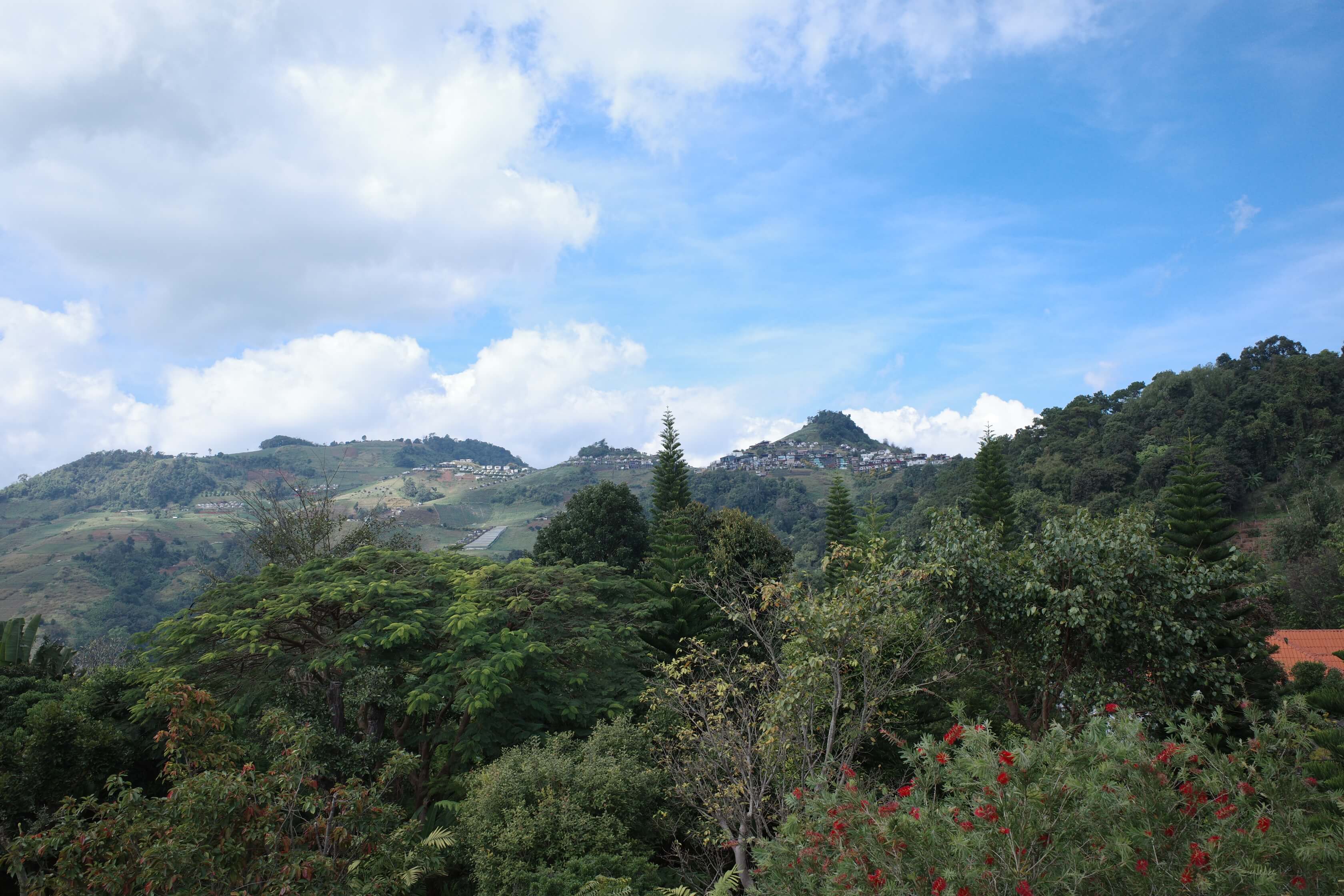
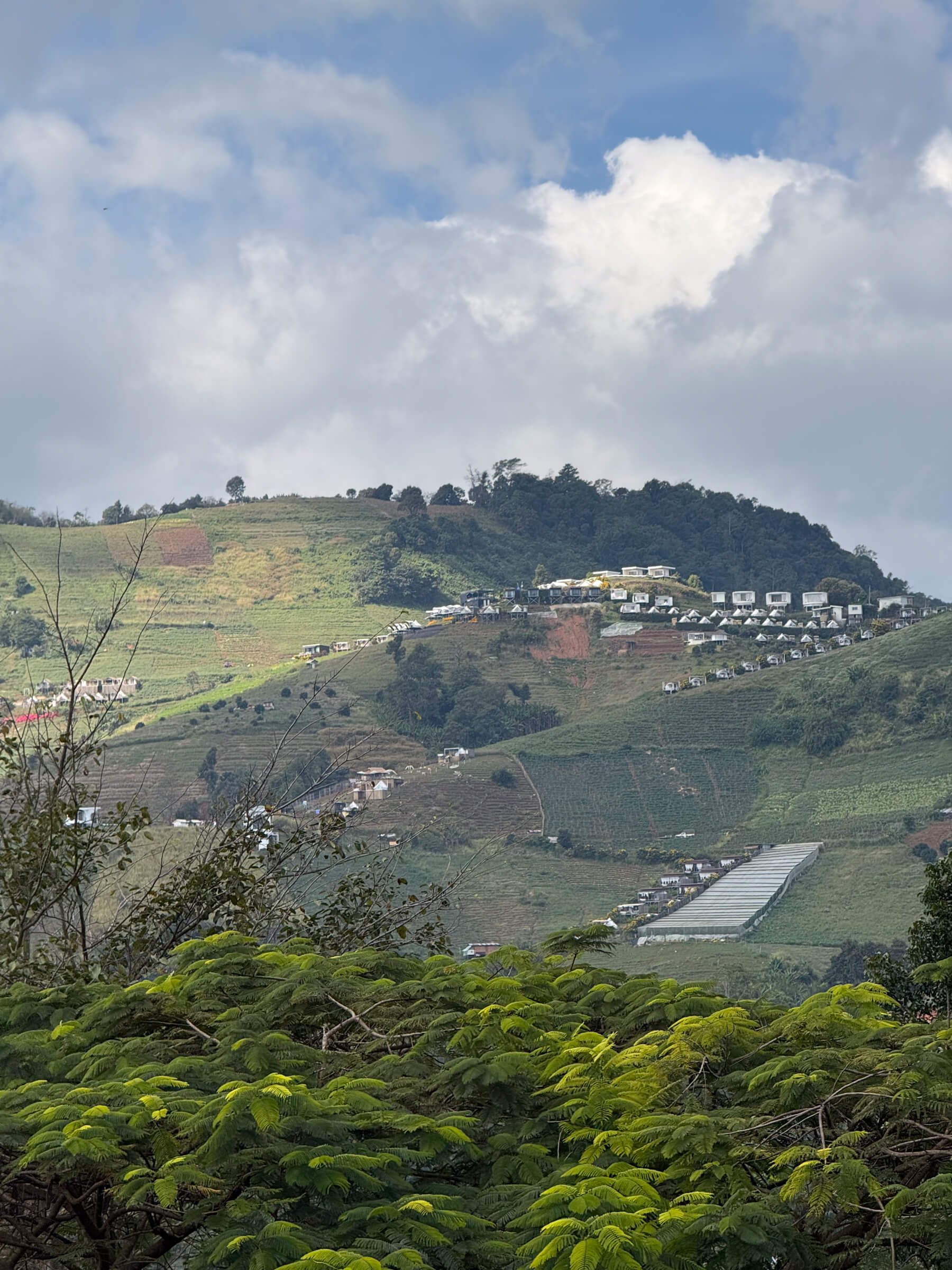
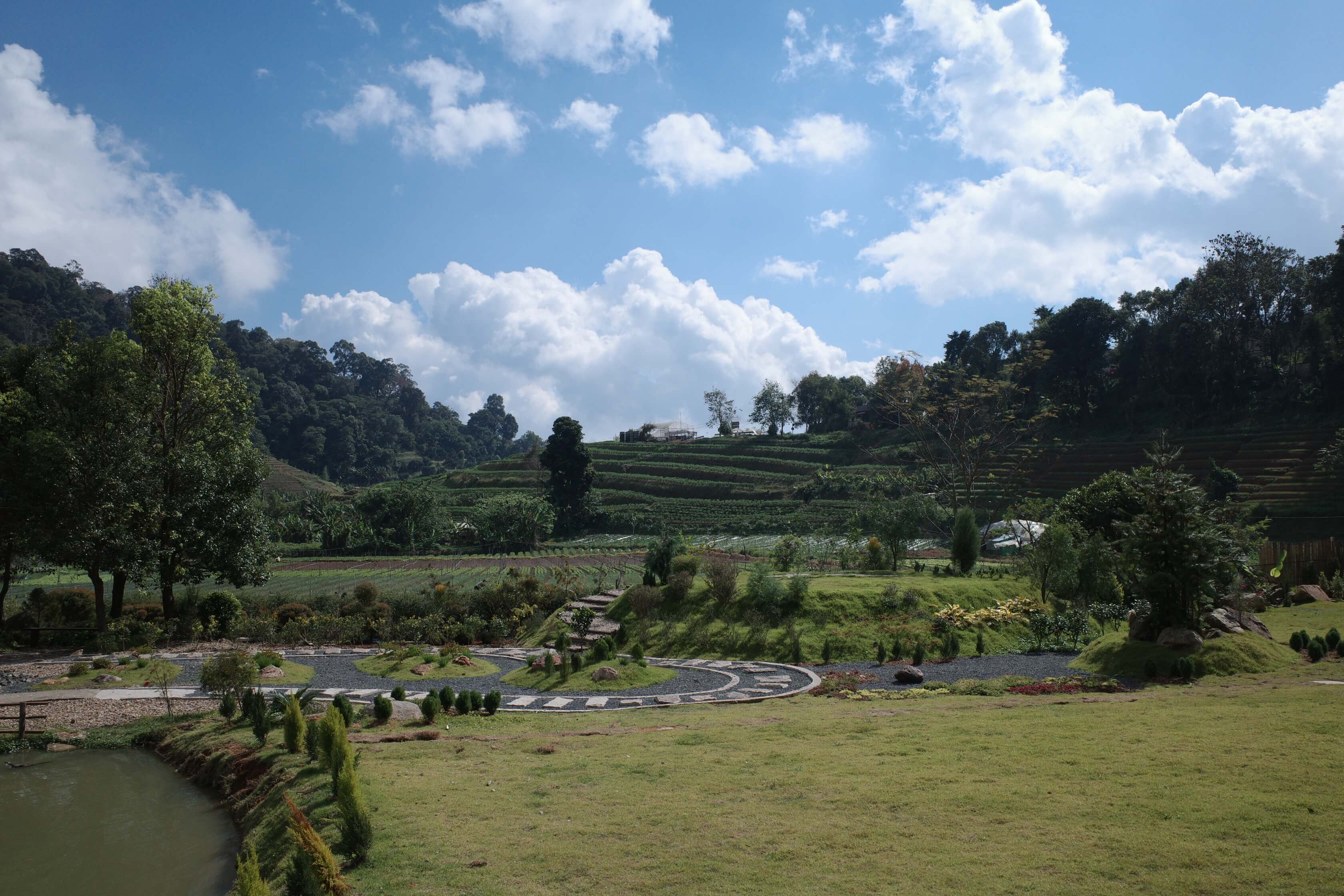
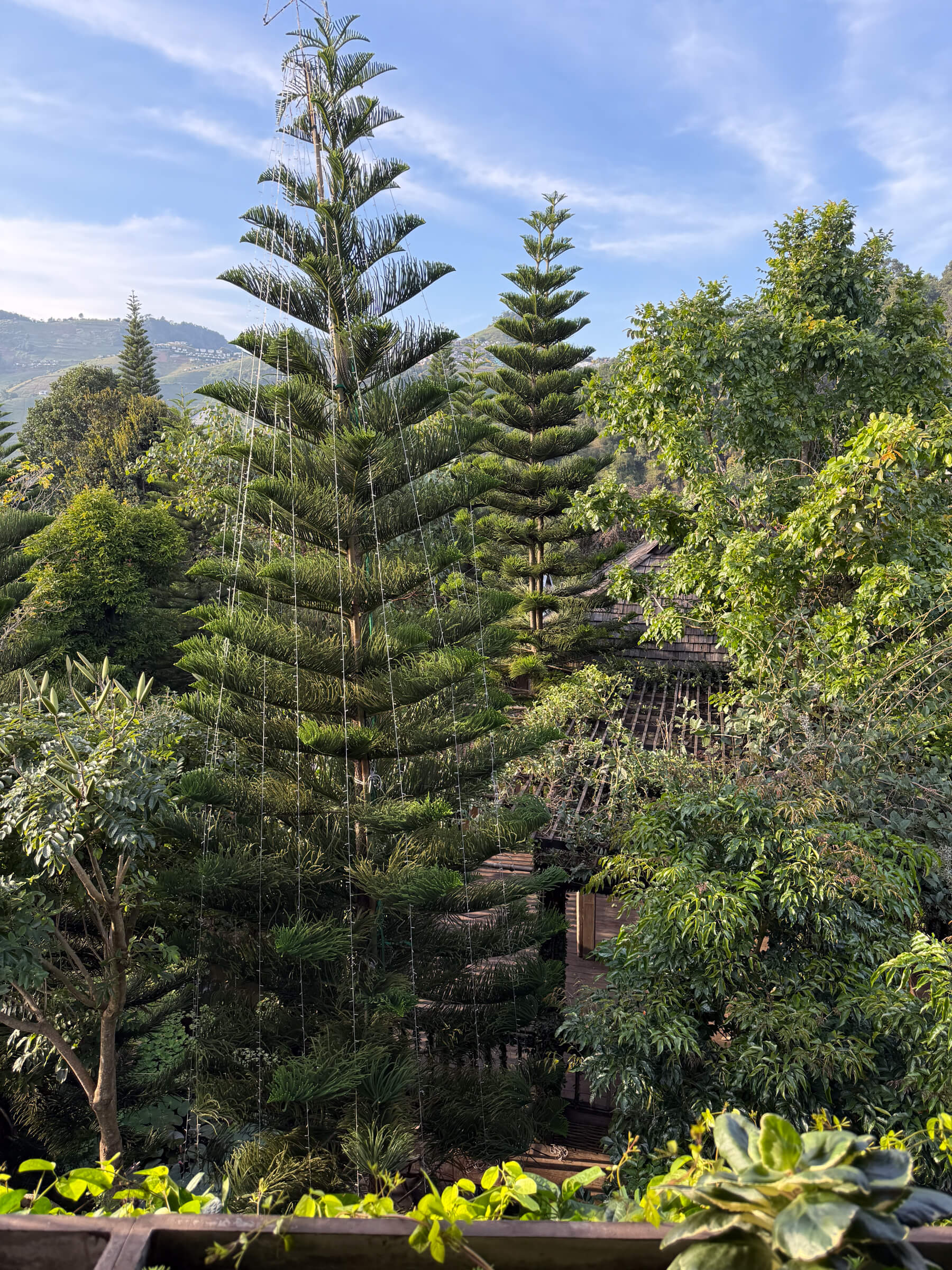
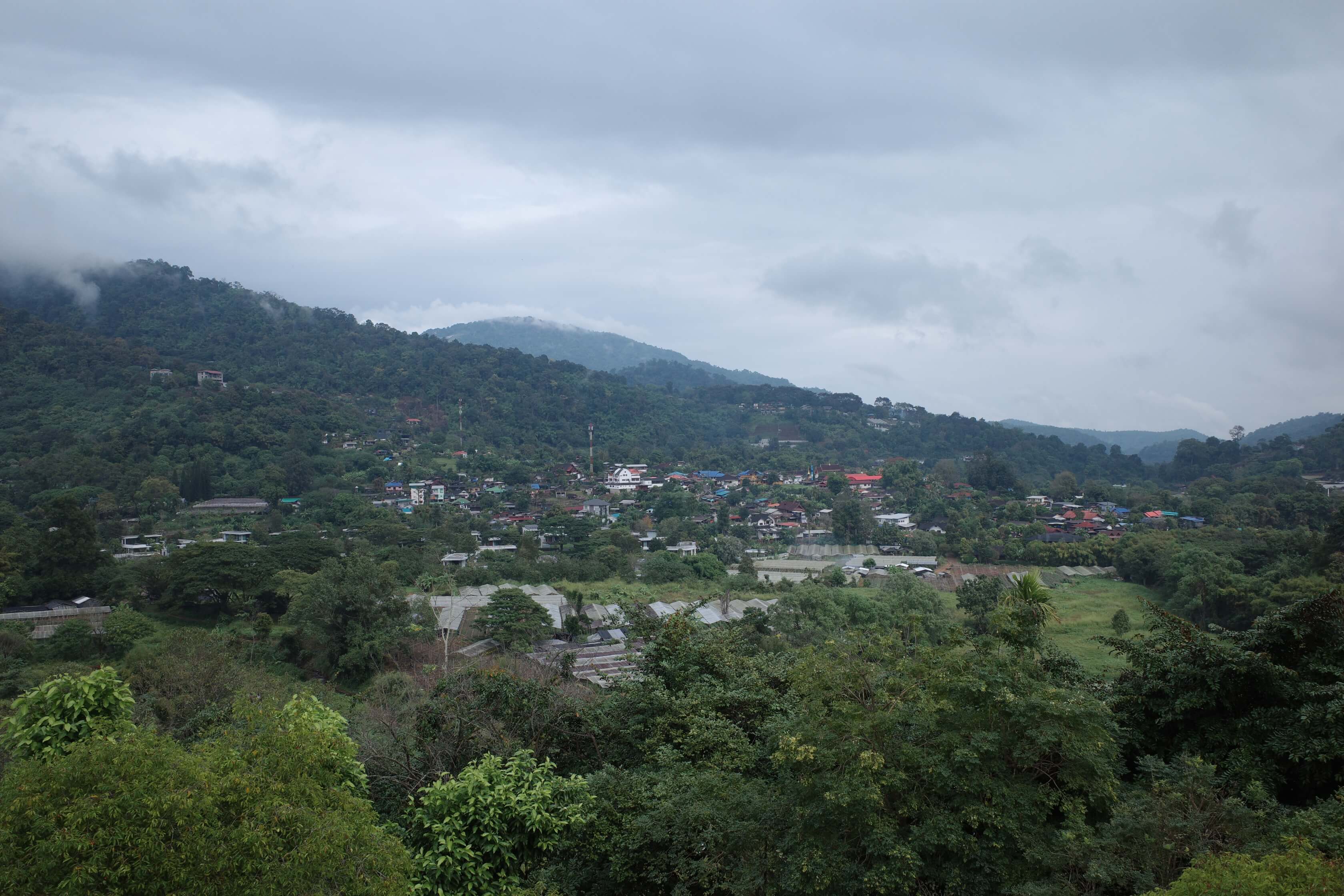
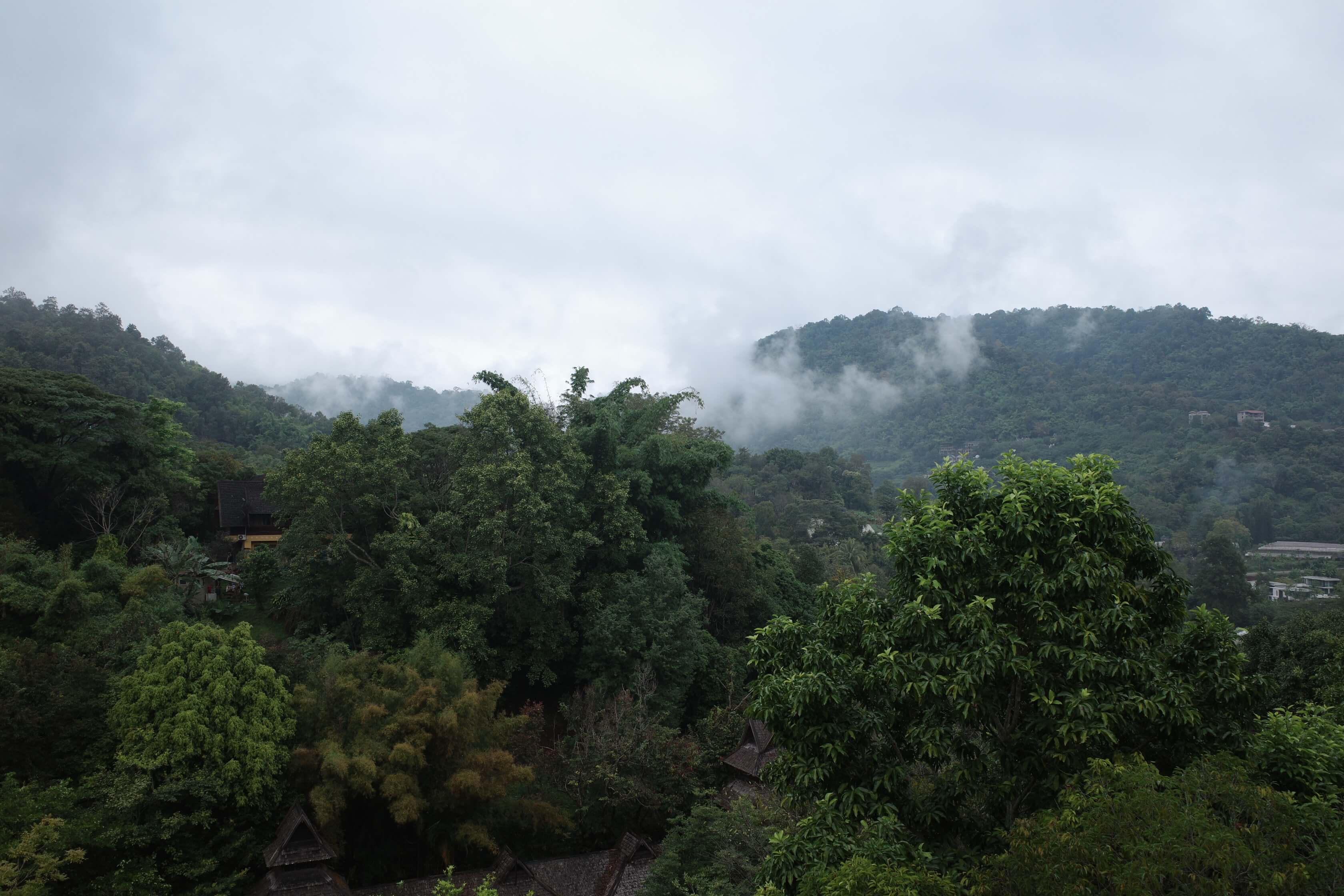
Some parts of the 1hr ride was steep and windy, causing some intense motion sickness for my partner, but it was all worth it when we arrived. Singapore is very dense and built-up though she can still be a lot greener than other similar dense cities, but the greenery of chiang mai’s mountains are on an entirely different level:
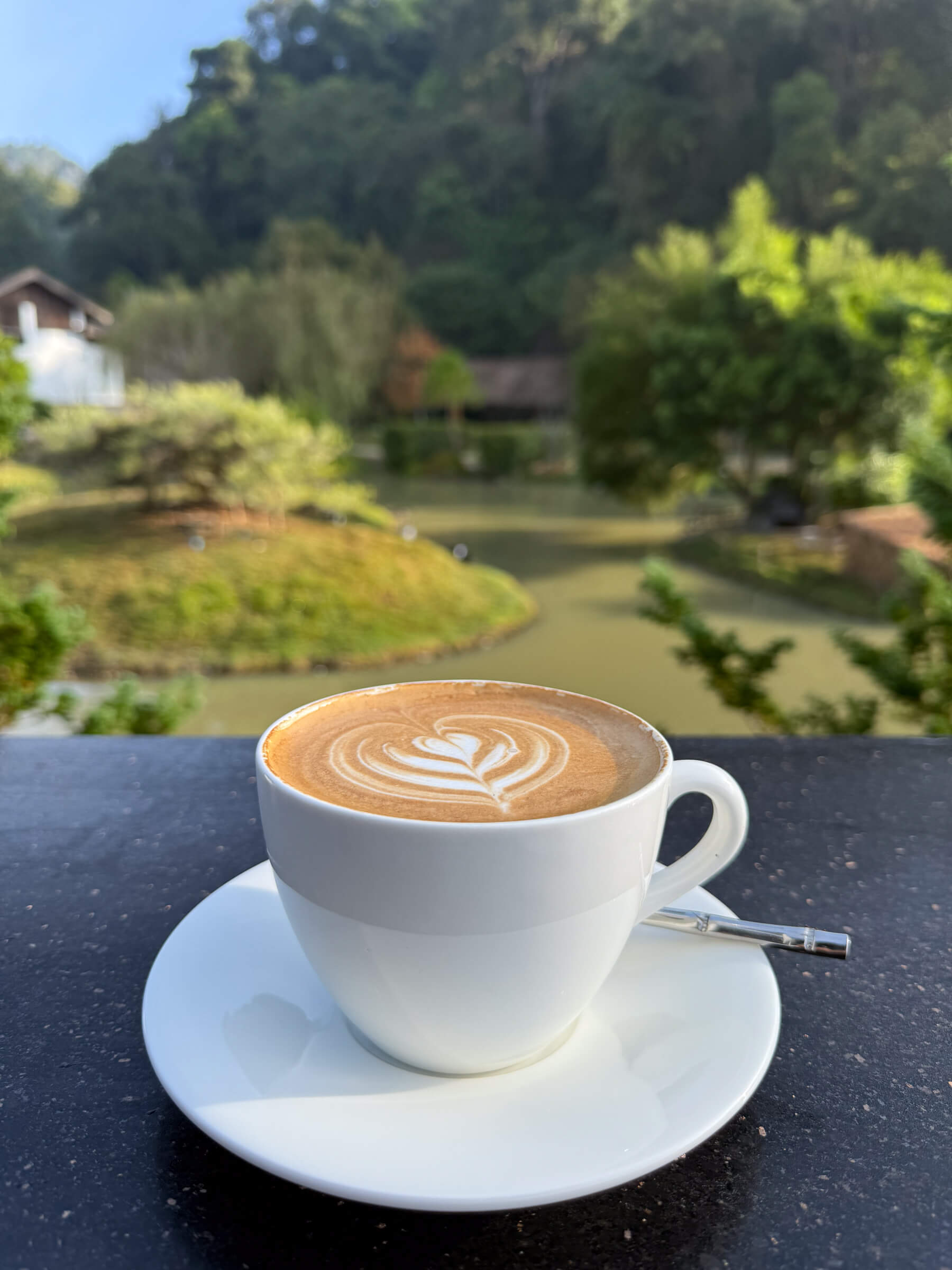
It was so comforting to have a proper latte against a beautiful backdrop and cool weather:
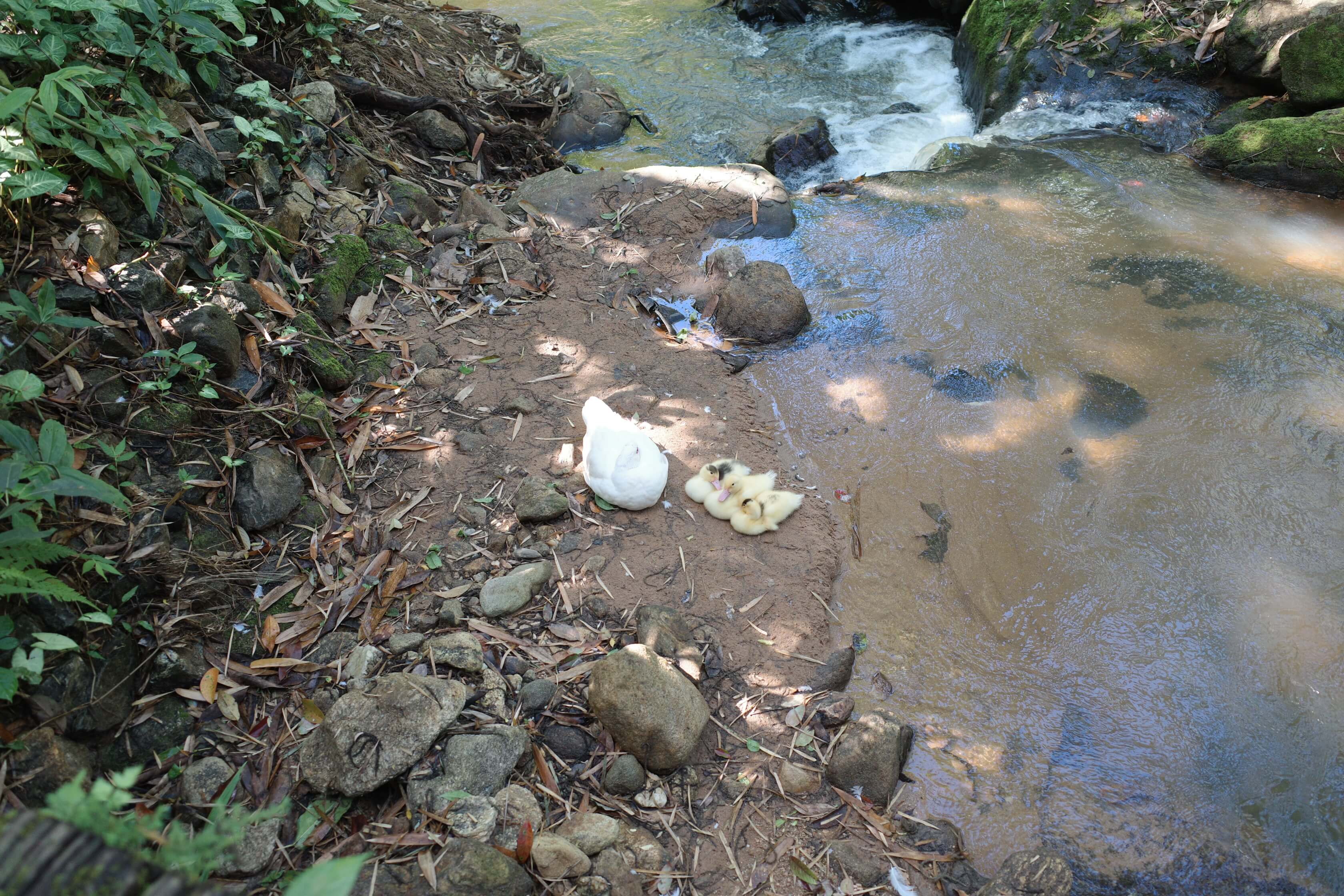
I may not have seen ducklings before:
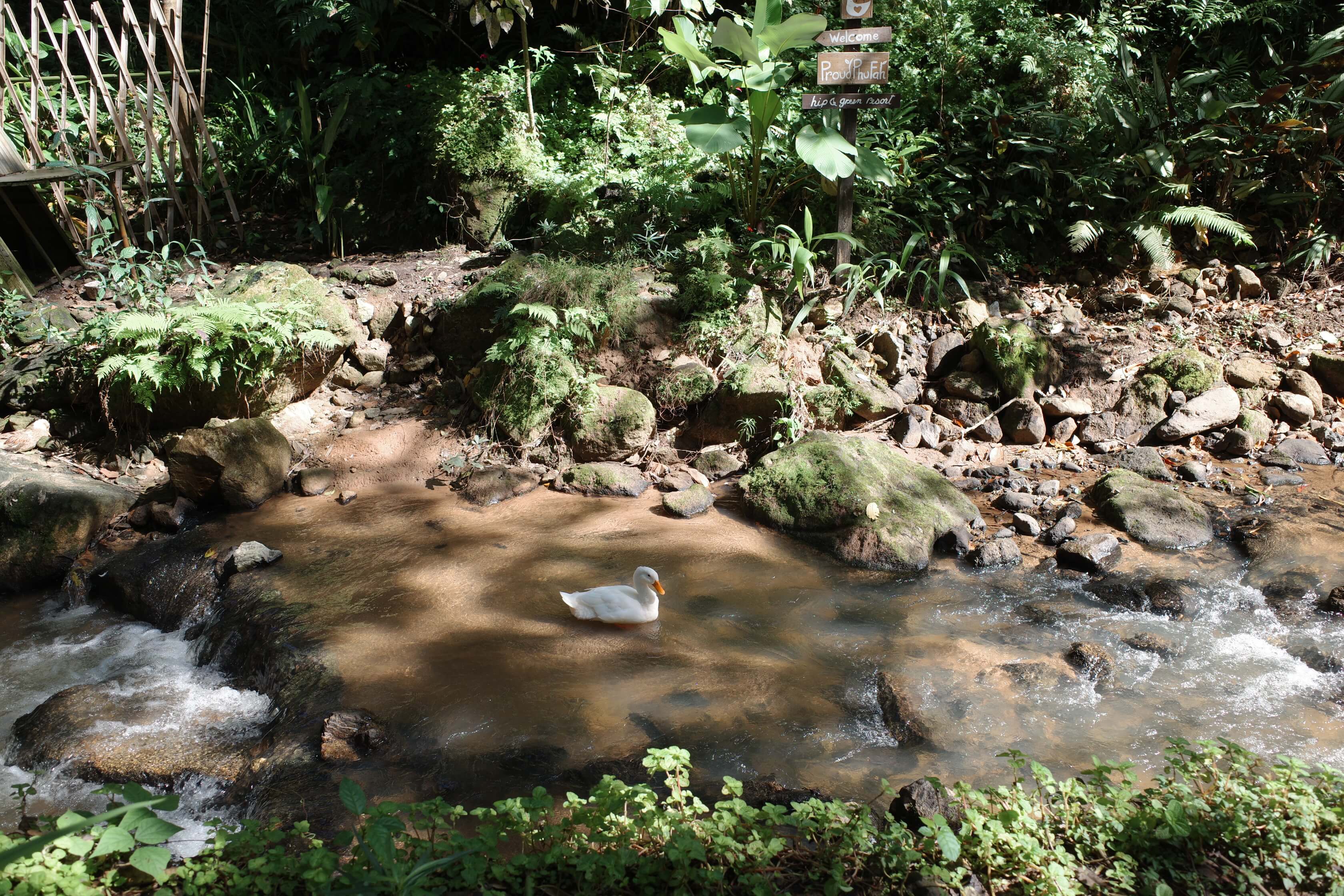
My partner calls this the quintessential duck – the kind we would see illustrated in children’s books:
I was hit on the head by a falling roll of blinds on an aluminium pole today at breakfast, and it gave me an existential crisis. It was just sheer bad luck because I happened to be walking past with my plate of sunny side ups while the staff was rolling up the blinds. It wasn’t supposed to fall or drop. They were shocked and kept asking me if I wanted to go to the hospital, an hour away in the city.
Thankfully for now I seem fine, the small bump it caused didn’t evolve into much pain and I hope it stays that way. Hopefully I’ll still get to wake up tomorrow. I just don’t want to have a concussion no matter how mild, because I know it may cause chronic issues. Somehow I am just thankful it is not worse, it could have been an iron rod, my skull could have cracked, I wouldn’t want to be in a one-hour ambulance ride on a long and windy mountainous route to the hospital with a cracked skull and a bleeding head.
It makes me think again how impermanent is life – I mean, who would have thought walking with a plate of eggs during breakfast would be dangerous, and that could be the last time I am conscious in this life?
I guess the fact that I can still write this post is a good sign.
It is rare for us to spend time near nature, and it feels relatively long since we had this opportunity. I think the last time was pre-covid. It feels nice to sleep without vehicle sounds and light pollution. Maybe it is not that rare in your part of the world?
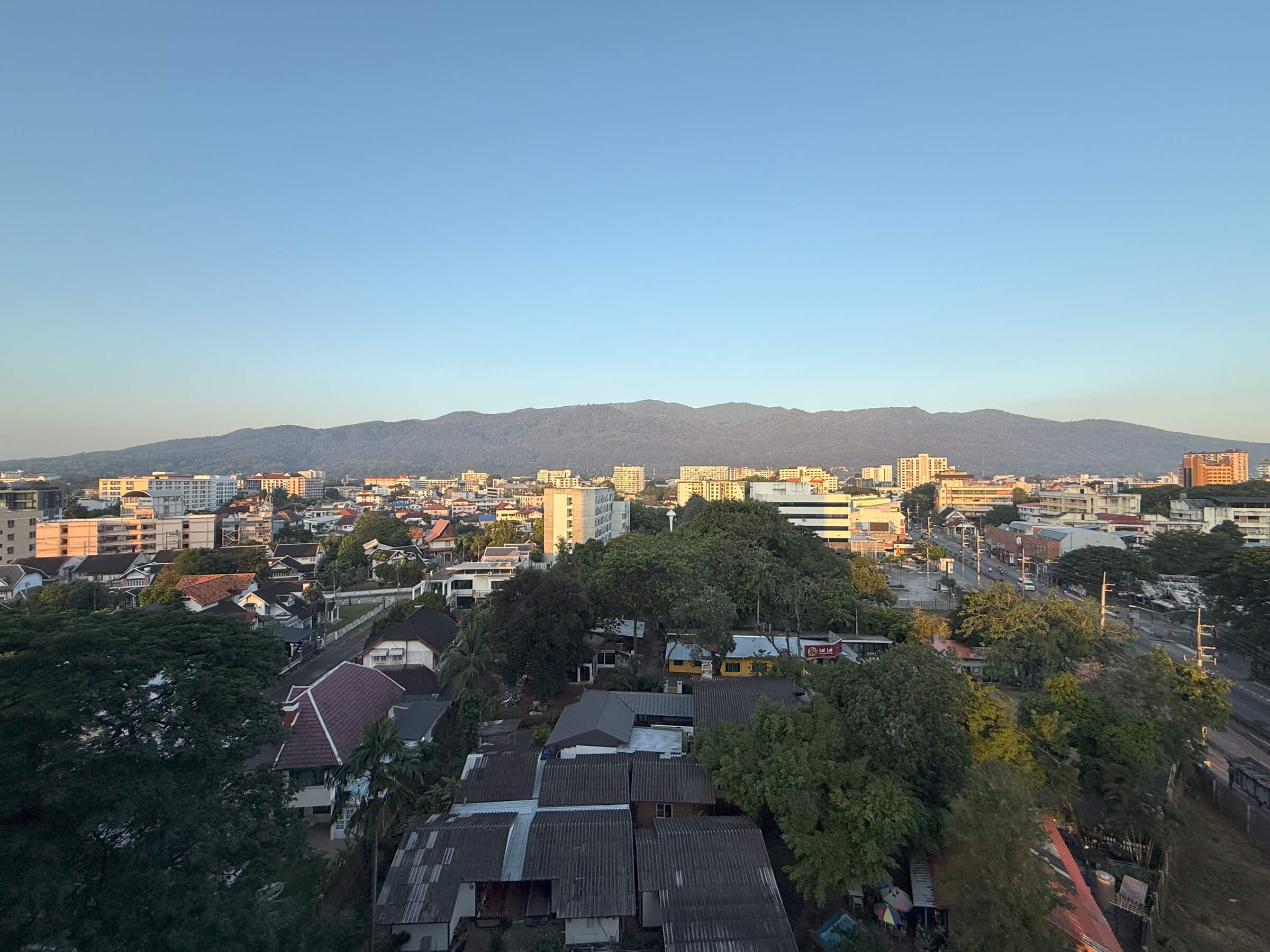
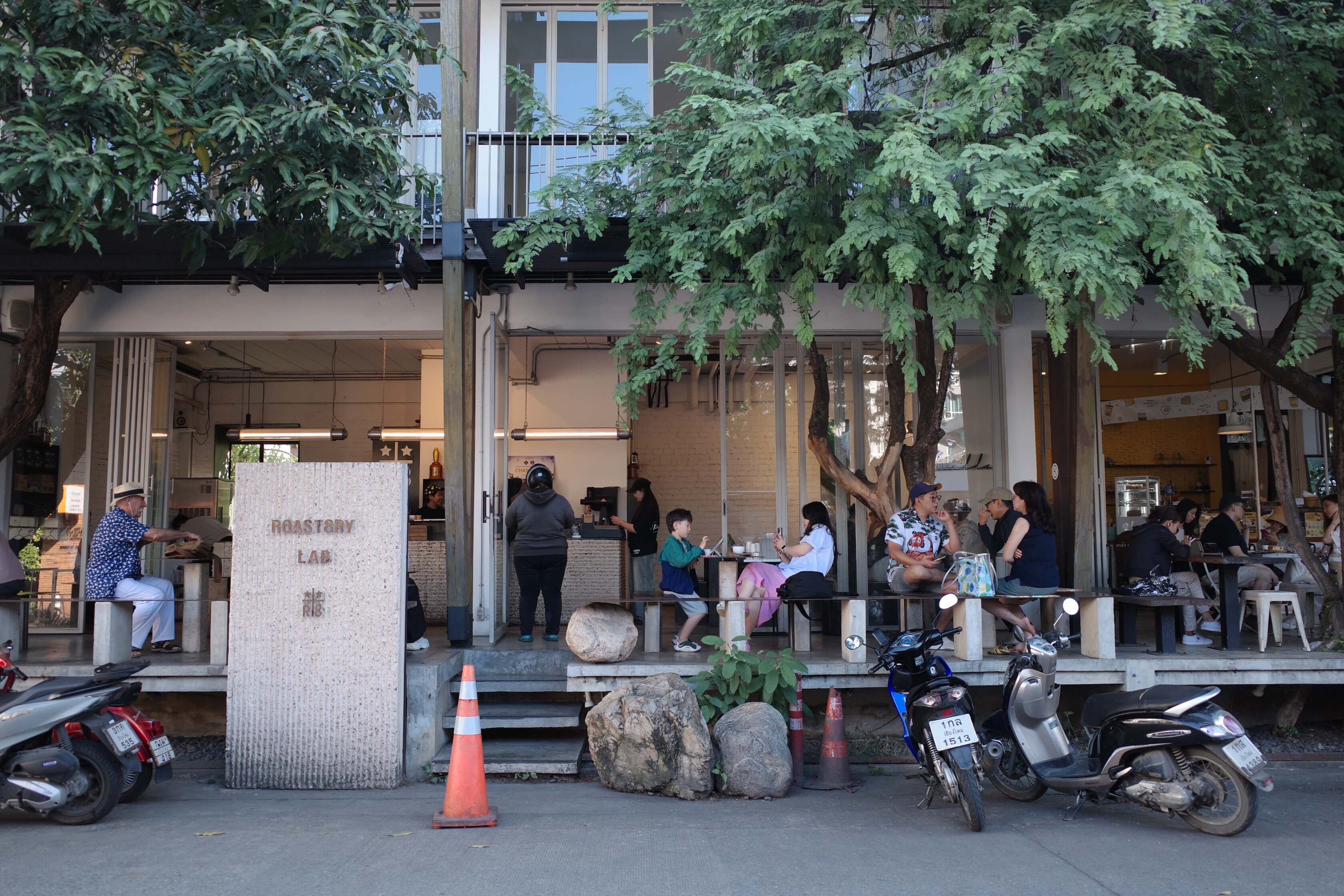
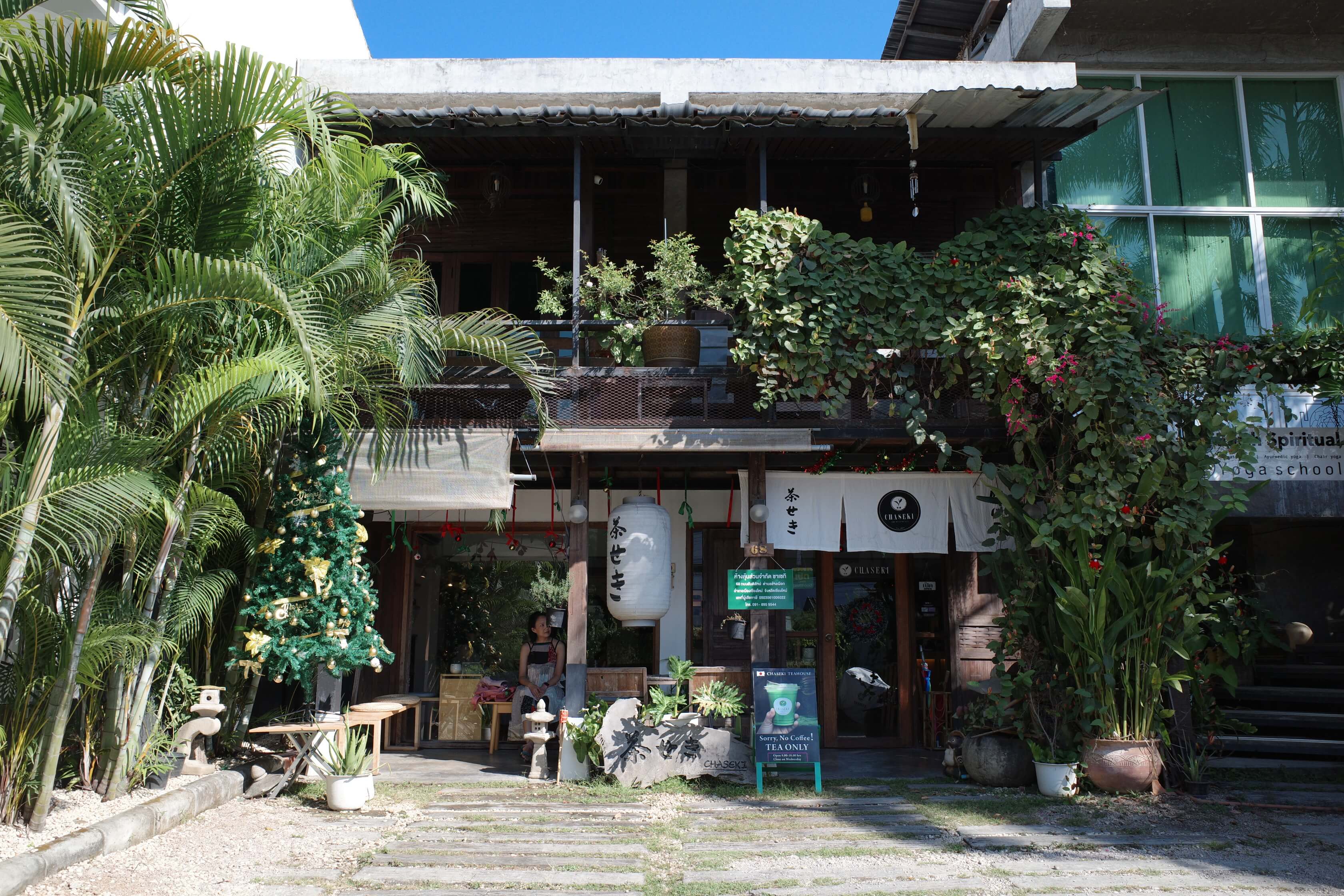
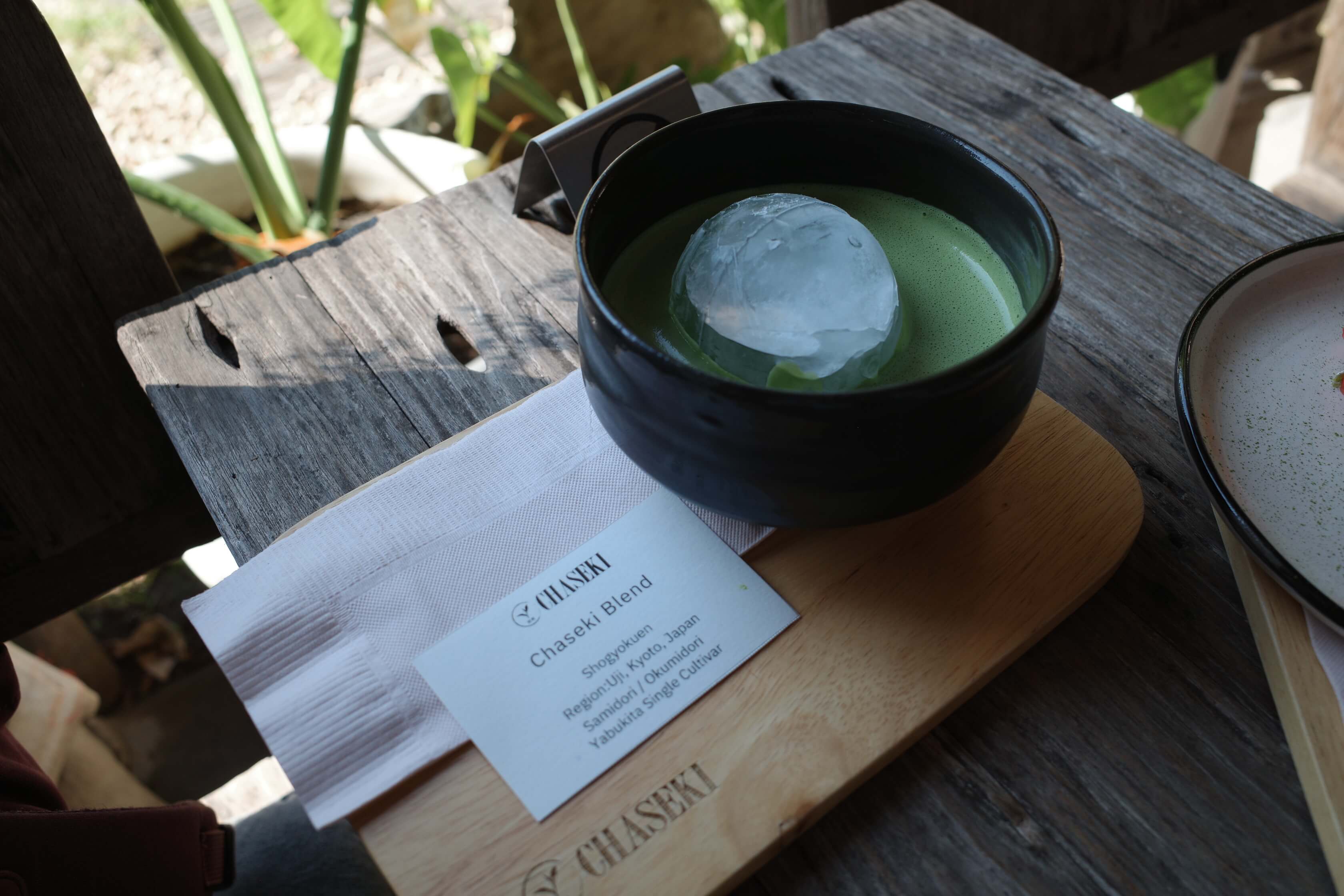
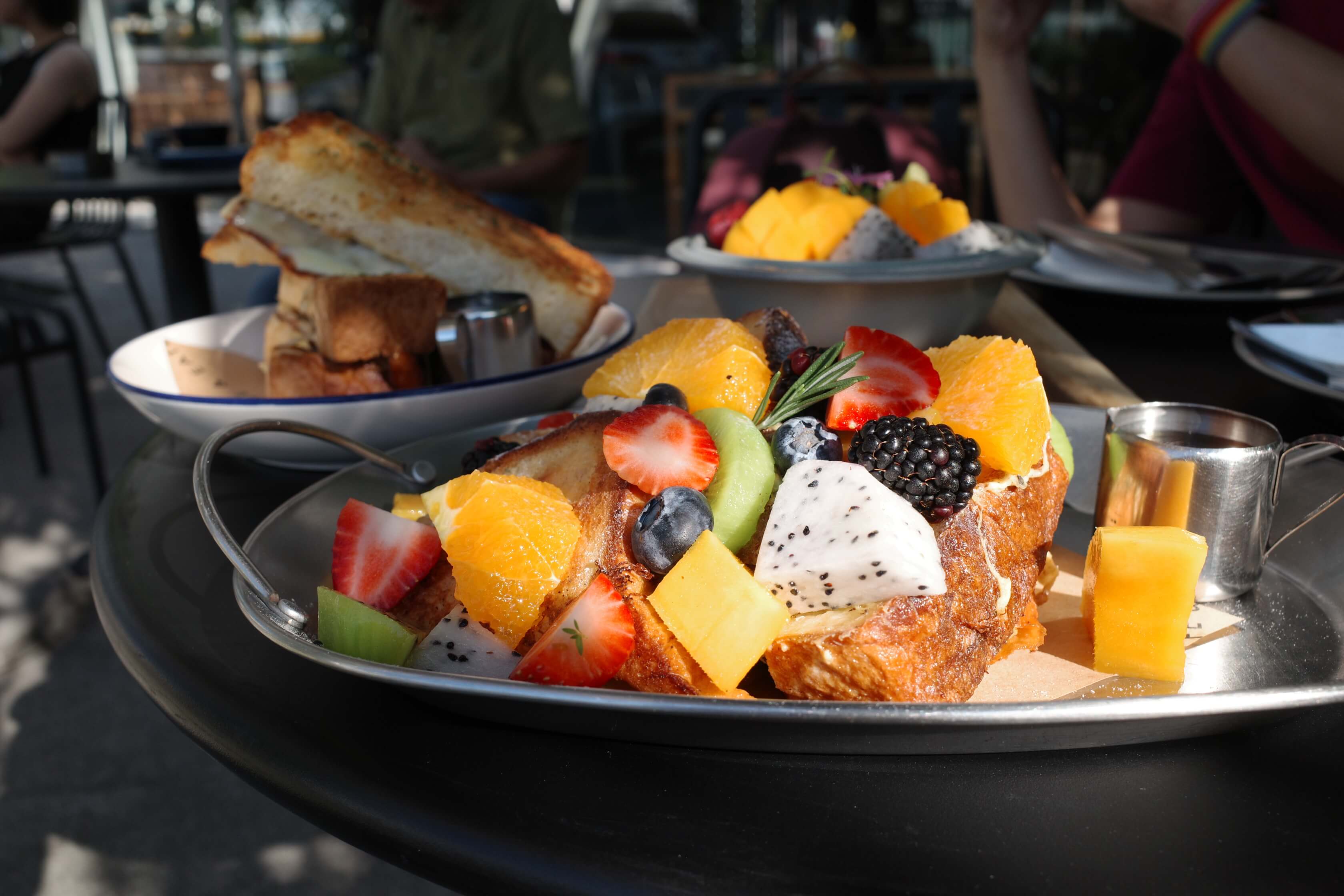
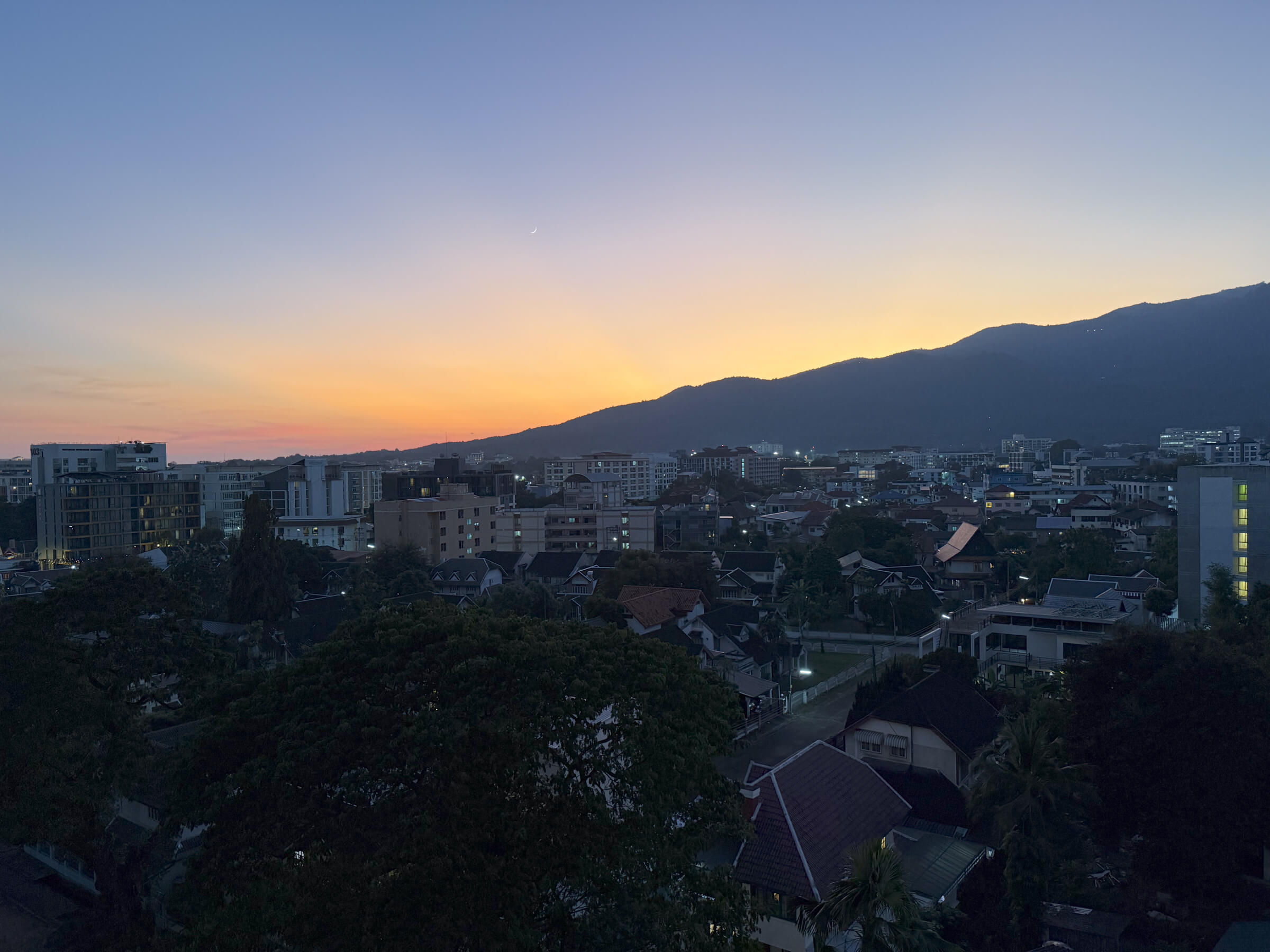
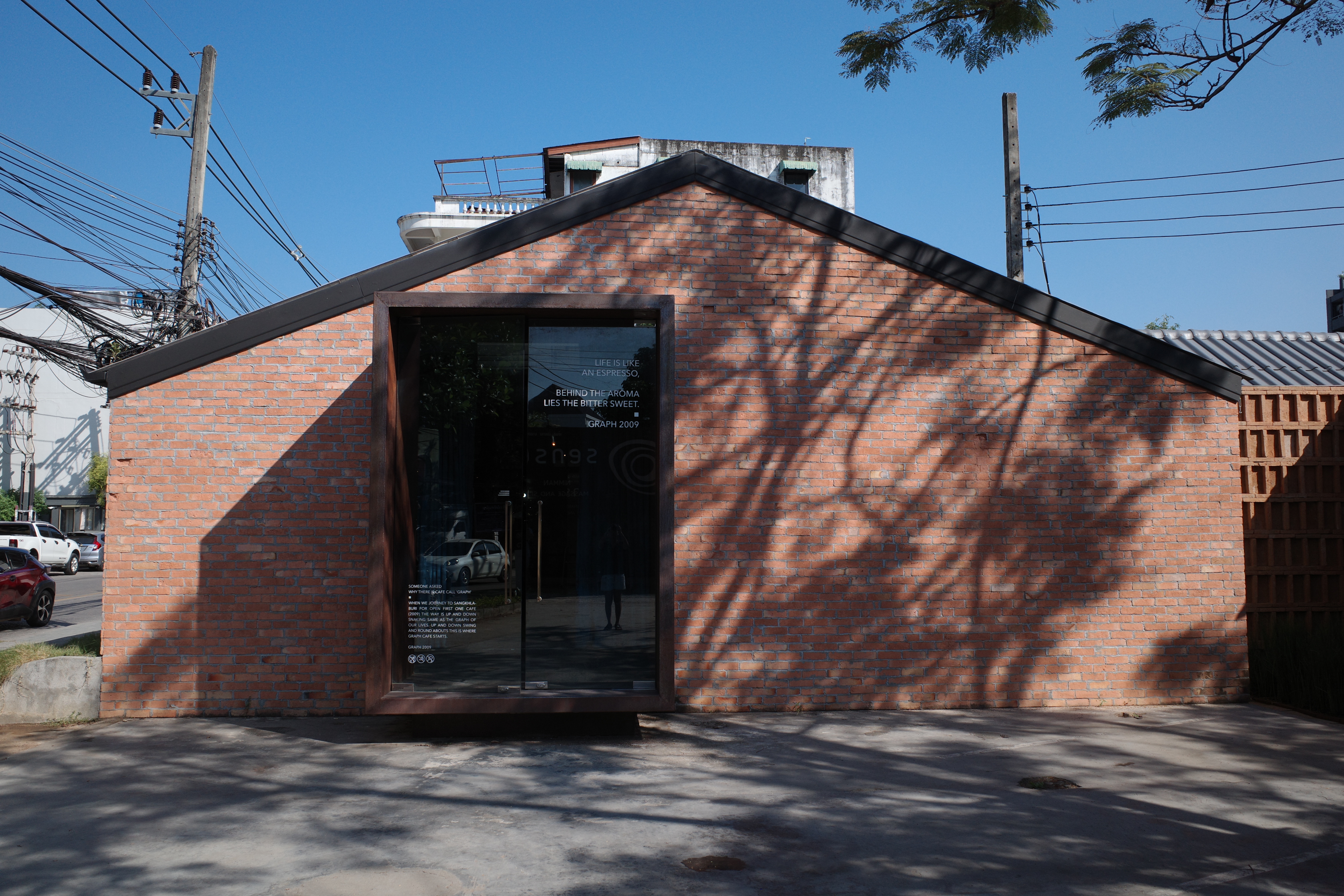
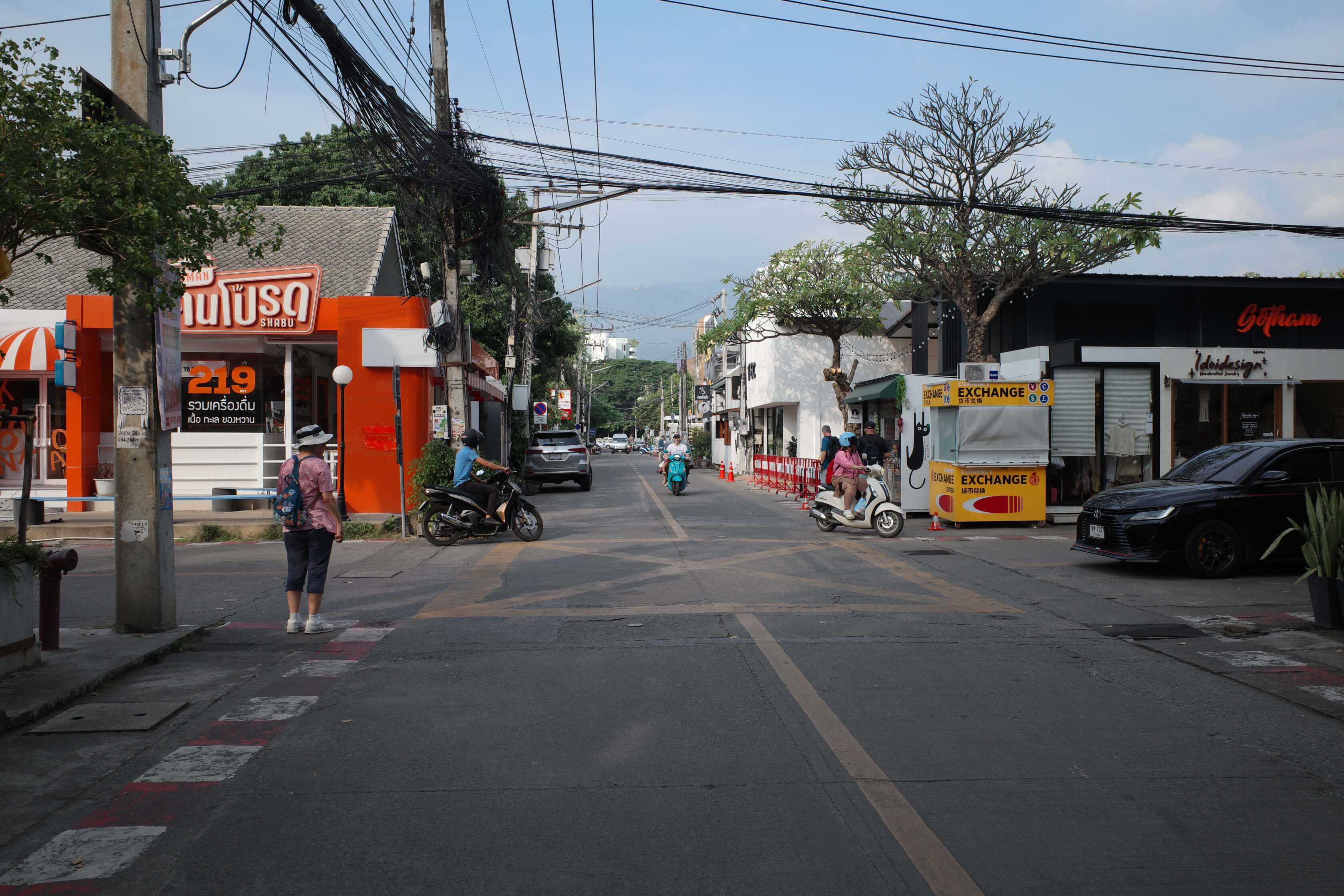
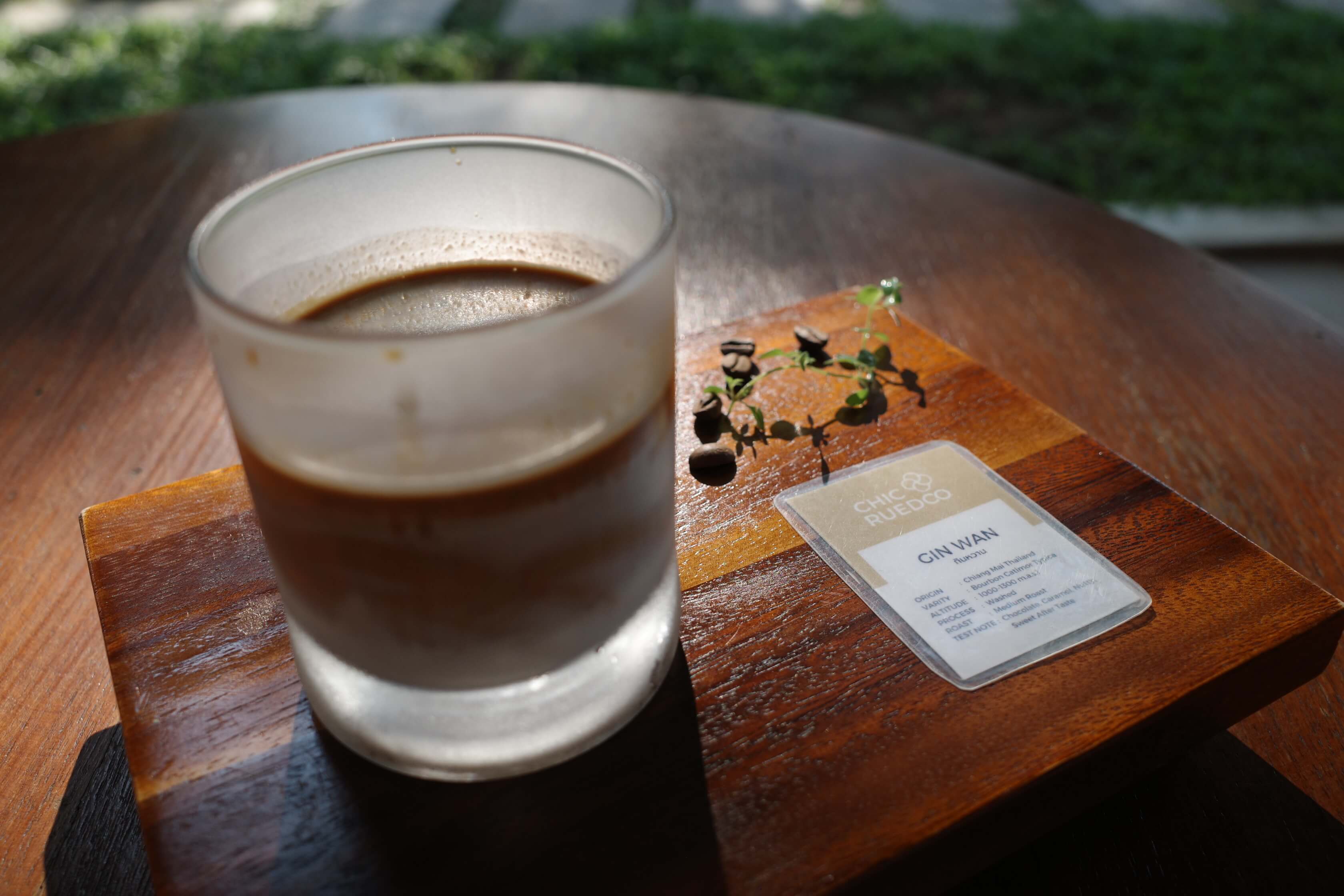
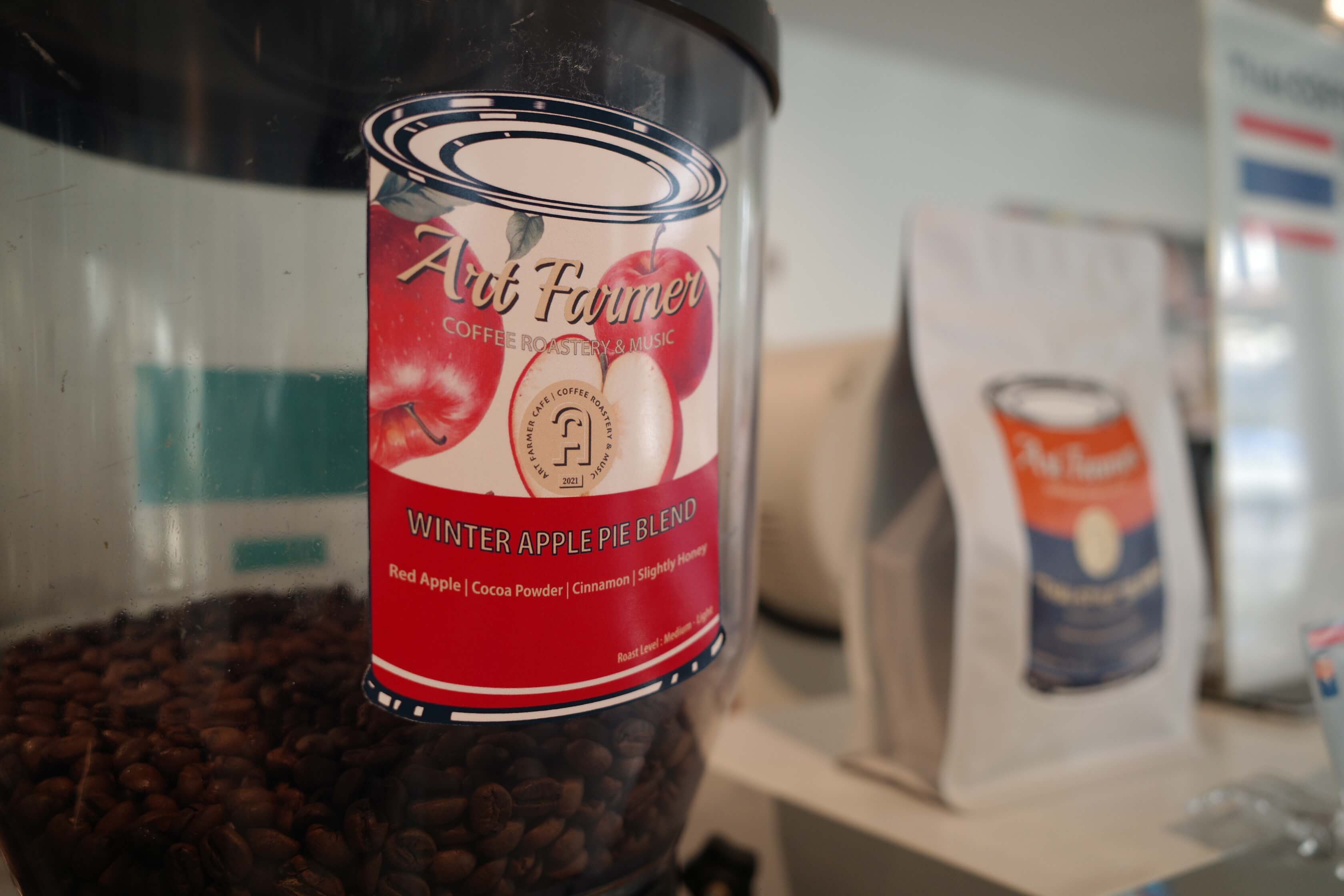
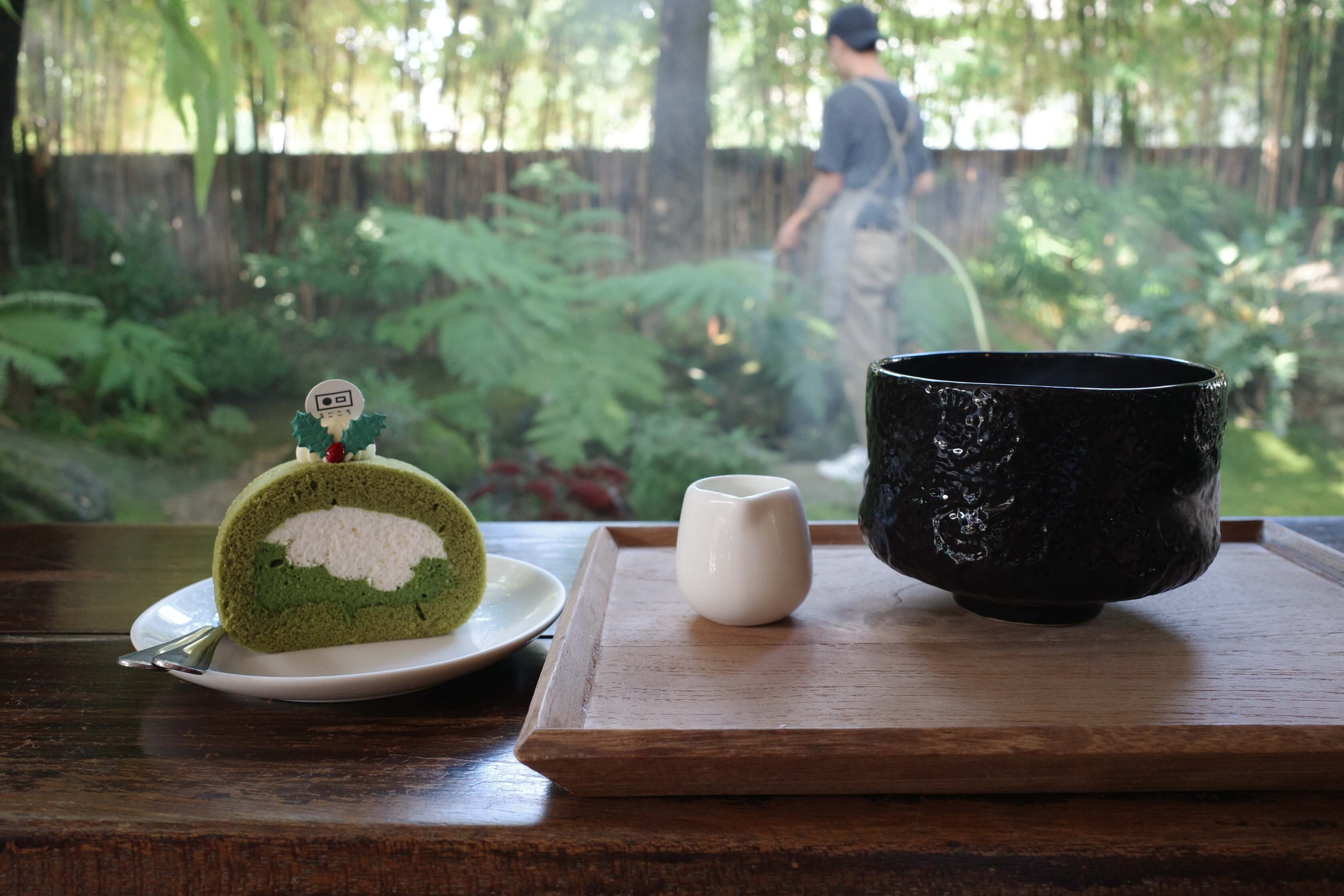
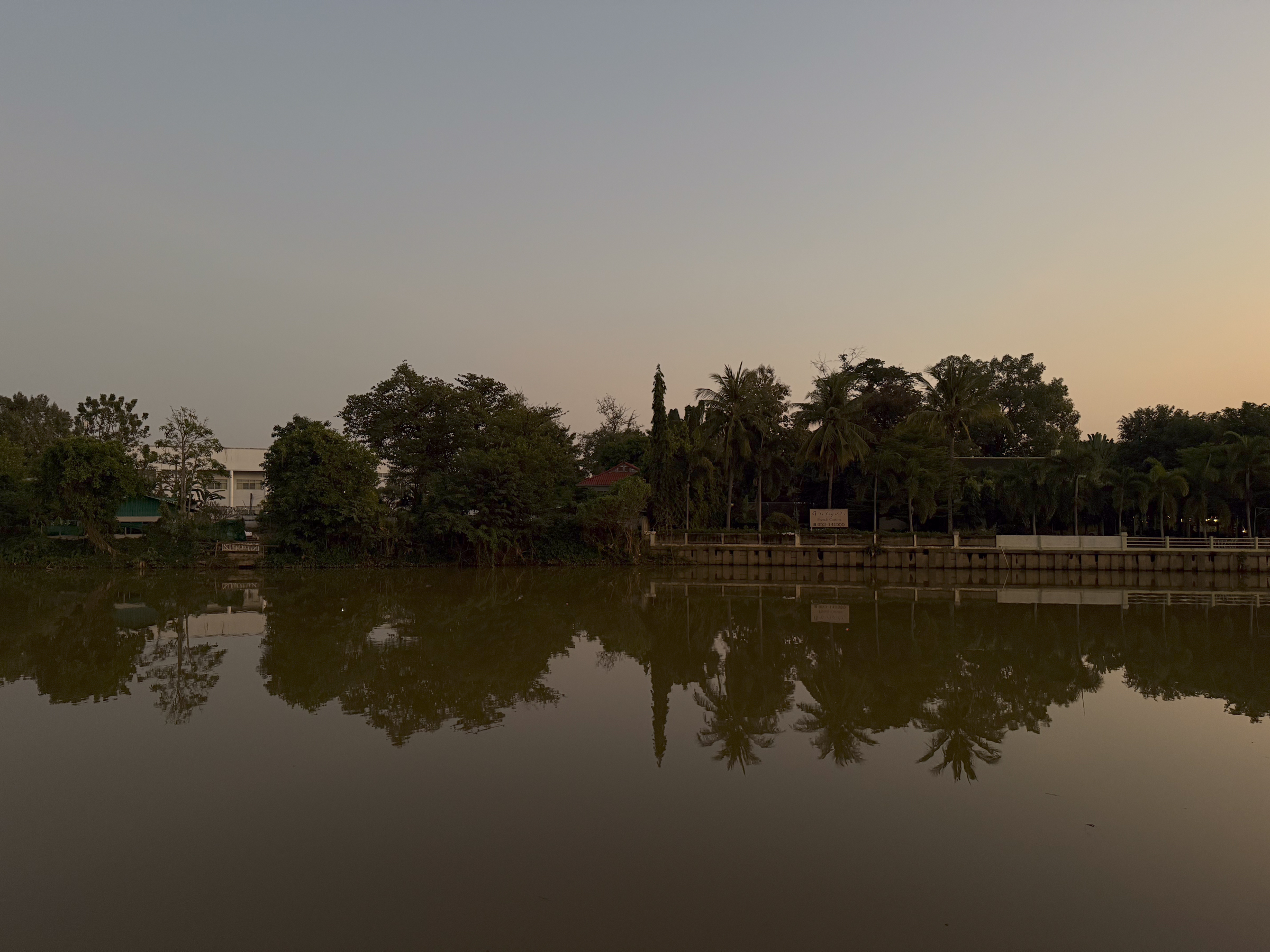
Sharing some straight out of the camera and phone shots from Chiang Mai. It is known for the coffee scene, but what I didn’t expect was that it has excellent matcha too, served koicha style which I haven’t encountered yet in Singapore. What I really appreciate about Chiang Mai is that there is no work involved in searching for outdoor cafes or restaurants. They are everywhere.
I love that I can see mountains in the distance:
Japanese-styled buildings:
Chiang Mai is very into serving fruits on your breakfast plate:
Hip cafes in hip buildings:
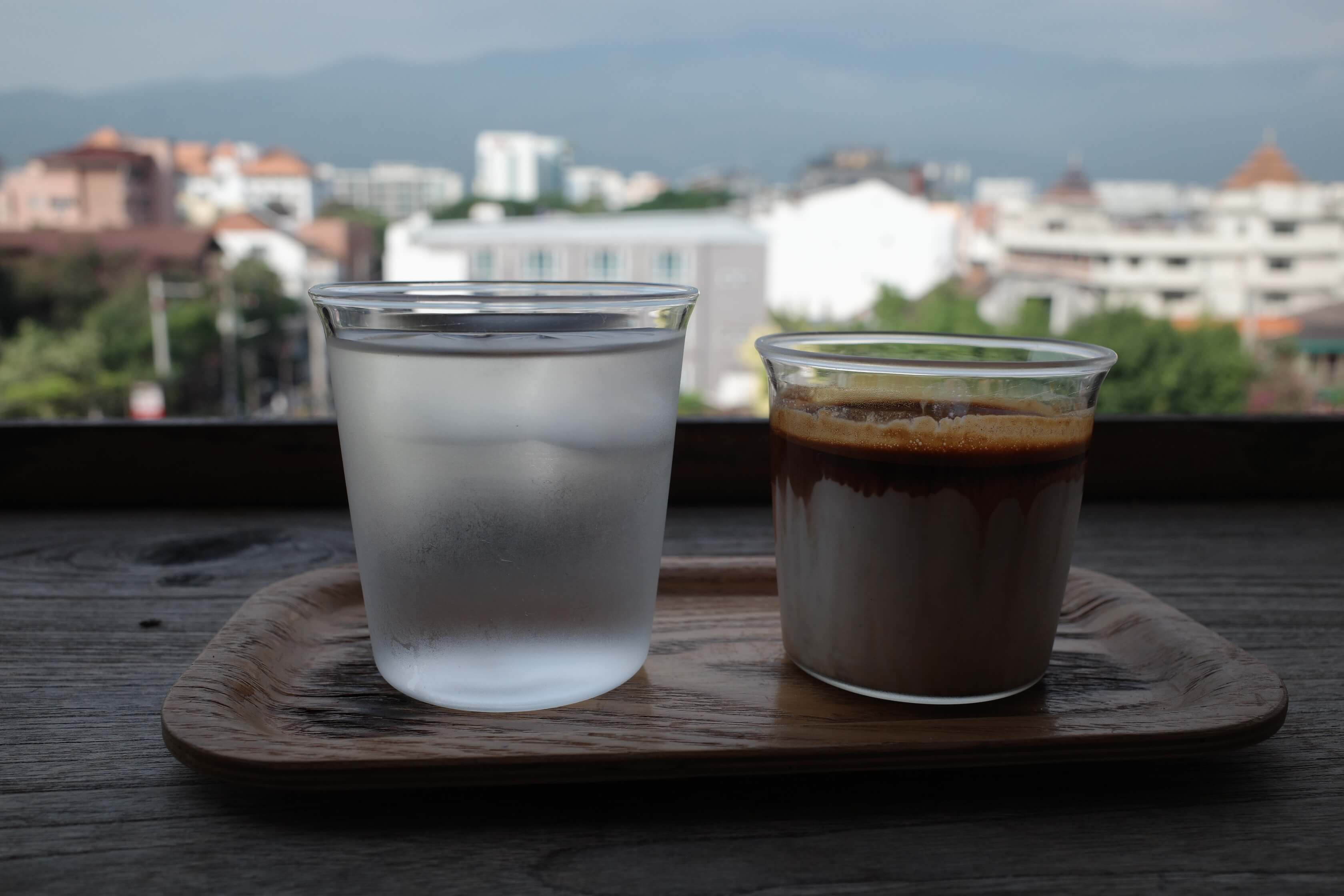
A dirty latte on a rooftop:
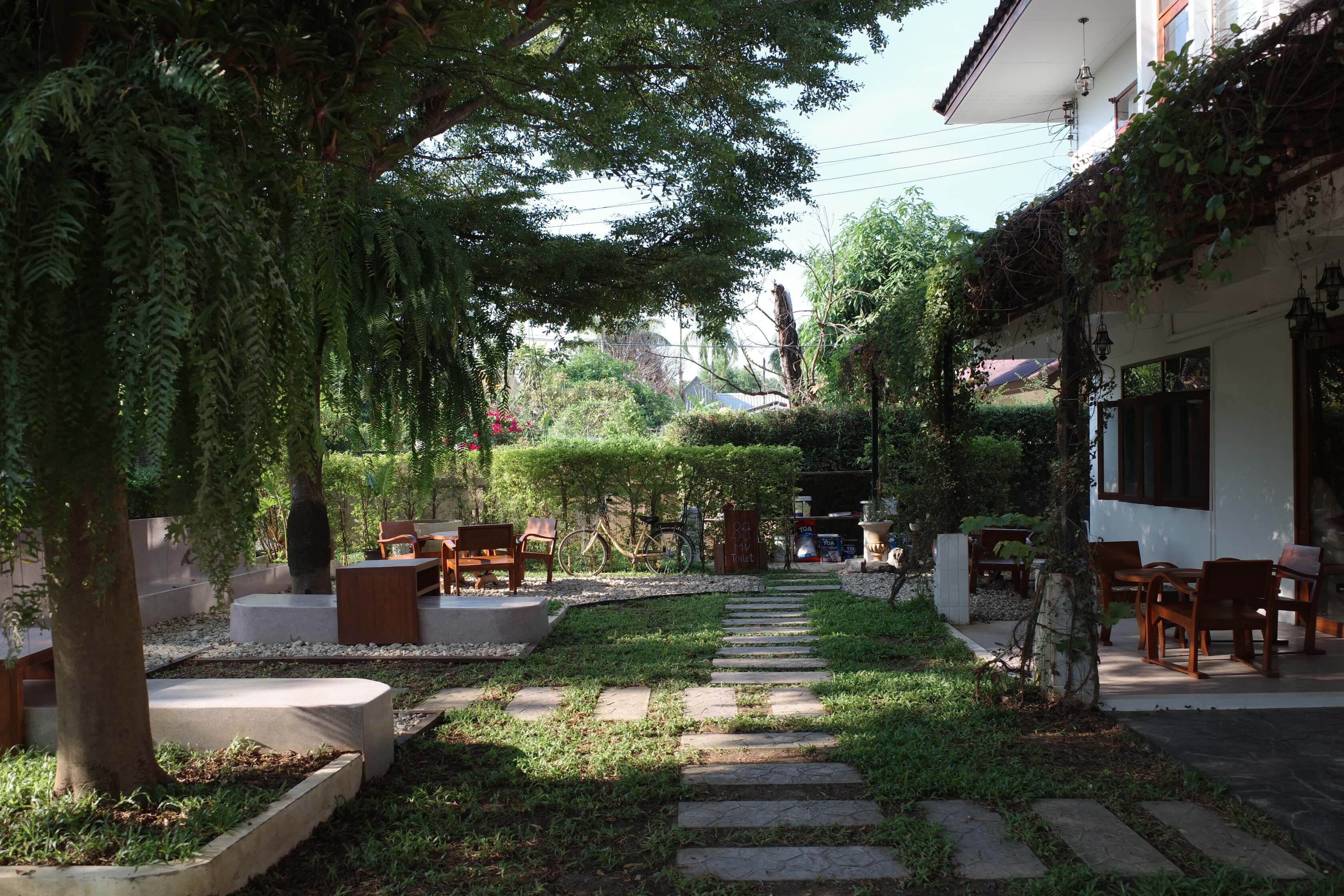
A cafe that is in the front yard of someone’s property:
I love the labels that come with their own roasted coffee:
In 2011 in a desperate attempt to change my life I went on a trip to the US with only enough money to last me for a month there. I did not buy travel insurance. Back then the idea of buying travel insurance never popped up in my consciousness. I don’t think I had any idea of the (expensive) healthcare system in the US. I spent almost 3 months there, and in that period I tried to learn how to surf by myself, got wiped out by giant waves multiple times, got swept out precariously into sharp corals on the beach. I was stupidly confident in my ability to stay afloat if anything bad happens. Being a sheltered Singaporean I had zero awareness of the potential danger that exists in some parts of the US. It didn’t occur to me that anything bad would happen to be while I was there, or that I could need to access healthcare.
Too bad I don’t have kids, I’m missing out on the opportunity to tell these stories to my grandchildren.
Fast forward to the present. I am planning a trip to Chiang Mai, which is less than a 3 hour flight away. Packing becomes a multi-day affair as I fret about what to pack in order to feel safe there. How do I pack the 5-10 types of supplements I need to eat every day? I remind myself to bring my traditional chinese medicine. I think about the quality and number of masks I need to bring on the trip. Should I bring some rapid tests for covid? What about emergency supplements should I get infected there? Should I bring my laptop? Will it get stolen? Will my apartment get broken in when I am gone? Will a pipe burst? What if a fire breaks out? Which travel insurance should I buy? Do they cover covid and other infectious diseases? What if I needed to extend the trip? Will the plane suffer extreme turbulence due to climate change? Should I prepare my will?
I was once a person who would pack my luggage in 30 minutes the morning prior to a trip. I was free to work anywhere as an independent remote designer. I frequently went on trips without knowing how long they would last. I never bought travel insurance until these recent years. I went to some places off the beaten path without ever considering if they would be safe.
I miss my innocence. I was anxious about many things but I was not anxious about potential danger. Hence I was able to travel a lot (not that much compared to my friend Adrianna but more than the average) which opened up my mind and many doors for me. I would be much, much, much lesser as a person without that travelling. It was travel that taught me I didn’t need to be stuck, that limits that existed in Singapore were artificial and cultural, that the diversity of human beings were way, way wider than I can ever imagine, that it was possible to be happy in an extremely different way of life that I was conditioned to live.
My present self is horrified that I used to be so reckless and oblivious, yet I am thankful that my naivety allowed me to experience the world freely. The more I age the more I experience the world, the more I realise how much potential danger is lurking in every corner. Ageing is also causing my body to recover slower and slower from any stress, if it recovers at all. This makes me more aware of the precariousness of my health, like it can be lost anytime. Of course covid has further emphasised this feeling. The world is ageing too. Extreme turbulence is something I never had to worry about. How likely was it to catch something like bird flu or monkey pox previously? It is hard, but I have to accept that we are living on different terms now, and how much risk I am willing to endure if I still wish to experience what life can still offer.
Why travel at all if it gives me so much anxiety and stress? Singapore is a city-state that is about 50km wide with skyscrapers everywhere. This country is wonderful in many ways, but it can also be grating. There is no way to leave that stress and compression that comes with living in a city, Most people in other countries can go on road trips (hi if you’re in europe i envy you). I personally believe exposure to different environments is very important to both physical and mental health. It gives my mind and body a much needed break.
Yet I worry one day I’ll stop wanting to travel while I am still young and fit enough because it is just too overwhelming. I have always thought it would be some external circumstance that would stop me from travelling, not my self. I think I would shrink as a person. My life now is a perpetual battle: me continuously trying to overcome my fears in order to prevent my world and my self from shrinking.
I also don’t know when we’ll enter a second pandemic, have worse geopolitical tensions, or weather patterns too erratic to travel. I can’t help but feel like life now is the safest it will ever be as I can only foresee things getting worse in my lifetime. I don’t mind being wrong on this. I hope I am wrong. But I just don’t see how we can overcome our innate insecurities to properly shepherd this world again. It would probably take something extreme if it does happen, so either way it just doesn’t bode well. So I want to experience more of the world outside Singapore while we can.
I think I know too much about the world to feel free again, but I hope I can practice a zen mindset. Life is impermanent, even in the safety of on my own home.
My tcm (traditional chinese medicine) appointment a couple of weeks ago was postponed because my physician was sick. I thought it would be fine to go a couple of weeks without, but my recovery from my alternate-day-exercise-routine worsened gradually until I had a POTS flareup. Just mere walking alone made my heart rate go up to 130s. This is highly disturbing for someone like me who can run 7km without being breathless. I totally blame covid for this, since this is something that only developed post covid.
This makes me wonder how much tcm has been masking my long covid symptoms. I am still thankful that there is something that can actually mask my symptoms and allow me to have an illusion of a somewhat regular life, rather than just progressively getting worse. I also developed a new symptom: almost unbearable teeth nerve pain that comes and goes 3-4 times a day. I don’t think it is a regular toothache for now because the teeth themselves don’t hurt when I put pressure on them.
It seems like being in perimenopause itself can also cause inflammatory flare ups. After struggling psychologically with being chronically ill for the past 9 years, I feel like it is time to accept that this would be the new normal for me moving forward: mystery symptoms popping up every now and then.
I have also been reading a book titled, “If You Live To 100, You Might As Well Be Happy“. It is written by an elderly korean psychiatrist, and it reads as though an old asian grandpa is trying to impart his wisdom, which means it can sound a little naggy and it demonstrates some thinking that is an outcome of his times. Well I guess people may one day say that of me too, that I read like an old asian grandma. Do I already sound like a middle-aged auntie in perimenopause?
There are plenty of reflections on his own psychological struggles with ageing. Most people want to deny they are ageing I guess. It is a human condition. I haven’t finished the book yet, but this is my favourite quote so far:
If someone were to ask me about one must-have life skill, without a second thought, I’d answer jung-gyeon (정견 / 正見), the ability to see things as they are, to see yourself for who you are. We in our old age need this sense of astute self-awareness. To look the physically diminishing, socially retreating, financially less competitive self, straight in the eye. If you feel anger, accept it and acknowledge that you’re angry. Your old age is not your punishment.
I regularly write about meeting people and ourselves where we are, but I haven’t thought of it in terms of ageing. I think for chronically ill people it is important to see who and where we are in terms of our health too. Illness aside, those of us who are neurodiverse should also attempt to truly see how our neurodiversity impacts our daily life and interactions. Having an illusion of who we are simply because we have some ideal version of ourselves in mind can set us up for so much disappointment, sadness and depression.
For example, I used to be able to stay up all night and survive on a couple of hours of sleep. I could look at my computer for many hours straight. Now I can barely last half an hour. I had plenty of self-regulation issues but there were times when I was highly creative and productive. Now, I have to thank my lucky stars if I am able to move around without much pain. Creative activities and work can only happen once in a blue moon, and often even if I able to complete something, I would have to pay for it after. Because I keep mourning for my past self, I have missed out so much on my present. This is only something I can write while I am being relatively lucid now. Sometimes my emotions are just so overwhelming that I cannot see beyond the darkness and despair. But the darkness and despair only exists because I keep longing for a self that can no longer exist, or a present that is impossible because of its underlying conditions.
Because of my neurodiversity, I have very specific psychological and energetic needs. I have learnt to recognise my boundaries and limits, so I have dramatically decreased my social interactions. But if I kept trying to be more sociable because it is perceived to be a good thing, I’ll just keep burning out. Some things have to be sacrificed because we want to cherish some other things. Some people can accommodate more, we all want to be people who can accommodate more, but I cannot change the reality that I am a person with a tiny capacity.
The other day I read about an artist with bipolar disorder:
Kyohei was diagnosed with bipolar disorder when he was 31 years old. He is very open about his depression; he recognises it as essential for his creativity. It is precisely because there are times when Kyohei is depressed and unproductive that he is able to feel and notice sceneries, sounds, and details that most people overlook. Kyohei’s sensibility allows him to honestly perceive everyday things as beautiful. — apartmento magazine
It was just provoking to me how he simply accepts his condition, just like that. Whereas I’ve been fighting with myself my entire life. But on a meta level: I also recognise I am also an outcome of various complex events, I also have to practice what I preace/write and meet myself where I am, so the irony is I have to accept that for now I am someone who struggles whereas others can simply accept. Will the acceptance of the struggling make it easier, or will I one day cease to struggle?
Like the elderly psychiatrist had written, the ability to see who we are is a life skill. People like me tend to beat ourselves so much that we are blind to our potentialities. Some people tend to have very romanticised images of themselves so they are endlessly upset when they can’t meet their own expectations. If we can’t see ourselves bluntly we may not know we are actually causing harm to the people around us. But if we are overly-harsh then we are shrinking ourselves makes ourselves smaller and smaller. Where is the correct range, and how do we improve our perception?
The past week I could be in a self-pity slash anger spiral because I have been unwell. But somehow I am just glad it did not get worse. Am I finally in the acceptance stage in the 5 stages of grief, or is this just a temporary reprieve?
Maybe I can finally see the absurdity and fragility of this world and my self. It is one thing to write about it, but another thing to truly acknowledge reality, and to live in that reality.
Over the past decade I tend to turn to books on buddhism whenever I feel down. I wouldn’t consider myself religious or a buddhist, and I don’t really fully agree wth much of buddhism especially the religious aspects, but I like parts of the underlying philosophy. I appreciate that it acknowledges the suffering that is part of living, the impermanence, and a huge part of its practice is to cultivate compassion.
Unlike many people I personally don’t believe in morals and kindness just because someone said so. Because I am an excessive overthinker I tend to question everything, including why is goodness good? Why is being “good” important for human beings? From my point of view, it is unfair and unrealistic to expect human beings to simply be “good” when we are thrown into such harsh conditions for living. The cost of survival for human beings has often come with violence, suffering and the oppression of others. With such collective trauma in our history, isn’t it too dismissive of our suffering to ask of us to ignore our fundamental insecurity in order to be good?
But later on I realised that when the buddha taught: there is suffering and impermanence in this world, therefore practice compassion – he kind of went from zero to one. He saw that the world exists as an interdependent system, there are systemic causes for suffering, hence it is only logical to understand why there are negative outcomes. It is only with compassion that we can actually see the entire picture and address the root causes, and when we understand the root causes it invokes more compassion. We hate because we only see what is happening now, but if we look back over the course of human history and the conditions that surrounded us, can there be an alternate histories with different outcomes? What provokes a choice? How much control do we have over our brains?
Compassion is not a moral choice but a logical one. Interconnectedness is not some woo-woo term but it is rooted in reality. We have to practice compassion, not to be kind and good, but it is the only way out of our own self-induced suffering. Compassion works even in our self-interest. It is only through understanding the other that we can truly solve our existential issues, not through more violence. Violence can only beget more violence. To me this is logic, not morals.
I think this is something buddhism tries to explain, but it doesn’t do it well as far as I know. I mean, I would probably have to understand sanskrit to even know what the original Buddha was teaching. And even so, the teachings are passed down by oral transmission for 500 years. Buddhism tries to appeal to our morals and conscience, and to an extent, fear by incorporating concepts of karma and punishment (there are differing views on what the Buddha had originally taught). But in my opinion the best way to appeal to human beings is through self-interest. We have to meet people where they are. Be compassionate not for being kind, but it is necessary to reduce our own suffering.
I guess this is a long way to explain why I turn to buddhist literature every time I feel like I am suffering. It is the only school of thought that goes so deeply into the realities of living and the psychology of human beings: suffering, impermanence, the over-fixation of a fixed identity, clinging. Sometimes what we need is not advice or positivity, but rather acknowledgment. It also doesn’t paint human beings as a species that has done something wrong to deserve this suffering — instead it says human existence is a fortunate thing, because we have the consciousness to work towards enlightenment.
I am also drawn to the contemplative nature of buddhism. It is not uncommon to read of buddhist monastics going to a cave alone and meditate for years. Some express their spiritual realisation through art and poetry. I’ve been reading Matthieu Ricard‘s autobiography, and it was astounding how he undertook writing and archival projects that spanned years or decades in order to preserve Tibetan buddhism’s literature. One single translation project took 10 years, even with a team of people. The person in charge only took a break for one afternoon every two week for 10 years. In these times when everything is fast, fast, fast, and AI-generated, it is comforting to read of such work.
Ever since I was young I had thought I would some day become a nun. But maybe what I was attracted to was not the religion, community or role, but rather what it symbolised. I wanted to leave the secular world, let go of all my attachments, and the idea of leading a contemplative life appealed to me. It still does, till today.
But like the Buddha preached the middle way, I wonder if I can incorporate some parts of that monastic life into my life. I feel like I’ve never taken my contemplative activity seriously —in fact my Singaporean-capitalist-upbringing makes me feel like I am not being “productive” and I am wasting my time. At an age when I am nearing menopause, I feel like I do not have a good enough grasp of my self and the life I truly wish to lead. I am still imprisoned by my conditioning.
Which is another reason why I appreciate buddhism, because it tells us we can achieve inner freedom through practice. I have barely scratched the surface, but after many years of reading mostly contemporary books on buddhism I feel like at the very least I know there is a tiny seed planted in my consciousness, and there have been moments when I caught myself being more mindful than usual, something that is more challenging for me than the average person because of my adhd mind.
I am going nowhere with this post. I guess recent events made me feel like it is time to turn inwards again. I’ve been thinking deeply on what it means to lead a contemplative life for me, and how much of it is already in-built within my nature but I have been trying to reject it because it doesn’t feel productive. I think what I am currently struggling with is that I want to share my output somewhat, but it is difficult to put myself into that state of mind since I am constantly craving stimuli. A contradiction I know. So much of me is contemplating, yet so much of me is also wanting to be out there and let the colours of life wash over me. Maybe they are not in opposition: exposure can lead to inner enrichment.
I feel like I am constantly in flux, just like my writing here. There is no point to my writing or my existence, just an ongoing process documented as faithfully as possible.
Sometime midway through the pandemic I felt like if I had any hope or optimism for humanity prior, I had lost it all witnessing how we responded towards a disabling virus. If we couldn’t rally our selves against something that is so acutely damaging, I am not sure how we can rally against longer-term threats. These feelings permeated not only towards humanity as a whole, but towards people I loved and cared for. I am someone who has felt alone my entire lifetime due to being perpetually out of step with the mainstream, but this pandemic made me feel the loneliest. Thankfully I still have my partner with me or else I would be seriously thinking about how to leave, but love no matter how grand it is, cannot takeaway one’s sense of existential loneliness. My partner is even more covid cautious than me, and in some ways more of a doomer, but she doesn’t feel that existential loneliness that plagued me all my life.
So I was surprised to feel that sadness when it became clear that it was mathematically impossible for Kamala Harris to win. I thought I could not be more numb than I already was. Still, I frantically refreshed all the apps hoping for a miracle. Maybe some people may wonder why is a Singaporean so concerned about the US elections? I don’t know if I should spend the energy trying to explain systemic repercussions. It is very disturbing when people out of the US see it as a joke, or make some statement about “next time”. For some people, there is no “next time”.
I think people are focused on the individuals like Harris, Trump or even Musk – rightfully so, but what is so depressing for me isn’t the result itself, it is what the result is representative of. It is one thing to elect Trump in 2016, another thing to re-elect him now after what has transpired in the past few years. He isn’t even coherent. But people seem to point fingers at America as though they are the only weird country. To me it has been an ongoing trend worldwide, probably made worse by the pandemic.
I think we are heading for much darker ages because we have lost our capacity to think, if we even had it in the first place. There are so many systemic factors contributing to it. Our public education, inequality, use of technology, a brain-damaging virus, etc. Maybe this outcome is not unusual considering the factors. I think the peaceful years before the 2000s were the actual blip: it gave us the illusion that progress is to be expected, that the universe bends towards justice – a saying I have now come to resent.
The problem with the mentality that there is a “next time”, is that we are running out of time. As a tiny human I don’t have the capacity to think in centuries, I can only feel this sadness for people belonging to my era. It is not even hundred years ago that people lived through world wars and great famines, so to experience this disjointedness is perhaps a human condition.
Cherish and document the little beautiful things of life and of this world, perhaps witness and document the ugliness too. Throughout the ages no matter what has happened, nothing can take away our capacity to witness. On this earth we are probably the only beings who can take everything we have experienced, and transmute it into other forms. Even if they may not last, at least there was something instead of nothing.
I just had my period, so I am feeling a little more fatigued than usual. Every month around this time I tend to wonder why the body finds it so difficult to overcome this blood loss when it is part of our inherent biology. Shouldn’t it account for this potential blood loss instead of leaving us weaker? Sometimes I think I am too idealistic, even when it comes to the intelligence of our bodies. Its prime directive is to reproduce, nothing says that it cares about our well-being and how we feel.
I think as human beings we tend to attach our own meanings, interpretations and feel-good narratives to everything. It is both a blessing and a curse I guess. Without this, would we still strive? But it sets us up for disappointment and depression when the world does not naturally bend towards improvement or justice. The world is a system:there are certain outcomes when there are certain inputs. We shouldn’t be surprised with the outcomes if we understood its history, but yet we are. Just like I shouldn’t be surprised at the state of my psyche and health if I understood my own history, and yet I always am. It is unrealistic to hope for an outcome that cannot be mine, to hope that I can become a different person with the cards that have been dealt to me. We have to know ourselves truly in order to see the true possibilities, not some imagined fantasy.
They say it is a cop-out to be a cynic, because it is much harder to carry hope. But I think it too takes courage to exist as a cynic when the world is drunk on hope — somehow as a species we don’t like to see reality for what it is or accept our selves for who we really are. That is why we keep going round and round with the same issues that plagued us throughout history, because we refuse to see the root of the problem.
I think being a cynic is not about giving up, but rather acceptance. It is with acceptance that we begin to see what is real versus what we kept hoping to see. It is like playing a computer game is all about knowing its limitations – it is pointless to play it in a way that the mechanics would not support.
This is what I’ve been thinking these days. There is a sense of chronic sadness plaguing me because there is so much violence – if we choose to not look the other way. Yes we are a lot less physically violent compared to our history, but the violence manifests in other ways. But no matter how much I think about it, I just cannot see us overcoming this. It is not that we are inherently violent, we are just inherently insecure, because it is impossible to live life feeling psychologically safe.
In my opinion the quality of our lives depends on how much we can reconcile with this existential truth. Because if we pretend it doesn’t exist, then the grief and disappointment will catch up with us sooner or later. Dwelling too much on it would cause unnecessary suffering because it is not like we can do anything about it. So perhaps the best we can do is cherish the small moments, to take the small wins. That an hour spent in full colour is a rebellion against darkness. I think we must all rebel in our own ways, in the ways we can. But rebellion is only possible upon acknowledging reality – otherwise we are just living a life that constantly shuttled by the desire to avoid the truth. A life that is not ours, belonging to our fears.
I reckon this must be a strange post to read. But once in a while I must write something that comes from the depths of my self. This is my own little rebellion, my way of acknowledging the reality that exists in me.
Last year around this time I had my first strength training session with a personal trainer. I had only 3 sessions with them, but due to a fundamental incompatibility – they had issues with me wearing a mask – I decided not to renew the contract. It was difficult getting another trainer at the same gym, so I decided to continue on my own. My issue was never about having someone to train with me in order to get motivation, but rather learning proper form.
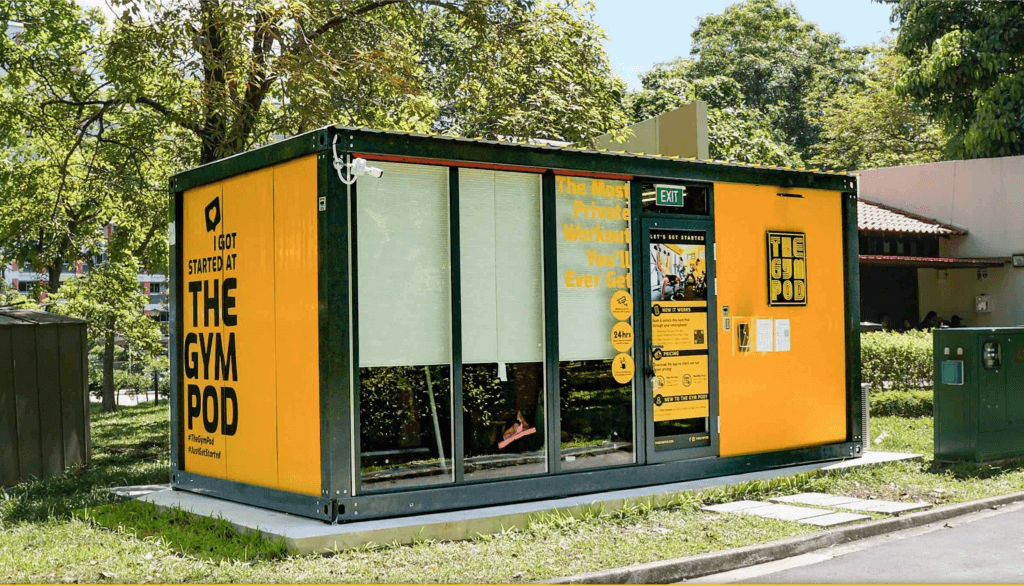
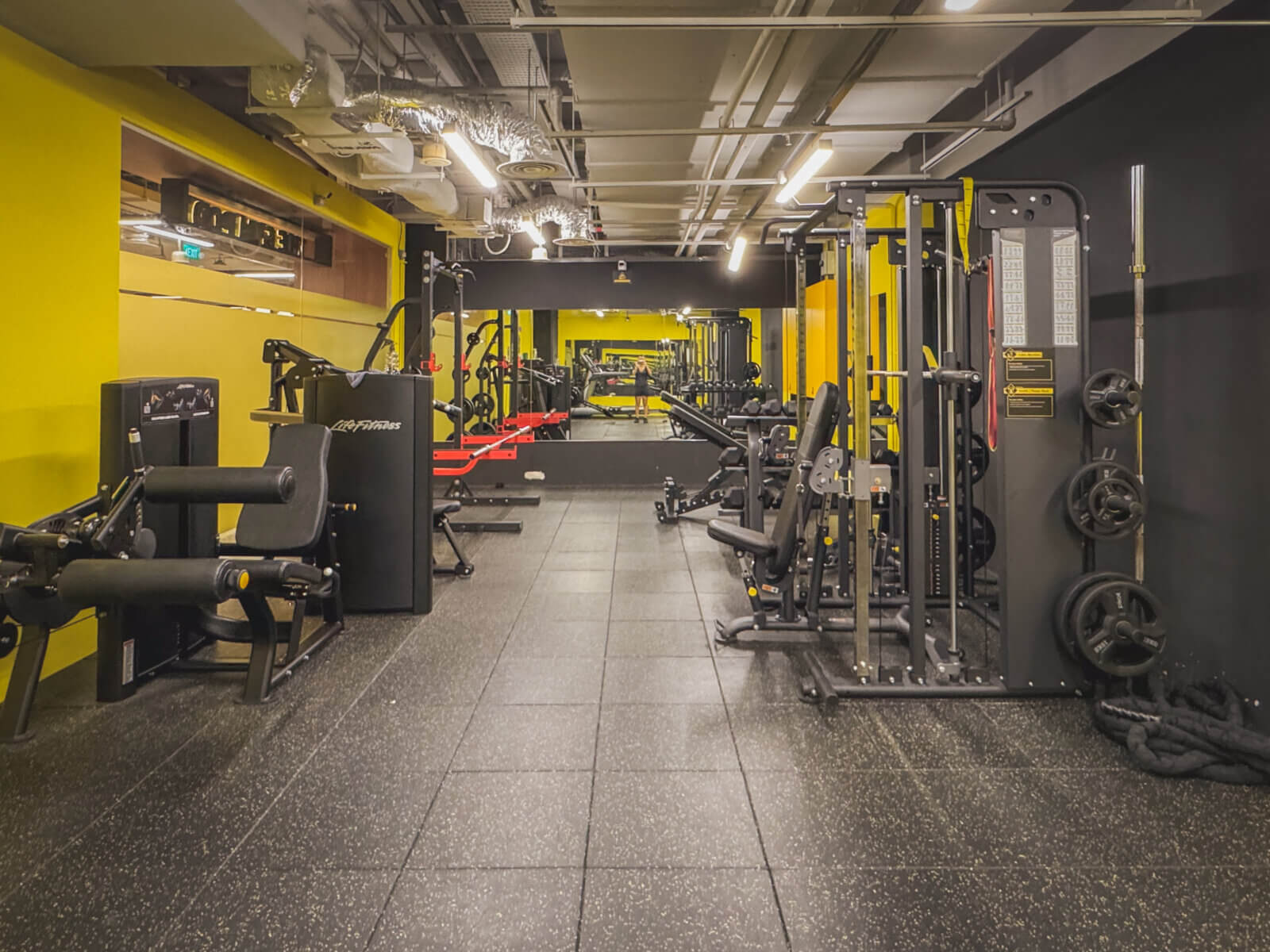
I did mostly weight machines at first because they are supposed to be idiot proof for people like me, and I didn’t want to overthink. Midway through my gym closed for a renovation, so I was forced to find a temporary gym. In Singapore we have these mini pod-like gyms around the island:
They don’t require a contract (unlike most gyms here), they are mostly private – one pod per person – and we can book it anytime on an app. Unfortunately most of these pods do not have weight machines, only barbells, smith machines and free weights, so you can say that I was forced to learn how to use the smith machine. Since these pods are private, I didn’t feel any self-consciousness or awkwardness being clumsy or anything. With that, I did my first squat with a barbell using the smith machine.
in my first gym pod
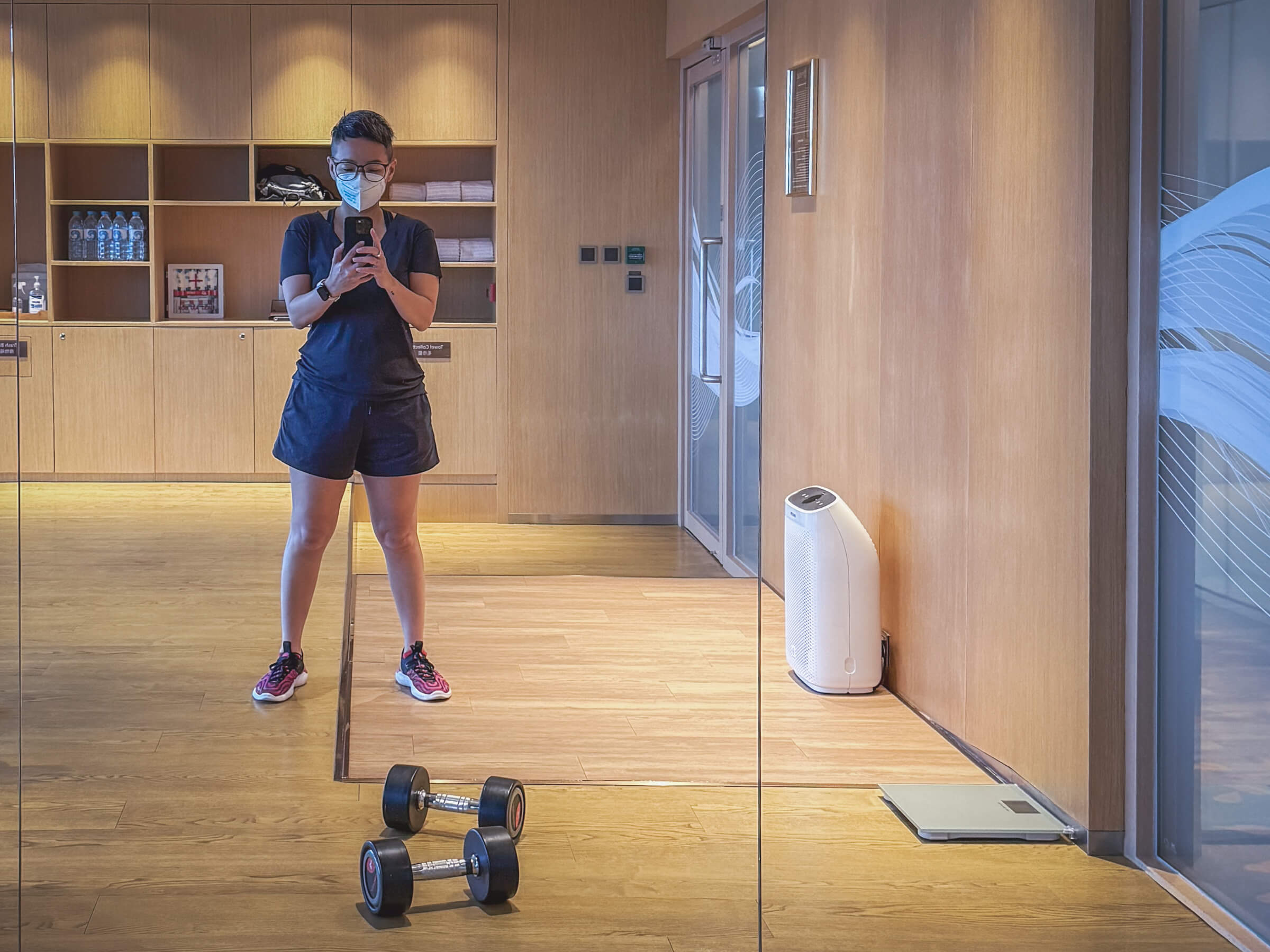
I slowly progressed to doing romanian deadlifts, bench presses and overhead presses on the smith machine, and some basic movement variations with dumbbells. I think this is a very useful skill to have, especially while travelling. Most hotel gyms do not have fancy equipment, but will at least have dumbbells. I found that learning to strength train was an easier way to keep myself fit during travels, versus running. I know that they work different systems, but doing some form of exercise was better than none.
with dumbbells in hong kong
After my first gym contract ended I signed up with Anytime Fitness. Their membership allows me to use any of their gyms in Singapore. Since I typically wake up from 4am-6am, I thought it would be good for me to use the gym in ungodly hours avoiding the crowd.
I am always craving for novelty, so it is great to be able to visit a different gym each time. I take the opportunity to read or write on the commute, and post-gym I takeout food from a different restaurant. Win, win, win.
What I loved about strength training is becoming stronger. Duh, I know. But I’ve never associated the quality of strength with someone like myself. Most of my life I have thought of myself as weak, in all definitions of the word. I was mentally, emotionally, and physically weak. I always needed help with carrying heavy stuff. I preferred buying groceries online because I can then avoid carrying them myself. Placing my carry-on luggage in the overhead cabins felt like a life-threatening experience.
I was surprised how fast I was progressing. I don’t know how it compares to the average woman, but it felt fast relative to my self and my body. When I first started weight-training, most weights felt unbearably heavy. They just felt like I wouldn’t be able to lift them easily for ever.
In my first session my trainer made me start with 20kg on the leg press because I told her I ran frequently. I didn’t understand the phrase “train to failure” until then. Post session I had one of the worst cases of DOMS (delayed onset muscle soreness) in my life, unable to walk properly for days after.
(Another terrible case of DOMS I can consciously remember was just hiking a gentle hill for a couple of hours a few years ago, which was how unfit I was.)
Fortunately I didn’t have any more cases of DOMS since. I don’t consciously train to failure since the research shows it doesn’t make much of a difference. And even if it did, I am not particularly seeking maximisation, just improvement. In life we often have to weigh tradeoffs, and since I have fragile health I don’t want to regularly walk around with an extreme state of inflammation. A little bit of stress loading is manageable for my body, but I am not sure what are the repercussions of frequent and dramatic stress. Maybe other people in general good health can push their body’s limits more, but I tend to get really ill in a multitude of ways. It is already a miracle that my body can afford to exercise regularly, because I know a ton of people with chronic illness can barely get out of bed.
One of the tradeoffs I am making is that my running progress is now slower. I have been mostly exercising every alternate day most weeks, so our of four days per week I can only run twice and strength train twice. Running twice a week is barely enough for any adaptations, and I was stuck at running 5km for most of this past year. Every time I made some progress it would be either derailed by illness or travelling.
I also started to gradually prefer strength-training (gasp), for many reasons. First of feeling strong is not a feeling I am acquainted with so I started to develop a new positive relationship with my body. Then it was simply fascinating to get obviously stronger. I would be struggling to lift a weight for a week, and the next it would suddenly feel easy. I have never experienced this sort of progress in my life before. Even running felt hard for a very long time.
I also experienced radically improved metabolic health – my blood glucose stopped dramatically spiking post meals. I mean, this is another duh: it is common knowledge that more muscle is correlated to better insulin sensitivity. Running did improve it significantly, but strength training made me doubt the accuracy of my glucose meter.
Slightly obsessive with trying to achieve my first pull-up, it was tempting to forego running all together. But I knew strength-training requires good mitochondrial health and endurance capacity too. If you watch Physical 100 you would also know that having muscles may not equate to endurance at all, so to me there is no point being able to lift something heavy up for 5 minutes but falter straight after. Cardio is also known to help with muscle recovery. So it was important for me to focus on the bigger picture rather than pursue potential quicker results.
But I still managed to hit 8.5km running last week – a distance I last ran before I got infected with covid 1.5 years ago – I think strength-training made running feel easier too because now I have more muscle in my core and legs. So strength and aerobic capacity have a synergistic relationship.
Overall I’ve also been getting less migraines, but I am not sure how much strength-training contributed to it versus other factors. Scientifically speaking it would make sense that it helped, because of the improved insulin sensitivity and also probably a better capacity for oxidative stress.
Carrying heavy weights has also become a lot less dreadful. I used to optimise everything for lightness: even something like carrying a camera in my backpack would make me think twice. These days I carry a selfie-stick-tripod with me so we have been taking a lot more photos than we usually do. Memories are so precious, and I don’t know when I’ll lose the opportunity to be in life with my partner doing little mundane things that we so easily take for granted so I like documenting them whenever possible. Who knew that starting to strength-train would lead to more photo-taking?
I have written about this before: that one of the major reasons why I love exercise is because it is one of the rare things in my life that feels truly rewarding. My mind can go berserk and I can have the darkest thoughts, but when I train my body does its own thing. It is so reliable, unlike me. I just need to show up, put in the brute force, and it gets fitter. It doesn’t care that I don’t care about my self or the world. The rest of the day I can be brimming with self-hatred but at the gym, I am one with my body. I am very thankful that it continues to bear the growing load I heap on it, and that millions of biochemical reactions are still working well enough for me to become stronger. Unlike most other people I don’t take this for granted, because I have had my body fail on me before. What I didn’t know back then was that my body failed because I have been failing it for a very long time. If I could go back in time I would treat it a lot better.
We lose 3-5% of muscle mass per decade after we hit the age of 30. Resistance training is encouraged to prevent further muscle loss. But I am pretty certain at age 43, I have more muscle than I ever had in my entire life, including my 20s. At an age when people start to accept getting weaker, it is pretty weird to become stronger.
The amount of muscle mass one can attain seems to be genetic. I don’t know when will I start to plateau. But since I had almost nothing before it has been a fascinating experience to see that I have visible biceps for the first time in my life. I can also pull myself up on a bar now:
A year ago I could barely grip and hang on the bar for a second before losing my grip. I’ll document some of my progress here so I can do a comparison if I am lucky enough to strength-train for another year (no more covid pls):
2023
2024
leg press
20kg
55kg
lat pulldown
19kg
42.5kg
shoulder press
7.5kg
20kg
chest press
5kg
27.5kg
romanian dead lift
9kg
44kg
Where does this lead me? I don’t know. Because I have lost my health before I am afraid to set goals, project and hope, especially with a disabling virus still running rampant. But if I do stay healthy enough I am glad that I have both strength training and running as my psychological refuge. They are the only times of my day when I am not being tortured incessantly by my mind.
I would like to have a few more sessions with a good trainer, because I want to learn proper barbell lifting. I realised I have been lifting heavy things off the ground the wrong way once I started to learn proper deadlifting. Who knew we are supposed to use our legs, not our arms? Did you know? I definitely didn’t.
I can do a pull-up while standing flat now, but it would be really nice to do a strict pull-up from a dead hang. Still working on it right now.
I wish I started on this much, much earlier in my life, especially at an age when muscle growth would have been much easier. I’ll be heading into menopause soon and everything will be much harder. I have a family history of surgical menopause, so perhaps the time will come sooner than later. But thanks to social media I have seen a ton of grandmas still gaining while in their 70s and 80s so I am not that worried. I am more worried about getting covid again than ageing itself.
I don’t ever want to think it is too late to learn anything. I picked up photography, cooking, exercising – all late. I didn’t have the will, imagination, self-regulation or emotional capacity to learn these things when I was younger. I was either being depressed or a workaholic. I wish I could have started a lot of things way earlier, but only upon hindsight I realised I could only do all these things now because I was able to grow into a different person, and I was lucky enough to have several environmental factors in my favour. I can only feel sorry for my younger self, because she was simply trapped in so many layers.
Hopefully, my future self would be able to write many more of these posts. If not being able to exist in such a moment however temporary, is still something I am thankful for.