I had a lot of self-hatred when I was younger. But over the past few years it gradually eased up as I embarked on a journey of self-understanding. This journey wasn’t voluntary, it was forced upon me after a physical and emotional breakdown. I guess that is what happens when our bodies are encased in a shell for too long. I feel like breakdowns are not necessarily bad – inevitable as we grow out of our old selves. An outcome of growth, despite the suffering. We suffer because we are conditioned to favour stability over change.
I am lucky in the sense that I tend to go to books as my source of comfort during trying times. The internet has been very helpful, as somehow there are always people going through similar experiences, sharing resources that have helped them. This is something I will always be grateful for despite all the negativity that comes with living on the internet. There is a spirit of sharing and access to that spirit. People sharing their experiences and resources online are how I started reading some books that I wouldn’t have picked up on my own.
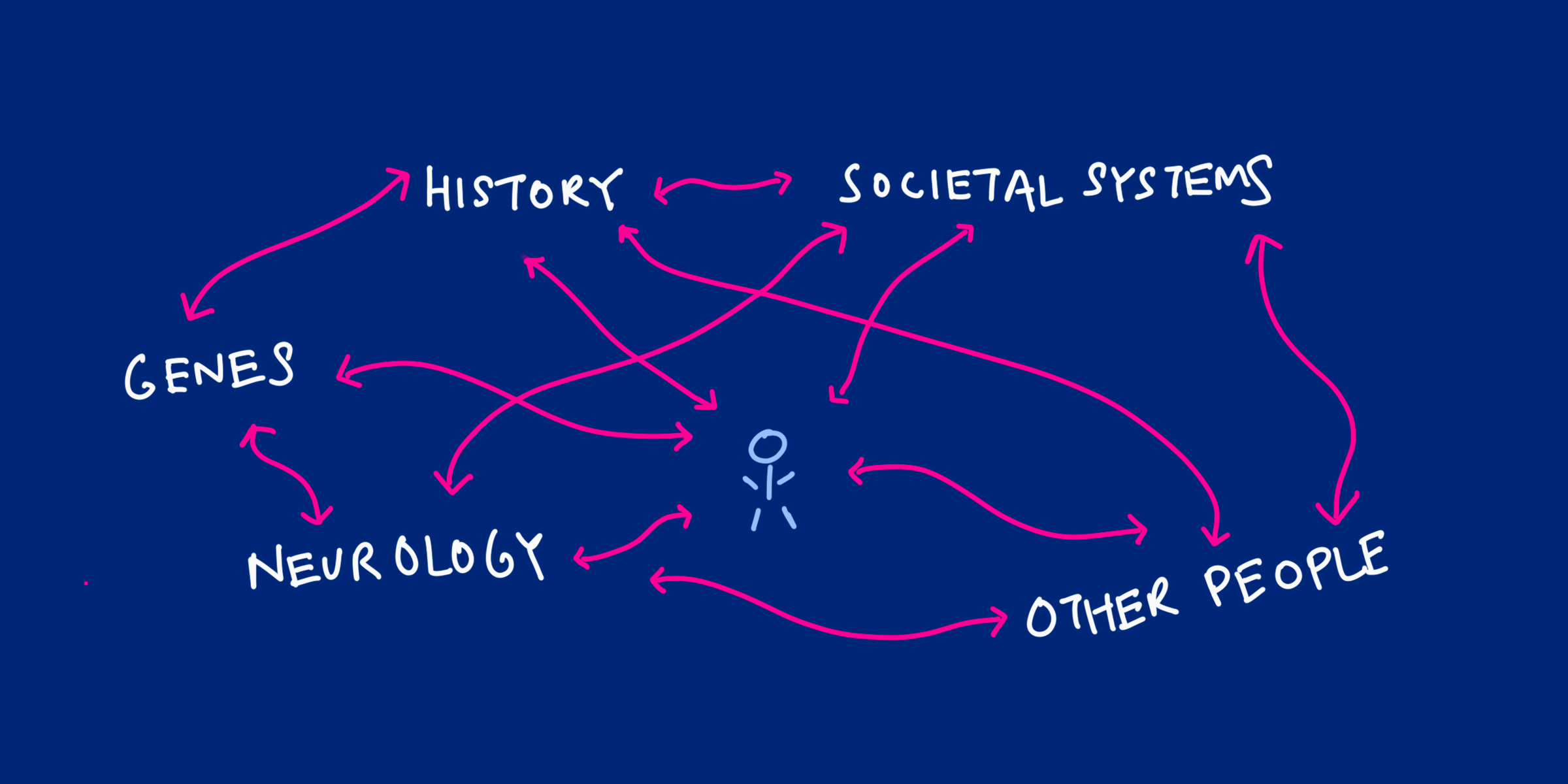
Through these books I started to understand myself better. Why do I always seem to be in pain, why are some things extremely difficult for me, why I keep burning out, etc. This is why I get touchy when people talk about choices, free will, personal responsibility, determination, grit, resilience etc. I learnt that there is so much that is out of our personal control. Some factors are simply an outcome of our history, some are embedded within the systems we live in, some are impacted by our ancestors, some are determined at the stage when we’re incepted and in the womb, so much is also influenced by what goes on in our early childhood years, etc. And all of them are interconnected, feeding into each other, creating feedback loops that entrench us negatively in our lives.
I gradually stopped being so hard on myself. But I still am. After years and years on this journey, I still feel like being trapped by invisible tentacles every day. Each day is a struggle, a constant battle with my mind. My mind is so me but not me at the same time. It generates these thoughts, these responses, these bodily sensations. I am on a roller coaster with no on/off switch. Sometimes something really innocuous will start a flood of very unpleasant sensations. I struggle to make healthy choices for myself, because half the time I am just too fatigued, the other half I just want to compensate myself for everything I’ve been through.
Because of my growing knowledge of why I am the way I am, why society is the way it is, I am able to develop some compassion with myself. Since I can truly see how things affect me on such a deep unchangeable level, that so much of what I “choose” aren’t really choices but they are a cascading effect of events out of my personal control, it became inevitable that I saw that other people too, are deeply impacted by so many factors out of their control.
We seem to believe every act is a contemplated choice, but so much of our behaviour is being driven by unconscious forces. The word “unconscious” seem new agey or freudian, but we are not conscious over how our neurotransmitters and hormones function. They have a life of their own.
If we truly had conscious choices over ourselves, wouldn’t most people be exercising every day, sleeping early, eating well, making enlightened choices for themselves, their relationships, their politics? Why would we be actively destroying a planet we are living on? Why would we compromise our precious health in various ways? We know alcohol is very harmful for our bodies, but we drink anyway. Some of us smoke even though it is one of the worst carcinogens. Some of us are addicted to sugar. Others are addicted to poor relationships, busyness, social media, etc. Do we really believe that all of these people including our selves included are actively choosing to harm ourselves?
I know I can’t. I know for a scientific fact that we can’t. It is just neuroscience. We can’t control how our brains developed, how they are wired, how our neurotransmitters and hormones work or don’t work. If we can, people with brain damage or tumours would not have dramatic personality changes. If a tumour can change our personalities, how free are we to be who we want to be?
And if we cannot be free to be who we want to be, how much can we blame others for not being able to be who we want them to be?
When the buddha preached compassion, I just couldn’t relate to it. I am not a person who believes it is just good to be good (this is complex to explain, but tldr is that I believe the push to make humans being “good” has caused more harm than being net positive). But if I look at it systematically, compassion is not just an altruistic value. We see it as altruistic because of the way we are conditioned to feel about the word. But now I see it as a developed understanding towards how interconnected systems affect us as people, and how this understanding can lead us to hold other people in a different light.
I realised compassion works in tandem with mindfulness – which is probably why the buddha taught what he taught. When someone acts in a way we cannot understand, we can have the capacity to conjure that pause – being mindful – and with that pause we develop the capacity to look at the systemic factors behind why this person may be acting the way they are. Sometimes this person is our selves. Sometimes it could be someone who has hurt us directly. Other times it could be a stranger on the internet. The hardest is probably trying to understand someone like Trump.
The reason why mindfulness and compassion eases suffering is not because they are woo-woo or simply “good”. It is because we tend to suffer less when we truly understand something. It is not a cure and doesn’t make our suffering go away, but it does lead to some form of acceptance.
When everything is simply grouped into good or evil like we all have total free will over our selves, there is no room to manoeuvre. There is no space for understanding, no width to learn to see how everything has its cause and effect. Hence we blame, we resign, we become upset when people continue not to make choices we want them to make. If we don’t see the systemic factors and how they feed into each other, we are not addressing the root causes. If we don’t address the root causes, we continue to be trapped in vicious cycles.
This is simply my current intellectual understanding. I am not claiming I have developed the capacity to be compassionate, in fact it is as far from being true as it can be. I am also not saying everyone should learn to be compassionate, because this is asking too much of people who are already subject to everyday suffering in various forms. But perhaps what I ask of myself is to be doubtful and curious. Be doubtful of my own harsh inner interpretations of situations, and be curious about why the circumstances are the way they are. Learn to see the tentacles that are trapping us, beyond the current moment.
It is easier to point fingers. But resentment is a form of suffering. Having a hardened view of situations is also a form of suffering. Unlike some other people, I do think resentment is a valid response towards many situations. However, it is up to the individual whether they prefer to seek psychological freedom instead. I think learning to see the tentacles that trap us may not remove the tentacles, but it may free us in other ways. It also allows us to know what we’re working with – then we can decide (if we can) whether we want to accept the situation or attempt to rebel. It may free us to know that what is trapping us is not our hopeless selves, but deep entrenched systemic forces. It may also free us to know that the person who is choosing to hurt us is not doing it out of sheer callousness, but they too, are limited in ways we may not be able to empathise with.
Understanding may free us. Or it may not. I don’t see it as a solution or an answer. But I see it as creating room for our minds to expand our awareness.
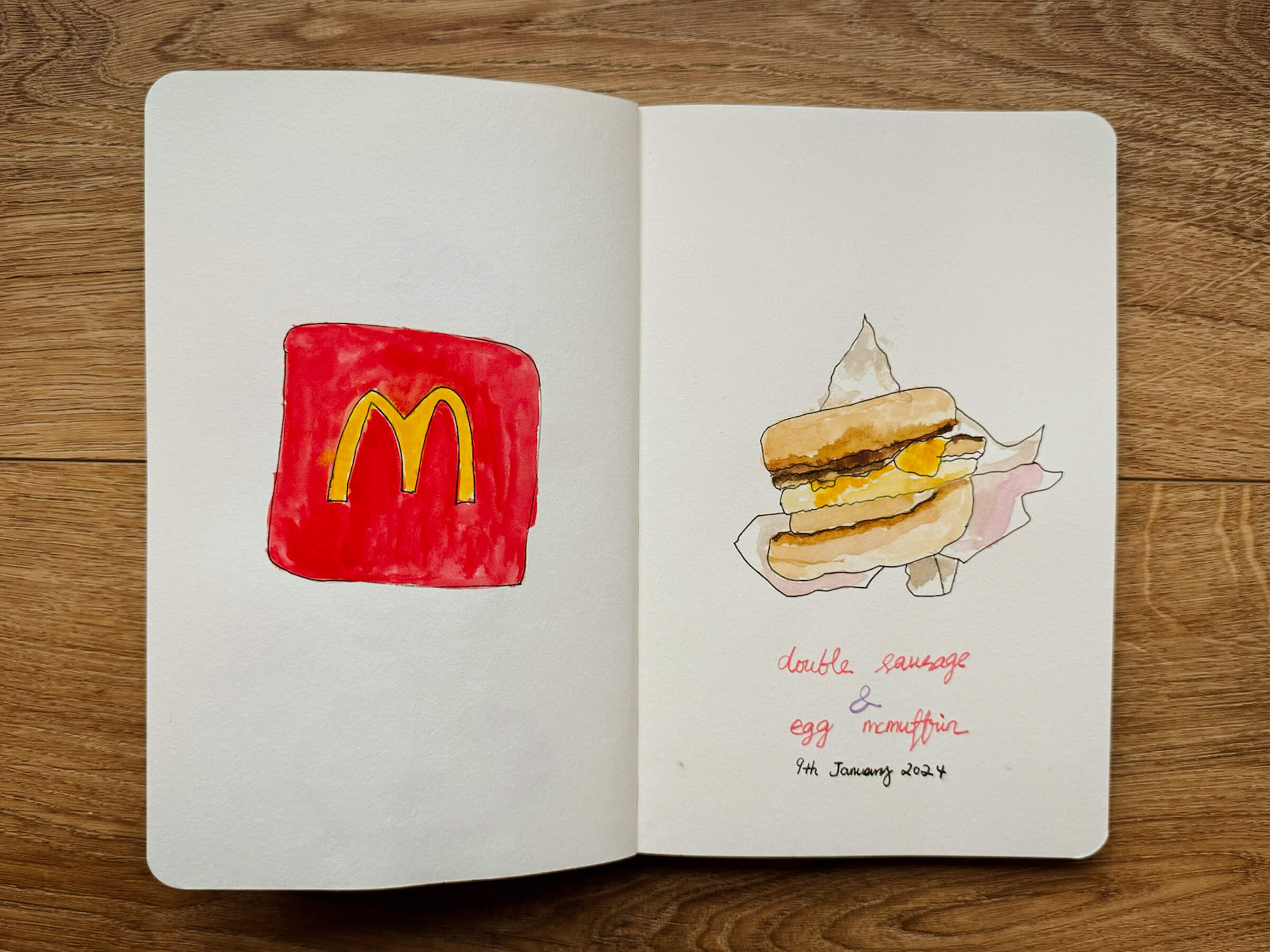
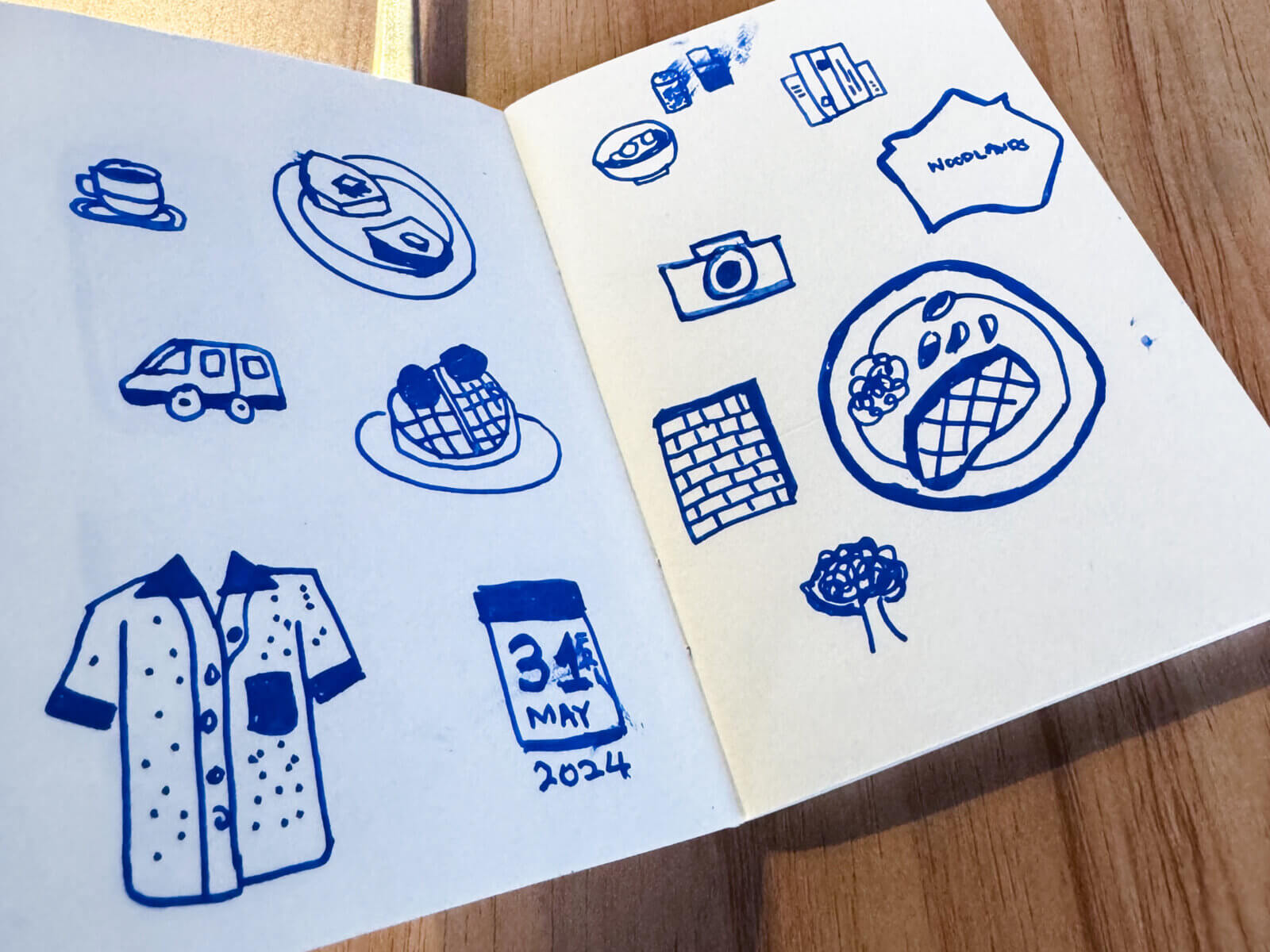
I just started drawing and painting again last week after stopping for a couple of months. Since then I’ve been trying to do it more regularly, hoping to incorporate it as a daily practice.
Previously I was hoping that drawing would be my hobby, so I was waiting to like doing it. So when things got stressful and depressing in my life, drawing was one of the first things that got dropped. It is difficult to do something that one doesn’t like doing. It feels like a chore.
I’m not really sure why, but recently I had a semi-conscious mindset shift. I realised instead of hoping that drawing would become my hobby, I should see it as a meditation practice.
There are many forms of meditation, but one of the most talked-about is mindfulness meditation. We take deep breaths focusing on each breath, bringing our attention back to the breath when our minds start to wander. It sounds really simple but most people find it difficult to even start. Anyone would think sitting and breathing is one of the simplest things humans can do but in reality we would do anything to avoid it. That’s the paradoxical magic of it: it is so simple that anyone could do it, but so difficult in practice that just merely managing to have a regular practice of this simple act can bring profound benefits.
Many of us go about our days in a disassociated state, going through our routines on autopilot mindlessly. We are almost never fully present, not knowing what it means to give our full attention to a moment. Our mind automatically likes to wander, going everywhere except here. The point of practicing meditation as I interpret it is to strengthen our ability to notice this phenomenon, and thereafter attempt to be fully present in the moment. The concept of being fully present can be vague, especially if we’re so used to being neither here nor there. It is the ability to be aware of what truly matters in that particular moment – the actual reality we are experiencing without being coloured by the past, future, biases, projections. Plenty of our suffering is caused by our thoughts and the feelings generated by those thoughts. If we’re lucky, meditation allows us to see that it is possible to have some distance between our thoughts and us.
Since meditation is difficult for most people to practice, it also has this effect of improving our ability to regulate and self-direct our selves. By practicing the capacity to practice – doing something we don’t necessarily want to do but because we recognise that it could be beneficial – we may develop the psychological muscle to will ourselves to do something difficult even if we don’t want to.
This is the role of drawing as a practice for me. I do it precisely because I don’t want to do it. This is why I have started to see it as practice, not a hobby. It is about learning how to show up, and not feeling over-dependent on my moods to do something. How difficult can opening up a sketchbook and making a few squiggles be? I am not afraid to ugly draw (or so I think), so it should be easy. But it just feels so difficult.
But if I do start, it becomes truly meditative for me. I go into a zone where it is just me and my drawing. My mind thinks of nothing else. Is it because it takes that much mental focus to draw something? I feel strangely exhausted after.
In many ways I am a very fuzzy person. When I see things I see fuzzy impressions of them. Drawing is teaching me to notice the details, to improve my observations skills. Instead of bringing my attention to my breath I start to notice where the line should start and end, where the light and shadow should go. Attention is a requisite of drawing. I am still nowhere good at it, but I notice that I am noticing. I am using my hands to make intricate movements, instead of clicking on a mouse and tapping on keys. I have terrible motor skills which just seems to be inborn but I lean into them nonetheless. Every jerky unintended movement makes its own art – my eyes see something, and my hands interprets it into something else.
My drawing looks nothing like the actual thing, but it is mine. The lines are uneven, the proportions and perspectives are all wrong, the colours are rudimentary. But all of these imperfections can only come out of my hands and my mind. It is an outcome that can only be produced from the person I am and the (lack of) skills I possess at that very moment. It is an expression of me living in that moment. All of this will never come by again. A lesson in zen.
I am telling myself to simply show up. Make a squiggle into my sketchbook. Any squiggle. Accept the mistakes, tolerate the smudges. Some days nothing looks good, but I drew.
I actually like my drawings, despite my obvious lack of technical ability. They just feel so utterly me. It is as though if I could melt my soul into lines, colours and brush strokes this would be the outcome. I am messy, smudged, skewed and jagged, just like them.
p.s. When my friend asked me how I would remember her after she’s gone, I told her I would make a drawing and burn it for her (it is a singaporean chinese custom to burn things for people to receive it in the afterlife). She has always been an artist and loves drawing, so I thought it would be apt to remember her this way. It has been a month since she’s gone. This post is written in her memory.
A few days ago a Singapore Airlines flight encountered severe turbulence, causing one death and tens of people to be injured. The night the news broke out I commented to my partner that this may get worse, because in recent years weather patterns have become more extreme and unpredictable. It turns out my fears were not unfounded. What seems like a tragic isolated event to most people feels like the start of a worrying trend to me (sometimes I resent this hyper-awareness).
Concurrently in the US a second person working on a dairy farm has tested positive for the bird flu. The virus is also spreading across farms in the US right now. As of now, 9 states and 63 herds are affected. I can’t help but wonder if we would collectively be losing our shit by now had this happened before covid. But we are now all trying to pretend this is still okay because of the trauma generated by covid. A second pandemic would be very hard to stomach, when the first one is not over.
It feels like we’re living in the beginning of the end. Everything seems to point to things getting worse especially because our main coping mechanism is denial, so we wouldn’t do anything about everything until shit hits the fan repeatedly. The system is complex, so I don’t know if the cascading effects will cause us to decline suddenly and rapidly, or it would just be a slow, drawn-out decline. We are also weirdly resilient in some ways, like cockroaches. It is just that we seem to prefer leaving things to the last minute. And sometimes these last-ditch efforts wouldn’t be enough. I mean, the covid pandemic might have been prevented if some people actually did something about it in its early days (instead of punishing the doctor who sounded an alarm over it).
I must have been spoilt by the relative stability we enjoyed in the first few decades of my life, so having all of these swim in my consciousness is provoking a lot of anxiety, on top of having to process my friend’s passing recently. I suffered from existential anxiety even before the pandemic, so it is being exacerbated now. I too wish I can do the whole denial thing like everyone else is doing, but I can’t seem to.
I feel an urgency to live life, to do the things I wish to do and not defer anything unnecessarily. Will flying be unsafe one day? Will we start to experience food security issues due to the worsening climate? How about wars? Will I receive a life-changing medical diagnosis suddenly? How long will people I care about remain alive and well for?
I suffer from executive dysfunction, so there are plenty of things I wish to do and yet I cannot seem to do. But it is difficult to tell what I truly want to do versus what I think I should do. I cannot help but blame myself for “wasting time” every day, because life is so impermanent yet I am doing none of the things I hope to do. How do I balance the compassion for my condition with the urgency I feel?
I wonder how are similarly aware people choosing to navigate their lives at this point in time. It is difficult not to feel weighed down and paralysed, and it also feels wrong to live somewhat hedonistically. I am a somewhat prudent person because of my chronic health issues. Typically I wouldn’t do anything to risk my health or stability. However being prudent in the present is only useful if there is a future.
We can never know our future timeline anyway. Will there be a day, five years, or a few decades? It is easier to plan, to know how one should live if there is a timeline. But in my opinion if life was already impermanent, the unpredictability factor has gotten much worse. In the past there was a probability of experiencing a negative personal event, but now we are all facing a collective future that is trending negatively.
Personally I’m going to try harder to live as though I’m facing a shortened timeline. I was like this in my youth, hence I made plenty of risky decisions which brought me great – both positive and negative – life experiences I wouldn’t have had if I had chosen to stay on a safe and stable trajectory. But I was forced to become a lot more conservative with ageing and chronic illness.
What would “living as though I am facing a shortened timeline” look for myself? I don’t really know. I am still getting to know myself. I had hoped to have more time to do so before I figure out how I should live. But everything seems precarious now, and the only thing I can do is to be willing to try more experiments in order to figure myself out.
I think in these times people like to consume feel-good stuff, and my writing is the opposite. But I am simply writing as I am.
Wanted to write a note but I guess this warrants a proper post since I’ve completed my main aspiration for 2024!
Today while trying our home pull-up bar I realised I could lift myself halfway without a resistance band, so I called my partner over to take a progress video. I made another attempt while she filmed, and managed to hoist myself over the bar this time!
I know this isn’t considered a strict pull-up – I did not start from a dead hang – I made a tiny unconscious leap to hang below the bar before lifting my head and chin above the bar.
Someone mentioned that this is a negative pull-up, but I couldn’t do negative pull-ups even if I wanted to without a stool. That’s because I am simply cannot leap high enough to get my head above the bar to perform a negative. When I started on this pull-up journey I tried to do negatives but failed. So I bought resistance bands instead, starting from the thickest at 45kg. I couldn’t lift myself even with the 45kg (my actual weight is a few kg above), so I had to combine the 45kg and 25kg ones.
There are people who are anti-resistance bands when it comes to learning how to do pull-ups, but I found them very useful in inspiring confidence and they allowed me to get the hang of it. I went from 70kg of resistance bands to 45kg (11 weeks ago) to 25kg (8 weeks ago) to 15kg (4 weeks ago) to finally 5kg just 4 days ago (journey on ig story). All this while I worked out at the gym at least twice a week, but had pauses when we travelled, got sick, or had a vaccine. My first strength training session was on the 23rd of October 2023, so it took me almost 7 months to get this far.
Strict pull-up or not – all I know is I couldn’t do this movement even with the help of the bands, so it feels like a big accomplishment. I’ll work on a strict pull-up next. I don’t even know if I can repeat this tomorrow.
Also, please pardon my pyjamas. I wasn’t expecting my first pull-up at all.
When I wrote about open-air dining in seoul I thought nobody would care, but surprisingly I got quite a bit of comments and DMs from fellow covid-cautious travellers. I would keep on doing the same otherwise: people tend to to write on popular topics to feel accepted, but isn’t it meaningful to share something different about our selves or the world?
the spectrum of covid cautiousness
Covid cautiousness is a spectrum: some people would not travel or dine outdoors at all, and outdoor dining is not risk-free. So it really depends on the individual’s risk assessment. Even for outdoors we would not dine if the space is packed, and if there are visibly sick people around. In this aspect my partner is more cautious than me, so she gets to assess the space first. We are on an interesting spot on the covid-cautious spectrum: the average person thinks we’re being hypochondriac – I can’t tell you how many times I’ve seen people visibly gasp when I tell them we wear an uncomfortable n95 on an entire 7-hour flight, don’t dine indoors at all or eat on planes, but there are also people who would frown at us for being on a plane or that we would even contemplate eating around anybody even in open air.
Sometimes I can’t help but think how much less complex my life would be if I didn’t have to think about how cautious I want or need to be. Like if covid didn’t exist at all I would be 50% happier. At least my relationships wouldn’t be as awkward as they are now. I too think that masks are uncomfortable I wouldn’t pretend otherwise, and I miss dining indoors terribly and would like the occasional hangout, but I have spent 9 fucking long years (and $) trying to get better from chronic debilitating migraines, so I cannot imagine having to go through that again, or worse. Who is going to pay my bills if I get more disabled?
So it is what it is. Unfortunately it seems like the virus is going to be around forever and as long as there are no available medical technology to prevent or resolve post-covid conditions, my partner and I will have to keep having to do the covid-cautious mental gymnastics. Our risk assessment may change especially if we get covid again, but for now everything we have been doing seems to work. I am not sure how much of it is luck though.
hong kong has a surprising wide variety of outdoor options
We have resisted going to hong kong because it is known to be dense and crowded. We had assumed it would be extremely challenging to find any outdoor dining options, as hongkongers are known to dine in tight spaces – they have a culture of sharing tables precisely because there is not enough space, and the probability of having space outdoors seemed absurd. I did not recall seeing any outdoor dining options in my previous trips, with the exception of dai pai dongs, which are also going extinct.
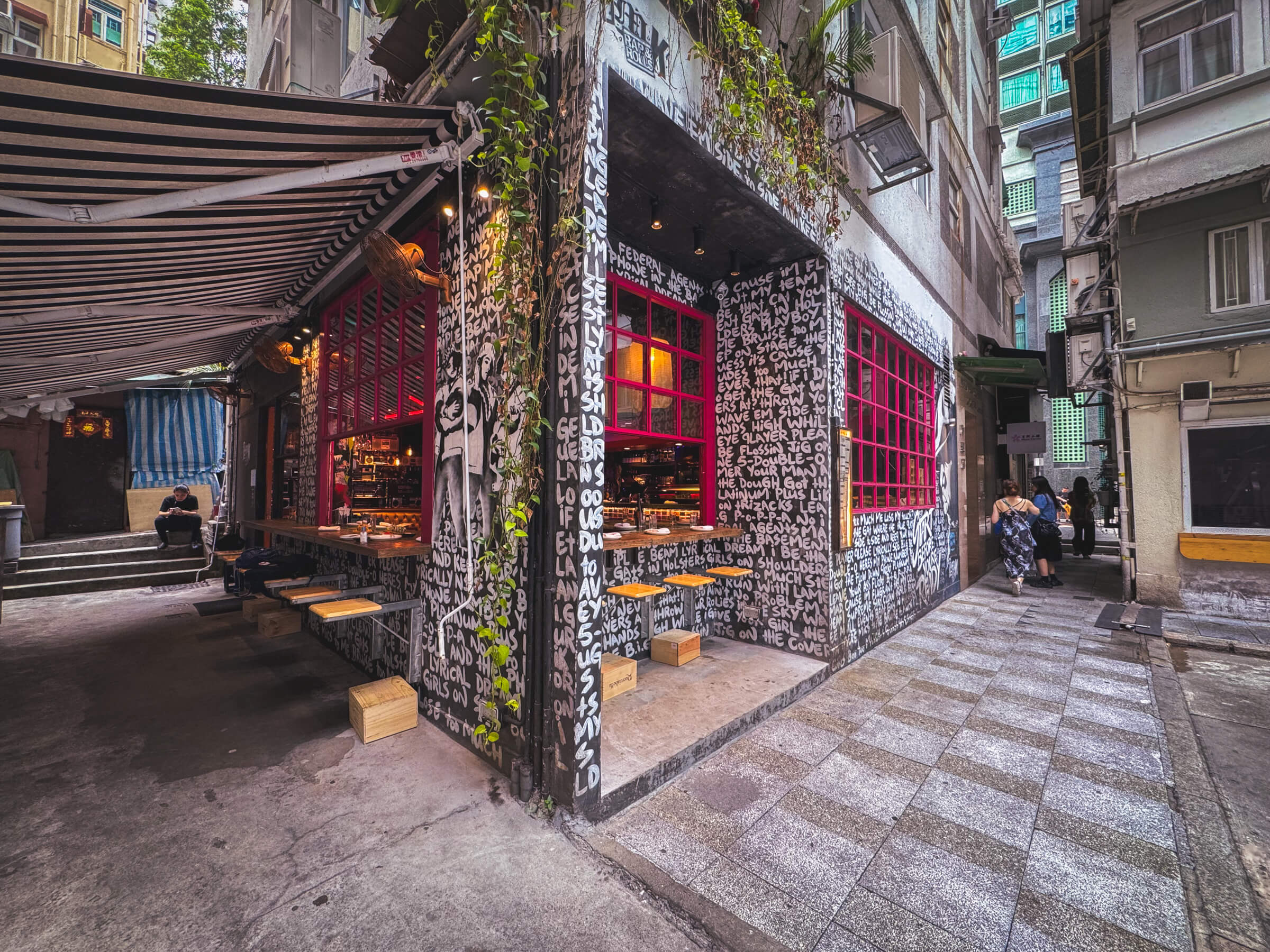
We went there anyway prepared to do takeouts or food delivery. We were surprised by the plethora of options for a dense city like hong kong, especially western-style cafes which have popped up everywhere. We enjoyed experiencing the different dimensions of open-air dining in hongkong. Here are a list of the places, the caveat being that their suitability may depend on one’s risk assessment.
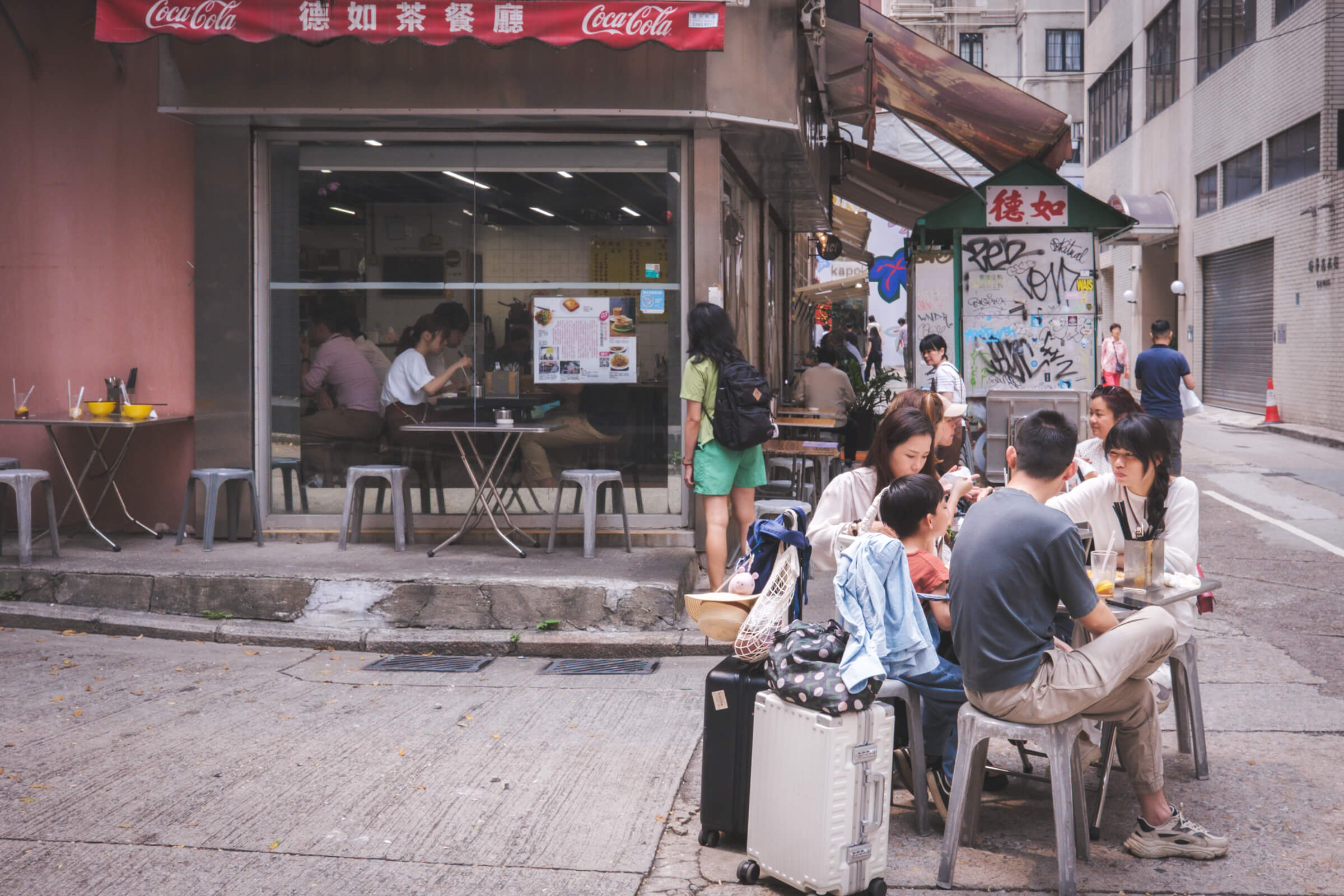
We thought it’ll be impossible to find a proper outdoor cha chaan teng (hongkong-style cafe). Tak Yu not only has outdoor sitting but seems to have a long history behind it. We love the old hongkong vibes. Their famous french toast is only available after 11am.
Near the same area (Star Street, Wan Chai) you can also find many other places with outdoor sitting:
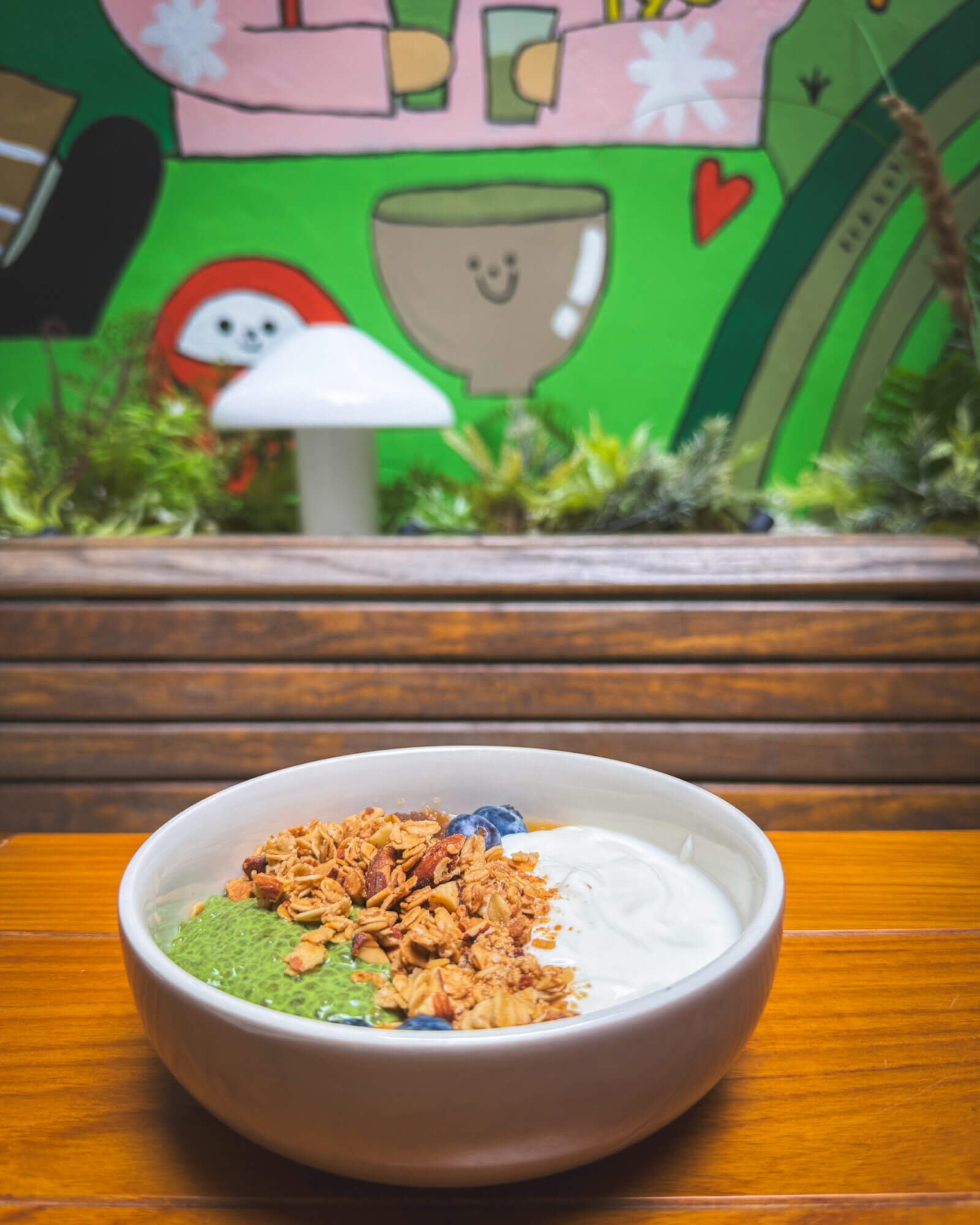
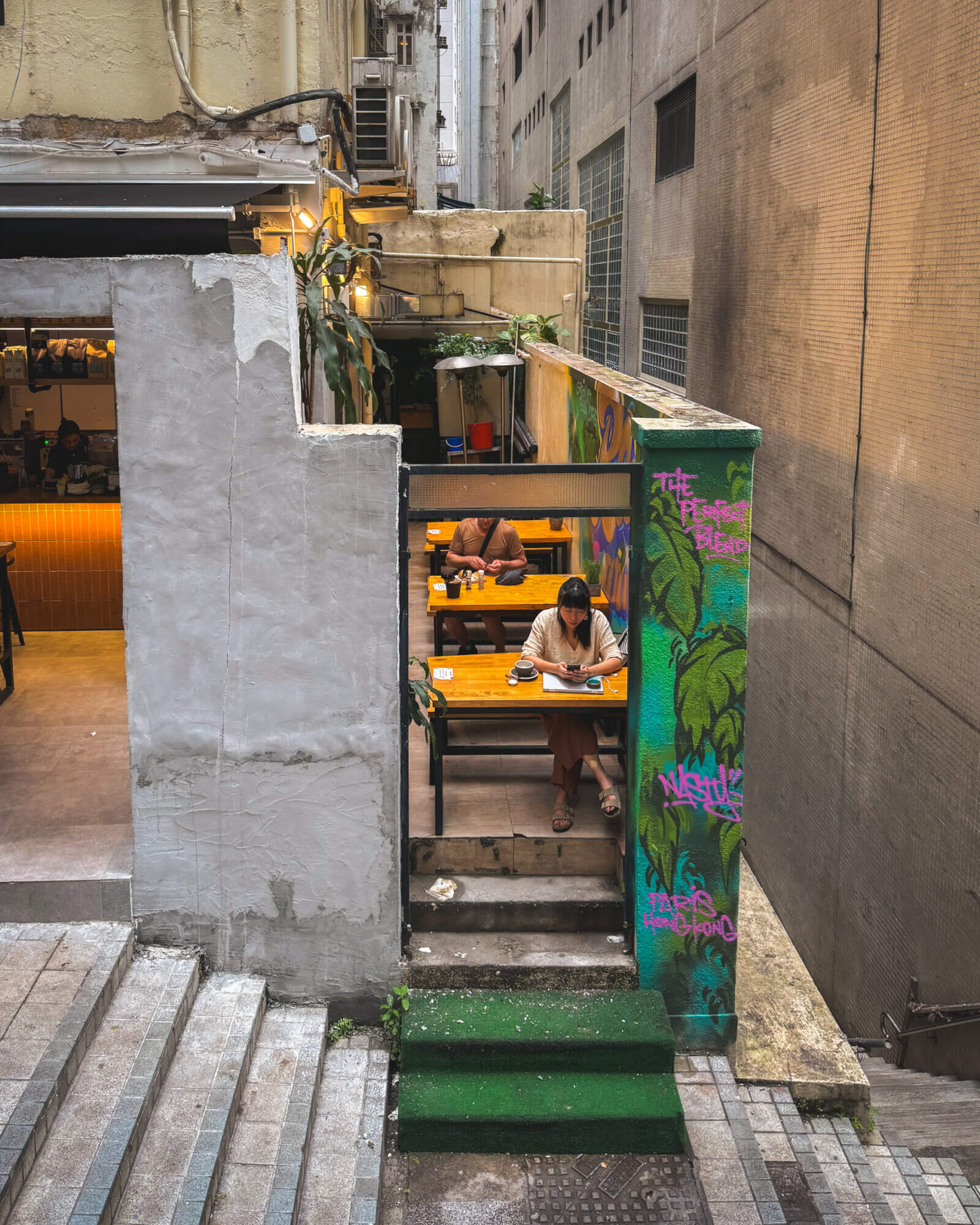
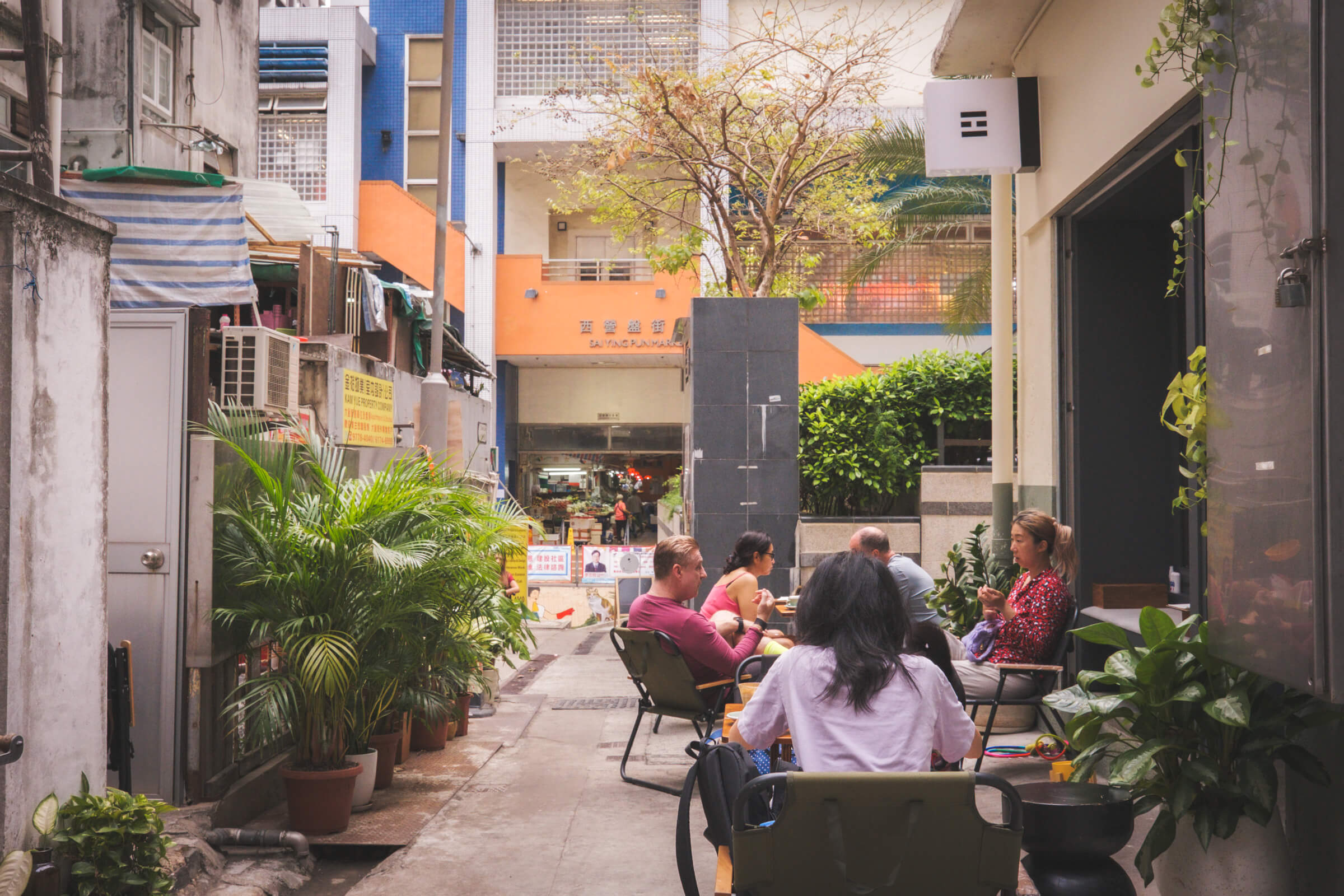
They have a cute outdoor space inside the restaurant. The matcha is so good here we went back several times. Serves a good matcha chia seed pudding bowl too.
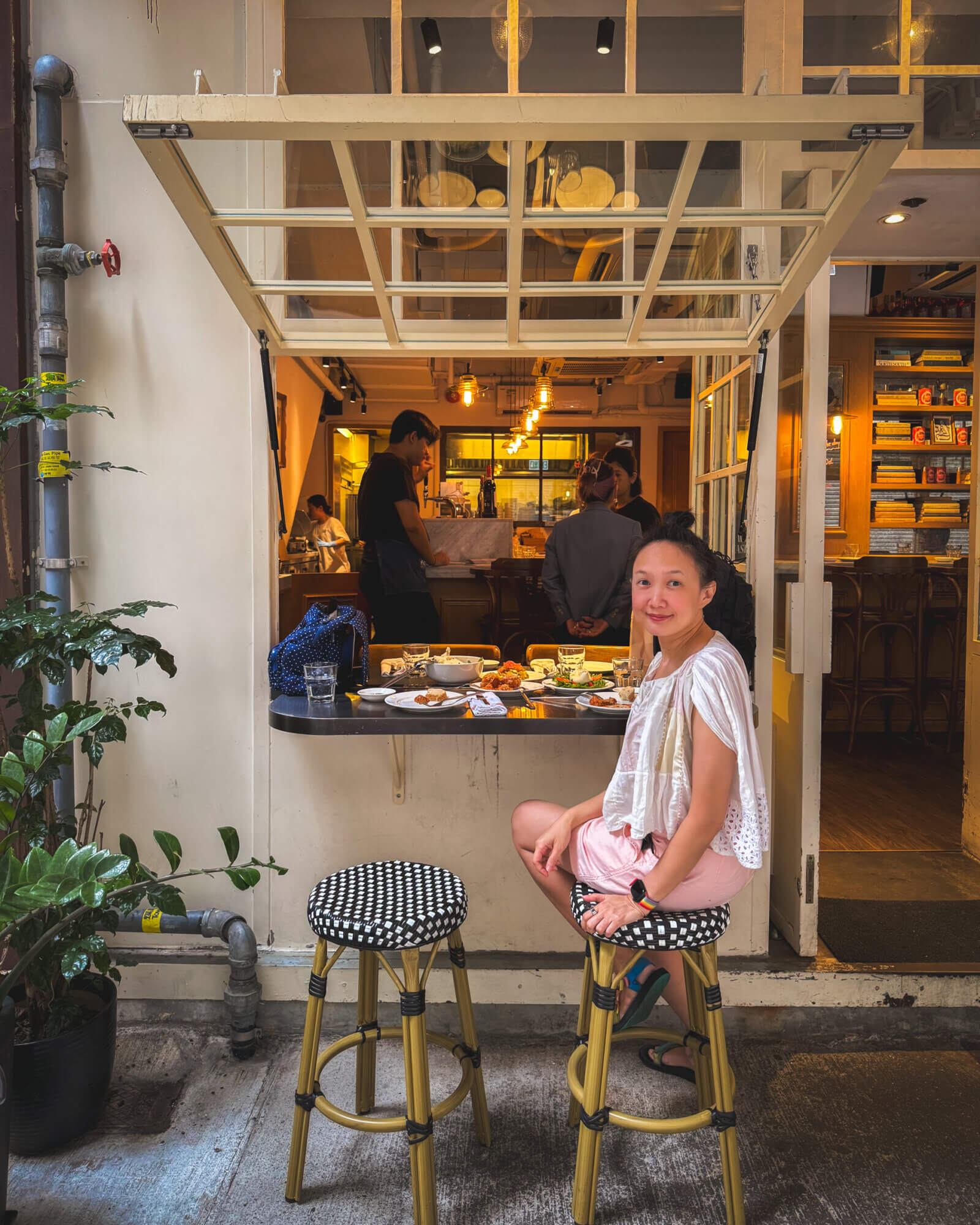
Italian food. Avoid during peak meal times. We were there about 5pm and it was relatively empty. It is also up to you to decide whether you are comfortable sitting facing the restaurant.
Other places with outdoor sitting around the area:
Cafe Match Box in causeway bay, but one of the rare cha chaan tengs with ample outdoor sitting. Food is okay. Prices above average for ccts. Nice retro-style decor.
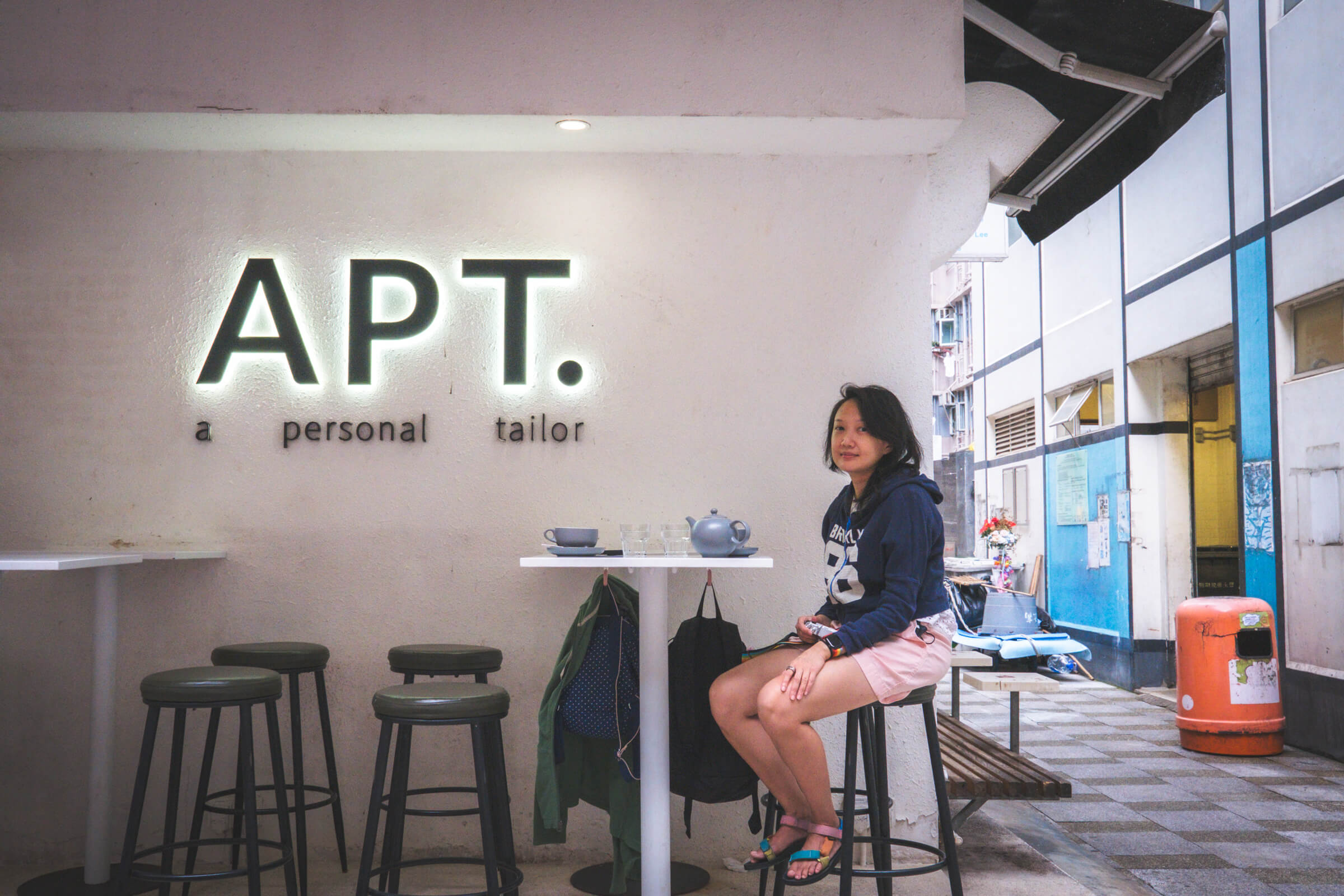
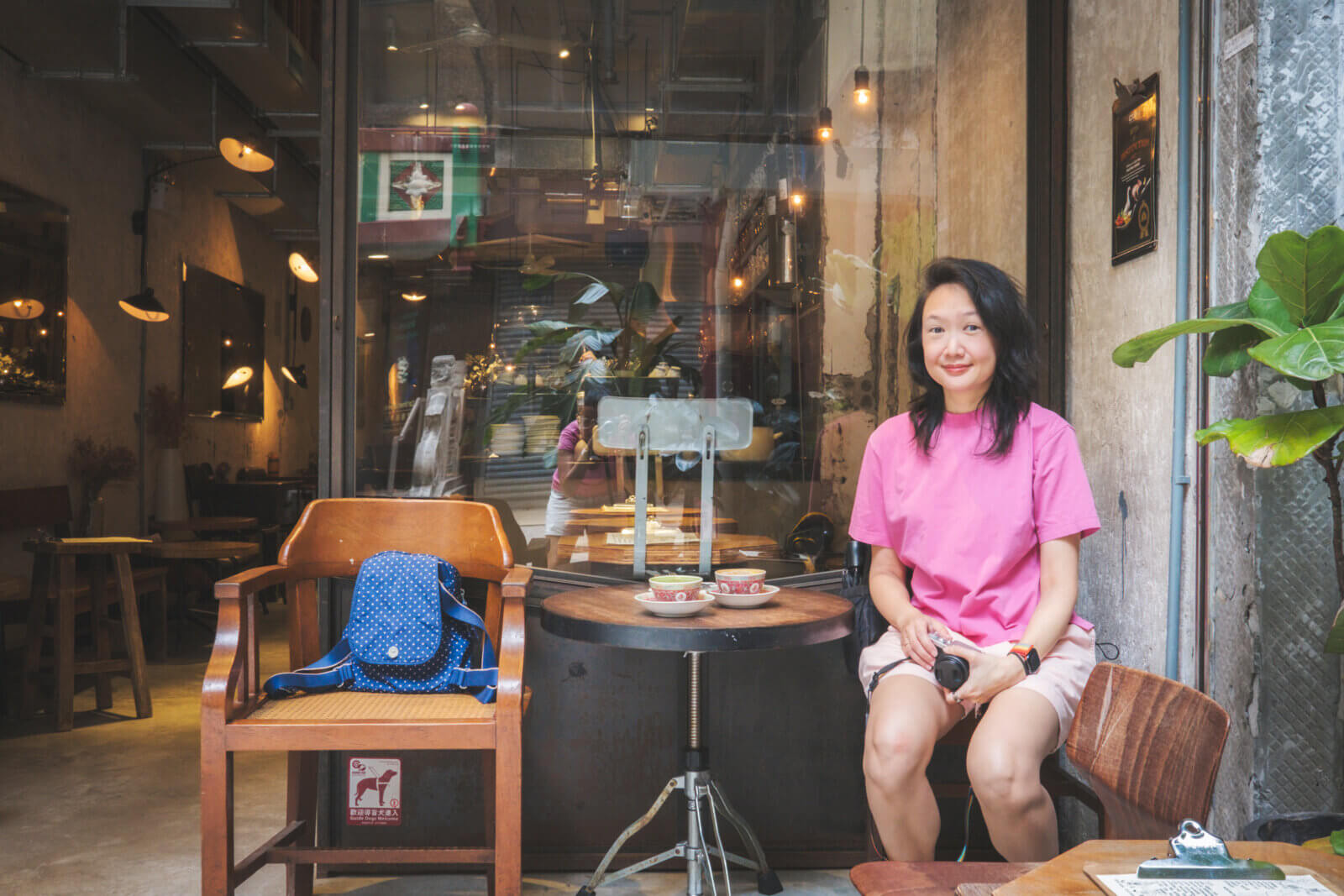
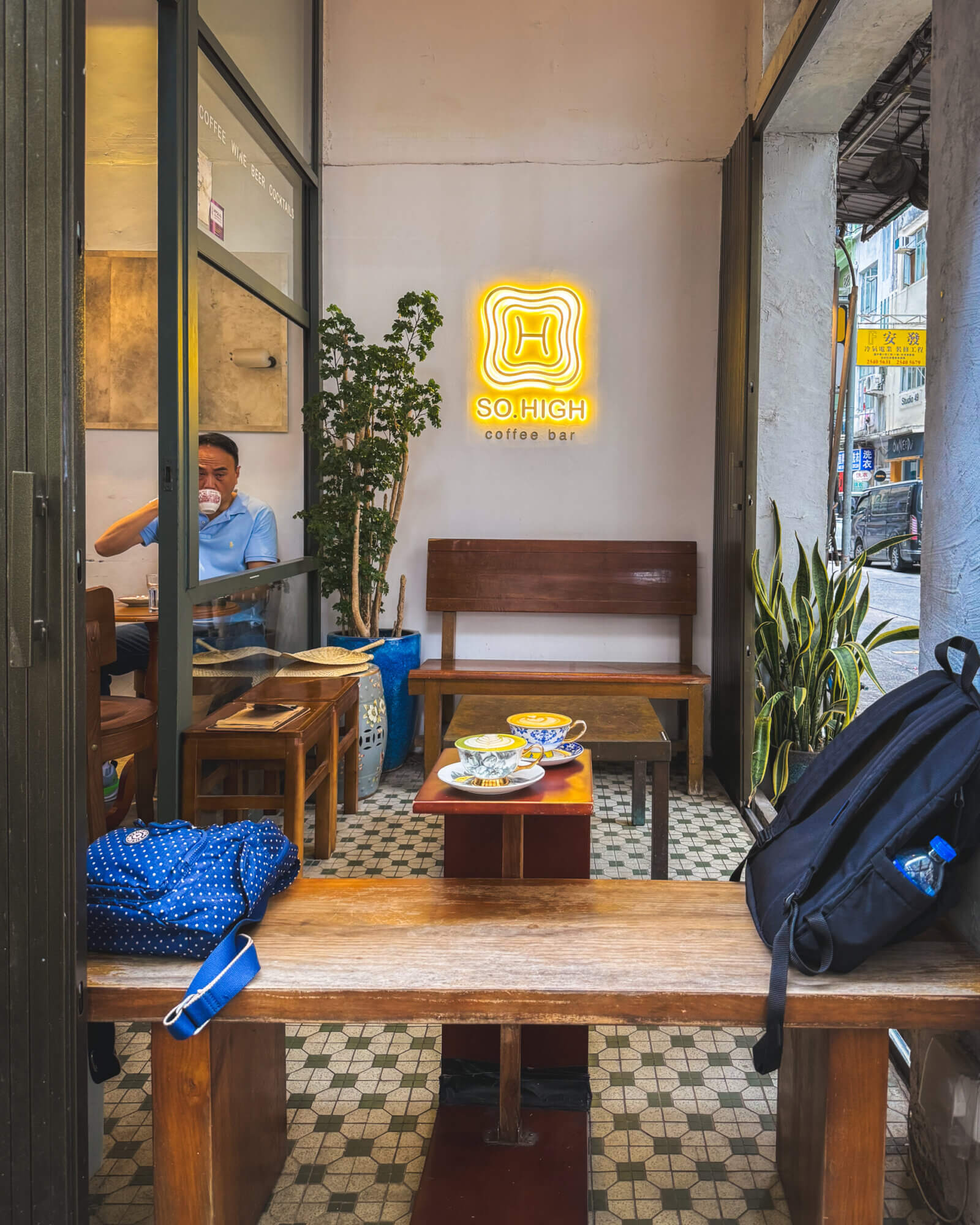
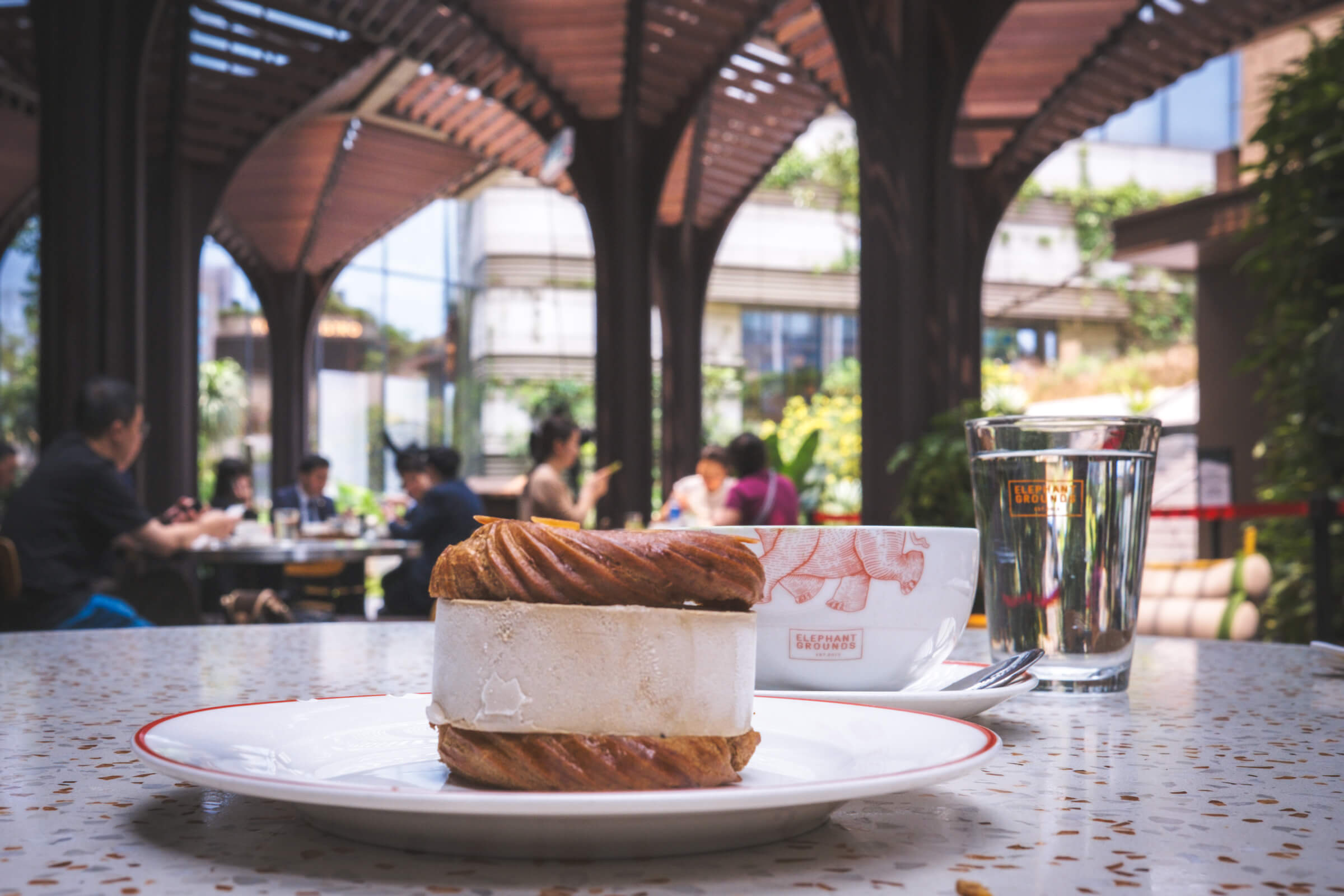
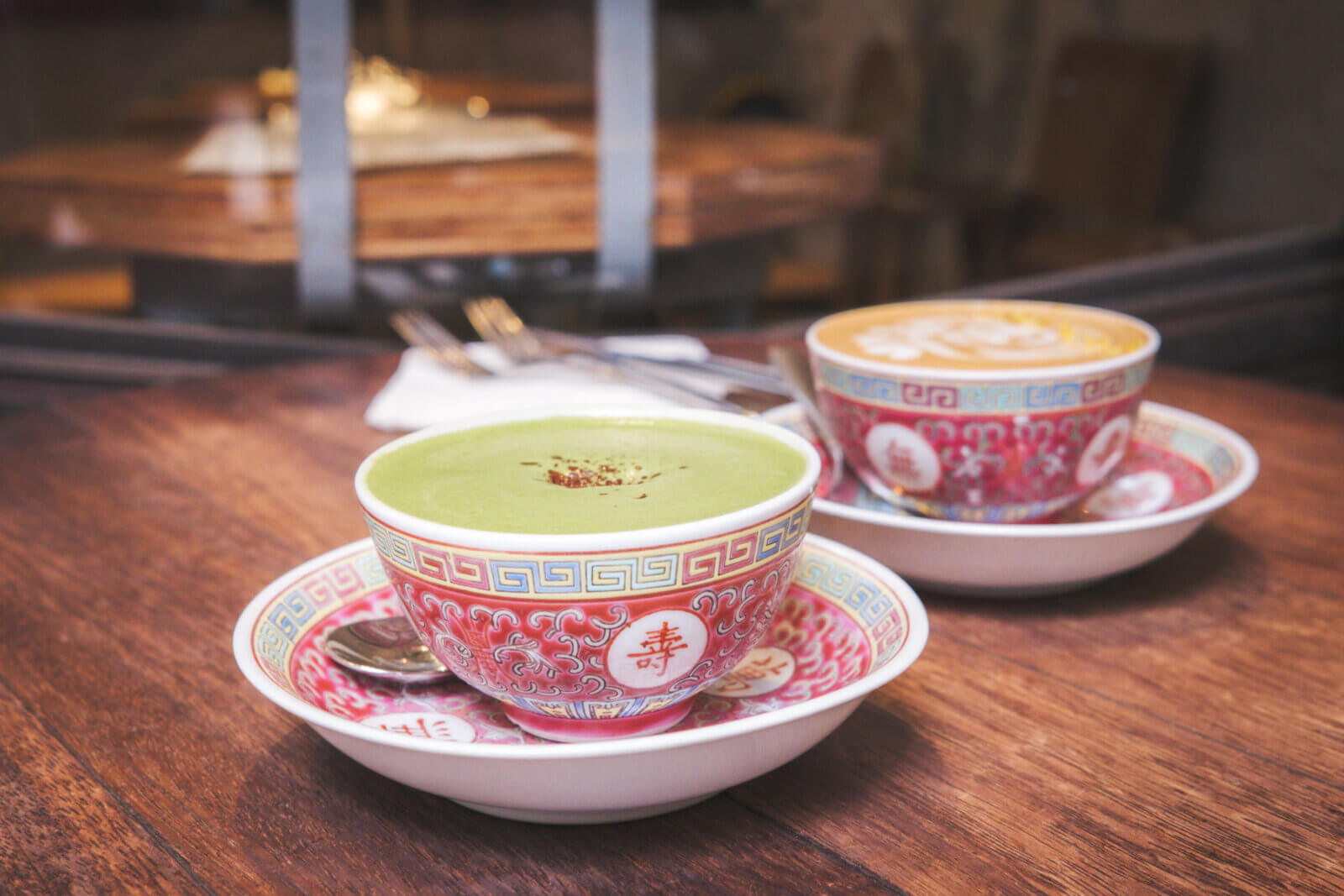
Small breakfast menu with about 3 items, but plenty of drinks. Worth visiting just for the beautiful coffee cups. They have other branches with outdoor sitting too.
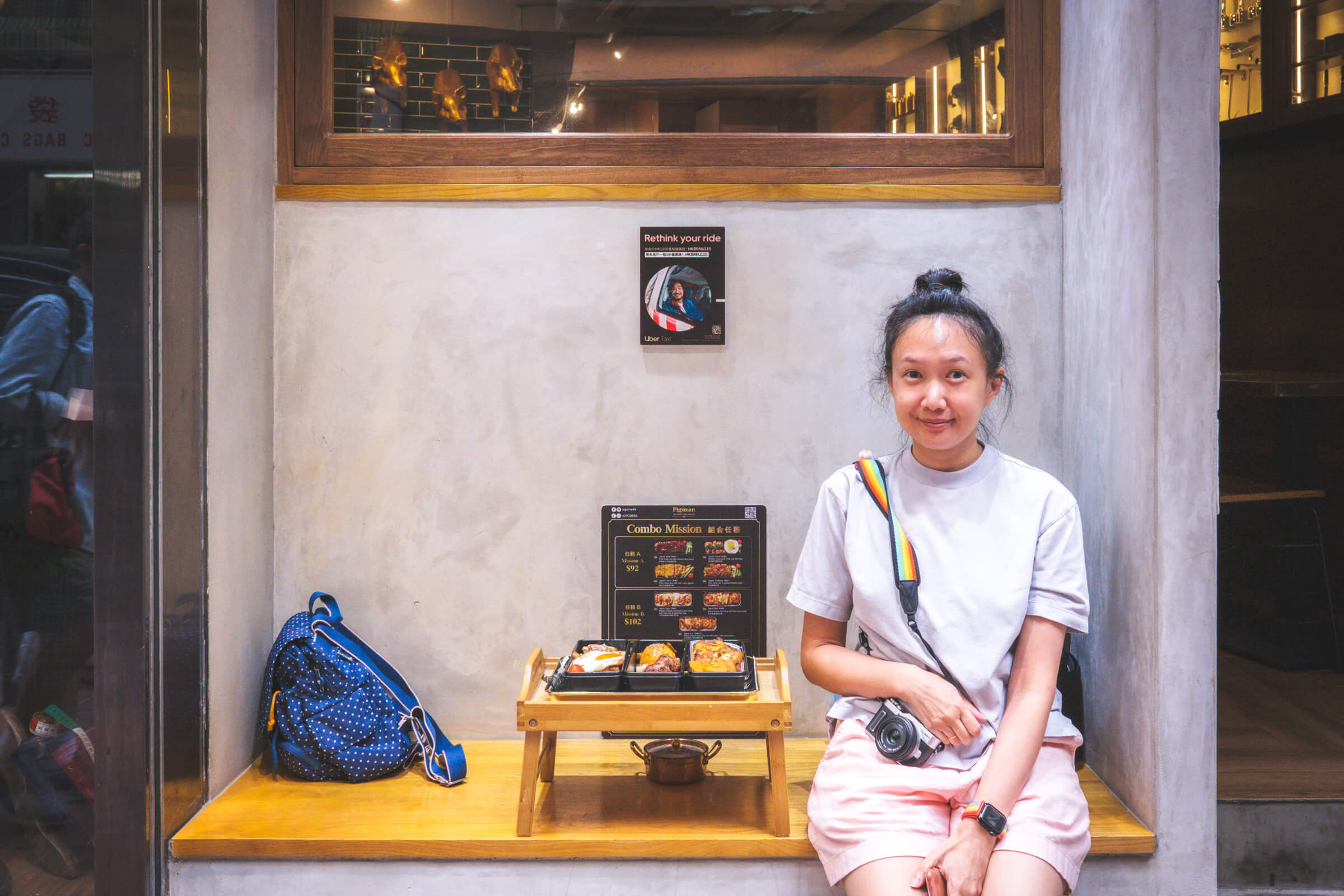
I’m not sure if you could count this as outdoor seating, they have one tiny bench with one tiny table outside their restaurant. They seem taken aback when my partner asked if we could eat there (we had to ask such awkward questions multiple times), but kindly relented. They have pretty good pork chop rice.
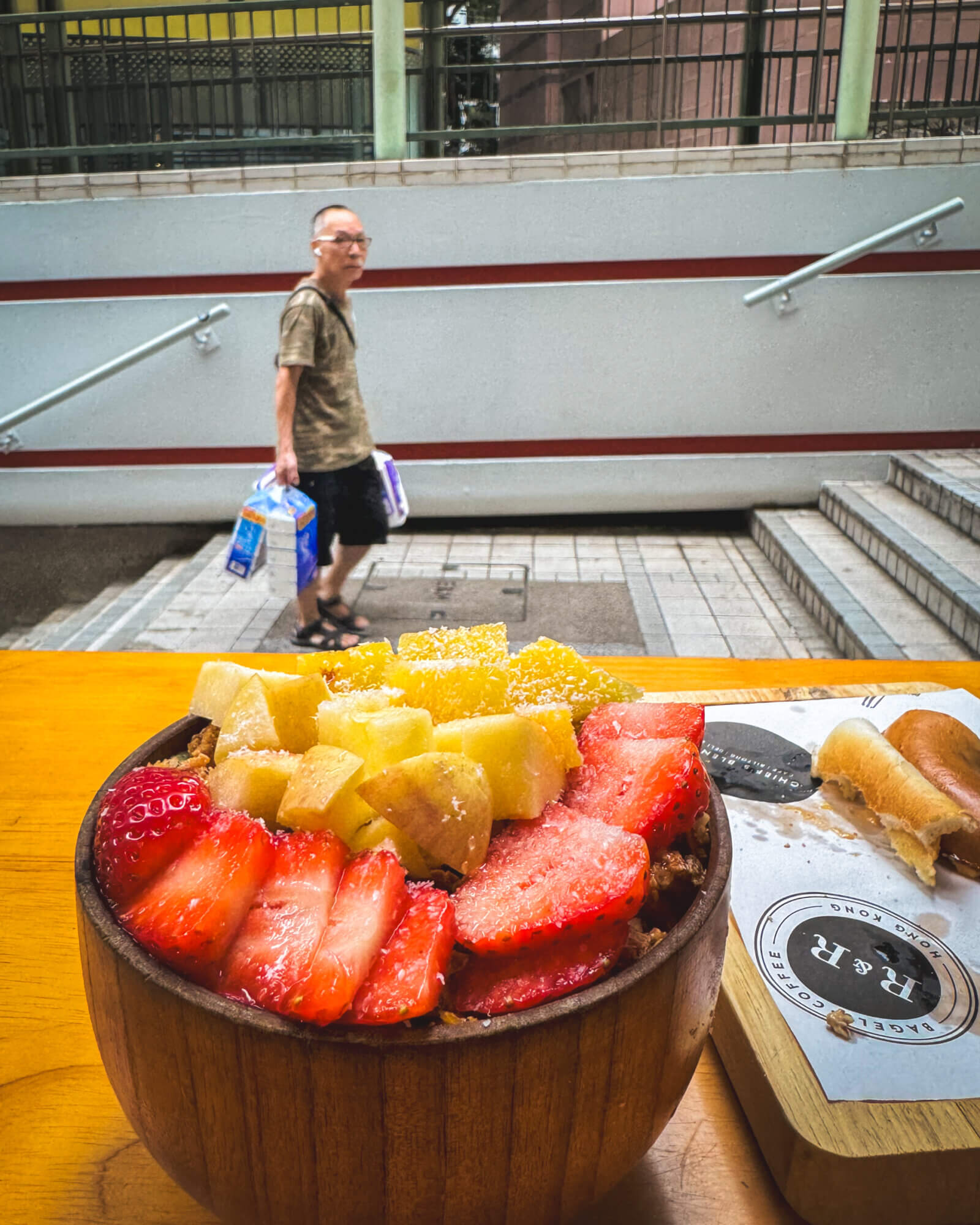
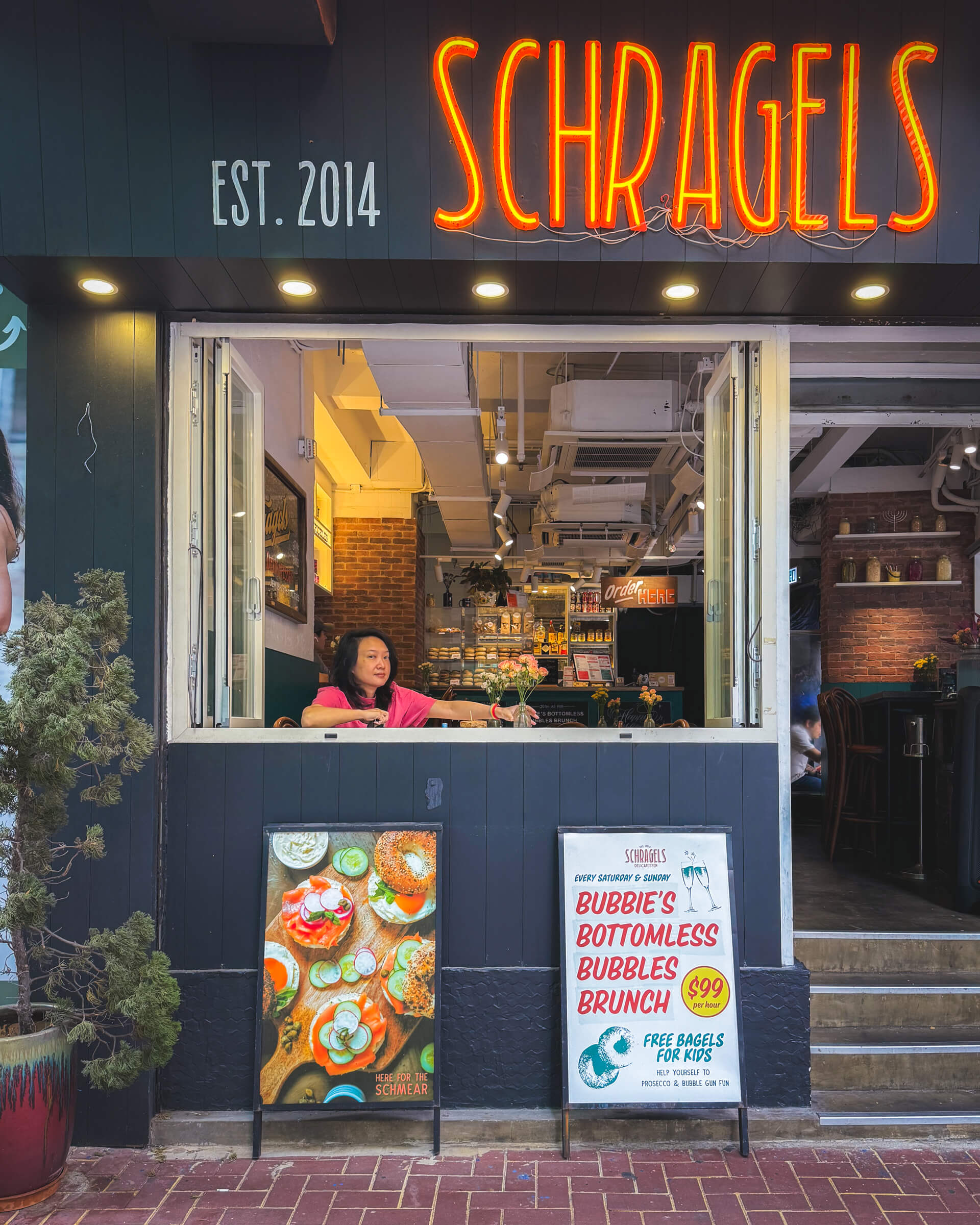
Technically not outdoors but they open their giant windows in the mornings when we were there (I guess it depends on the seasons). We went there at opening hours (8am) to snag the seat beside the window. There was only one couple dining apart from us. Supposedly the best bagels in Hong Kong, but I prefer Two Men Bagel House in Singapore.
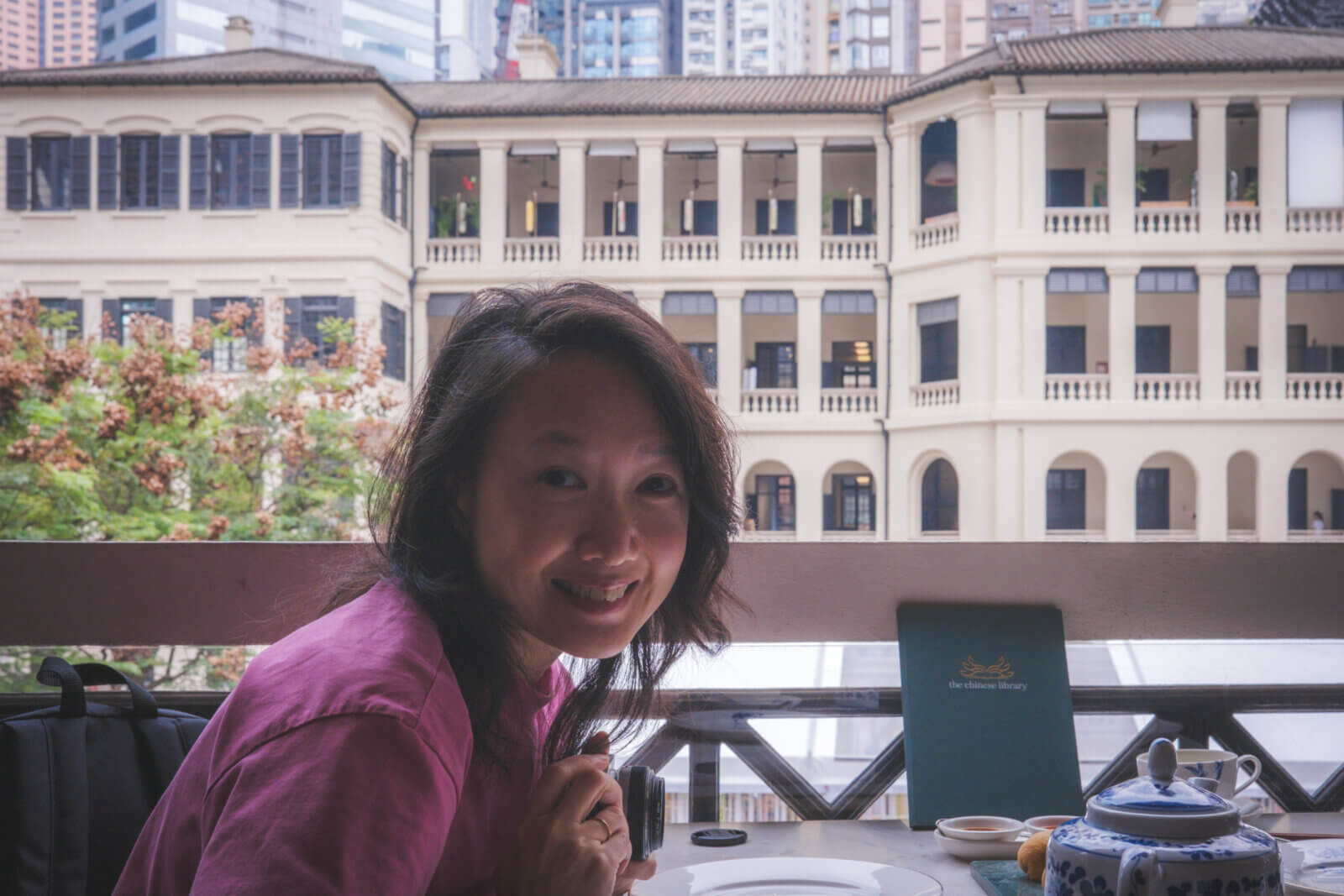
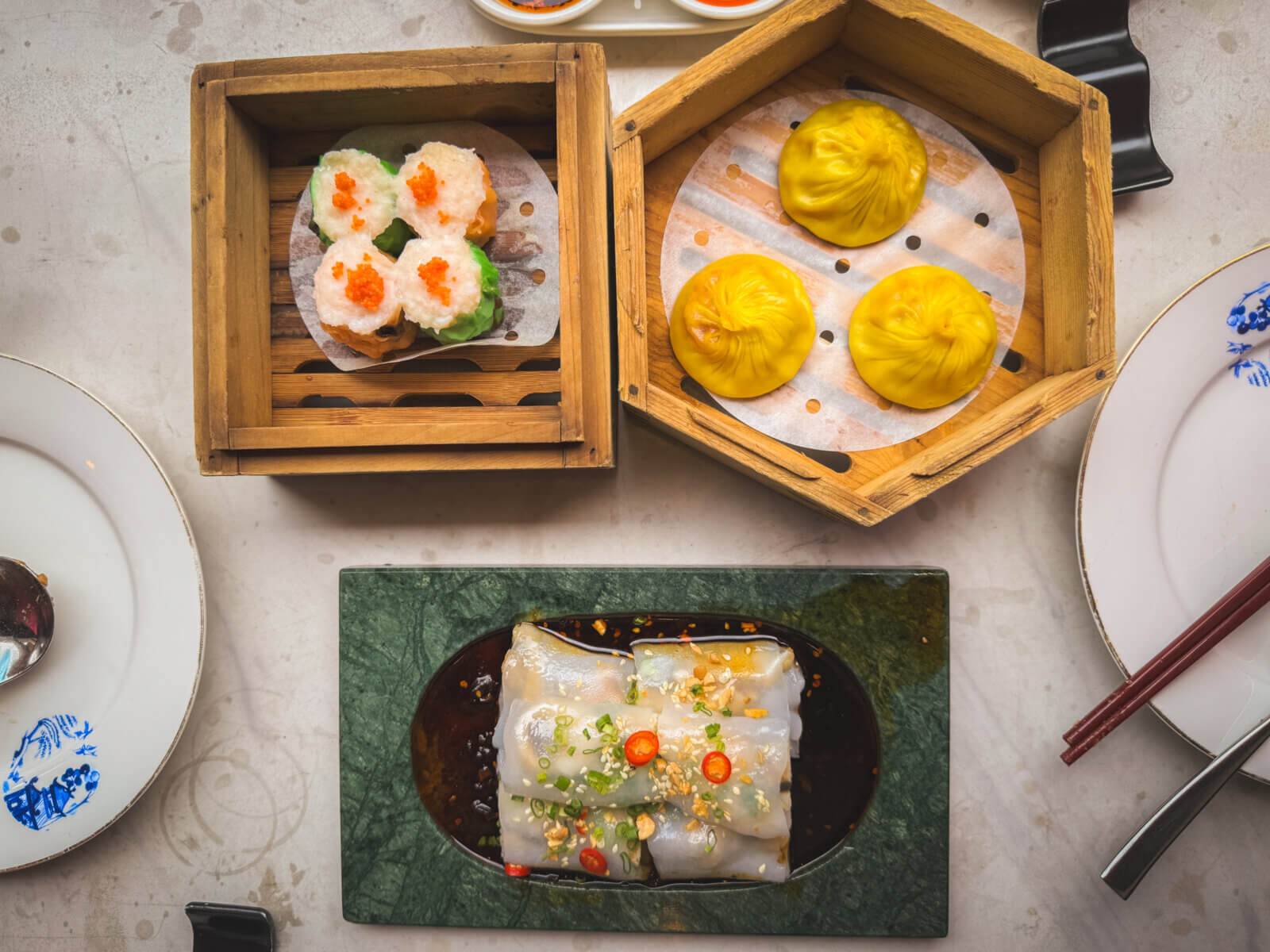
I have to say this is expensive dimsum and we were only eating there because it was my birthday and outdoor dimsum restaurants are rare. I cannot remember when was the last time I ate dimsum at the restaurant. Housed in the beautiful Tai Kwun building – the former Central Police Station with a prison.
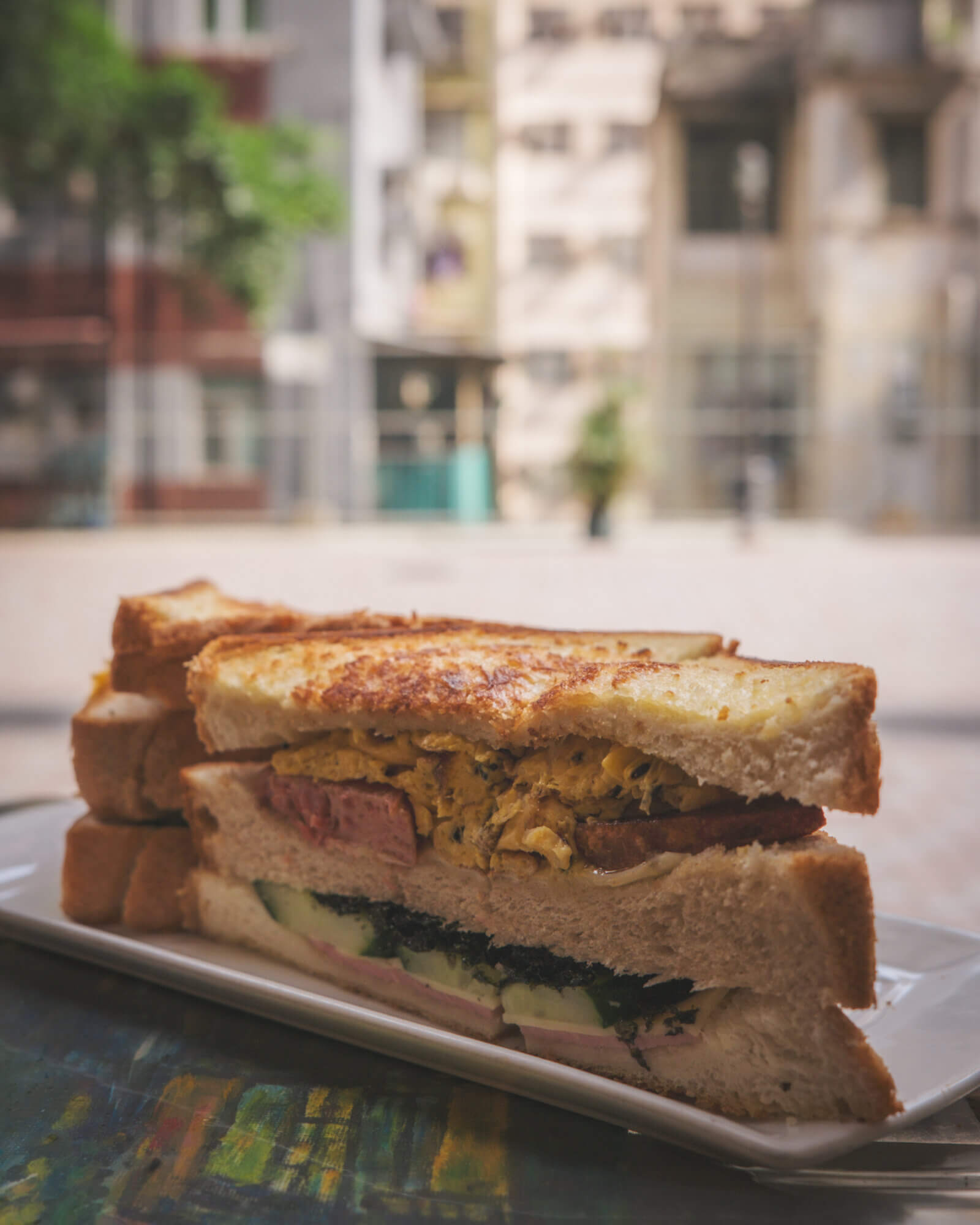
Owned by a sweet old couple, the cafe has like a giant drip coffee menu but we were really there for the sandwiches. The entire cafe is open-air but it could be narrow, so it would be best to take the tables right at the entrance.
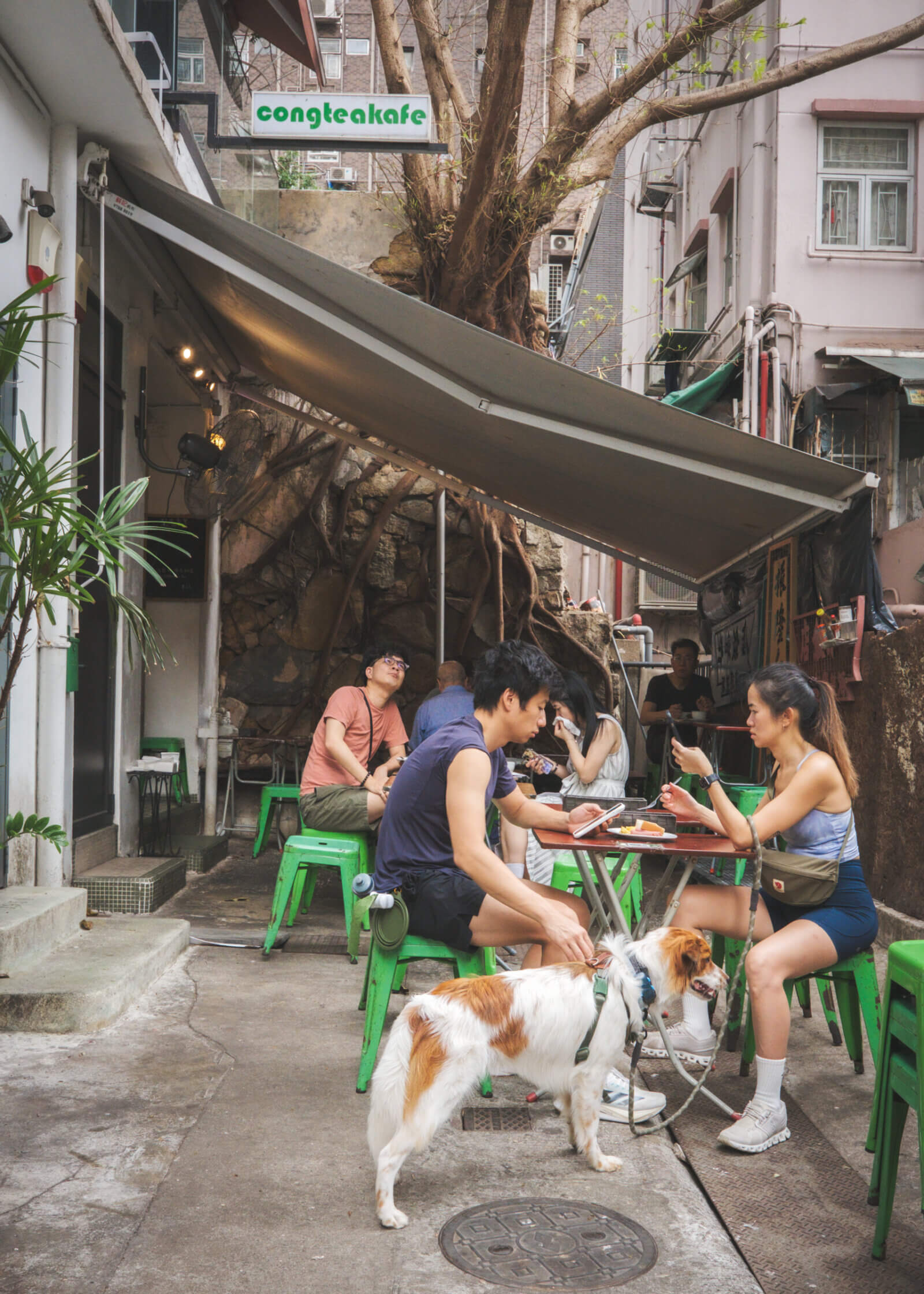
Congteakafe is actually a modern cha chaan teng. Go there if you want to have a traditional hong kong style breakfast. It could be packed, so I would go there at opening hours. They have a breakfast and lunch menu, hence they serve different food at different hours.
There are not as many outdoor places at the Kowloon side, or maybe I am just terrible at finding them. They are a lot more spread out compared to Hong Kong island. But here’s some of them:
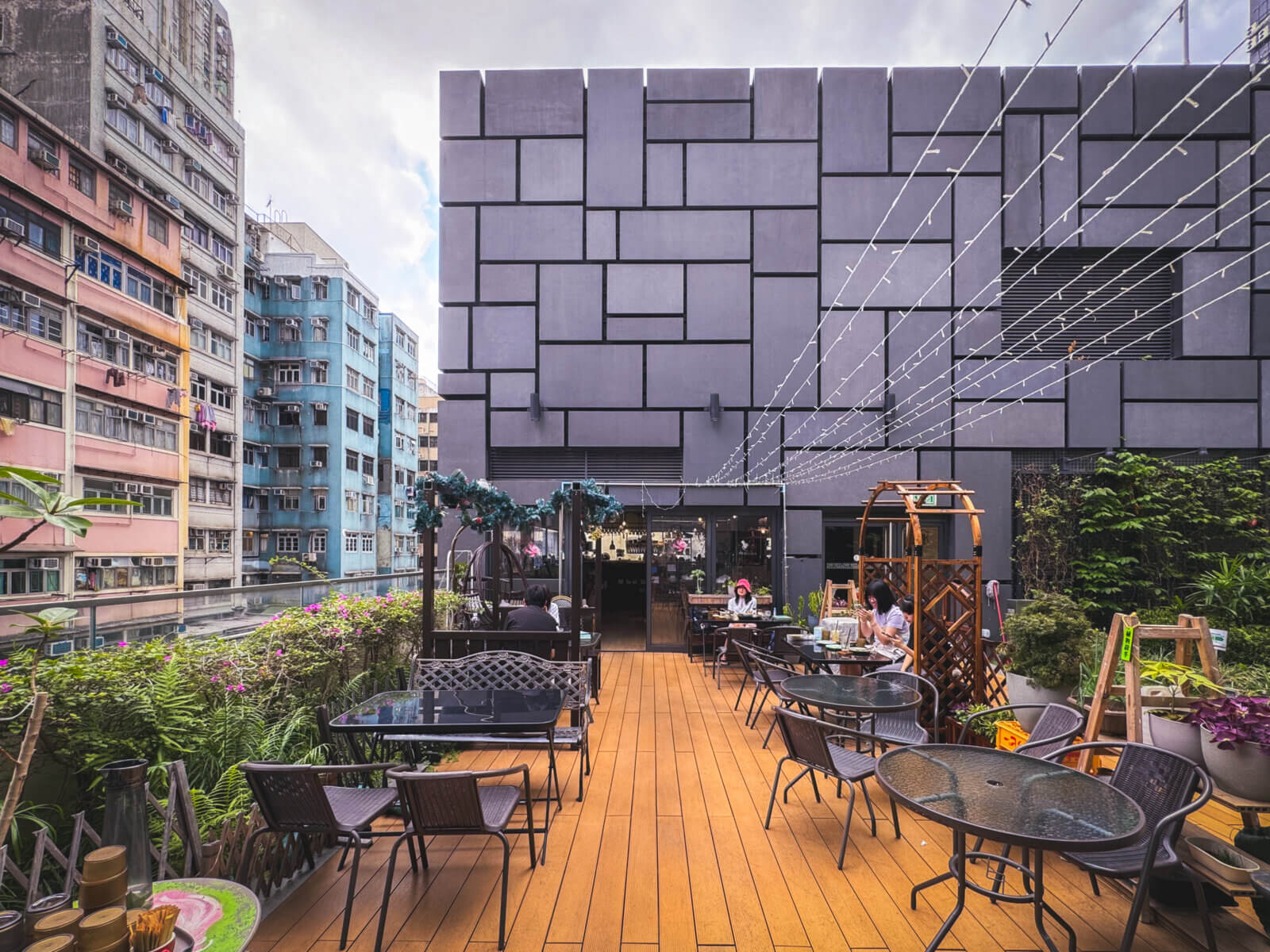
I would come here just for the experience of dining on a roof top surrounded by the dense buildings of Mongkok. The food – japanese fusion – is pretty good too.
The cafe officially opens at 10am, but food is only served 11am onwards. Visit if you need food in the Tsim Sha Tsui area, else you could give it a miss.
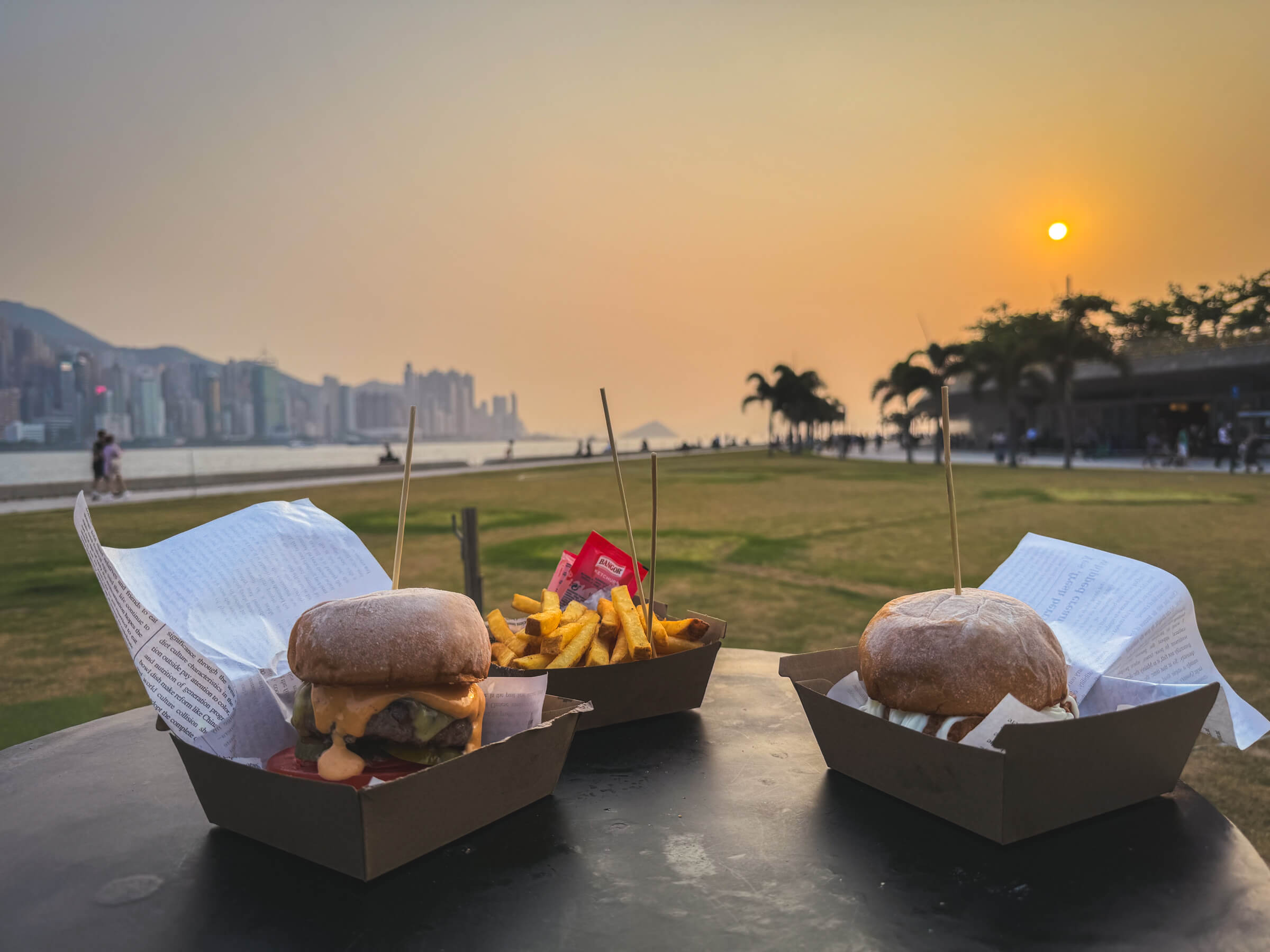
We were hungry after visiting M+ and thankfully there was this food truck with a beautiful view. There are some other food trucks in the West Kowloon Art Park and a few restaurants with an outdoor dining area.
ÔDELICE Tsuen Wan West & Feather & Bone (Tsuen Wan) In the same building (OP Mall), we were there because we visited The Mills and this seemed like the only place nearby that had a chance of having some outdoor restaurants. You can walk along the waterfront after food.
Sai Kung: famous for seafood, plenty of outdoor options here.
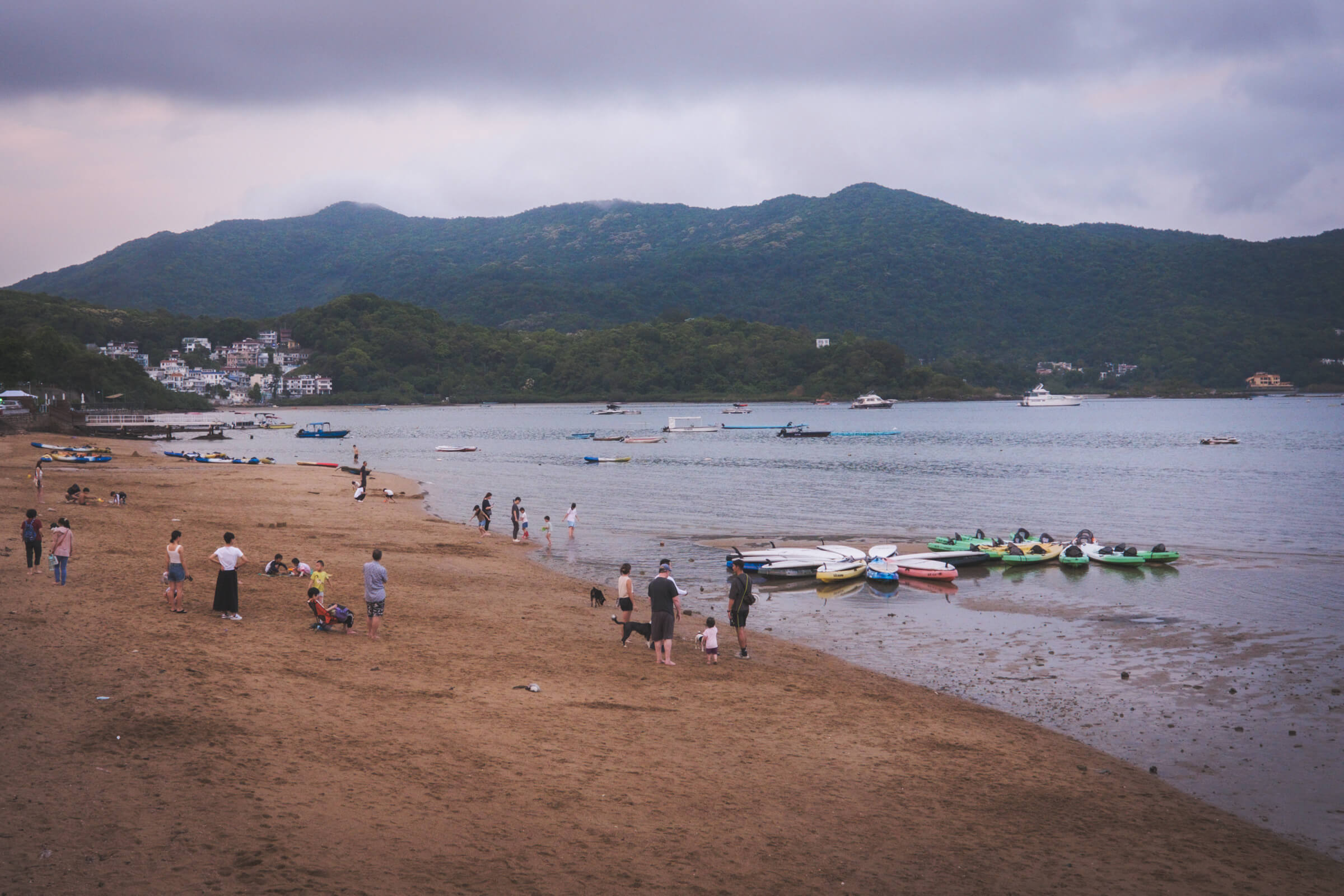
Outlying Islands: Plenty of outdoor options because it is a thing to dine alfresco when one is near the sea?
There are a lot more dining outdoor places than mentioned, but most of these were personally visited or verified. Sometimes you see an outdoor place mentioned on google but when you get there the area is closed or the tables have disappeared. Due to time constraints we also couldn’t visit everywhere we’ve bookmarked. You could do a keyword search on google like “outdoor seating”, “alfresco”, “pet-friendly”, and sometimes there could be surprises.
Hope this is useful to some covid-cautious internet stranger out there. I take this opportunity to say hi! because it is a lonely world for us out there.
Hong Kong still seems like the same place in many ways, but it feels different. I don’t know how much of it is due to the changes in me or the changes of the place itself. But I am still so fond of it, because I grew up with a media diet of cantonese music and dramas. Somehow listening to people speaking cantonese makes me happier? What a strange phenomenon, especially because I am not cantonese myself.
Even while travelling or living in foreign places, it was always visiting cha chaan tengs that brought me great comfort. It wasn’t chicken rice or nasi lemak I craved when I lived overseas, but hong kong milk tea and pastries.
Hong Kong is nostalgia on steroids. Their old ways of living still exists in large pockets, for now. The young business people seem to appreciate this, starting new cafes with decor that pays homage to their heritage. Old buildings are preserved and turned into creative spaces:
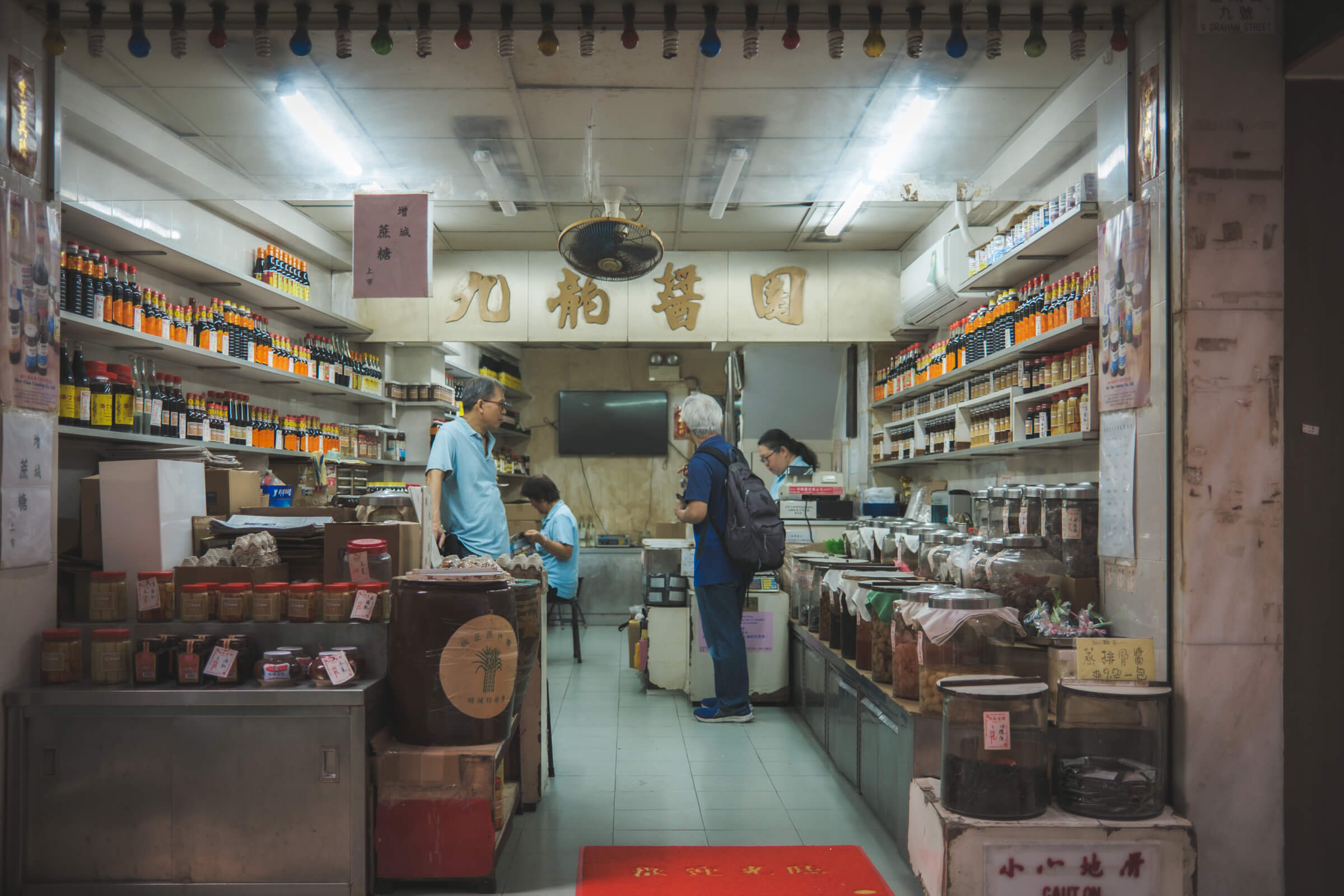
Perhaps it is because I am from a country that keeps tearing down old stuff in order to build shiny new things, I can’t help but be drawn to all the old that exists in Hong Kong:
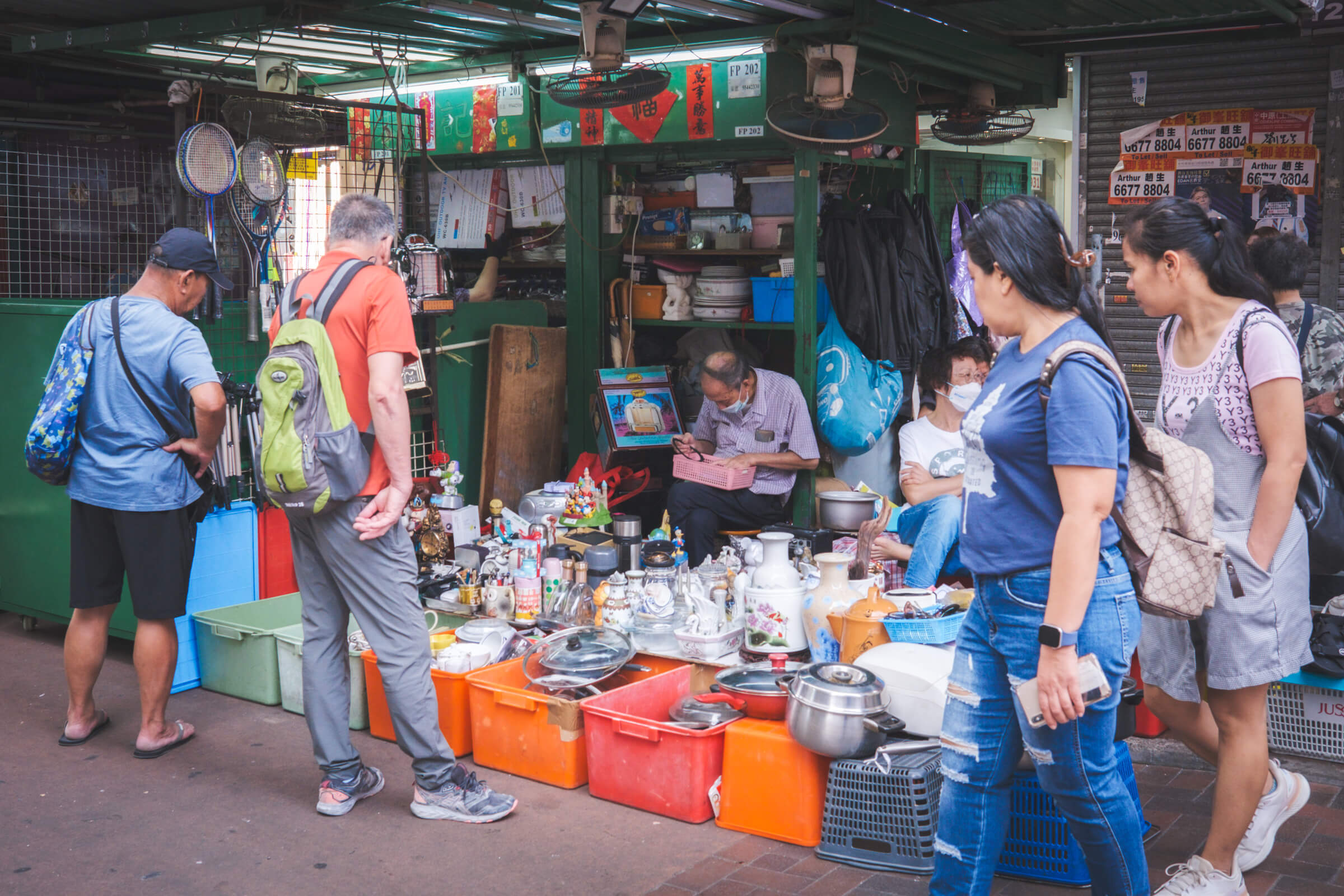
One of my favourite neighbourhoods is Sham Shui Po, where you can find stalls selling knick knacks like this:
My partner was so excited to stumble upon this stall:
Sadly many shops did not survive the pandemic. Instead there were a ton more hipster cafes. Hopefully we’ll get to experience a different evolution of Sham Shui Po in time to come.
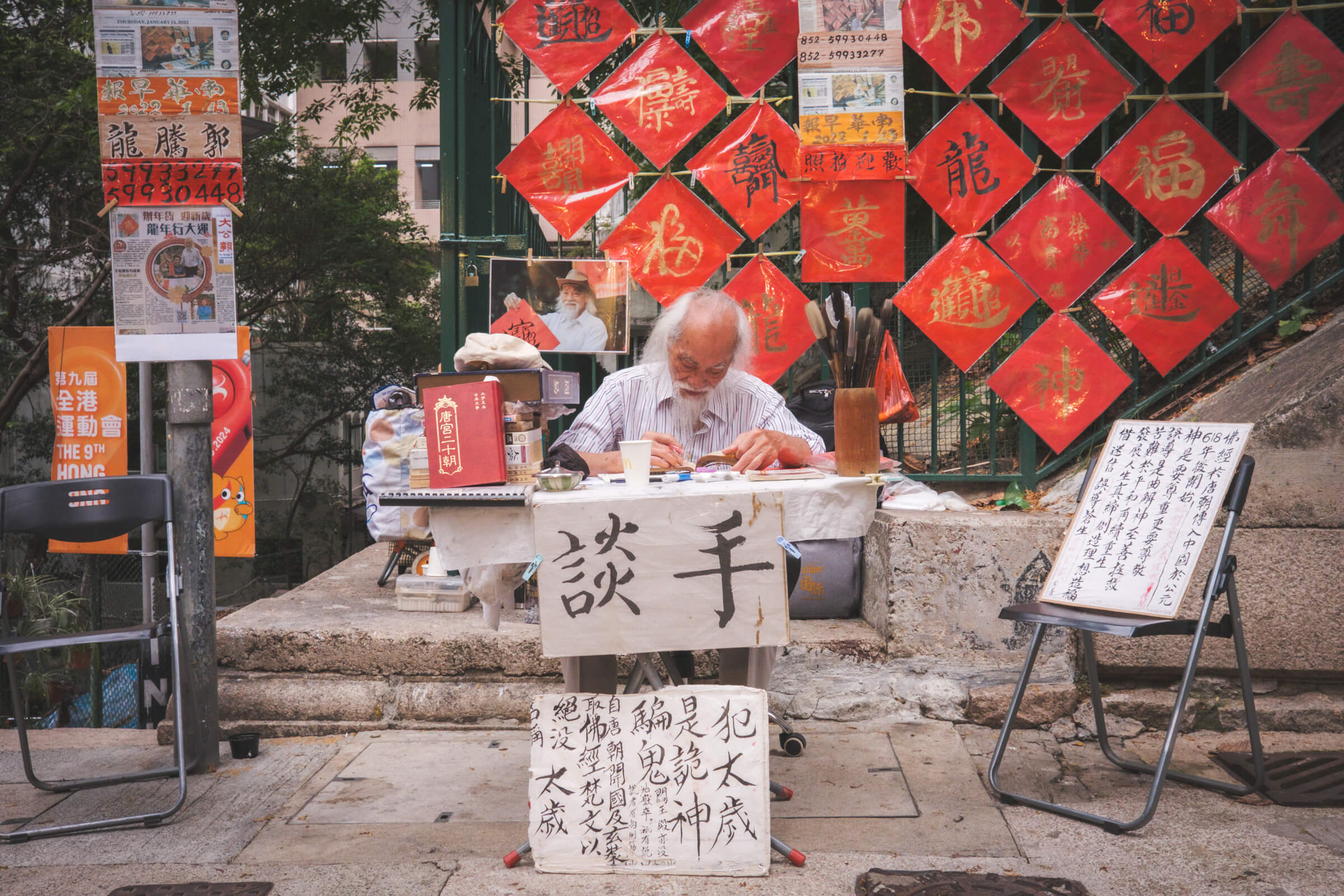
There’s not many places in the world where you can come across a person working on chinese calligraphy on the street:
I particularly loved visiting Sai Kung, even if we had to take a 30-minute vomit-inducing mini bus ride:
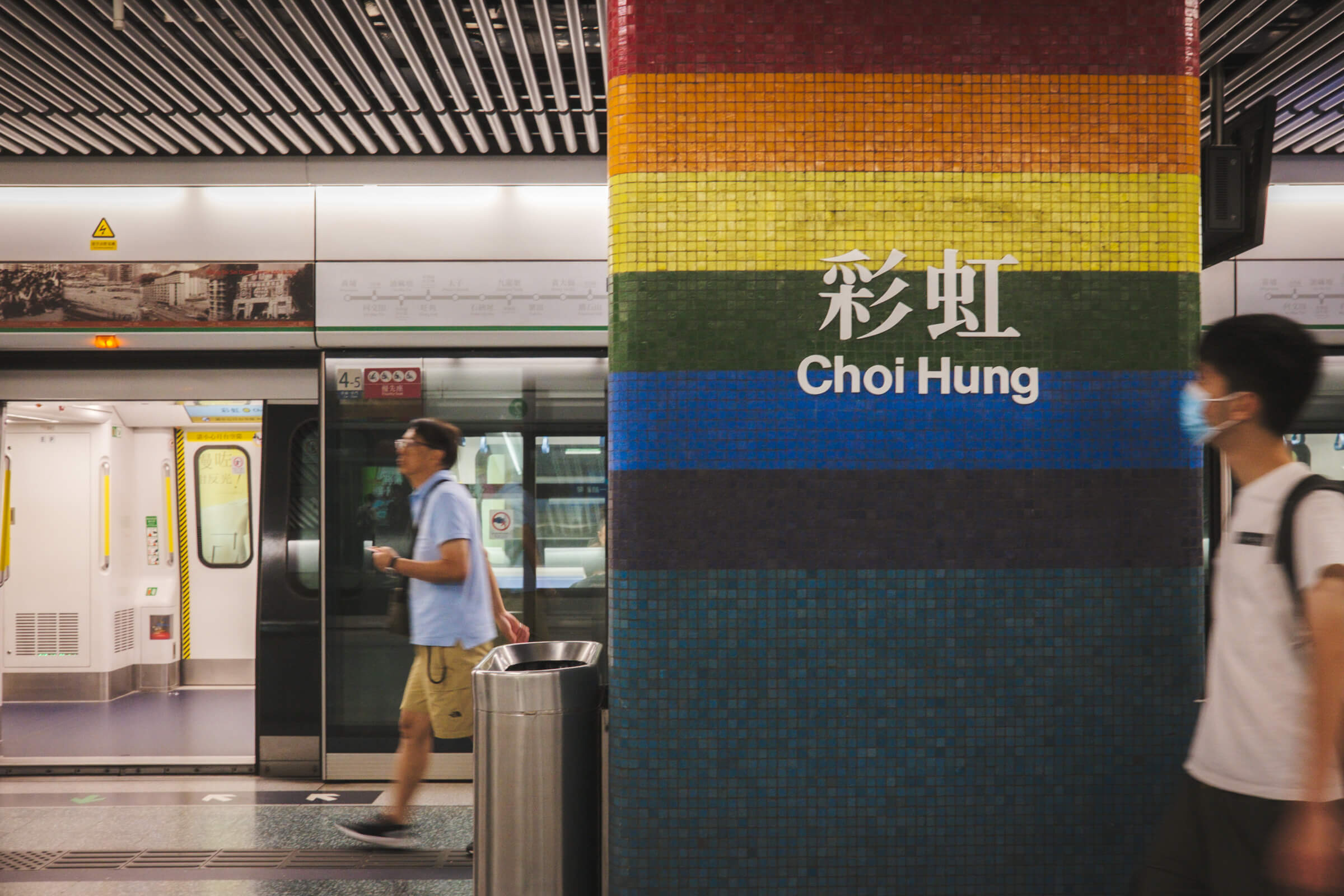
…but we’re rewarded with these beautiful rainbow mosaic tiles on the way:
We just loved these coffee/tea cups – in Singapore everything is homogenous looking, perhaps because such attention to detail would not be rewarded in an environment where cafes and restaurants routinely do not survive beyond a few months. Why is Hong Kong different? It is a dense highly-capitalist city too after all. My guess is there are simply more REITs here, while Hong Kong has a lot more space with different types of ownership, especially out of the central business area. It is also probably different growing up in a place where everything is a beautiful chaotic mess, versus the type of pristine orderly (sometimes sterile) beauty we have here in Singapore.
Everyone seems crazy about these soft serve trucks – you can buy souvenirs like toys and postcards of it:
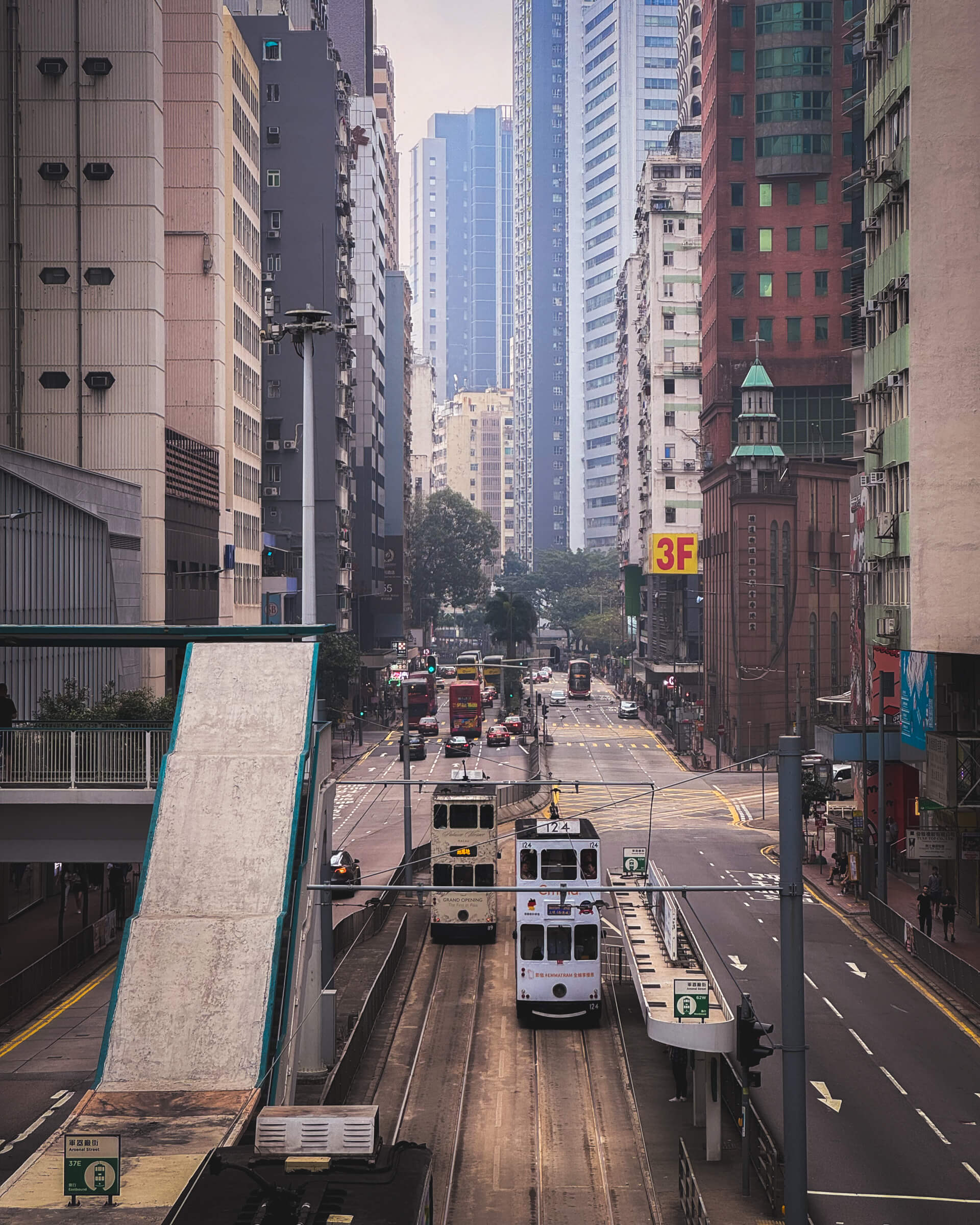
…and who doesn’t like trams? We like that they are not air-conditioned since we are covid-cautious, and they cost about 0.40 usd per trip.
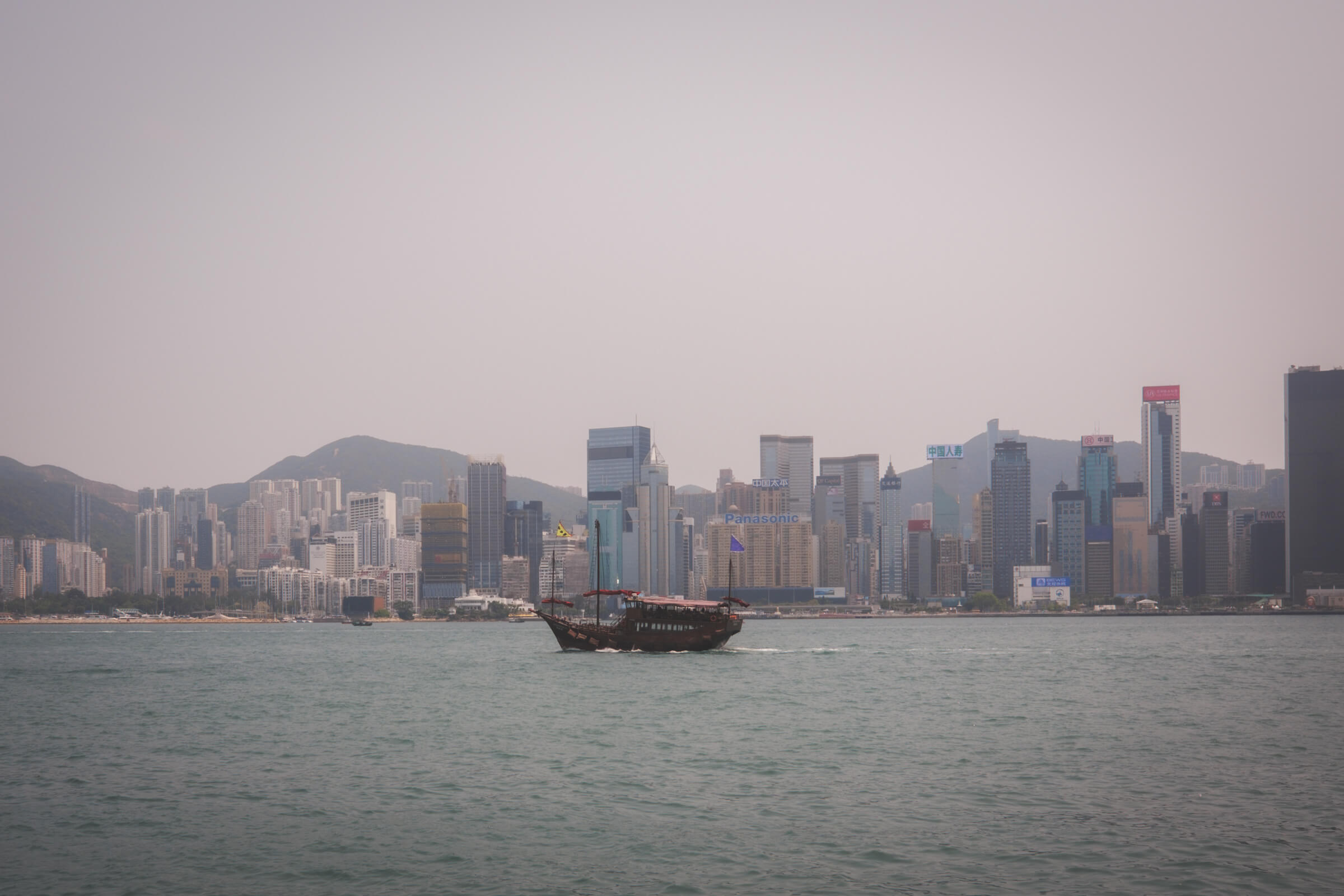
I also appreciate you can see old junk boats against a modern city-scape:
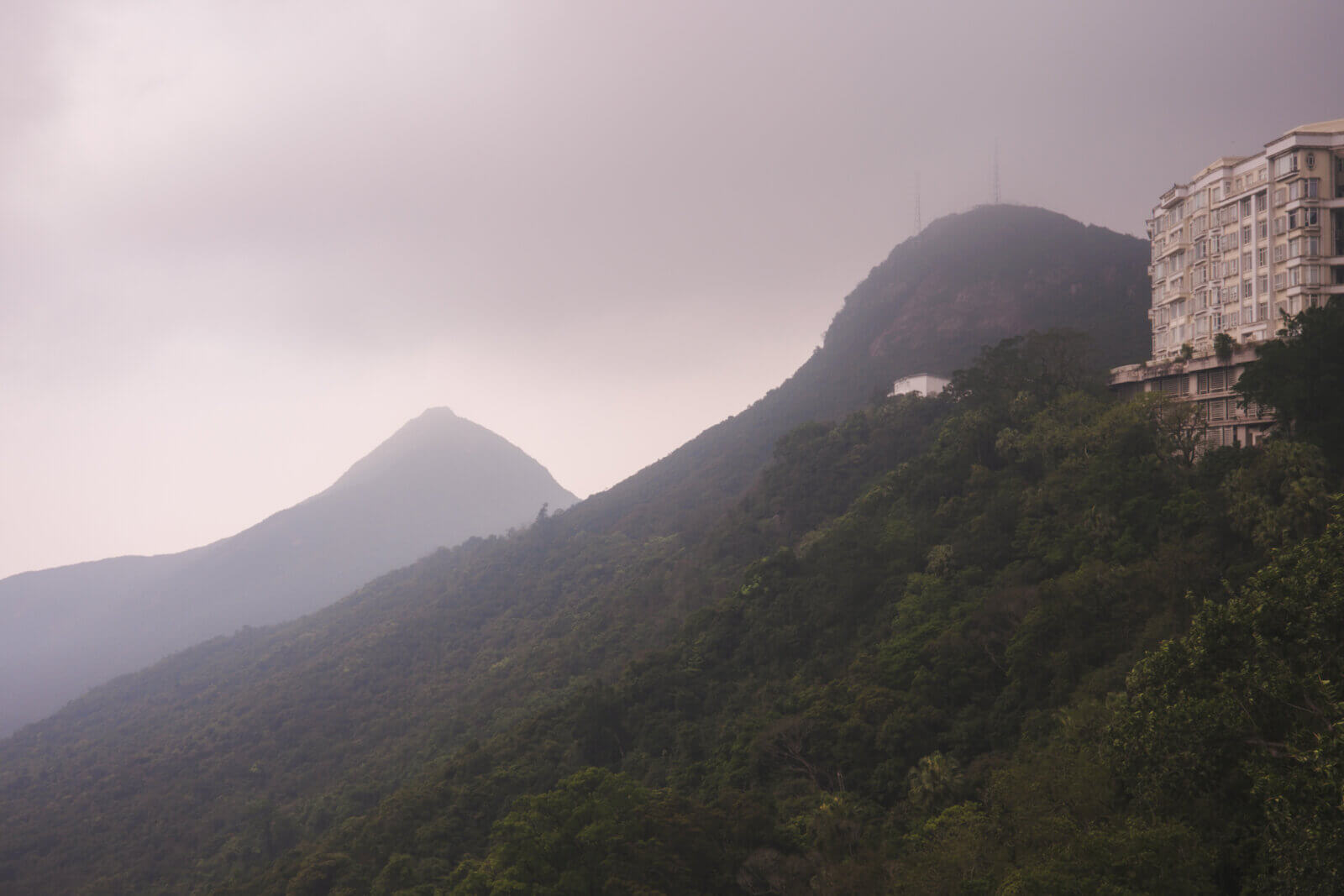
Speaking of cityscapes, one can see majestic hills even in the city, and there are a ton of hiking trails.
I like that if you’re willing to venture far enough, there are areas still relatively untouched by modernity.
The reasons why I love Hong Kong are the same reasons why some people dislike the place. It can be grimy, chaotic, old, messy. It is everything I didn’t grow up in. I love it as a occasional visitor of course as a caveat. But I do have a school mate who moved here to study in her teens, and she disowned the opportunity to live here in favour of the chaotic mess of her original home even with all the political baggage. There are people who made the move in the other direction. The environment that happens to make us thrive can be such a strange inexplicable phenomenon.
I am a very different person from the person who last visited Hong Kong 8 years ago. I am glad to have the opportunity to experience the place with a different perspective, and through that I got to be closer to myself, because like people – places are a mirror to our selves.
I didn’t actually feel like writing today, but I’m worried if I don’t write I would forget the feelings and thoughts I have at this point in time. It doesn’t seem right to write about my friend who had just passed away – worried it will turn into some form of theatre, yet it also doesn’t feel right to not write about such a significant event in my life.
I have known her for 18 years. She knew me at a time when I was young, foolish, immature, unaccomplished. We shared some difficult times together, times we wouldn’t mention to each other henceforth, things that I can never write about. It only occurred to me after her passing that I’ve lost the only person I can talk to about that past.
When she decided to become a tattoo artist I encouraged her at a time when not many people would (singapore has a highly pragmatic society). She had to work as an apprentice with very little or almost no pay for a long while. I watched with pride and satisfaction as her skills got better and better, eventually running her own studio and being a mentor to other artists. She inked my semi-colon tattoo, and I often joked she wasted her skills on me. Her art is now on hundreds of people.
We’ve drifted apart in the last few years. But even prior we were never the sort of friends who would hang out frequently together. Yet she was one of the few people I would definitely meet each time I was back in singapore during those days I lived or spent a lot of time overseas. There were long exchanges through text and emails, though I am afraid to look at them now.
I’ve become increasingly isolated in the past few years: a large part of it is due to the pandemic, and the depression caused by the pandemic. I was also going through a prolonged existential crisis (which is still on-going) that made me unable to relate to myself or other people. Or you could call it a long transition period of slowly becoming my un-masked self. I found it difficult to navigate relationships because they were all founded upon my masked self. I found myself automatically masking with people and it exhausts me, so I gradually avoided most interactions.
So I have not seen my friend much for the past few years. Even as I found out she was dying I took a really long time to pluck up the strength and courage to arrange for a meetup. I wanted to make sure I wouldn’t be a walking wet blanket around her. The week we were supposed to meet, she was hospitalised. And then she was gone.
Even though she was on a timeline, nobody thought it would be this soon. I had mistakenly assumed I would have more time. Don’t be like me. Don’t ever think there would be more time. I cannot even begin to describe my regret.
But thankfully she didn’t need me because she was and had been surrounded by a ton of love and people. She was just that sort of person, like a ray of sunshine. It was very evident when the tributes started pouring in.
We don’t realise the full meaning of what a person means to us until we feel their permanent absence. It is difficult to accept that she wouldn’t be replying my texts anymore. I liked sending her photos of interesting tattoos. I feel a hole in my soul, missing a part of me that existed because my friend mirrored it. I am reminded of this quote by Salman Rushdie:
“Whenever someone who knows you disappears, you lose one version of yourself. Yourself as you were seen, as you were judged to be. Lover or enemy, mother or friend, those who know us construct us, and their several knowings slant the different facets of our characters like diamond-cutter’s tools. Each such loss is a step leading to the grave, where all versions blend and end.” – source
Grief for me doesn’t come out in one big rush (it may especially seem so for autistic people). It slowly drips. Since her passing I haven’t had the chance to fully break down in tears, afraid to know what I may find if I do so. The last time something like this happened, my eyes lost their ability to tear for years (diagnosed with blocked oil glands). So it is a matter of time that I have to meet my grief somewhere, somewhen. But I think of her when I wake up, when I fall asleep, when I shower, whenever my mind quietens. There is a constant dull ache somewhere in me. I seem to be always on the verge of tears, but never really crying. I guess it would be like this for a long while.
Recently I chanced upon a tweet stating that highly sensitive persons (HSPs) are basically autistic without admitting it. It surprised me, since the traits of HSPs as I know it seem to be the opposite of stereotypical autistic traits. A couple of decades ago I identified as a HSP, but I somewhat grew out of it before deciding what I have is actually cptsd. Apparently the person who wrote the book on HSPs based it on her grand-nephews, who were later officially diagnosed as autistic. So I went into a research rabbithole.
non-stereotypical autism traits I have
hyper-empathy
Later on I came across this post that lists a bunch of non-stereotypical autism traits. Hyper-empathy which can be interpreted as being highly-sensitive is one of them. The author odescribes how her hyper-empathy manifests:
For those of us with hyper-empathy, this is one of the factors that make socializing difficult. Personally, socializing becomes a full-body sensory experience for me. I find myself absorbing the energy of those around me. In the presence of extroverted individuals exuding positive energy, my body vibrates with an overwhelming intensity that feels intrusive. When encountering sadness, I melt into the heaviness alongside them. Interacting with someone who is dissociating causes my senses to dull, and my mind becomes foggy. I experience muscle tension and stress when around people experiencing stress and anxiety.
I relate a lot to her experience. Maybe “absorbing energy” is a little too woo-woo for some people, but I could explain it scientifically in terms of mirror neurons and somatic stress. We have mirror neurons in our brains, and they fire when we observe someone doing something, possibly eliciting a similar response in us. This explains why we cringe when we see a knife cutting someone on tv, and therefore it is highly associated with empathy.
So I theorise hyper-empathetic people have over-active mirror neurons, and the psychological boundary between someone else and our selves becomes extremely fuzzy. For people with normal empathy there is probably some unconscious mechanism that quickly reminds the individual that they are observing is someone else, that this emotion does not belong to them. This mechanism does not really exist for hyper-empathetic people, or it is less robust. I feel pain when I see someone in pain, and it causes me a lot of stress. My body starts having a stress response – adrenaline starts flooding, muscles start tensing, emotions start overwhelming – as though I am the one in pain. Sometimes I may even over-identify with the pain, and it causes me more distress than the actual person. I was probably also over-projecting.
existential OCD
Existential OCD is also mentioned in the post. The concept of existential OCD is new to me so it was intriguing:
Existential OCD involves intrusive, repetitive thinking about questions which cannot possibly be answered, and which may be philosophical or frightening in nature, or both. The questions usually revolve around the meaning, purpose, or reality of life, or the existence of the universe or even one’s own existence. These same questions might come up in a university philosophy or physics class. However, most people can leave such classes or read about these topics and move on to other thoughts afterwards. Similar to other forms of OCD, individuals with Existential OCD can’t just drop these questions. – International OCD Foundation
So now I have something to explain and describe my obsessive thoughts about my own existence and/or the meaning of life. It is quite interesting how quickly I am able to accept my own quirks when it is an observed and documented phenomenon versus having to bear my own lonely weird quirk in this world.
internal repetition
Then there is internal repetition:
Another reason why high-masking Autistic adults are less likely to be identified is because of our tendency to internalize repetitions. This can manifest as internalized stimming, where we repeat the same sentence, or phrase, or engage in internal counting. It may also involve listening to a song on repeat for several hours.
I don’t know if constantly repeating hurtful things people say to me is considered as internal repetition. These things haunt and hurt me for decades, and I am really not exaggerating. I also tend to replay traumatic incidents in my mind over and over again.
I thought listening to a song on repeat for several hours/days/months was normal for a music fan?
special interests
Autistic people tend to have special interests they can spend hours on. They can also talk about it forever, sometimes without noticing other people are not interested. The stereotypical autistic interests may be like dinosaurs and trains, for example. According to the blog post above people with non-stereotypical autism may have special interests which are more socially accepted. Well as you can see, my special interest is the internet. More specifically, using the internet as an infrastructure for self-expression and self-directed learning.
When I am into a specific interest, I go all out to learn about it. Some people get into running and are satisfied being able to run faster, I read dozens of books and research papers to determine how I should run. It was similar when I was trying to fix my metabolism. I now know the specifics of insulin signalling, how much leucine one needs to start building muscle, and why eating some food can cause oxidative stress. Sometimes I share this information with people I care about, and you can see their faces turn blank.
stereotypical autistic traits I may have
stimming
So I was convinced I have no stims unless we count internal repetition. But I suddenly realised I have the tendency to shake my legs. A lot. A quick google search shows that shaking legs is a form of stimming.
sensory processing issues
I am definitely have auditory sensory processing issues, hence I really dislike podcasts and calls, including video calls. Along with light sensitivity – they are my migraine triggers. My devices are permanently set in night and dark mode, and if possible I use e-ink. I am also uncomfortable with strong smells, so walking into an aromatherapy store is a nightmare. But (so far) I have no issues with fabric or most food.
an intense hate/fear of phone calls
It only occurred to me recently (in the last 1-2 years) that the reason why I hate phone calls is mostly because of sensory issues. It literally hurts my ears when I have to listen to people talk over an earpiece or a speaker. The muscles around my head and neck would tense up badly as I struggle to listen.
Another reason why I intensely dislike them is because they don’t allow me time to think about my response. When I was trying to freelance for the first time in my early 20s I would also encounter very aggressive or rude people on the phone, and it would give me stomachaches. I went back to full-time work because I cannot handle phone calls, and later on when I tried freelancing again I had a strict no phone call policy that all my clients thought were weird (and unreasonable). But I didn’t budge on it no matter what, because I knew phone/video calls would render me unable to work. Thankfully remote working was starting to take off then, so I was lucky in that aspect. Singapore was behind, but my clients were mostly startups and fans of 37signals (which I was also a fan of but now eugh).
writing really long texts
Since I have auditory processing issues I have a huge preference for communication via text. Again, I didn’t know about this could be an autistic trait until I saw some memes and threads on reddit. This explains my excessively long blogging style so much!
I write long texts even in chat groups and 1:1 messaging, which I guess can be frustrating or endearing depending on who I am communicating with. Many people I know have a fear of writing especially in school, I thrived on it. They may also find it tedious, which is why they prefer phone calls.
disliking small talk
I thought this was just a personality preference, again. I never liked socialising, except for a short phase in my life when I thought I could become a different person because I was at a different place (SF). These days I don’t even like talking.
social anxiety
For quite a few years in my 20s – the same few years I refused phone calls – I refused to meet any new people because it made me very anxious. Internet friends would want to meet for coffee, and I just kept saying no. I prefer online friends and asynchronous communication. The thought of meeting people gave me stomachaches, again.
I managed to overcome this later especially for the development of my career, but on hindsight I realised it was because I was forced (by myself and by some people) to become better at masking. In-person engagements drain me terribly, even till now. I would lie on the floor and not move after attending meetings for work.
feeling like an alien
So I’ve always felt like I was an alien (not joking) since I was a small kid. I kept wishing that a spaceship would bring me back to my home planet. Entering adulthood, I had one single friend who also felt the same – she was instrumental to my life in many ways and kept me alive – later on we lost touch because she probably had enough of me. Back then I was an emotionally taxing person without being aware of it especially because I relied psychologically so much on her.
I thought feeling like an alien is a pretty rare phenomenon since I have not encountered anyone else feeling the same way, but a quick google search shows that it is very common for autistic people.
rejection sensitivity dysphoria (RSD)
Rejection sensitive dysphoria (RSD) is when you experience severe emotional pain because of a failure or feeling rejected. This condition is linked to ADHD and experts suspect it happens due to differences in brain structure. Those differences mean your brain can’t regulate rejection-related emotions and behaviors, making them much more intense.
I didn’t know something like this exists as a condition. This is also why I identified as a HSP when I was younger. I have always been told I am over-sensitive. This is a major trigger for my suicidal tendencies, because it felt like ending my life was the only way I could end the pain. It is highly related to my fear of abandonment as well, I react badly if I feel that someone I care about is abandoning me.
demand avoidance
Like RSD, I have only learnt about this term in the recent months. I thought I was simply being lazy. I have a lot of trauma associated with this, because there is a lot of shame being labelled as lazy or that I lack determination, and then there is a lot of fatigue having to do all sorts of things I don’t actually want to do. Sometimes there is intense fear or dislike behind doing something, and an entire life of having to suppress that fear or dislike is very draining. Which probably explains why I kept burning out.
repeated burnouts
I just believed I was a fragile person prone to burnouts. Now I can see why living in this world exhausts me.
defining autistic traits I may not have
bottom-up processing
In the book Unmasking Autism, the author similarly explores non-stereotypical autistic traits, but maintains what defines autism is the bottom-up processing style whereas neurotypicals use the top-down processing style. People who use bottom-up processing tend to use details to piece the entire picture, whereas people who use top-down processing tend to see the big picture first before adding the details. At least that is the conventional rudimentary explanation.
Based on this explanation I am definitely more of a top-down person. However I consulted an autistic friend, and she also relates more to the top-down style. It gets more confusing when I browsed online communities where some people say they too look at the big picture first, but the difference is they tend to need a lot of details thereafter, whereas most people are okay being fuzzy. For me it really depends on how interested I am in that topic.
alexithymia
I believe I can read people’s emotions and facial expressions pretty well, and I thrive on sarcasm. Or so I think. At least it is being corroborated by my close friends. I was told I am highly intuitive, many times I could sense someone’s emotions even before they are aware of them themselves. There are autistic people who don’t identify with having alexthymia too, or they feel like they are at the extreme opposite end.
avoidance of eye contact
I have no issues with eye-contact, but they were challenging for me during my socially anxious days. It still makes me uncomfortable at times depending on the other party.
the overlap with cptsd
Many of the above traits overlap with cptsd. People with cptsd may have hyper-empathy too, because they have to quickly learn how to read/sense people’s moods and reactions in order to avoid being more hurt. They also have issues with emotional regulation.
But for me, suddenly I am not sure which is the chicken and which is the egg. Did my cptsd cause my neurodivergence, or did my neurodivergence cause my cptsd? Since my brain is over-sensitive and I have rejection sensitivity dysphoria, I may have reacted a lot worse to traumatic experiences in my life compared to the average person. Maybe for some people they would shrug it off eventually, and be able to appreciate the bright spots in their lives, but I was basically swimming in a pool of pain and sadness my entire life.
throwing adhd in the mix
It was also in the past year or so through memes that I realised I may have adhd. From what I learnt online, it may be highly confusing to have both autism and adhd. They can cancel each other out, which explains why so many audhd people are undiagnosed until late in life.
I guess it boils down to how we define autism. I am not autistic going by the DSM criteria. But based on the blog post above I seem to exhibit many of the non-stereotypical autistic traits. The traditional autism diagnostic criteria is also biased towards a certain gender and race, so autism symptoms may manifest differently in minorities because of social pressure – i.e. they tend to mask in order to avoid upsetting people.
But what is autism exactly? I am not wiser after researching for a while. How does one decide that those non-stereotypical autistic traits are autistic traits versus some other form of neurodivergence? It seems like we still have a limited vocabulary and understanding when it comes to atypical brains. Is anyone who doesn’t process the world the same way as neurotypicals considered autistic?
Social communication and social interaction challenges
Repetitive and restrictive behaviour
Over- or under-sensitivity to light, sound, taste or touch
Highly focused interests or hobbies
Extreme anxiety
Meltdowns and shutdowns
I can relate to all of the above. But I think the confusion comes from all of them not being extreme enough to be easily identifiable or recognisable for me.
I scored pretty high (103) on an online test that was recommended by an autism subreddit. The interpretation of the score is: Stronger indications of autism, although non-autistics may score as high.
autism as a spectrum
My friend reminded me that autism is a spectrum. I found this very helpful sketch that illustrates what a spectrum may look like:
I guess people can argue labels are just labels. Who cares about slapping on a label which may narrowly define who we are? But it matters for me. Ever since I began to contemplate I may be actually autistic I’ve started to look at myself differently, in a more compassionate manner. You could argue that I can be more compassionate regardless of my labels, but unfortunately my brain is not built that way.
My relationship with my partner has had noticeable improvements after we realised we may be both on the spectrum – albeit on different areas. My adhd self would get frustrated with her obsession with details that didn’t seem to relate to the topic at hand, and I thought she got too easily annoyed by my doom piles (it is a form of visual stress for her). She doesn’t get overwhelmed as easily as me, so she may find it difficult to understand my meltdowns. We both have sound and light sensitivities.
Things just make so much more sense if my brain is simply structured differently. It ironically makes me feel less misanthropic because now I can actually understand why I find it so challenging to accept typical human behaviour. It is not an intellectual concept that I cannot understand them. I neurologically cannot relate. Even my chronic suicidal ideation makes sense to me now.
moving forward
I am still in exploratory stages, so I am not sure what I am going to do. Will I get officially diagnosed? I am not sure if that is even possible, since I think people are still quite behind here in Singapore in terms of diagnostic criteria. I may hope to find an adult adhd/autism aware therapist, because I have experienced so many challenges and trauma in my entire life due to this. People who are diagnosed late in life go through a grieving process, because an earlier diagnosis would have spared them so much trauma, and appropriate interventions or adjustments could have improved the quality of their lives by leaps and bounds. If they have been diagnosed earlier, they could have learnt to thrive earlier.
Even if I am not autistic, I am definitely on some weird neurodivergent spectrum. Writing this post makes it crystal clear as I go through all my difficulties in writing.
I would at least attempt to redesign the way I live in order to be more protective of my difficulties. For example I have always been sensitive to noise on public transport but most of the time I don’t bother with headphones because it didn’t seem like a big deal. But I would probably be more inclined to put them on now since I would rather not deplete myself for unnecessary reasons.
I’ll probably write more of my experiences navigating this, and how it has and will change the way I interact with the world.
(Will appreciate your thoughts in the comments, if any)
Yesterday was the one-year anniversary of the day I tested positive for covid for the first time. All things considered I thought I had done well to avoid it for three years though it obviously also involves a lot of luck and privilege (of not having kids, having to work in an office, or needing a lot of social contact). On hindsight I could have done better: I trusted my loosely fitted kf94 too much and didn’t run for my life even when people around me were sniffing and coughing in a library, and had even stayed there for an hour around those clearly sick people. These days we don’t take any chances. N95s for all public transport, kf94s for all indoor spaces including our family’s apartments, and we run from sick people. I know some covid cautious people who don’t venture out of their homes at all so our measures could have been more extreme, but I had to find a balance between what I could do sustainably versus what would make me lose my desire to live. In the past year we also went on four international flights which we safely completed with 3m Auras fitted with sip valves and strictly no eating.
Why go to such extremes when it is mild and just a cold, one may ask if they are new to me. My infection had extremely mild respiratory symptoms and my fever hardly broke 38 degrees celsius, but I felt like my whole life had been drained out of me. I mean, why not when the virus attacks every celland vessel of our body. I am lucky enough to not develop any visible neurological symptoms like brain fog or loss of smell and taste, and the debilitating fatigue I felt eventually went away after a few weeks. I even got back to running after a few months and now I am lifting weights. But till now I am not in a good place neurologically – depression, anxiety are all known post covid symptoms – and my heart rate goes berserk every now and then. My last episode was just a couple of weeks ago. My heart rate variability never recovered to pre-covid numbers.
But yes, call it a cold.
It is my belief that people think it is mild because they don’t monitor their biometrics. Perhaps with each infection their resting heart rate is permanently elevated by at least 10 beats but they see no cause for alarm. We can’t see DNA damage or easily test for immune system damage. People are suddenly developing chronic conditions like diabetes or thyroid disease but nope it is not covid.
I can’t tell how much of my depression is caused by my self, the neurological effects of the infection, or that this pandemic has really exposed how self-sabotaging we really are as a species.
My social ties with the people around me are now permanently altered, since no one around us is covid cautious we cannot unmask around anybody. I haven’t had coffee with a friend since the omicron variant arrived. I am pretty anti-social and I like being alone, but it would have been nice to grab a drink with someone once in a while, especially with those who are visiting from abroad.
This is my new reality, as long as I value my health. I have to choose having all my bodily and mental functions, or being human.
I wonder if I would have cared this much of my health if I didn’t spend the last 8 years trying to recover from a chronic illness which I may never recover from. If I was still healthy I would perhaps believe “it wouldn’t happen to me” when it comes to long covid. Like many others I would have blind faith in my immune system and trust that it would do its job like what the governments say. Don’t be like me and read too many books, and learn how fragile homeostasis can be. Just one hormone here and one neurotransmitter there stops functioning, and everything can cascade into a giant dtysfunctioning mess. Ask me how I know.
Nevertheless I celebrate passing one year without getting reinfected. In this day and age I think it is an incredible feat – I seldom pat myself on the back since you probably know how self-deprecating I am. But even Singapore has stopped reporting numbers though we held out much longer than others. I have no idea whether we are going through waves now, except for the cluster of positive tests that pop up on my ig stories sometimes.
I developed some ptsd from my infection too, and now every time I feel slightly weird in my throat or if my heart rate is elevated I go into a panic. I had gotten it shortly after my birthday last year, so this year my birthday made me feel impending doom, as though the same thing was going to happen again. I tell people I am afraid to get covid again and they look at me funny, telling me it is just flu what (singlish). I guess they don’t know flu viruses are carcinogenic too, do they?
I felt such a sense of relief that yesterday went by without much drama. I know it is irrational and arbitrary, I could get infected today or tomorrow. But it just seemed so hard to get through one year unscathed.
I guess I left out the most important factor to stay covid free apart from work and kids – one must survive a non-existent social life. Since a lot of the spread is caused by close contact and some of it is asymptomatic, it is virtually impossible to hang out with people since it is also virtually impossible to expect anyone to wear any mask, much less n95s. It is uncomfortable and awkward masked and trying to have a good conversation. In some other countries people form covid cautious bubbles so they can all go mask-free and have a good time. Here, I am fortunate to find a covid-cautious chat group that shares research, fears and anxieties. It really helped a lot, especially with my mental health.
I must not complain since I am partnered with someone on the same page as me, and I am sort of used to this – having to rely on online social contact instead of physical ones since I did spend long parts of my life pre-covid refraining from social contact due to social anxiety. But it still feels awfully alienating, and it is not fun being judged as a hypochondriac.
Even writing this post feels weird. I am weird, but I am not very good at doing weird things I suppose. Like any human I still crave for belonging and acceptance. I am not sure how many bloggers out there (who are not primarily long covid advocates because they have long covid) write about covid as much as I do. I can’t help but feel like people must tire of my constant attention on this by now. I am tired too, I too wish the pandemic is genuinely over so I can stop writing about this. Being able to stop writing means I am able to stop having it in my consciousness so much, and that would mean society has finally done something about it. I am just not that type of person who is able to ignore glaring parts of reality, which explains why I am in a poor mental state almost all the time.
The last year was spent in a somewhat hedonistic manner, partially because after getting infected and suffering from several POTS-like episodes including fainting twice with a 130+bpm heart rate, I felt like life has become too uncertain. Who knows when I’ll get reinfected again, and who knows when POTS or chronic fatigue will become a permanent part of my reality? Precautions as an individual may not work as well anymore, since the rest of society has given up. How effective is a n95 mask in a virus-laden environment? I have also spent countless time and energy worrying about my loved ones getting reinfected and not making full recoveries. It is exhausting.
To live a functioning life, I have to basically ignore reality, and become somewhat heartless since I cannot overcome people’s lack of desire to care about their own health. If they start faltering right in front of my eyes, I just have to be stoic and trudge on. Can I?
I celebrate one year of not getting reinfected. But the reality has not changed. There is some promising news about vaccine technology, but there is no longer an incentive to quickly bring it to market since no one cares anymore. I think the world is suffering from a collective trauma they are denying.
There can only be acceptance and coping. Nothing in this world says that reality has to be kind, or human beings have to be rational. I guess I have to be somewhat grateful that it is just a disabling virus that is causing me so much grief, and not bombs dropping on my apartment right now. I think life is pretty screwed up that we have to think this way. It is not a suffering competition, yet we have to minimise our own suffering in order to find some bright spot.
I wonder how did people cope during times of war and violence. Did they feel guilt too when they are able to carve out some joy in their lives when people were fighting and dying? Am I spoilt by the relative peace we’ve enjoyed in the past 50 years because most of human history is just full of destruction? Perhaps the difference is in an outright war most people are visibly suffering, whereas if not for the small covid cautious community and thousands of research papers I might seriously think I am insane.
I might as well get used to living in this sort of despair and chaos. The first 2-3 years of the pandemic felt like I was holding out for an end in sight, whereas the past year felt like I was going through the five stages of grief. The world may never feel safe anymore, or perhaps it was an illusion that it ever did. How do I live in an unsafe world, is an existential search I am going through. Maybe the damage brought by sars-cov-2 is minuscule compared to future viruses. H5N1 is already infecting cattle in the US and is found in raw milk. Viruses aside, there are ongoing wars, and the environment is getting hotter every day.
Like many others I want the life before 2020 back, and it is difficult to accept it may never come back. I have begun to read zen buddhism books again, because its entire philosophy is based on meeting life as it is. In buddhism all perceptions of solidity is an illusion, and I find that frame of mind very helpful trying to interact with a world that is threatening to fall apart any moment.
Can I survive another year without getting reinfected? I doubt it. But I will till try. Trying unfortunately means continuing to jeopardise my relationships as I continue to feel sad and disappointed every time someone minimises the virus, while they think I clearly have mental issues. I am trying not to let my ongoing sadness and grief affect the only relationship I have left – my partner – but it is hard. I have been shrinking as a person, because my world has been shrinking too. Yet ironically, to be less unhappy my world must shrink, because it is untenable to care about people who don’t want to care about themselves, or a world that is bent on self-destruction. I don’t have the emotional capacity to care enough about myself, much less anything else. Is it okay to exist with a broken mind and soul?
At the very least it feels comforting to be able to type this long page of words out. That I can still have this tiny will in me to write this despite believing I will be judged for it. This is the only place I can hold on to some sense of truth and self.
I haven’t been well since my birth day. The very next day I woke up with elevated heart rate again – I am more aware of this because I use a bunch of health monitoring tools. Without them I may not know I am in bad shape, and would probably unknowingly put my body under more stress. Sometimes I find myself thinking about all the “knowledge” I’ve gained because of my chronic illness and sars-cov-2. It is not knowledge I’ve sought out of intense curiousity or desire to learn, but rather out of necessity. I now know more about nutrients, mitochondria, exercise science, electrolytes, ventilation, neurodivergence, viruses, immunity, ventilation, etc – more than the average person, and arguably more than the average doctor. Is this a good thing? I don’t know, except that I cannot really choose who I become. So much of it is dictated by the whims of my body.
It is worse now that I am also ageing. Of course everyone is ageing, but I am also undergoing the early phases of the dreaded perimenopause. So when episodes occur now I have no idea which part of it belongs to my original illness, post-covid effects, or perimenopause. Probably all of the above. I probably wish to write something smart on this blog, but these days my life is very much coloured by my mind and body. Still, I remain faithful to my commitment to document the thoughts that plague the forefront of my mind. We think so little of our experiences because they seem so mundane, but we’re like rovers exploring life with different configurations and equipment. No two people can be the same, or even remotely similar if we truly dial it down to the most intimate of their thoughts, interpretations and preferences. This is extremely interesting and intriguing to me. Is it for you?
Every time nowadays I see a person wearing a mask I would really like to ask them why. In fact if not for my social awkwardness and fear of conflict I would approach them to do a humans of new york style interview portrait series of them and their masks, with a story of why they are still masking. I mask myself because of all the research I’ve read, but most people are just going by government advisories. Most governments are like YOLO because the virus is “mild”. So it becomes intriguing to me when I see people masking – why are they resisting that annoying discomfort and alluring social pressure? What makes them different?
It is weird how I think it is weird that some people actually care about their health. I guess it says something about the world nowadays.
I feel a lot less depressed since travelling to Hong Kong despite being mildly physically unwell due to some form of dysautonomia (thanks covid). It has been 8 years since I was last here. Like Japan I wanted to know how my relationship with this location has changed, because I have changed so much.
I have many thoughts and feelings about Hong Kong, which I would probably write in another post. But one thing I know for sure: I need travel to survive. Travel is not just a fun or pleasurable thing for me. It is sustenance. It provokes me and keeps me awake. It is my umbilical cord to life. I know it sounds frivolous, like how dare I say something like this. But I am sure throughout history there were others like me, people who wanted and needed to know the world as a whole. Because it develops us as a whole too, to get to know the different parts of our selves that slowly awaken every time we venture to somewhere previously unknown.
I am struggling to navigate this realisation with my covid cautiousness, because travelling is always riskier than just holing myself up at home. In Singapore we can’t do road trips or local travel, since a marathon runner can basically run across her in an afternoon.
Do I really have to choose my soul over my body? I can only hope our current covid travelling protocol is good enough.
I guess I am writing 3 different posts in one. I used to be uncomfortable with this, but now as part of my ageing goals I would just really like to be my messy self.