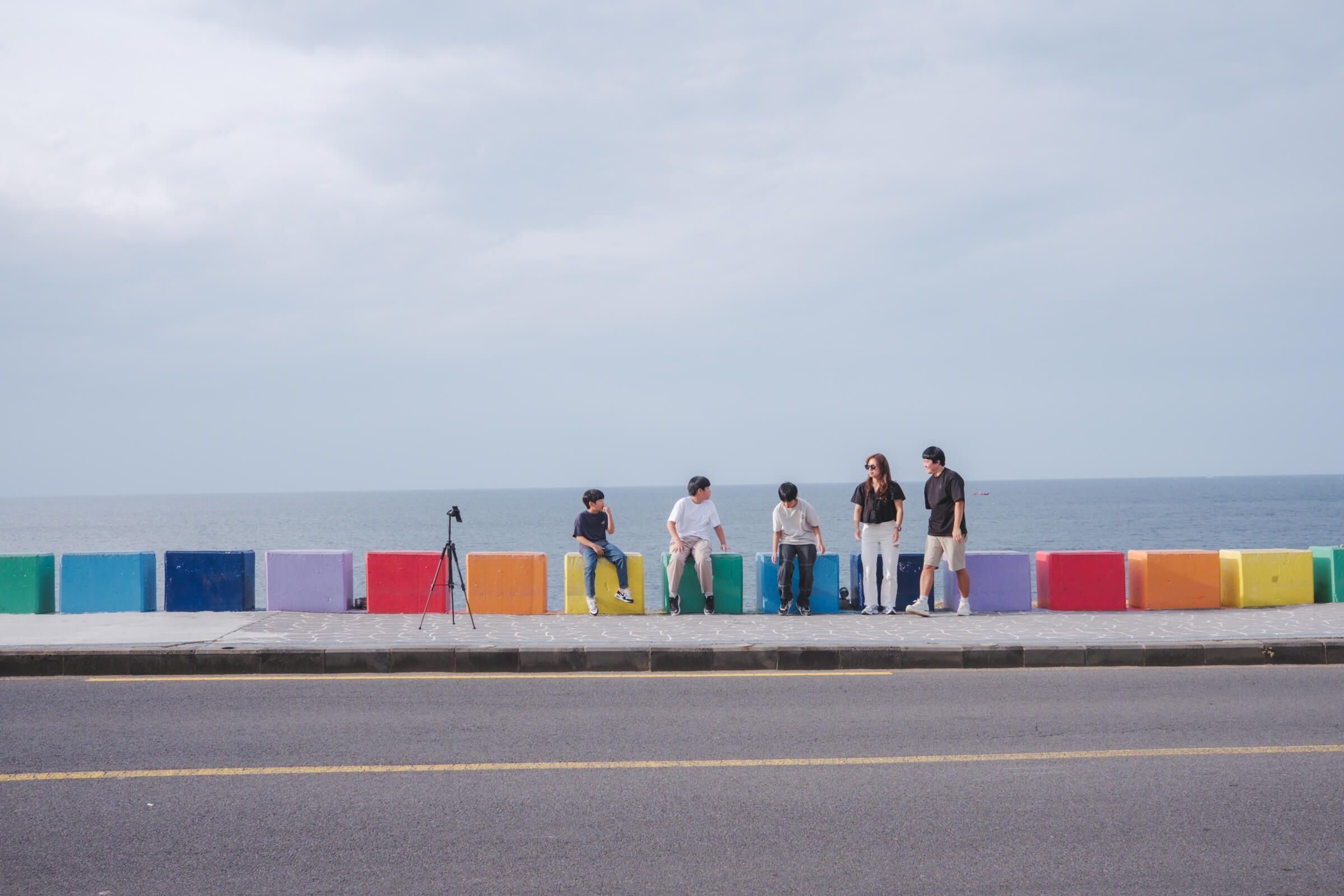
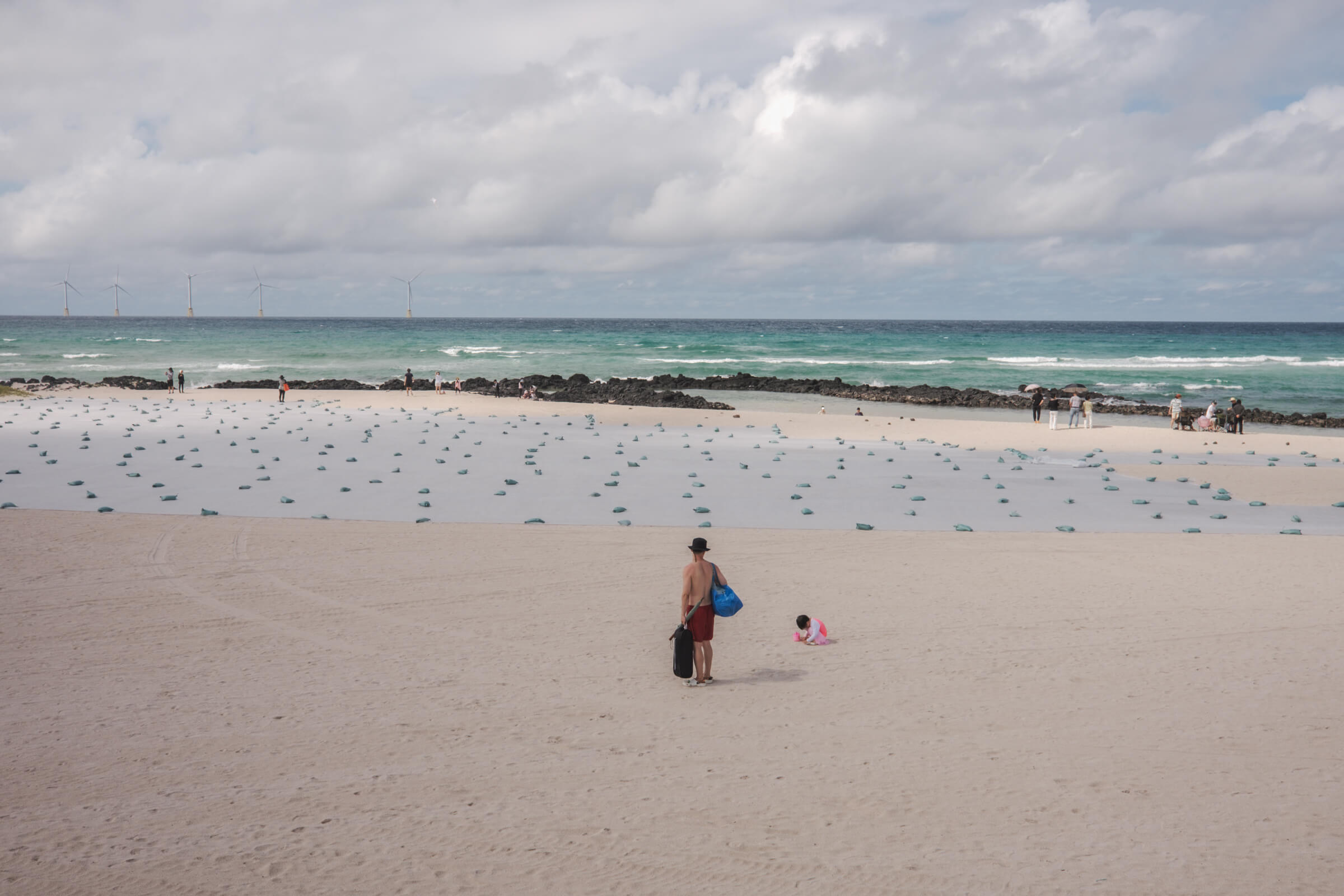
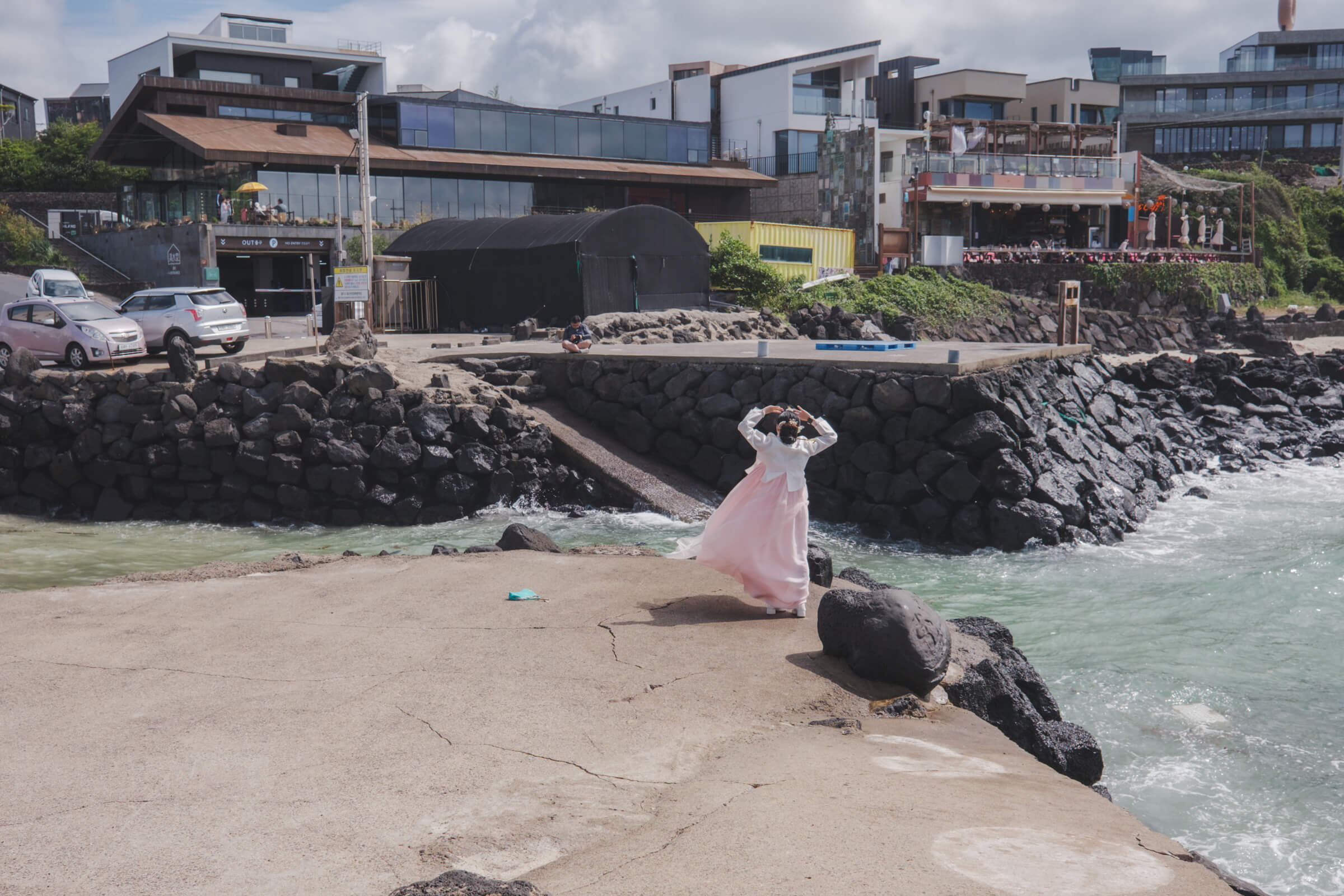
My partner commented that I am the only one who likes to take photos where the subjects are quite zoomed out, so I thought I might as well lean into it:
I just think there is so much meaningful context surrounding the subjects. Maybe this is how I perceive life in general too, and maybe that is why my mind is always exhausted.
The past few weeks I haven’t been recovering well from my exercise. I thought it was perimenopause or something, but upon examining my journal entries I could trace it back to one bad night of sleep. Its effects cascaded into several days after, manifesting in fatigue and headache. I do think perimenopause is also affecting it.
The morning after I didn’t sleep well I still went for my scheduled 5km run. Previous experience had taught me that I would probably feel like shit after but I would possibly still recover within a day or two. But this time round I didn’t recover well. My morning hrv was low for the next few days.
I think age is catching up with me.
I lived a very unwieldy life from childhood till my 20s, which had lasting consequences even till now. So I compensated in my 30s by developing the discipline to keep habit streaks. I would feel deeply uncomfortable or disappointed in myself if I broke a streak. When I first started running I went from being totally untrained to running every single day for about 90 days. I was lucky I didn’t end up with an injury.
I tend to over-optimise my life and decisions, also an overcompensation that resulted from under-optimising my life when I was young. I try to exercise as much as I can, so that I can hit optimal fitness within the time given – at least based on theory. When travelling I’ll try to pick the most optimal stay in terms of comfort, value and location. I’ll strategise how I use my credit cards in order to maximise the miles earned.
But lately I realised hyperfocusing on optimising is ironically making me live a suboptimal life. Because I want to maximise my exercise time even on days I am not in an optimal state I end up falling ill. Or I’ll spend so much paralysing over a decision because I want to make the best decision possible that I end up wasting precious time of my life. The desire to over-optimise for certain things because of some traumatic phases in my life has caused me to become really inflexible in many ways. I have been missing the forest for the trees.
Sometimes we are just locked into a certain mode of operation because it has served us well for a time period, but we don’t realise we can stop operating that way because our life, circumstances and selves have changed.
I have to accept that I am getting older, and my body will be shifting its limits as I age. Things I could comfortably do before will become harder. Maybe I cannot aim for ultimate fitness, but I can aim for being as fit as possible for chronically ill women within my age group. Sometimes I can seem so well I forget that I am actually chronically ill. I can be pain and migraine free for long periods of time, but it is always lurking in the shadows, threatening to bubble up whenever I am not careful enough.
I used to eat really low carb to manage my migraines, but as I started to exercise more and gain more muscle I slowly started to notice that it was hampering my recovery. My body was also struggling to support an ageing reproductive system while being in ketosis.
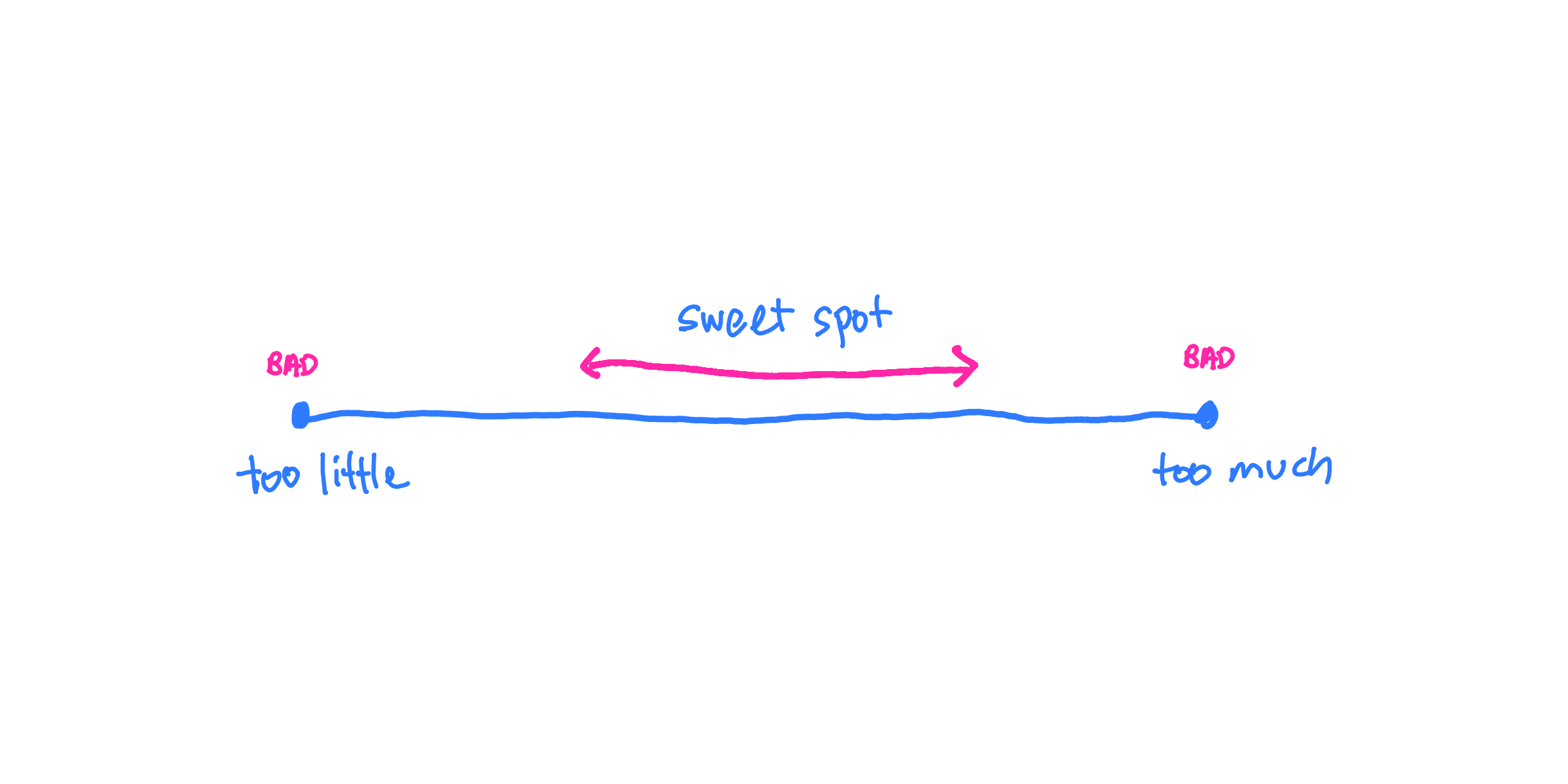
I learnt that in health, there is no one optimal way of being. We could optimise for one part of the body and yet the same intervention is at odds with a different part of us. For example, I can optimise for cardiac health and have very low supposedly healthy fasting glucose numbers but feel like shit because my reproductive system demands more. I once read somewhere that nature and evolution just wants us to reproduce, even at the expense of our overall well-being. So my theory is that it favours a slight energy surplus so that it can support any potential pregnancy. But if we over do it and have metabolic issues we cannot be fertile either. Health interventions are almost always on a spectrum: too little is bad, too much is also bad. But people who are health conscious – myself included – can be very black and white.
How does one find the middle ground, the sweet spot? Research and scientific journals may not help either. They may be behind time, or only for a specific demographic. I have also since learnt that people can respond very differently to the same intervention because of genes. Yet medical and health advice is dispensed as though one size fits all. I do think healthcare will be increasingly customised in the future if we survive the climate and virus apocalypse. It seems to already be on the way there for some areas, like cancer treatments. Unfortunately, this is where economic privilege makes a huge difference.
Though I seem to be writing about health or practical matters in life, essentially I think it boils down to developing some from of self-knowledge and creativity flexibility. This applies to the more abstract areas of life too, like in our creative practice.
Perhaps this post is an example. Sometimes I get into a very fixed mindset that I should only focus on one topic. But so much in life overlaps and impacts one another. My consciousness is also always burdened with overlapping concerns, so why should I consciously restrict myself just because there is a mainstream belief of what is right and better? To me, life is a constant repetitive process of freeing ourselves from our inner prisons.
Some of our internal baggage is obvious and heavy, and paradoxically that makes it easier to work with. But there is some baggage that just seems innocuous so we don’t really notice them or think that they are hampering our life, yet we are slowly being injured by a thousand paper cuts. Going back to the subject of optimising – it is something that is traditionally perceived as positive, but it can become an invisible block.
I guess it is a good thing that I am even noticing this instead of being in autopilot mode. There have been recent times when I have caught myself being hyperfocused on optimising, and suddenly I become aware of it. It is still not easy to break out of old behavioural patterns though, even with increased awareness. My mind still defaults to thinking that habits and routines are preferred, even if I am actually physically suffering in trying to keep to them.
Sometimes at the age of 44 I still can’t help but feel like a baby learning how to crawl. That I am encountering something new about myself, and I have no idea how to manage or respond to it yet. There was simply no such mental flexibility when I was young, because I was so heavily conditioned by the mainstream beliefs of society. There was no sense of self to say that hey I don’t actually want to do this, let me do something else instead. One positive thing about getting old is the capacity to say no, even to our selves. That the brain becomes more open to possibilities in a different way.
When we are young, we are naive and idealistic, so we think anything is possible. As I get older, I am less prone to unrealistic thinking and hence I am definitely more close-minded in a way. However, still I have seen enough of life to know that shit can get weird sometimes, the world is more diverse that we can ever know, that things that used to sound so frightening or impossible are actually not that scary and can be possible, pursuits that were appealing are no longer so, that as we know ourselves and the world better new doors can open too. Maybe the most liberating of all is that 99% of opinions do not matter so feel free to go our own way (within legal reason).
With recent times, things have gotten even more uncertain: doctors and scientists can also be ignorant, politicians are untrustworthy, the earth seems to be on her last legs according to climate data etc. It seems pessimistic. But like the zen master likes to say, it is with uncertainty and impermanence that there can be creative possibilities. If things are certain and fixed then we will only be inclined to do things a certain way.
My ageing body too, makes everything more uncertain. If I have to see the silver lining I guess it would be that I can now finally learn to be more flexible as a person. I hate to admit this, but most of the time people simply won’t change unless push comes to shove. I guess I got shoved, and now I am forced to start a new journey.
Everyone seems to know that exercise makes us healthier but I think it is still an abstract concept to most people. It is still being associated with aesthetic value – looking lean, and there are more important things in life than to look lean. Not everybody is interested to test the limits of their body, to know where it can go. The idea of running being able to run 5km without huffing and puffing is not appealing to everyone. Maybe most of us just want to be able to walk. To complete our day’s tasks. To be present to our loved ones. Spending a few precious hours each week to improve our body seems like a vain thing to do. Developing the capacity to run seems nice to have, but frivolous.
But I’ve learnt: the point of exercise is not to “improve” the body. It essentially maintains it. When we are young everything is fine and dandy. Our body is kept in almost perfect homeostasis. The natural effects of ageing however, puts us in a chronic negative loop. The more we age the more errors start happening in our body, the less we are able to recover, and hence more of our biological resources get depleted, resulting in a chronic diminishing capacity to cope with stress and energy demands.
The right amount of exercise creates a positive feedback loop: it is stressful for the body, so the body responds by growing more mitochondria to cope with it:
Conversely, without enough stimuli, our strength and energy capacity start to shrink. Negative stress like illnesses and stressful events coupled with the effects of ageing will dwindle them down if we don’t do anything about it.
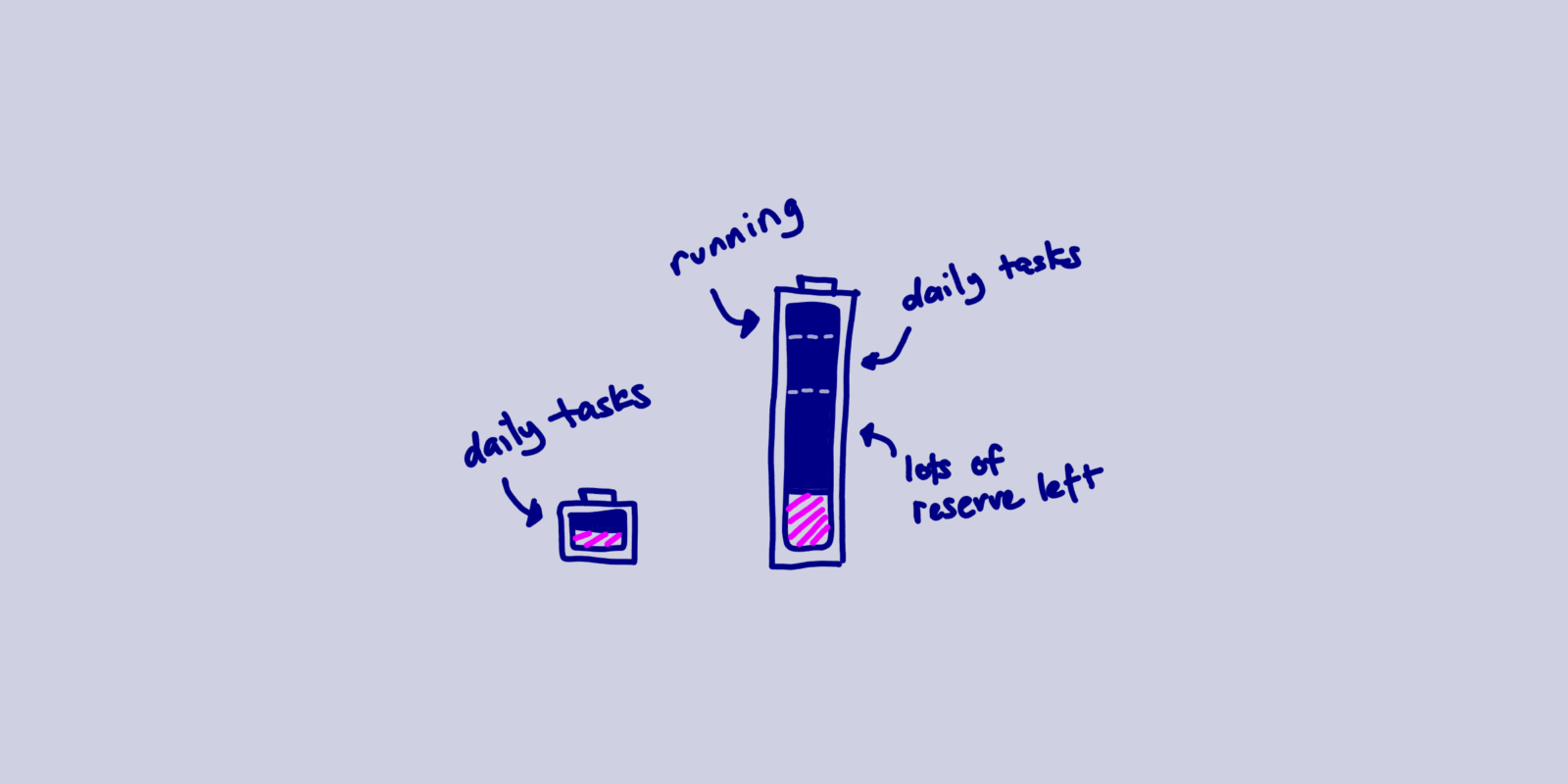
The amount of energy we can use each day is finite. If our aerobic capacity is compromised, just walking around is enough to deplete us. Imagine if we are able to run 5km and not feel tired. On the days we are not running we are barely dipping into our energy capacity.
This applies to strength as well. When we are able to lift say 20kg without breaking a sweat, this means that the daily mundane chores of carrying things around will not tire us much. Previously, even carrying 1kg on my back for 30 minutes would tire me significantly. Since lifting a significant amount of weight doesn’t feel too strenuous to me now, I can walk around with a much heavier load without feeling too depleted. There is just more capacity to work with, and it takes a lot more to reach breaking point.
Somehow we tend to associate energy as though it is part of our character, or that we can simply will energy to flow from our body. People with very little energy are perceived as lazy or weak. It is very much a physiological state, and a lot of it can be determined from birth. We can’t expect someone with very little muscle to lift 20kg of weight no matter how much will power they have. It is the same with our aerobic energy, which fuels most of what we do. If we have very little mitochondria left, we cannot make them generate more energy than they are capable of no matter how much positive thinking we can have.
People with chronic illness is stuck in that negative energy loop. Which is why traditionally the recommendation is to exercise. The process that makes more mitochondria is not the exercise itself, but recovery. But people who are chronically ill lack the ability to recover, which is precisely why they are chronically ill. The more they attempt to exercise, the more mitochondria they are damaging, the less and less capacity they will have. The body is essentially stuck in a vicious cycle when chronically ill. Till today, medical professionals don’t have a good idea on how to reverse this negative loop.
I was able to get myself out of this negative loop with the support of traditional chinese medicine (tcm), which philosophy is to get the body back to homeostasis, not just addressing the symptoms. Yet most people think tcm is hogwash.
I was someone who lived with chronic fatigue for a very long time. I lived an extremely sedentary lifestyle with an extremely bad diet in my 20s. Coupled with chronic stress I became chronically ill in my 30s. It took me almost a decade to get better. Being on the other side I am now experiencing what it is like to be fitter, to have that extra reserve capacity to deal with the energy demands of life. I was never this healthy before even when I was much younger, because I was never taught how fragile is health, and what being healthy truly means. It is not just about avoiding illnesses and pursuing longevity, but it is about being able to cope with what life throws at us. If we are always feeling tired it is difficult to handle any form of stress. And life is extremely stressful, even if one loves their job and social life there is still stress. Our body doesn’t care if we like or enjoy the stress. Stress is stress to the body, and if we don’t do anything to circumvent it we will eventually pay for it.
Stress kills mitochondria and since everything is stressful – even eating is a form of stress – we have to actively grow our mitochondria so that if our daily life and ageing kills some of them, we still have some left over. If not, the threshold to burnout is very low – a single unfortunate event can push us over the brink.
This is also why I don’t like to get sick. Illnesses are extremely stressful for the body, even mere colds.
Hypoxia, infections, inflammation, mutations – all can alter flux patterns through the Krebs cycle, with a knock-on effect that switches on or off hundreds or thousands of genes, changing the stable (epigenetic) state of cells and tissues. Tissue function eventually becomes strained, biosynthetic pathways falter, ATP synthesis declines and the delicate web of symbiosis between tissues begins to fray. And so we age. – Nick Lane, Transformer
Viruses like covid send us into a chronic negative loop. If we are unlucky we may not be able to break out of it. We can’t take for granted that the body is always able to recover. It is not just about stopping the negative symptoms, but to be able to go back to the state we were in before the illness. It is not that easy to grow mitochondria, and a single bout of illness can set us back permanently. Sometimes the negative loops are invisible, and the effects take years to manifest. People who were infected with HIV or the Epstein-barr virus didn’t suffer their consequences until many years later. Viruses are a leading cause of various cancers. But we don’t know these things.
We only know this abstract concept named, health. We don’t know what it actually takes to truly possess it, or we would cherish it way more.
This past week my partner fell sick — not covid as far as we know (we tested) but it seems like a more severe flareup of her MCAS. She hasn’t been this sick since her first MCAS flare when she had to be on a low histamine diet for almost a year.
I know it sounds dramatic, but the moment we knew she developed a fever it felt like our lives flashed before my eyes. I had no idea if this fever would end up to be innocuous or something more sinister. Co-incidentally I was also reading a blog of a former lawyer whose life suddenly changed because of dengue. Again these events made me feel very keenly how fragile our health and life can be.
The current instability of this world serves as a chronic perpetrator of anxiety for me. It is like we don’t really know if an event would be the trigger that cascades the collapse of civilisation, or is it just another terrible event among the many terrible events happening every day. I feel like we are living in the end times, but we don’t know how dragged out the end is going to be. There is a lot of uncertainty, so as usual I find solace in reading buddhist philosophy.
It is a pessimistic way of living, though I would insist that I am simply being realistic. Sometimes I too wonder if I am constrained by my own pessimistic biases of life and human nature. But the steady stream news and scientific research seems to be affirming my pessimism.
In many ways my lifelong pessimism is a gift. Since young I’ve been having the attitude that I am never going to know when life will change or end. So I have always sought to live my life to the fullest — as full as a depressed person can muster — often making what seemed like reckless decisions. But only upon hindsight these reckless decisions turned out to have brought so much to my life.
Living this way is very anxiety-inducing. I have not yet developed the equanimity to face reality head on. Maybe I make it sound like as though I have a choice. The truth is I just don’t have an alternative mode of operating. I just cannot seem to disassociate from reality like most people can. I would have been a monk if I had been born in a different era.
I am a person full of sadness but within me I am also growing a sense of fullness. I get glimpses of it once in a while. It is not constant. I feel like this sense of fullness is only possible because I have been living life on its edge, not having the passive confidence that there will always be tomorrow. Thankfully and miraculously my partner is on the same page so we both try to pursue this ephemeral sense that we are truly living.
There is only now. I find myself thinking this more and more these days. I cannot make long-term plans. Sometimes I plan for a trip merely a couple of months in advance and it makes me nervous. Will I be able to go? I don’t know who is suddenly going to get sick these days.
Sometimes I question my sanity but there is a part of me that knows. Life has proven me uncountable times that things always change. There is no sense of safety. Maybe it has to be this way, at least for me. If safety is guaranteed would I be inclined to do the things I have done?
Perhaps it is not a bad way to live like there is no tomorrow (coupled with some moderate sense of responsibility). Even if we do make it to a ripe old age, this would propel us to live mindfully and fully instead of being on autopilot. This is how we have loved each other for the past 9 years, and it is because we have loved this way, there is also that sense of fullness in our relationship.
There is a poignancy when there is no guarantee of tomorrow. It brings us closer to the moment. We both feel like we have had a good nine years together that we can be truly grateful for, so if shit was to really happen it would feel like at the very least we did experience a lot. To ask for more would make us seem greedy. This seems like a good position to have, living in a world like this. To know we’ve tried to give it our all.
I was supposed to do a dental crown after I was finally done with my root canal in may, but as usual I procrastinated plus we travelled for a bit in july so I have only managed to pull myself together this past week to search for a prosthodontist (a dentist that specialises in crowns). I could do it at a general dentist but I have some ptsd after my failed root canal.
Each time I have to search for a new dental professional it is a nightmare. In most scenarios I can simply wear my own n95 mask and somewhat ignore what the other person does because I trust the protection of the n95. One-way masking is not 100% foolproof, but beggars cannot choose in this climate. Going to a dentist is one of the highest risk settings for the covid cautious because our mouths are wide open to anything that is airborne in the room. I have been to dental appointments where one of the dental team is coughing or sniffing. Covid can also be transmitted asymptomatically (asymptomatic infections apparently can account for up to 45% of the spread). Hence I request for the dental team to mask with n95s, and that is a very difficult ask in a world that is not informed with science. Nobody believes covid is a thing, nobody seems to know it can be transmitted asymptomatically, and worst of all nobody knows how airborne transmission works.
Thanks to modern messaging I could simply text or email clinics and make my request. They could either accept or reject me and I could move on. But I was still severely stressed. I knew intellectually I was experiencing more stress than warranted. Having to explain myself over and over again to a disbelieving society exacerbates this stress.
This whole process is extremely triggering for me. I have trauma from my childhood when it comes to being disbelieved, being rejected, being ostracised, being minimised, having to over-explain, feeling small and weird. A lot of these comes with growing up neurodivergent, upon hindsight. Our society likes to penalise people for being odd, and kids suffer the brunt of it because they have not developed enough selfhood to defend themselves. “Why can’t you just be like others?”
Therefore being covid cautious is actually very triggering for me. Because it is the same traumatising feelings again: being disbelieved, being rejected, being ostracised, being minimised, having to over-explain, feeling small and weird. I believe at least 50% of my ongoing depressive feelings can be attributed to the ongoing pandemic. The feelings just keep occurring: over and over again. It doesn’t matter how much I age, how much I know I am justified. It is definitely better compared to my younger self, but still very stressful.
I think if not for my partner I would cease to exist in this world. What is the point of living in a world where I am obviously not a good fit for? Each passing day feels like misery. It is not just about my traumatic feelings, but also the lack of optimism and hope in a world that is full of denial and exclusion. Many people in this world likes to step on others to stand tall, and it continuously makes me sad.
I don’t know how I can be not depressed when the conditions are such. It would require a lot of deliberate ignorance and disassociating. Then I guess the question is: how do I make myself survive despite it all?
Thankfully I have gotten a number of positive responses from the select few clinics I messaged. There were also a couple of negative responses, but in the minority. Maybe there is some compassion in this world after all. Though part of me feels that this isn’t about compassion or accommodation, but rather science. To protect my health I have to be profiled as the hypochondriac or the sickly person even though I am probably physiologically healthier than many at this point. But I guess I still grateful to be profiled and accommodated rather than none. There are people in other countries who are getting ridiculed and gaslighted by their medical professionals, or their medical systems may not have given them a choice at all – so I will not complain.
There is so much loneliness and uncomfortable feelings that come with being covid cautious, but without my health I am nothing.
I’ve been reflecting a lot about my rejection sensitivity dysphoria, an perhaps of all my health conditions I consider this to be the most disabling for now. I can do a lot for my physical health, but there is very little to what I can do about my physiological reactions to stress and rejection. I feel like I was born with this neurological wiring. I just feel sensitive to everything. I have learnt to cope with it better as I age but it is still very exhausting. I don’t think it ever goes away – I just get better at putting layers over it. And sometimes, the layers crumble.
This world is not kind to people like me. We’re just perceived as weak. In a just world the weak gets more protection, but here we are just the butt of jokes. All my life I am simply told to just be stronger. I am the one with the character weakness and hence I must fix myself. Or else I do not deserve a place.
What is the point of this again?
I am so lucky to be with my partner, who sees my so-called weaknesses as strengths. But she can’t process my feelings for me, or prevent the pain I feel on a daily basis. Without her I don’t feel incentivised to be alive at all. I feel strangely amused when people insinuate I should earn my place – but to me it is like why?
Still I keep on going, hoping to find some insight or perhaps grow into someone else. It feels exhausting. I try to distract myself from the exhaustion. The veil doesn’t work all the time. I can only tell myself to learn to co-exist with my self, and to develop the compassion I need to endure being in this world.
Once in a while when I have no idea what to read or I want to read something different I would browse my library’s skip-the-line collection via Libby. That’s how I read “The Dawn of Everything” by David Graeber and David Wengrow.
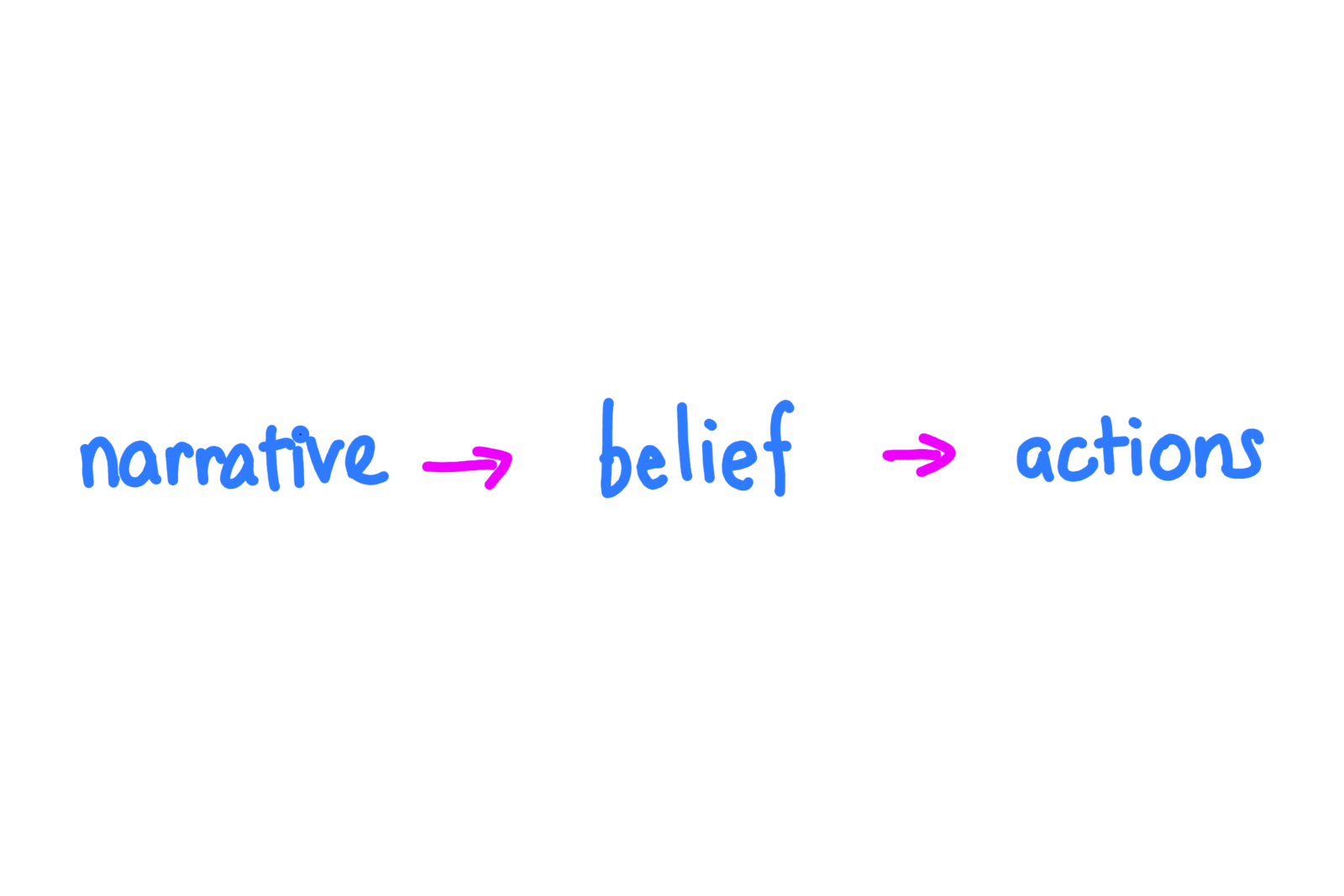
The book is 704 pages long so I would not attempt to summarise its complexity or analyse it. It sets out to examine the prevailing narratives we have for our own human history. Why is it so important that we examine these narratives? The stories we have about ourselves shape our culture, politics, economics, individual beliefs etc, and hence they shape our potential and our future.
The authors are not trying to prove that they are correct and the existing version is wrong. What they ask of us is that we learn more about it and question it – that human beings are diverse and hence our history contain multitudes and is complex – we cannot reduce what happened over thousands of years to one single simple narrative that applies to everybody.
For example, for the longest time we believed at some point of our history civilisations became a thing because we invented agriculture, therefore we had a ton of resources to feed people and armies – we need not be nomadic anymore to find food, so we did everything we can to hoard and grow this power, including mass violence on other human beings. Only people who belong to these civilisations are “civilised”, everyone else is “primitive”.
But anthroprology has come a long way. It is now suggesting that people we formerly thought of as “primitive” had creative, intelligent ways of life. Some of these people from indigenous societies were known to be highly intelligent:
Some Jesuits went further, remarking – not without a trace of frustration – that New World savages seemed rather cleverer overall than the people they were used to dealing with at home (e.g. ‘they nearly all show more intelligence in their business, speeches, courtesies, intercourse, tricks, and subtleties, than do the shrewdest citizens and merchants in France’)
…knew how to practice agriculture but simply chose not to:
Researchers in the 1960s were also beginning to realize that, far from agriculture being some sort of remarkable scientific advance, foragers (who after all tended to be intimately familiar with all aspects of the growing cycles of food plants) were perfectly aware of how one might go about planting and harvesting grains and vegetables. They just didn’t see any reason why they should.
What to a settler’s eye seemed savage, untouched wilderness usually turns out to be landscapes actively managed by indigenous populations for thousands of years through controlled burning, weeding, coppicing, fertilizing and pruning, terracing estuarine plots to extend the habitat of particular wild flora, building clam gardens in intertidal zones to enhance the reproduction of shellfish, creating weirs to catch salmon, bass and sturgeon, and so on. Such procedures were often labour-intensive, and regulated by indigenous laws governing who could access groves, swamps, root beds, grasslands and fishing grounds, and who was entitled to exploit what species at any given time of year. In parts of Australia, these indigenous techniques of land management were such that, according to one recent study, we should stop speaking of ‘foraging’ altogether, and refer instead to a different sort of farming.
Instead of fixed fields, they exploited alluvial soils on the margins of lakes and springs, which shifted location from year to year. Instead of hewing wood, tilling fields and carrying water, they found ways of ‘persuading’ nature to do much of this labour for them. Theirs was not a science of domination and classification, but one of bending and coaxing, nurturing and cajoling, or even tricking the forces of nature, to increase the likelihood of securing a favourable outcome. 50 Their ‘laboratory’ was the real world of plants and animals, whose innate tendencies they exploited through close observation and experimentation. This Neolithic mode of cultivation was, moreover, highly successful.
…balked at the Europeans’ constrained way of life:
Those Native Americans who had been in France, he wrote,
‘… were continually teasing us with the faults and disorders they observed in our towns, as being occasioned by money. There’s no point in trying to remonstrate with them about how useful the distinction of property is for the support of society: they make a joke of anything you say on that account. In short, they neither quarrel nor fight, nor slander one another; they scoff at arts and sciences, and laugh at the difference of ranks which is observed with us. They brand us for slaves, and call us miserable souls, whose life is not worth having, alleging that we degrade ourselves in subjecting ourselves to one man [the king] who possesses all the power, and is bound by no law but his own will.’
…practised political systems that we would not be able to imagine in modern times:
Most interestingly for our own perspective, he too stressed that the Plains Indians were conscious political actors, keenly aware of the possibilities and dangers of authoritarian power. Not only did they dismantle all means of exercising coercive authority the moment the ritual season was over, they were also careful to rotate which clan or warrior clubs got to wield it: anyone holding sovereignty one year would be subject to the authority of others in the next.
There are many more such examples that would be impossible to list. The book covers much more than correcting our collective misperception on indigenous societies. But this is not really a book review, but rather to contemplate how much we are individually and collectively influenced by what we know of reality.
Travelling changed my life dramatically. The first distinct memory was watching a bunch of kids play at a rural part of thailand. I was taught to believe that we need a lot of material things to be happy, but that moment made me realise that belief was wrong.
Later on I visited SF for the first time, which was also the first time I felt that it was possible to feel a sense of belonging, something I felt deprived of since I was cognitively conscious. In singapore (at least back then) I was always considered as the black sheep, the sore thumb sticking out. In SF it felt like the weirder you are, the more you belonged.
It didn’t matter what was the objective reality, if such a thing even exist. What matters is that some moments or insights can open our minds to a wider spectrum of possibilities. I am very much less romantic about SF now, but it was still the place that shook the foundation of my being and the world I existed in.
These experiences taught me that singapore was essentially a fish tank. If all I knew was that fish tank, then that was all I knew about reality. That means I had to live within the boundaries and social expectations of that reality. Of course it is always possible to go out of bounds, but it is really not that fun being an outcast and the subject of negative societal judgement. It is human nature to desire belonging and acceptance.
Living elsewhere made me realise I was simply trapped by my narrow perceptions of reality. I started to flourish in a very different environment than what I was born into. My previously negative qualities in singapore became what was celebrated about me. Just by being able to perceive and be perceived in new ways my reality became radically different. To open new doors we have to be capable of seeing those doors, and have the self-belief that we are capable of walking through them.
Similarly for the longest time I felt extremely pessimistic about humanity. I too, bought into the narrative of humans being “naturally” self-interested and territorial. I cannot say that I feel positive about humanity now, but I have more of a questioning spirit. Even if our future still seems doomed to me, it feels inspiring to know that we were not always like how we are now.
In developing the scientific means to know our own past, we have exposed the mythical substructure of our ‘social science’ – what once appeared unassailable axioms, the stable points around which our self-knowledge is organized, are scattering like mice. What is the purpose of all this new knowledge, if not to reshape our conceptions of who we are and what we might yet become? If not, in other words, to rediscover the meaning of our third basic freedom: the freedom to create new and different forms of social reality.
I guess the moral of the story here is to not be so fixated on what we know to be true, but rather cultivate an investigative spirit so we can keep learning, keep asking questions, and keep expanding our notions of reality. With new dimensions of reality comes new potentialities.
It would be nice if teenagers now get inspired by the book and become budding politicians who will shape our policies, but I think it is worthwhile to start at an individual level and question our limiting internal beliefs.
Before reading the book I had already known that David Graeber had passed away, due to covid (fuck covid). After reading the book I felt a profound sense of loss. They were planning to write at least 2 more books in the series. This book is not about the ultimate truth, but rather about opening up our minds, teaching us that what we believe is set in stone is not as solid as we thought. It is very much an anthropology book as much as a philosophical book. It feels buddhist, even. We could like or dislike David Graeber, agree or disagree with him – I think we need more of what he had brought to this world.
I had tried to read Debt: The First 5000 Years but couldn’t continue because it was too dense for me at that time, but this time around I am finally in the right mind to read The Dawn of Everything, so I feel encouraged to go back to it.
Once, I told my therapist that I felt existentially lonely, that I could not find people that had much in common with me. She encouraged me to participate more in online communities. Writing this I realised it is a consolation that I can find some solace from books, at the very least.
When it comes to self-care people may think about treating themselves to a day at a spa, having some quality alone time, or spending some time on hobbies, but as I grew older I realised the most important parts of self-care are tedious, boring and potentially anxiety-inducing.
For example the more I learn about health and nutrition, the more I realise the only way to eat in a truly healthful way is to cook. Cooking is the only way to control the quality and sources of the ingredients, the amount of heat and seasonings used. These days I try to avoid vegetable oil, but when we eat out everything is cooked in vegetable oil. I also try to avoid high-heat cooking, which is easier because I can choose salads or steamed foods. It is just better to cook.
But I don’t really enjoy cooking. It inevitably creates a mess and there is a cleanup process which includes the washing of dishes. Time, patience and the capacity to do ingredient prep is key to cooking good-tasting dishes. I don’t like prepping ingredients because it is boring and tedious plus I have naturally bad hand-eye coordination (due to adhd) so I have to be hypervigilant in order not to hurt myself. Storing a wide variety of ingredients stresses me out because I’ll forget and end up wasting them. Looking at a large amount of ingredients to prep is overwhelming and triggers my pathological demand avoidance.
So if I do cook, I try to keep things really simple. Which means most of the time they taste simple too, but I crave complex-tasting foods. I also want time to do other more interesting things instead of sweating buckets in the kitchen and having to clean up later. Previously when I experimented more with cooking, it was always disappointing that the time:reward ration is not favourable because I could spend hours cooking one dish and it is all eaten in 15 minutes. For some people, the hours cooking is the fun part. I end up thinking I don’t want to deal with the stress and effort of cooking, especially in singapore where eating out can be cheaper than cooking.
Yet now I am trying to cook more regularly again, despite still thinking that it makes me feel better when I eat out. I guess I have gotten to the point in my life when I realise self-care is not just doing nice things for myself, but the willingness to do things I don’t actually want to do because the outcome of doing those things is much better for me. I put myself under potential stress and discomfort not for my employer or my parents or for society, but for my self.
This applies to plenty of other potentially stressful or boring things in life that we have to do to care for our selves. I hate visiting the dentist, but I visit them regularly because I have finally learnt that my teeth is really important. I dread setting up medical appointments but I do it because the short-term avoidance of anxiety and pain is not worth the long-term potentially negative outcomes. I record every expenditure in an app even though it is tedious because I don’t want to be in a financially compromised position without knowing how it happened. I track my biometrics everyday in a spreadsheet to learn how my menstrual cycle is affecting me. I enjoy it now, but I used to really hate exercise and it took me years of trying and giving up. I try to practice drawing in order to improve my hand-eye coordination and patience.
I realised there are so many things I do in my life that I wouldn’t do if I had a choice, but age has taught me that the important things in life are not exciting, glamorous, fulfilling or joyful. It is the capacity to show up for my self in mundane, boring, painful, stressful times – on a regular basis. Things that other people were supposed to do for me when I was a child but they didn’t: now I am finally in a position to do it for myself.
The boring, tedious, stressful things that have to be done on a regular basis builds the foundation to a life that has the potential for excitement, fulfilment and joy. Because without health – physical, mental or spiritual – it is very challenging to generate the energy and situations required for those qualities.
I am only able to notice moments of fulfilment and joy in my life recently, not necessarily because my life has become better, but because I am in much better health psychologically (for now). But I couldn’t be in better psychological health if my hormones are tanked or if I am too tired to think with clarity. Life requires a form of spiritual (not religious) energy: the spirit to truly care about living. The self is the vehicle for life. Hence to truly live, the self has to be cared for. The healthy and whole self experiences life radically from a broken and tired self. It feels really weird that something so obvious has to be spelled out, but the negation and neglect of the self is all too common in our current society.
The time I spent in Khao Yai was one of the most freeing periods I had felt since 2020. Being known for its national park, the qualities of the place makes it very ideal for covid cautiousness especially in low season as most places are open-air and spacious. Fortunately or unfortunately, a car is required because there is almost no public transport infrastructure. Hence we felt safer than usual because we could avoid sharing transport with other people.
The first thing we did upon picking up our car is to wind down the windows and turn off recirculation mode. This brings in outside air into the car. Then we set up our air purifier – the air fanta 3, which can run on either a portable battery or a car lighter charger. We plugged ours in the car charger, but I did bring a portable battery just in case. We ran it for a full hour while driving before unmasking. This is the first time in roughly five years we unmasked in a car.
airfanta 3 in the backseat of our rental car
In singapore we mask during the rare times we drive as we use a car-sharing scheme. It felt really weird to be driving without a mask, like we were doing something wrong. It was as though we were in one of those anxiety dreams where we forgot to wear a mask.
Many of the cafes, restaurants and even hotel lobbies are open air, so it almost felt like the before times because we could go from car to hotel lobby to restaurant unmasked. Of course open-air doesn’t mean 100% risk free, but both of us felt that this is what we can accept to make this actually sustainable in the very long-term. It is low season in Khao Yai so there weren’t many people around. We do wear our masks outdoors if there are enough people around. I usually follow my partner because she’s more sensitive to potential risk than I am.
There are many accommodations in Khao Yai that are standalone with balconies or patios, so that added to the safety factor.
standalone accomodations
We avoided hotels that do not have windows that can be opened. We ran the air purifier perpetually anyway.
Since Khao Yai is known for its outdoor attractions including its famous national park, we could do plenty of things outdoor with virtually nobody around.
taking a walk in a vineyardvisiting a mango farm
At many cafes, the outdoor is the feature. It is usually the other way around in other places: the indoors have great interiors whereas the outdoors feel like an afterthought. In tropical countries like Singapore, sitting outdoors is a form of voluntary torture since it can be extremely hot and humid at 35 degrees celsius. Khao Yai is at a higher altitude. It was the rainy season so there were some uncomfortably hot days, but we did enjoy quite a number of cooler days.
a cafe with interesting outdoor architecturea cafe where they offer plenty of instagram spotscoffee in a giant tentour favourite matcha place in khao yai
There are also food options available in Khao Yai that is typically unavailable in Singapore due to the hot weather. We even had sushi outdoors.
shabu shabu outdoors
We usually skip hotel breakfasts because they are almost always indoors with a few rare exceptions – in Khao Yai almost every hotel breakfast has a patio option. Some restaurants are fully outdoors. One place offered only in-room breakfast which was great for us.
Of course, covid cautiousness is a spectrum. Some people wouldn’t travel at all or eat outdoors. Right now it seems like it is going to be a perma-pandemic, so we had to decide where in this spectrum we want to exist. We are quite comfortable wearing n95s on planes and everywhere indoors, and avoiding most human interactions. We cannot pretend that covid doesn’t exist anymore, yet we cannot be isolated hermits either. Thankfully a well-fitted mask works, along with other prophylactics.
We really appreciated our time in Khao Yai because we were able to go mask-free much more than we can in other places. It makes me contemplate more car-centric travel to isolated places. Thanks to the rental car we were able to travel around unencumbered. I won’t pretend to like wearing a mask. I just do it because I cherish my health and my brain more than I dislike wearing a mask.
I can’t help but feel weird writing this post because 99% of people are living as though the virus is harmless. Everyone else has moved on, but I keep on writing about it. But being queer taught me that representation matters. Almost every day I come across research papers telling us about the long-term harmful effects of viruses, so why am I the one feeling weird? This path is extremely lonely, but this is something that feels important to stand up for. If I don’t acknowledge this like everyone else just to feel less lonely, I am simply contributing to the denialism. I choose the loneliness. But thankfully I still have my partner with me. She doesn’t feel lonely though. I guess I have something to learn from her.
Once upon a time I would start doomscrolling when I woke up. I realised it was causing mental fatigue way too early in the day, so I switched to writing morning pages instead. I’ve been on an unbroken streak for morning pages since october 2021. Recently I’ve begun to wonder if my morning pages habit had caused me to be somewhat inflexible. That time of the day is usually when my mind feels the freshest. I could use it for writing or some form of creative work. Sometimes just the mere act of writing morning pages can be mentally fatiguing. I could write evening pages instead I guess, but I am so used to my routine that it seems difficult to break.
It is just so easy to slip into auto-pilot mode in life. Since every day can be just a repeat of yesterday, we can simply go on an unquestioned loop. Ageing makes it harder to break out of these loops, because we gain less and less exposure to new experiences, or we lose interest in gaining them. At some point in life we just have much less energy, so we just want to stick to something comfortable.
I have a keyboard I bought eons ago because I wanted to learn how to play. As usual I hyperfocused on it at the beginning and burnt out. The story of my life. So I stopped learning, because the burn out made the idea of playing it feel fatiguing. These days I thought I should give it a try again because I think I am better at pacing and chunking now – am I – but somehow it seems so difficult to just start?
I think the problem with the mobile phone (at least for me) is not addiction per se, but it is just so easy to default to it when there is some space in time. It seems way harder to uncover the keyboard, see if the electricity plug exists, plug it in, find a suitable app for lessons, and actually go through the initial difficulty of learning.
Picking up the phone and finding something to browse seems way easier. And before I know it, it has been three hours just randomly scrolling rubbish.
It is the same with anything else that is actually worth doing. It requires a deliberate quietening down of the mind to gain enough focus so that we can start the task. The phone does not demand the same of us. It can be endlessly scrolled even if we are mentally exhausted. It is exhausting us further silently but we do not care, because it is right here and right now and all we need is our eyes to move and our fingers to flick.
The weird thing is I know exactly what is the issue but still the inertia overwhelms me. I am starting to truly believe when they say the smart phone is bad for us. It is not that the technology is bad per se, but it is ease it brings into our lives. Since it is so easy, why do anything else?
The smartphone has enlarged my life in many ways, but it has made me smaller too. It is worse because tech is my first love. I actually really like it, so it is difficult to create a distance from it. People are numb to the wonderful things that tech can do, but I still marvel about it on a daily basis. I still think it is incredible that I can type these words and you can read it the moment I click a button.
I am starting to realise how difficult it is to live an intentional life. That we intend to do something, and actually really do it. It is just so easy to be in auto-pilot mode, and the phone is always there to ease any potential boredom that may be a creative seed in disguise. Here I think about Craig Mod writing about boredom being the great engine of creativity. I can’t help but be curious about what I’m missing out on because I am so used to a certain way of living.
I think everything in life is a practice. To learn to say no to the smartphone and attempt to do something else, or even sit in boredom is a practice. At least I can comfort myself with the knowing that I got the first step right, to believe that I can change my way of life as long as I am willing to practice it. Maybe it feels difficult right now because the idea that I can practice something is still foreign to me, after relying on my unstable adhd hyperfocus for so much of my life.
The people who brought me up have a sweet tooth, so I was allowed to snack on unregulated amounts of chocolate, sweets, chips and carbonated drinks whenever I wanted. I used to drink zero plain water, and would only drink sweetened drinks. I still have elderly in my family and extended family who are surviving into their old age with zero plain water. As a growing teenager I started to drink unregulated amounts of caffeine. Thankfully alcohol was unpleasant so I couldn’t develop an alcohol addiction. I also developed a bad habit of sleeping really late. During the school holidays it was “normal” for me to sleep at 3 or 4am. When I got my first computer I started sleeping late even during school days, so I was perpetually sleep deprived.
By the time I was in my 20s I developed chronic migraines and insomnia. I struggled for a few years trying to manage those symptoms and being a freelance designer. Back then I wasn’t very aware of my sensory and self-regulation issues, so the stress of being a freelance designer affected me deeply. There was also stress from my personal life, so everything compounded and I seriously contemplated my life.
I went to SF on a whim in 2011. My chronic insomnia, which I had struggled with for years, went away magically. I had a chance to move there so I did. I worked very hard and had to jump through quite a number of hoops to move, so I became a lot more zealous about my health in order not to let it affect my career and life there. The beginnings of my health journey started then. It was in SF that I started to maintain sleep hygiene for the first time ever in my life, it was also in SF that I attempted to go to the gym regularly, it was also in SF I had my first run, first long walks, first hikes, first salads, first bicycle, first blender, etc.
Sadly I am not sure whether it was due to age, stress or a virus – may be all of the above – my chronic migraines returned with a vengance as I turned 34. I also developed chronic dry eyes, which resulted in a lot of pain. So I had to move back to singapore.
I was in terrible, chronic pain for the next eight long years. In those eight long years I lived with a lot of fear and apprehension, because I didn’t know what specifically triggered my migraines and when would they happen. For a long time they happened every day. Imagine building my entire identity over being a good-enough designer, and then losing my capacity to look at any screen. I couldn’t see any light at the end of the tunnel. It felt really bleak. I questioned what sort of quality of life would I get when I was in pain most of the time, unable to do the things that used to give me some meaning in life.
Now, I see that entire experience as a major turning point in my life. It was a very isolating experience because it is a mostly invisible illness. Nobody took my pain and suffering seriously except my partner. I still have cptsd over it. It is not just the actual physical pain of the illness, but the psychological and social pain of it. Hence I am over people.
There are no words I can use to describe the experience. All I can say is that an experience like this is very clarifying, at least for me. Everything falls apart without health. There cannot be hopes and dreams for someone like me. Any day that can be experienced without pain feels like a bonus for me.
Health is something that recedes in the background for most people. It is something that is very prominent and loud for me. My entire focus – apart from my partner – is on my health. It is now something I can say that I enjoy, because I cannot forget what it is like without it.
That is why I go to sleep every day without fail by 10pm. I don’t ever stay up late anymore unless it is because of logistical reasons like a flight. I hardly snack between meals, eat my last meal by 5pm, and now I have stopped eating deep-fried food. I love tonkatsus too, I am only human. There is so much I love that I have stopped eating. Once in a while we would pass by a supermarket aisle and I would wistfully tell my partner which were my favourite snacks and how much I miss eating them. I miss foods like instant noodles.
But in return I stopped having weird symptoms, I get to enjoy the pleasure of being able to run further and further, and it never fails to surprise me when I am able to lift what used to feel so impossible in previous sessions. I also fall asleep like a log now on most nights.
I used to be so afraid of even walking out for just 30 minutes because just doing that would trigger incredible exhaustion which would inevitably lead to migraines. On hindsight I probably had some form of mitochondria dysfunction. I used to have to frequently say no to my partner when she suggested plans because I was so afraid of falling ill. I was just telling my partner yesterday that just a few years ago a short visit to a common friend was enough to trigger a multi-day terrible migraine.
Now I am able to endure so much more. So I say no to eating pringles and say yes to improving my physical capacity for stress. Every time I think about eating tonkatsu I think about how it is going to kill my poor mitochondria. I put up with the social and physical discomfort of wearing a mask because I can’t imagine giving a free-pass to a virus – any virus – running rampant within my body, especially now I know many viruses that were thought to be mild, are now proven to cause dire systemic health effects.
Thanks to my poor health I am now fitter than I ever was. If I can go back in time I would tell my 10 year old self to sleep and eat properly, but it is not like she would actually listen to me. I do think that people who have taken reasonably good care of their body from young would probably have a much better baseline than me, unfortunately the health of our parents matter quite a bit too. But I’ll take what I can get at this point.
This has caused a wide chasm between me and most of this world. It is just very difficult to relate both ways. People cannot relate to what it is like to be disabled for years, and I cannot relate to what it feels like to have unbridled confidence in my health. I know health is fragile, and health is gold. It makes me unable to live like a typical person, in exchange for that provoking clarity of my priorities. Just like in zen they teach us to be aware of the entirety of a moment, I have become aware of the miracle that is homeostasis, and it is such a gift to be able to cherish it.