journal/

on-going mostly unedited stream of thoughts

do what we can

I was telling my partner that though I love the sense of accomplishment when I finish a travel sketchbook, it inhibits me from doing more travel sketching because the thought of completing an entire sketchbook feels daunting. We both concluded that perhaps it is better to have a generic sketchbook with no specific theme so we don’t have to feel compelled to finish it in general or when we end a trip. We should feel okay to sketch a couple of drawings to record our impressions, or maybe an entire trip can simply take up one spread. Sometimes it is hard to remember that it is not the quantity that matters.


Our floor gets exceptionally dusty whenever we come back from a trip, so the last time we got back I had to mop the floor. I am strangely a perfectionist when I mop the floor, so it prevents me from mopping it often because it feels too draining and tedious. This time around I decided to deliberately do a shoddy job, half-heartedly going over the floor quickly and ignoring the difficult-to-reach areas. I learnt that it takes exponentially less effort to mop the floor this way compared to my regular effort. The floor still felt clean enough.

In response my partner told me that she too started putting our comforter in its sheets haphazardly instead of making sure it is perfectly straight into their corners. At the end of the day, it still does its job.


These examples reminded me that it is better to do what we can instead of always aiming for some ideal state. I think a lot of my procrastination happens because everything feels too daunting and tiring. Knowing how to chunk, pace and dose is key to doing the things we want to do.

Our society has conditioned us to be perfectionists, as though anything done without excellence is not worth doing. So many people don’t even try doing the things they wish to do because they think they will be bad at it. But nobody says we have to be good at doing the things we are interested in doing. Interest and excellence are different. I can be interested in photography but I don’t have to be excellent with it. Depending on our goals, sometimes having fun is more important. Pushing for excellence may not be fun to everybody, especially for someone like me who prefers novelty to specialisation. It is important to understand our own preferences.


I run at at an average 10:00 per km. That’s awfully slow from most people’s point of view. But I enjoy it, it keeps me at a sustainable steady state, and that is my zone 2ish pace. I don’t incur too much oxidative stress or stress hormones. So why do I have to compare myself to other people’s pace or try to break PRs?

Just like I once wrote that there is minimum effective dose for strength training and other beneficial activities, there are also thresholds where doing something is effective enough without it feeling strenuous. Once we breach that threshold the effort:reward ratio becomes dramatically smaller. Continual experimentation is needed to figure out where is that threshold. If 80% is enough we don’t have to go for the 100%. Heck, sometimes even 1% is good enough, because everything compounds.

It is important to figure out where we are and do what we can at our own pace, or we are gatekeeping opportunities and experiences from our selves. It is a skill to do things for just a few minutes with minimum effort, knowing that it all adds up and that it is better than doing nothing at all. There are some instances when doing nothing is better than anything, but as with everything we can learn to make conscious informed decisions versus simply being dismissive and passive.

yet another dysautonomia episode

I went for a 5km run yesterday a couple of days after returning from thailand. Sometimes after a long break it may feel more strenuous but I felt better than expected, even thinking to myself how grateful I am to my body for carrying me through distances.

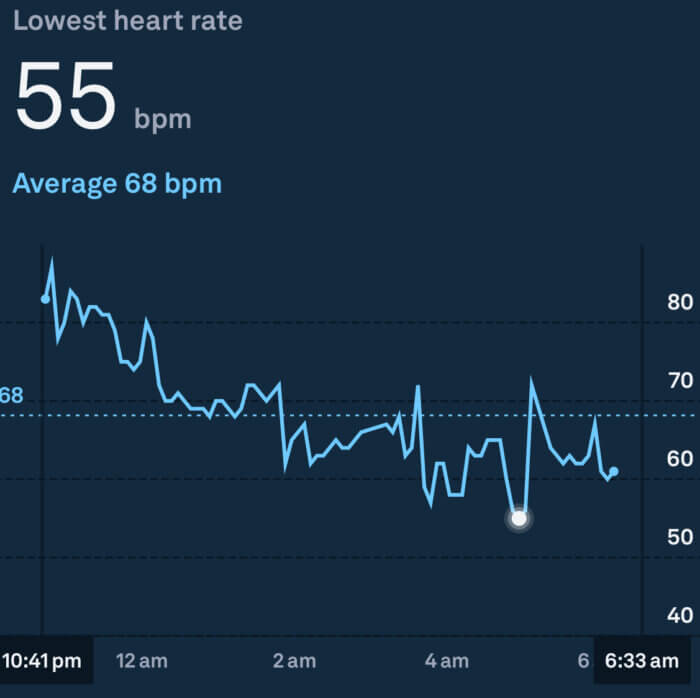
Post-run I felt fine throughout the day. I took a short nap in the evening which is typical for me. After napping I felt slightly chilly even though it is super hot in singapore right now. Alarmed, I checked my heart rate on my watch. It was 80+, probably a normal heart rate for many people but elevated for me. I stood up and measured again. It started hitting 110+bpm. It didn’t get better before I slept. My overnight body temperature increased 1 degree celsius according to my oura ring.


Each time I get an elevated heart rate out of nowhere I get really worried that I’ve gotten infected with something again, especially if accompanied with chills. I went to drink some oral rehydration salts thinking it may be an electrolyte imbalance. I started getting these electrolyte imbalances since I had my first and only covid infection. I never had them in my life before, no matter how dehydrated or stressed I was. I had intense migraines instead.

My running theory is that my body held on to physiological homeostasis a lot better pre-covid even if under oxidative stress at the expense of my brain resulting in painful migraines, and post-covid my body goes out of homeostasis easily but I no longer have debilitating migraines. I do not know if the lack of migraines is a good thing or not since it is theorised to be a protective mechanism, just because there is no pain doesn’t mean my brain is not damaged from the oxidative stress. Is there a very harmful effect every time I suffer an electrolyte imbalance? Is it accumulative?

I was thinking that perhaps previously if my body was already in a stressed state I would probably have a migraine prodome preventing me from exercising or doing too much, but now I have lost my warning system.

I had a relatively stable state of health for months before this episode. The last time I had these POTS-like symptoms without an attributable illness was oct last year, so I thought my body has finally recovered properly from my covid infection in april 2023. Nope. I probably became better at taking care of my body and didn’t allow it to slip into such a stressed state. I guess I was more stressed and tired than I thought after a few hours of driving and flying in consecutive days.


Thankfully my heart rate seems to have recovered towards the end of my sleep:

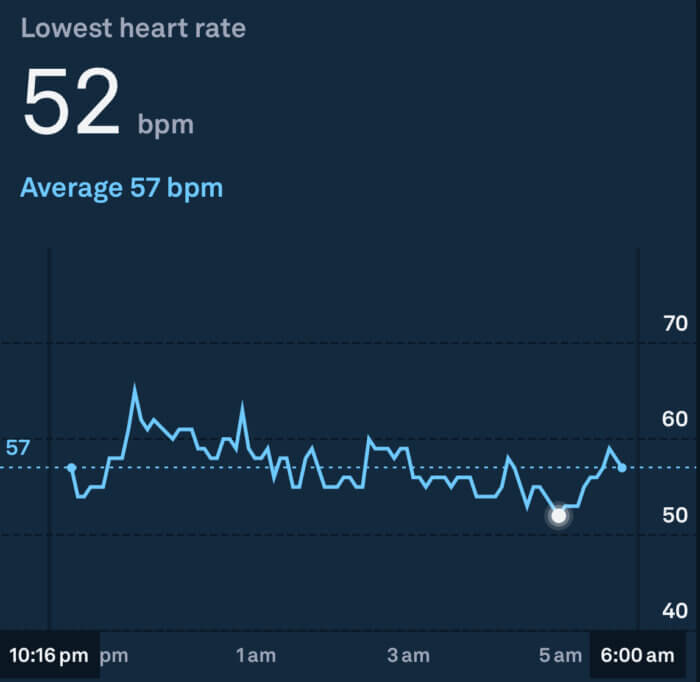
I was just thinking to myself recently how reliant I have grown to be on my oura ring. It is reassuring to have hard data on the state of my body instead of having to depend on ambiguous feelings. For comparison this is a typical overnight heart rate graph for me – I hardly get spikes above 70bpm while sleeping, yet yesterday it was about 90+ before I went to bed:

I tend to defer to my heart rate data each time I feel off for whatever reason. It tells me whether there is truly something wrong with my body or if it is just in my mind. I am grateful that I am able to have these tools, or I’ll be walking blindly in the dark.

I have to admit that I did feel more fatigued than usual yesterday morning, but still went for my run because my biometrics were fine. So they are not 100% foolproof. This is a lesson for me, that I still have a long way to go in terms of my relationship with my body.


I was worried I caught something because of the increase in my overnight body temperature. I did a 6-in-1 combo test and it was negative. Coupled with my recovering oura stats – my heart rate does not recover so quickly if I am ill – it is a dysautonomia episode due to too much stress. Thanks to the internet I learnt that low grade fevers are a common symptom for dysautonomia and post-exertional malaise.

I also had some aglio olio yesterday for dinner, I seem to have developed a sensitivity towards olive/vegetable oil. These oils contain linoleic acid and it is known to cause oxidative stress. One of my previous episodes also started after I had an italian dinner with a ton of olive oil. Since I know oxidative stress is a major trigger of my migraines, I wouldn’t be surprised if it triggers dysautonomia too. So far my triggers seem to be excessive linoleic acid, physical stress and certain times of my menstrual cycle.


I am dismayed that my dysautonomia is still lurking in the shadows, but I am also somewhat glad it is not worse. If I take really good care of my body I am still able to do most of the things I want to do. I am mindful of the long covid community, and hope that there will be advances in medical science for long covid soon. This is why I am still passionately covid cautious, it is really not fun getting elevated heart rate and mysterious fevers, and I definitely do not want to get early-onset dementia.


written 810 days after my covid infection

primal sadness

I still feel afflicted by my mind in many ways. I try to focus on the present, and distract myself by trying to live life in my fullest possible manner, but once in while I still notice that sinking feeling that has plagued me since I have known consciousness.

Intellectually I know it is just a sensation, yet why does it affect me so much, so much that if I am not careful I’ll spiral into some deep drowning darkness? I feel like there is some primal part of me I cannot understand with language or with the definitions taught to me by civilisation. A part of me that feels too raw to exist in this world, as though just by being alive it hurts.

That there is always some part of me who doesn’t wish to live: this feels extremely terrible when there are so many people fighting to see another day. It adds to my existential guilt – why am I able to exist? I should be careful what I wish for. The part of me who wants to witness life till the very end has been growing as I age and love, but that part of me that wishes I don’t have to endure all these feelings does not reduce. Sometimes it grows as well, along with the confusion I feel from this disjointed conflict.

I think I am handicapped in many ways, or at least in the current state of this society. I can’t function or operate like most people, I would admit readily that I am so emotionally fragile that I wouldn’t be able to withstand setbacks that many people go through. I am always ready to give up, allergic to the word resilience. I feel like I am not meant for this world, and perhaps if I was born in a tribe a thousand years ago I would have been left to die.

Most of the time I am deluded that I am just like any normal person, and harsh internal judgment arises when I am unable to function like them. Thanks to the progression of society I now know I have internalised ablelism. But I am still a product of the 80s, that I don’t know how to divorce myself from the part of me that keeps judging and shaming.

Is it worth keeping me alive, I find myself wondering a lot. If I am not a productive person by societal standards am I just taking up valuable space? Is this sort of thinking human nature because the nature of humans have been so inevitably shaped by our harsh survival conditions that only the fittest can survive when we were hunter gatherers, or is it the fault of modern capitalism that we are conditioned to think that we have to be useful in order to be worthy of life?

The fact that I am writing this. These are my thoughts every day. That I really have to fight against being not swallowed up entirely by them. That in order to continue living I have to keep learning how to ignore this primal sadness that exists in me. I am like a child that keeps having to have toys shoved in the core of my attention in order to distract me from crying.

first impressions of khao yai

Khao Yai is about 2 – 3 hours drive from bangkok airport. For the past few years we usually go to places where we don’t have to drive because I tend to find driving stressful. But this limits our travel options since places that have good transport infrastructure are typically heavily populated cities. The last time I drove in a foreign country was in 2019, so I wasn’t sure if I was up to it.

Singapore is a very small country: we could drive across the entire country in less than an hour, so we are not used to driving for more than that. Our roads are also very orderly and planned, so we may lack the survival skills required for more chaotic traffic. Thankfully we could skip most of the bangkok traffic by driving from the airport area.

We had the idea to visit khao yai because we have a friend living there. I was semi-curious of her life. I admit I knew nothing about the place before we met her. It wasn’t a destination that came up before.

Thanks to her I decided to skip driving on the highway and opted for the slower but calmer roads. I also made 3 stops along the way to break up the monotony and fatigue of the driving. We were not in a rush anyway. This is one of the cafes near bangkok we stopped at to have some matcha. It is amazing how we can find such tranquility near bangkok:

We finally reached khao yai many hours later due to the frequent stops along the way. We must be the only people making this many stops for a 3-hour drive. But why not?

It felt really worth all that anxiety and effort upon reaching:

One of the many cafes with an amazing view and environment:

Vineyards are also a thing, though they are probably not in season now:

Some cafes are really stupendous:


I wrote some of the following in my anniversary post: that as I age I tend to find myself more and more drawn to the safe and comfortable zone. Knowing and remembering more of life gave me more accumulated anxiety about everything, so I prefer to be in a stress-free existence by only having safe experiences. But I am aware that this causes a chronic shrinkage of my existence. I have become smaller and smaller, and I have become one of those people who have started to wonder what had happened to my past free (and admittedly ignorant) self?

Maybe to many people a 3-hour drive is nothing, but it felt like a huge accomplishment for me, a barrier I had consciously chose to break for myself. I was chronically trying to avoid it. This opens up other possibilities that I wouldn’t have contemplated before.

I feel like I have to actively rebel against ageing, not because I am afraid to be old, but I don’t want to become static or smaller. The accumulative stress of living makes me want to stay safely in the same place, yet ironically it also makes me less and less resilient to stressful conditions.

I am glad I am still able to experience something different, and I hope to continue to be able to do so.

my strange memory

I’ve been on a rabbit hole to learn more about the human memory after watching college kids perform seemingly impossible memory feats on a tv variety show. It has made me reflect on my own poor working memory. A few years ago I attended a bicycle building class: I struggled badly with remembering the instructions and had to make the instructor repeat it a few times for me while others didn’t seem to have the same issue. It is something I have accepted about myself since I was a kid. I was topping my class quite effortlessly every year until rote memorisation became necessary in secondary school.

My poor ability to rote memorise permeated into other parts of me. I began to believe I have poor learning skills, so for long spurts in my life I gave up on learning anything. It also fuelled a large part of my low self-esteem because I started getting terrible grades at school.

Thankfully due to the rise of the internet in my teens I realised I could learn something quickly if I was deeply curious. I picked up photoshop, web design, and coding on my own and didn’t seem to have issues remembering steps to do something. I think it is mostly because a lot of it can be inferred from logic before it becomes part of our long-term memory.


I guess I tend to assume I have a poor all-round memory because I have a poor working memory. Yet when I was bored in secondary school I would keep myself awake by writing down lyrics of chinese songs in traditional chinese. In Singapore we learn simplified chinese, but cantopop and manga exposed me to the traditional version. On top of remembering the aural form of the lyrics, I could also write them.

It has been around 20 years since, and I can probably still remember at least half of them. A random song I haven’t heard in years can pop up on the radio and I would still be able to sing along. I can still write out chinese lyrics of hundreds of songs. As a big fan of Faye Wong, I can recite her discography in chronological order complete with the order of the tracks. Isn’t my memory strange?

There is something about conscious and repeated exposure that injects these effortlessly into my memory, but somehow it fails me if I try to remember something deliberately. I think a large part of it is due to adhd. I just cannot sustain enough attention to memorise anything consciously, except when I am in a hyperfocused state. Hyperfocus brings me the attention span not available to me in my daily life. But it is not a state I can consciously switch on. It comes and goes like a ghost I cannot chase.

I just wish I knew all of these when I was much younger so I wouldn’t have wasted so much of my life. I am probably 100x much better at studying now compared to when I was a teenager. Personally I think it is too much to ask of a teenager to ace multiple exams over multiple years that would define their life significantly at a period when they are typically in turmoil for various reasons. We designed society to be convenient for the economy instead of what actually makes sense.


Going down the rabbit hole I picked up Moonwalking with Einstein, a book where journalist Joshua Foer sought to demonstrate that anyone can having amazing memory after training with mnemonic techniques. I am not very convinced: he may have survivor’s bias – just because he can train himself to be a memory athlete doesn’t mean anybody can. Mnemonic techniques typically require good visualisation skills, which not everybody has.

But unlike my past self I now believe that it can be at least improved, because the brain is the ultimate learning engine. New neuronal connections are formed each time we are exposed to new stimuli. Like strength training a muscle, the brain can be exercised to gain improvements. Yes there is probably a threshold, but I would wager that most of us are nowhere near that threshold. Constant new learning experiences are not something most of us have as adults.


This has taught me is that in general we are too quick to believe in self-limiting narratives for ourselves. We should try to investigate if these limits are true. My working memory is poor as of now, but is it something that can be improved? I kept thinking that my memory as a whole is bad because I have accumulated too many traumatic memories (yes I see the irony) with regards to my working memory, forgetting that there are strange large repositories of things I actually can remember. Like lyrics. The spelling of a ton of words. The writing of numerous chinese characters. Phone numbers and addresses from few decades ago. Lots of random facts I’ve accumulated by reading a lot.

I hope it doesn’t come across as bragging. I am trying to express how blind we can be to parts of our selves, unconsciously choosing to have a narrow yet magnified focus on a particular part. The way this society operates (and its emphasis on rote learning) has made me feel bad about myself for most of my life. I wonder if I can slowly change that impression. 

Well, I once believed I was born physically weak. Making the conscious decision to strength-train has changed that perception. I wonder how many of these beliefs I can flip.

pride (2025)

The other day I caught myself thinking: my partner is the greatest contributor to my happiness. It is not only because I am a recipient of her generous love, but what is more subtle is that I got to gradually know myself better through her. People around us act as mirrors, and the intimacy of a romantic partnership makes our partners one of the most effective mirrors. It is deeply uncomfortable to see my own warts and flaw so closely and clearly, yet through her eyes I also got to know the better parts of my self I was never capable of knowing on my own. I know for a fact that I would be much less of a person if she didn’t appear in my life.

Imagine if I gave all of that up because I was worried about people’s judgement of my queerness and my queer relationship. To be clear, I was never actually worried. I am making the point that this is how absurd it is to exchange our lifetime’s potential inner richness for societal conventional approval. It should not even exist as a tenable equation. But this is what some people demand of us when they deny our right to be queer, and the right to be in a legal relationship with our partners. Sadly this is also what some people believe they have to give up because they cannot bear societal rejection. More tragically, queer people in some environments are still being persecuted or bullied.


I have never struggled with my queerness. Even as a young child I just could not see the logic of it being wrong. I can be socially anxious about anything and everything, and my low self-esteem permeates into almost every single area of my life, but I have never once believed that I was less of a person because of my sexuality. I cannot explain why.

My relationship towards my sexuality is positive. I am an example that not every queer journey is fraught with shame or struggle. This is not to dismiss other people’s struggles but to correct the misperception and projection that there is always shame involved. I have never felt like I wished I can be straight, and have always perceived queer love as a beautiful thing. Not everyone thinks their non-heteronormative sexuality as something to hide. There are many parts of myself I cannot accept, but my queerness is not something I had to accept because it was not something up for acceptance to begin with. It felt so fundamental, and right. I know I am one of the lucky ones.

Right now in Singapore we cannot legally get married but no one gives a shit if we hold hands in public. I don’t think this for granted, and I know not everyone can be safe with their true identity. This is why I believe it is important to celebrate Pride. I acknowledge that this space that I have now did not come easy: there were plenty of people who bravely stood up before me, and there are many who have lost their lives for this. I acknowledge that even if I have no qualms about being queer myself, that does not translate to actual physical safety to be who I am if I was in the wrong time and place. For many, the world is still very unsafe.


I post photos of us regularly. As of now, in the 9+ years I have been posting them no one has left hate comments or threatened to kill me. I consider myself very lucky. Maybe some people may think I am attention seeking or something but nobody bats an eyelid when heteronormative couples post photos of themselves and their kids. I partially do it because of my continuous awareness of impermanence, but partially I also believe that representation matters. I come from a time when it wasn’t that typical to see lgbtq+ couples out in the wild, when seeing a photo of a lgbtq+ couple felt like striking lottery. Again, I don’t want to take this for granted. The media still sometimes portray queer people negatively when there are tons of us just leading lives like any other human being.

For a long while now I have stopped thinking of my queerness as this separate, different thing. It is just not in my consciousness. So I have to admit that writing this is not something I would write normally, since I tend to write on stuff that has been sticky in my mind. I am writing this with deliberate intention because I don’t believe that the universe bends towards justice. Justice must be a conscious human decision, made again and again. As we can see in some areas of the world, the tremendous progress we’ve made in the past few decades is actually backsliding again. It is a continuous struggle for our humanity.

I just wish the world is such that I don’t have to write such a long essay to express my pride towards my queerness but unfortunately so much this world is still stuck in illogical thinking. I am conditioned to see the word pride as something uncomfortable, but one of the definitions of pride says, “your feelings of your own worth and respect for yourself” – I just want to reemphasise that I am proud to be queer and to be my self, in a world that seems perversely bent on making us shrink our selves. I cannot help but feel deep pity for human being sometimes, because so many of us seem to need to crush other people’s souls in order to feel better about themselves. Are they proud of themselves? That they have led lives depriving other people of the right to be and the right to love? Every one of us who have stood tall against this crushing tide of forced conformity deserves to pat ourselves on the back and call our selves proud.


I still hope to be able to marry my partner in my home country some day. Before meeting her I have always thought of marriage as unrealistic: how can a person vow to love someone else for the rest of their lives? But now I know. I don’t have to vow to love her for the rest of my life, because any alternate reality is unthinkable. There is something more powerful than love. It is the melding that occurs when two people spend a long time together. She is just part of me now.

When I was younger, the legal aspects of marriage were also meaningless. But now that I am middle-aged I see the value of being legally bound. To my abstract mind, celebrating pride publicly like this is my tiny contribution to the march towards marriage equality. Our voice matters, and this voice to express oneself: my beliefs, wishes, values – this voice is hard fought for. Even in this modern day and age, the privilege of expressing oneself is not afforded to everybody.

I hope people who are able to have a voice will cherish it. Do not take it lightly in such precarious times. That is why even till today, every opportunity to write or post a photo feels precious to me.


With this, I hope everyone on the lgbtq+ spectrum gets to celebrate Pride in their own way, that we continue to honour those that came before us, and that we will continue the march forward so those who come after will also have opportunities to celebrate love.

playing my own little game

My interest in playing board games got reignited after watching some korean tv puzzle shows. After few days of playing board games my partner was reminded that life is like playing a game (or rather games are designed to be based on life): most of us have some particular outcome we want out of life – we gather different resources, gain experience points, and set certain priorities, in order to work towards the outcome we want.

The problem is many of us are conditioned to work towards outcomes that are societally approved, like higher social status (money is often a vehicle for status). We could live through an entire lifetime without questioning if the outcome we are working towards is something we truly want, or if it is just an ingrained conditioning. Some of us are stuck in resource-gathering mode without even contemplating what is the outcome we want out of hoarding resources, because again the conditions are set up such that for most people resources are scarce. Even when we no longer need those resources, we still hoard them. I find myself doing that even when playing a game because I am taught early on that resources matter a lot. Sometimes I get too hyperfocused on gaining resources that I forget there are other goals in the game.


Life is a continuous balancing act. Without money we can’t have anything else (unless you live in a super socialist environment). Yet in some scenarios, all the money in the world cannot buy time or health. There is also no point in having money or time without health. Of course for some people, relationships are also important. It is difficult to have it all: money, health, time, relationships, and the self-awareness to manage them all in a healthy manner.


There was a time when I was immersed in playing stardew valley for two weeks. Playing that game taught me two things:

  1. I can play the game in any way I want. I don’t have to win anything or play towards the pre-set goals. I can quietly farm or fish if that’s all I want to do. For the entire game I also ignored the social aspect, which is representative of me in real life I guess.
  2. I was actually happier living in my own world playing that game versus trying to engage with people in reality. It made me realise how much stress comes from interacting with people for me.

Previously I contemplated going back to school to complete a degree. But it was one of those goals I have that I wasn’t clear whether I wanted to do it truly for myself or for some subconscious desire to prove myself. But prove myself for what?


Recently we acquired a couple of commercially made corsi-rosenthal boxes. They are collapsible and depending on their size they can be packed into a luggage or a boston bag. We plan to bring one with us on trips so that we can purify the air in the places we stay at. It occured to me that I am actually increasing my covid cautious precautions as time goes by when most people have relaxed theirs. We went from wearing cloth masks to now n95s. I have gone over 770+ days without getting reinfected, and I still have ptsd over my last infection. I know my body has never been the same again, even if I got healthier and fitter in other ways. I know I may eventually get reinfected because nothing is 100% unless I decide to not step out of my house forever. But I am still going to try my best to avoid it till then. I don’t want rupturing red blood cells to clog my blood vessels (twitter thread).

The realisation that we are actually being more cautious rather than less reminded me of what my partner mentioned about life is like playing a game, and people play according to what their conditions program them to. Because of what I’ve experienced, I prioritise health over anything else, including social ties. So I push every other lever in order to protect my health.

My partner and I, we are like playing our own little game our own way because we’ve both figured out what is the outcome we want in our lives. We both value our health tremendously, so it makes it easier to turn down other things or do potentially difficult things.


I think in life it is important to understand what is the game one wants to play and what conditions are needed to fulfil it. Without deeply questioning this, we may end up chasing things simply because everyone else is chasing them. Sometimes it is unfortunate but what we want as individuals may not be what our partner or what our family wants. We all have to decide what is it that would make living worthwhile and/or fulfilling.

I think my life reached a turning point when I belatedly realised what I need is not what most people can understand. It is just what it is. The world is just not set up for people to understand anything. I am still susceptible to loneliness and social pressure, but constantly reminding myself of my own priorities helps to keep me on track.

It sounds so obvious right? Figure out what is important, and stick to it. Yet there are so many people who don’t even realise what is truly important to them, or they cannot stick to what they want and need because they fear social repercussions.

I just wish I knew what was truly important earlier in my life, I could have saved so much time, energy and grief.

thoughts about human intelligence after watching korean game shows

We started watching korean variety shows since they started appearing on Netflix. I think it started with Physical 100 which gave me the push I needed to get started on my own strength training journey. Physical 100’s participants were widely varied so they feel more relatable compared to professional athletes. It was mind-opening to see what the human body was capable of in a non-professional sports setting.

Then we got into The Devil’s Plan which is a puzzle slash strategy slash political game show. Watching this made me feel extremely unintelligent as I struggled to follow the games’ rules. But it was highly entertaining. We watched season 2 recently, and my partner lamented that she just wanted to watch people competing with their intelligence without the politics.

So we started watching Elite League, a game show where students from several top korean universities compete to solve puzzles. Again it was mind boggling to see what the human brain was capable of. I enjoyed being mind blown at how creative some of the problem-solving was. This is not something I would encounter in my ordinary life, so it was like peeking into a different dimension for a little while.

It was also fascinating for me to observe the psychology of the participants. Imagine being told you’re the smartest your entire life, only to realise how limited you are when competing with other people. Some people may have the raw intelligence, but they crumbled under peer and time pressure. Just like a tiny microcosm of reality I guess. I wonder how many contestants went through an existential crisis after.

[possible spoilers ahead] During some of the games some players used over-complicated solutions which made me wonder if an over-active intelligence was actually a handicap in reality. There was a team from an university that was apparently ranked below all the other universities, so they were the underdog. Unexpectedly they went really far. I think being the underdog allowed them to play in a much more relaxed manner. When they won a game it was a huge fun celebration because it was unexpected, but when the supposedly top university won it felt more like a relief because they were expected to win anyway. This made me think about how expectations shape our reality and happiness. It feels like it is not fun to be an academically inclined person because people will just have expectations upon you for the rest of your life, and it is difficult to break out of those expectations. When an average student suddenly gets an A, it is like they achieved something great. But anything less than an A is unacceptable and even embarrassing for high-performing students.

I observed (just my personal observation, I could be wrong) that some contestants took failure really hard. If they took failure this hard in a game show, how much harder would they take failure when they are out and about in society? It makes me feel that if one is used to winning, they would want to keep winning. They would not be inclined to take risks, or they would feel like they have very little margin for error. Hence they are typically pretty much locked into their high-flying trajectories, unable to contemplate a life without these type of wins.

I started to contemplate that being somewhat average is actually a form of superpower. There is much more room to manoeuvre, more opportunities for experimentation. Average people are accustomed to a certain rate of failure, so they don’t take failures too hard. Wins are really celebrated and joyous because they are unexpected. They are not par for the course. It doesn’t feel too bad to switch out an average career for another average career. People around them don’t have high expectations of them, so there are less disappointments all around. Doesn’t this feel like a happier life?

(There is also a certain type of people who seek out failures deliberately because they know failures are key to learning. But these people are not typical.)


There is a whole long separate discussion if getting straight As or going into a top university is even important in life. I think it really depends on the individual – what do they really want to get out of life? Unfortunately I think at age 18 very few people would know what they really want. Personally I think flying under the radar is a form of happiness, but I probably could have only reached this conclusion after 4 or so decades of life. I still feel a lot of trauma from the education system, and I feel it killed my love for learning for a prolonged time, and formed psychological barriers I struggle to overcome till today. But if I can go back in time with the knowledge I have now today, I would still place less focus on academic results and focus on learning things that actually matter. The way most schools are structured is just not conducive to actual learning. They are also terrible for neurodivergent people like me.


Watching these shows made me start to wonder if my brain can be trained to play some of those games. Serendipitously in the same week I found the book “Mindshift” at my library’s skip the line collection. After reading the book I had a sudden interest to browse Coursera again, and also to rekindle my ancient interest in programming – after a 8 year hiatus? The last time I tried to do anything serious I burnt myself out so much that I couldn’t touch it for 8 years…but I would like to believe I am much better at chunking and pacing now.

I am not sure if this is just a passing phase since my most of my interests tend to be short-lived. But I think they are short-lived precisely because I didn’t know how to engage with them in a way that wouldn’t burn me out. We’ll see, who knows?


I think it is very interesting to have new ways of thinking and living after watching tv. That one person’s vision of creating some entertainment can have ripple effects on a society’s culture. We decided to watch AlphaGo the documentary because we were introduced to Lee Sedol in The Devil’s Plan 2, and it resulted in another great learning experience.

Sometimes I forget that the brain is essentially the original learning intelligence, that we can feed it continuously and it will keep on learning and making unexpected connections across everything we’ve learnt. The emergence of artificial intelligence has only provoked me to have a deeper curiousity towards what our biological brains can be capable of. They are modelled after our brains after all. These days people like to defer everything to AI, instead I am inspired to consciously start feeding my brain new inputs continuously and observe how and what it learns. It is inevitable that with new inputs there will be new outputs. I used to have so many self-limiting beliefs of how and what I am capable of learning. But now I am almost seeing my brain as a separate entity from myself, my self-esteem and psychological hangups are almost separate from its inherent biological ability to learn.

What is going to happen if I keep giving it new inputs in the right doses on a regular basis? I don’t know. I may or may not feel smarter or see any visible outcomes, but I do know for a fact that the process of learning itself grows new neurons, and that can help reverse the cognitive decline that comes with ageing. So, instead of feeling expectations or fear that comes with anticipating failure, how about just letting the brain do its own thing that it has evolved to do? It is about establishing trust in the science of our biology, and that doesn’t have to involve any feelings we have for our selves. I find that oddly liberating.

on inner expectations

I am not sure when it started, but I tend to feel like I am wasting my life if I am not doing something creative or enriching. Hence it has been difficult to cope with being chronically ill and/or fatigued, because I don’t have much energy left after performing all the tasks required to keep me alive. I also have a malfunctioning dopamine reward system, so I don’t typically feel a sense of reward when I complete something I make myself go through the motions even if I don’t feel like it. It feels like 90% of my life is simply making myself do things. I would feel bad about myself if I am not successful in making myself do the things I feel like I ought to.

But recently I have found myself wondering if I would still have these inner expectations if I was born in some remote village up in some mountain. Where did these expectations come from? Why do I feel like I have to do certain things? Do I continually guilt trip myself because I am a product of a competitive city-state with no natural resources? Sometimes I think about monastics – they spend their entire waking life meditating and doing chores, do they feel bad about themselves for not being creative? Maybe if I was born few hundred years ago I would either be hunting, gathering or performing some hard labour. I wouldn’t have the time or the mind-space to have existential anxieties.

Somehow I just have this inner-belief that I ought to feel alive, though intellectually I would not ask someone without limbs to run a marathon, so why do I keep wanting my deficient brain to feel something it can’t?

It seems I have this deeply ingrained wiring predisposed to unhappiness, unable to appreciate what I have in the present. I keep wanting more, feeling I should be more, when in reality I have already covered an unspeakable distance. I am blind to my own accomplishments, and I feel like I can never meet my own expectations of myself.

I just wish I can accept myself more. I never had this acceptance as a child, and now it has become a lifelong curse. It is as though once we miss the window to feel whole, we would permanently lose the capacity to feel so. This sense of brokenness plagues everything I do, especially at rest.

But isn’t wishing for this self-acceptance a form of an unrealistic self-expectation too?


The strange thing with life and the human psyche is that the more we want something, the more it seems to elude. It may come to us naturally if we stop grasping after it. So many times I have found myself to be strangled by my psyche, only to suddenly break out of it. Things that used to bother me tremendously have lost their power over me over the years.

Inner work is mostly invisible, yet it determines so much of how our lives would unfold. There is nothing to show for it. No measurements, no outward accomplishment. It is not like accumulate badges when we work through our inner battles. I tend to place disproportionate value on what can be seen, but becoming my self is a tedious creative process too. My adhd brain seems to apply to how I view my life, quickly forgetting all the obstacles I’ve worked hard to overcome and instead hyperfocusing on all that I cannot overcome.

Can I design a better system for myself to review periodically so I can appreciate my own long and lonely journey? This is partially why I like to look back at “on this day” entries for my journals because the contrast between my past and present selves reminds me of all the work I have done. I intellectually know that it is not just my creative output that is representative of my life, but the mindset seems deeply ingrained in me.

Perhaps more than creative output, the harder thing to know is where I am as a person. Monastics meditate and do repetitive mundane chores because they prioritise being in harmony with their mind. My inner conflicts come from a misalignment in how I think about my priorities and how I act towards them. It is a form of forgetting I suppose. What I truly want for myself is optimal health which is inclusive of psychological health, yet my automatic default is to judge myself based on my capacity to be creative. Psyches are weird.

I feel like my weekly posts are different from my private morning pages. Somehow writing on a public blog brings out an analytical side of me that may not necessarily exist otherwise. The process of writing this post has once again unwound the tangles in my messed up mind.

Inner expectations can imprison us deeply and infinitely, but if we are lucky enough to ever step out and look at it from a distance, we would be able to see that they are arbitrary and illusory.

pathological demand avoidance

I first came across this term when I was browsing the subreddits for adhd and autistic women. After reading more about it I realised belatedly (in my 40s) that I have been coping with this my entire life. Strangely just finding a name to something formerly ambiguous can bring so much clarity and comfort, along with grief. Grief: for all the blame, self-blame, guilt. shame, exhaustion I could have avoided if I had known earlier. But I feel like as a 80s kid it is not so much a late diagnosis, but rather we had to wait for the world to become more aware.

I have many autistic and adhd symptoms, but I consider this one of the most disabling in my life. I am still paying for the consequences now, such as facing expensive dental bills for the rest of my life because I refused to brush my teeth as a child. That is just teeth, and to an extent can be solved with money, but what about all the psychological trauma that came with the inability to do important things, and with it the labels of being lazy and irresponsible being plastered all over me for the formative years of my life? I still have strong negative feelings for myself till today. It is strange no matter how many accomplishments I have made or how much love I have received later in life simply cannot overcome all the negative reinforcement I have experienced while growing up.


As a child, I couldn’t do homework. I just couldn’t. I would carry the anxiety with me until the very last minute, and then I would panic. It was the same when I had to study for exams. My working memory was poor (and is still poor), I couldn’t focus – that made studying very hard so I would avoid it till the last minute and then panic. These led to disastrous consequences for my academic performance of course, so it led to more blaming and shaming. Also, imagine having to exist perpetually either in the anxiety of avoidance or the fear that comes with panic. My nervous system was constantly in flight or fright mode.

Thankfully I found other things that I was good at later on. I picked up coding and design on my own in the late 90s, when learning resources were scarce and most people didn’t know how. If I was interested in something I had an insatiable curiousity, leading me to learn new skills quickly in a hyperfocused state. I realised belatedly that I wasn’t bad at learning, I just had to learn in a different mode. But it was too late, the scars would always be there.

This demand avoidance would plague me as a designer. Because of how hard it is for me to do most things, I would complete deadlines in panic at the last minute. My first freelance stint was terribly unsuccessful as I developed a phobia of phone calls. Each time the phone rang I would freeze. Coupled with a fear of conflict, it made freelancing impossible. I ended up disappointing quite a number of clients this way. Without knowing what went on behind the scenes, I plainly looked irresponsible, and I myself felt like a terrible human being. Fortunately things did get better as I got older because I developed several coping strategies, but I paid the price with my health.


There is an accumulative effect. People are always forcing me to do things or I am forcing myself to do things. After 40ish years of life I feel exhausted, and I can never seem to recover from this fatigue, even if no one else is putting pressure on me right now. I just feel tired from having to live. I have to be very on the ball about my health because of my chronic illness so most days I keep to a strict routine, which tires me out too. It took me years to even get to a point where I can have a routine, instead of just shrivelling at the word routine. The fact that I can exercise everyday, eat my supplements, blog each week, read at least 52 books a year – is a miracle. I do these things even if I don’t feel like doing them, because I almost never ever feel like doing anything.

My partner is the opposite. She has to consciously stop herself from doing too much or else she’ll fall sick. I see her and immediately I understand what I am lacking. I feel like an abomination in this world like I should never have been born. Almost nobody understands the extent of the psychological fatigue I feel each day, how much I have to push myself each day just to stay alive.

What is the point of life if doing anything feels dreadful? I guess that is why I contemplated ending my own existence many times in my life. Yet there have been some bright spots that keep me going. I just don’t know if it all balances out. I don’t have it in me to bring suffering to others if I can help it, so I feel stuck. I can’t leave, I don’t want to be here, yet I have to continue forcing myself to keep on doing things I don’t want to. Which compounds the issue.

Some days I feel so exhausted that I just lie there and do nothing. But the inner critic appears and asks why am I being so lazy and useless. There is tremendous shame and guilt for “wasting” my life when there are a ton of other people who would do anything to be in my shoes. I feel worse doing nothing even though all I want is to do nothing, so I force myself to do something, anything. That exhausts me again, which makes me want to do more of nothing, which makes me feel more useless and lazy, and the vicious loop continues.

I think it is possible to find things that don’t trigger my demand avoidance. I love to exercise, for one. I go into a worse depression if I can’t exercise. Which is why I don’t wish to get sick, which is why I am covid cautious. I can’t imagine being bedridden – I honestly believe I wouldn’t survive long covid. It is already difficult enough when I am moderately healthy. So I practice covid precautions which requires mental attention, it is tiring to constantly worry about being infected again, it also attracts judgment from other people, activities I used to do freely like travelling and going to the dentist are now considered risky – they all add to my mental fatigue.


Pathological demand avoidance looks a lot like self-sabotaging behaviour. Why would anyone refuse to do homework when there are painful consequences? Why would anyone leave things to the last minute even though it is much easier to do a little bit each day? Why would anyone live in a mess? Why would anyone keep angering or disappointing people?

It has brought nothing but negativity and pain in my life, and continues to do so. But I just can’t will my brain to be otherwise. If I could, I would, because this is just inviting suffering into my life. I keep wanting myself to be someone else, I keep blaming myself for it. Can I ever accept that I am simply this way, and find a way of living that coexists with it?


The brain has a finite capacity to perform tasks. Most people have experienced mental exhaustion to a point where they simply cannot do anything else anymore, even if they still possess enough physical energy. Both autistic and adhd people can suffer from pathological demand avoidance, so one of the theories is that our different brain structure makes us more prone to it.

I don’t know about other people, but I think I have an exceptionally sensitive nervous system, so just the mere act of existing is tiring for me because I am constantly being activated by sounds, sights, people’s energy, my mind’s noise, etc. So having to do anything in a perpetual state of exhaustion is hard. I also think I have an impaired dopamine signalling system, so I don’t typically feel a sense of reward when I complete a task. Of course when I was younger I relied a lot on caffeine, sugar and states of hyperfocus, which made me burn out very frequently.

I am a lot better now in terms of energy management, but doing anything out of my ingrained routine is still hard and requires ongoing momentum. Intellectually I am aware that I need more self-compassion and self-acceptance, but it is difficult to break out of that inner judgment that exists, the subconscious desire to be “normal” like everyone else.

Knowing that I am neurodivergent is somewhat new for me – within the last one year or so. Hence this is a new journey for me, to navigate my life and self with this new understanding. I don’t think I have truly understood yet. But being able to give this ambiguous suffering a label is at least a consolation. I now know I am not alone.

I used to get into these tense situations with my partner because she didn’t understand why I simply couldn’t do some things. But ever since we contemplated we both may be neurodivergent we have increased empathy for each other. I think this is the gift of deepening self-knowledge. It changes everything: once we are able to relate to our selves in a different way, it will inevitably change how we relate to everything else.

I started writing this with a spirit of sharing, hoping that sharing my experiences would be helpful to some internet stranger elsewhere, midway through writing I started feeling extremely heavy after recalling the feelings I had when I was younger, but towards the end I suddenly realised I forgot the awareness that I have this condition is new to me, so there is still space to mould that new relationship with myself.