journal/

on-going mostly unedited stream of thoughts

sharing my protocol as a moderately covid cautious person

There may be a misconception that all covid cautious people are the same, but it is pretty wide spectrum. Some covid cautious people may frown upon my behaviour because I still travel and I mostly don’t mask outdoors when it is not crowded, whereas people who are not covid cautious may think I am a hypochondriac because I do “extreme” things like not eating indoors and I wear a n95 on public transport.

I wrote a few posts on eating in open-air thinking they would be unpopular because everyone is pretending covid is over. To my surprise I see from my website stats that they continue to be circulated. Once in a while I get a grateful comment or message. It made me realise that these posts may be unpopular in my immediate circles, but they are appreciated at some unknown corner of the internet. I try to tell myself that I should not write posts based on people’s appreciation, but sometimes I am only human (I think) and perhaps it does affect me unconsciously. I consciously fight against it all the time, deliberately writing seemingly obscure posts because I believe obscurity is one of the qualities that makes this world fascinating. I continue to be fascinated by people working on obscure things.

Why I am avoiding covid still

I am tired of explaining this, so I am linking to someone else’s site. TLDR: I don’t want to permanently fuck up my brain, immune system and everything else. And no, vaccination can only reduce the risk of these things, not prevent them. The effects of reinfections may be cumulative.

Why I’m sharing my current protocol

Because I am very online, I have come across a wide variety of studies and information regarding mitigations that we can all take against covid. I realised most people are not exposed to this information, so I thought writing a post to share them may be helpful. Some of these mitigations are very easy to implement and sounds borderline unbelievable – like drinking tea and brushing teeth with the right toothpaste – but the scientific research supports them, so why not? I may accidentally start a brush your teeth to prevent covid movement, who knows (j/k). We may still end up getting covid, but at the very least we would have had some nice tea and very clean teeth.

I have given up on convincing non-covid cautious people to be covid cautious, because life has taught me that most people cannot be convinced (including myself). We only change our minds upon some mind-altering experience, and most of the time reading someone’s blog post or listening to someone’s monologue is not that experience. I cannot transplant my experience of being chronically ill to someone else no matter how many words I use to articulate it. So I am writing this post for people in those unknown corners of the internet, for any reason they may find this helpful.

Since I am only moderately covid cautious, I have changed my thinking on how cautious people should be at a minimum. I used to think wearing a well-fitted mask, not eating indoors, and being very cautious about who to have close contact with is the bare minimum of trying to avoid covid. I felt like what is the point of wearing a mask and then eat indoors where viral aerosol can easily infect us? But after almost 5? (I lost count) years of mitigations I am very tired myself, though I continue to do them because I am desperate enough to avoid more illness. But the fatigue is there. So I can see why it can be very difficult for most people to achieve this so-called baseline.

to be covid cautious is to be a social pariah

To seriously avoid covid one must be willing to be socially isolated. Physical isolation is one thing, but covid cautious people are also treated like pariahs, so it is deeply psychologically uncomfortable. Humans are social creatures and have a profound existential need to be accepted so I can understand why people don’t want to be pariahs.

physical safety risks of being covid cautious

Some places are stating to enforce mask bans (some humans really suck). I have read many stories of people being harassed because they were wearing masks. Some are physically assaulted, resulting in serious injuries. Some work places frown upon mask-wearing so there are career repercussions. I am lucky to live in a country where people don’t give a shit when I wear weird-looking duckbill masks so I empathise with fellow covid cautious people who don’t have this sense of safety.

some mitigations are better than none

All things considered I have come to believe just having some mitigations are better than completely giving up. It is all about reducing probability. Hence in this post I am sharing some mitigations that can be used in the situations where some people cannot mask for various reasons. I used to have paralysing social anxiety, so I can also understand why some people would rather get sick than to stand out, which is unfortunate.

If everyone applied zero precautions then the virus would simply go unchecked. But if more people applied some mitigations instead of none, perhaps in some scenarios people might be able to avoid close shaves and the probability and intensity of potential spread may be reduced. I can only hope. I think it is important to be realistic if we are hoping to make a dent in the transmissibility of the virus. It is now impossible to get everybody to mask, but perhaps we can make more people drink tea?

caveats and fine print

I am just sharing my protocol, I am not proclaiming to be an expert, or that my protocol is complete or the best.

Also people think being covid cautious is a personal choice: do I personally want to get sick or not? But we forget that by getting sick we are also harming the people around us because asymptomatic spread is not uncommon at all. Even if a person believes covid is not dangerous to themselves, it still poses a high risk for immunocompromised and elderly people. There are people who can’t even leave their homes to buy groceries because it is no longer safe to do so. Is this the society we want, to leave people behind? I acknowledge this is something I am not addressing enough in this post. But again I hope with some mitigations the risk to others can be reduced.

I may get criticism for writing this post because it seems like I am encouraging people not to mask. Which I am not. I emphasise that people should mask if they can. Yet I also want to be realistic. Instead of all or nothing, maybe something is better than none.


My baseline protocol

The main thing to understand is that covid is an airborne virus. Wearing a n95 and avoiding indoor eating seems too over-the-top until we truly understand why the airborne quality of covid makes it so transmissible. Here is a video using infrared to show the velocity of people’s breath, which is why one of the highest risks of covid spread is close contact, even outdoors. This animated video by John Hopkins demonstrate how virus particles can linger in the air indoors, explaining why it is not safe even if the place is empty. If you hate videos, here is a scientific journal article on ten streams of scientific evidence supporting the prevalence of airborne spread. This is why I:

mask

  • everywhere indoors with a kf94/knf95 mask, including physical meetups with family.
    • surgical masks, apart from having many gaps, lack the electrostatic filter that the kf94/kn95/n95 masks have.
    • if there is a gap that means you can easily breathe in viral aerosols
    • most earloop masks have air gaps – just put your hands over the seams and breathe out, if you can feel air coming out then there is a gap, but you may be able to find some that are reasonably well fitted. These brands are reasonably well-fitted for me: zimi, powecom, 3M, savewo. Depending on where you are, some brands may be difficult to procure. For more info: r/Masks4All
    • I wear a kf94/kn95 for comfort in most indoor places because most indoor spaces in Singapore are pretty well-ventilated (tested with a co2 monitor), and if I meet someone I make sure the windows are open
    • zimi masks are my current favourite but they can be challenging to buy. They provide a good and comfortable fit for many fellow covid-cautious people, and are one of the most if not the most breathable masks I’ve ever used.
  • n95 in risky spaces like public transport, flights, clinics. 3M aura is the most popular choice. Flo masks are popular for people who prefer reusable masks.
  • in my opinion the longer we are in the presence of viral aerosols, the more important it is to have a well-fitted mask with no air gaps. We can possibly get away with a good quality mask like a kf94 that may not be perfectly fitted if the contact is transient. This depends on many factors like a person’s immune system at that point, the viral load, environmental ventilation, etc. Some people can get away with sharing a bed with an infected spouse, other people get infected with just opening their door for a few seconds to pick up delivered packages. So it is important to assess our own risk.
  • to really ensure the mask is fitted with no air gaps, one can perform a fit test at home.

avoid dining indoors

  • there’s nothing that can guarantee that there are no virus particles in the air indoors.
  • once in a very blue moon I take a calculated risk if my co2 monitor (will explain why later) shows a good reading and the space is large

avoid close contact

  • I haven’t hung out with a friend for months if not years. I visit family with a mask on. This is not just for myself but also to protect them in return in case if I am asymptomatically infected.
  • I recognise this is something not most people can do
  • because I avoid close contact I am comfortable not wearing a mask outdoors as long as I am not near anyone and it is not crowded. I mask outdoors when there are crowds

other actionable layers on top

The above may be hard to do for some people, so one can try some of these below. They are not 100% effective, not even close, but perhaps they can reduce some risk. The initial viral load may matter in terms of how severe the illness and after-effects may be, so even if we do get infected it is still helpful to use some of these to reduce viral load. All of them have scientific studies attached:

nasal sprays

  • each time I enter or exit a risky situation I’ll use a nasal spray like VirX (known as enovid in other markets). I don’t know what are the long-term side effects so I don’t use it regularly. Is it really effective? I don’t know.
  • Iota-Carrageenan works too, but nothing is 100%.
  • there are probably other sprays on the market which you can do a search on

oral mitigations

  • cpc mouthwash is shown in studies to reduce viral load. I use it only in a high-risk situations because I don’t want to disrupt my oral microbiome too much
  • we’ve changed our regular toothpaste to something with zinc oxide. In singapore, colgate total has zinc oxide
  • blis k-12 oral probiotics
  • povidone iodine spray

food & supplements

far uv

  • this is not the same as UV as we know it. Exposure to far-UV is not harmful to humans as far as we know and it inactivates pathogens. I personally don’t use it yet because it is expensive, but I would if I could afford it. I only know about the ones by Nukit, but there are probably other retailers.

air purifiers

safety glasses

co2 monitor


This is as much as I can think of for now. Maybe I’ll update this or publish a separate updated version if the science or situation changes.
“ugly” drawings from korea

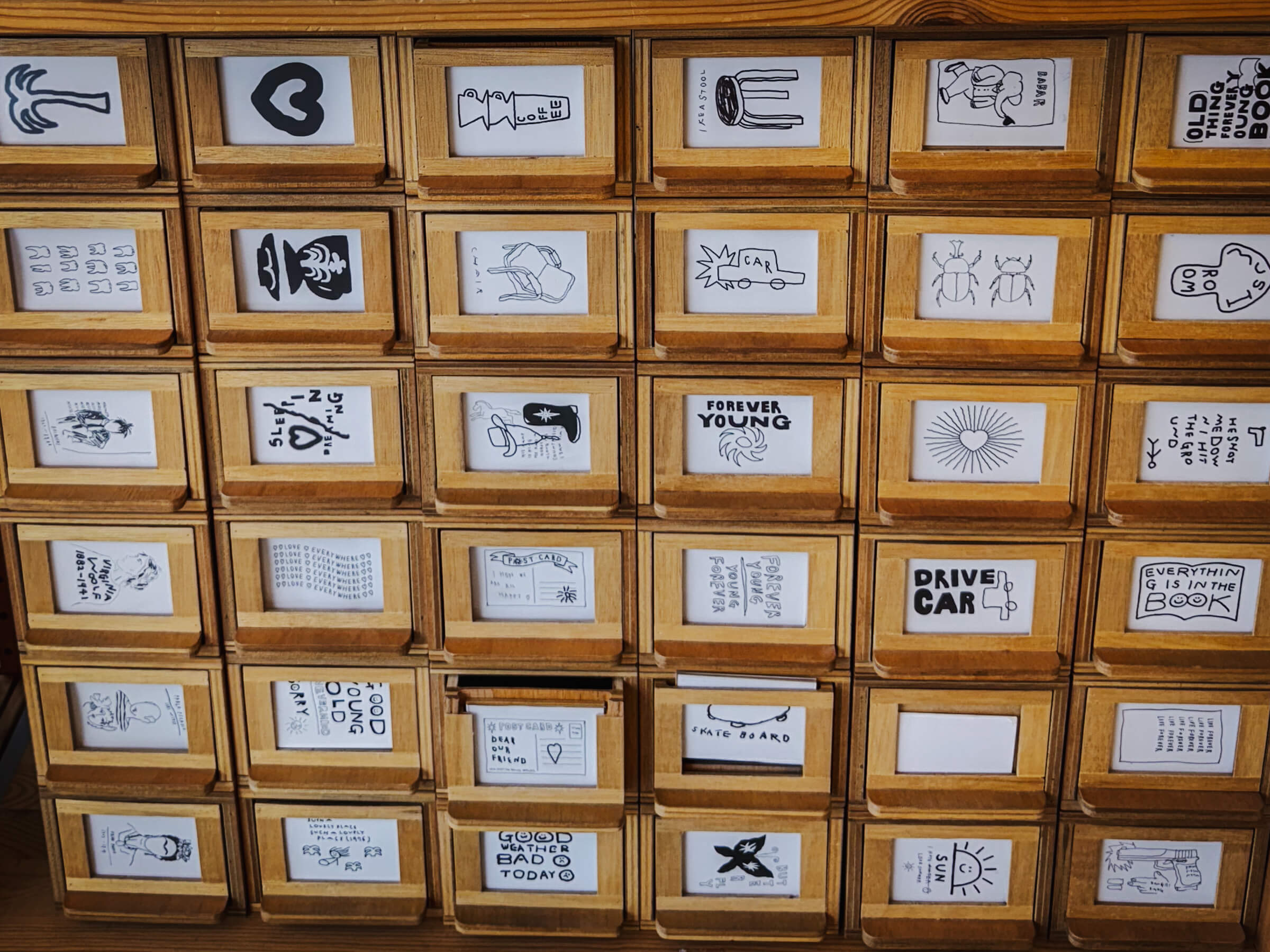
The first couple of days in korea we stumbled into a 3-storey stationery shop called Object. There was a particular section where they sell stationery and stickers by a particular artist with a distinct style I now call “ugly drawing”. By ugly I don’t mean it in a negative or derogatory way, I just mean it as a matter of description – like it is deliberately drawn in a messy, imperfect, inaccurate manner (pardon the quality of the photos, I took these casually and in a hurry, not expecting them to be used in a blog post):

photo of shelves of stickers in a stationery store, Object

I remarked to my partner that we can draw anything, call it art and sell them as long as we think it is art. Although I personally call it “ugly drawings” it doesn’t mean I think it is easy. Somehow there is still a consistent style and they are amazingly still attractive and aesthetically pleasing.

This style of drawing seems to be a trend in korea as we travelled to several cities. I thought I’ll share a collection of them.


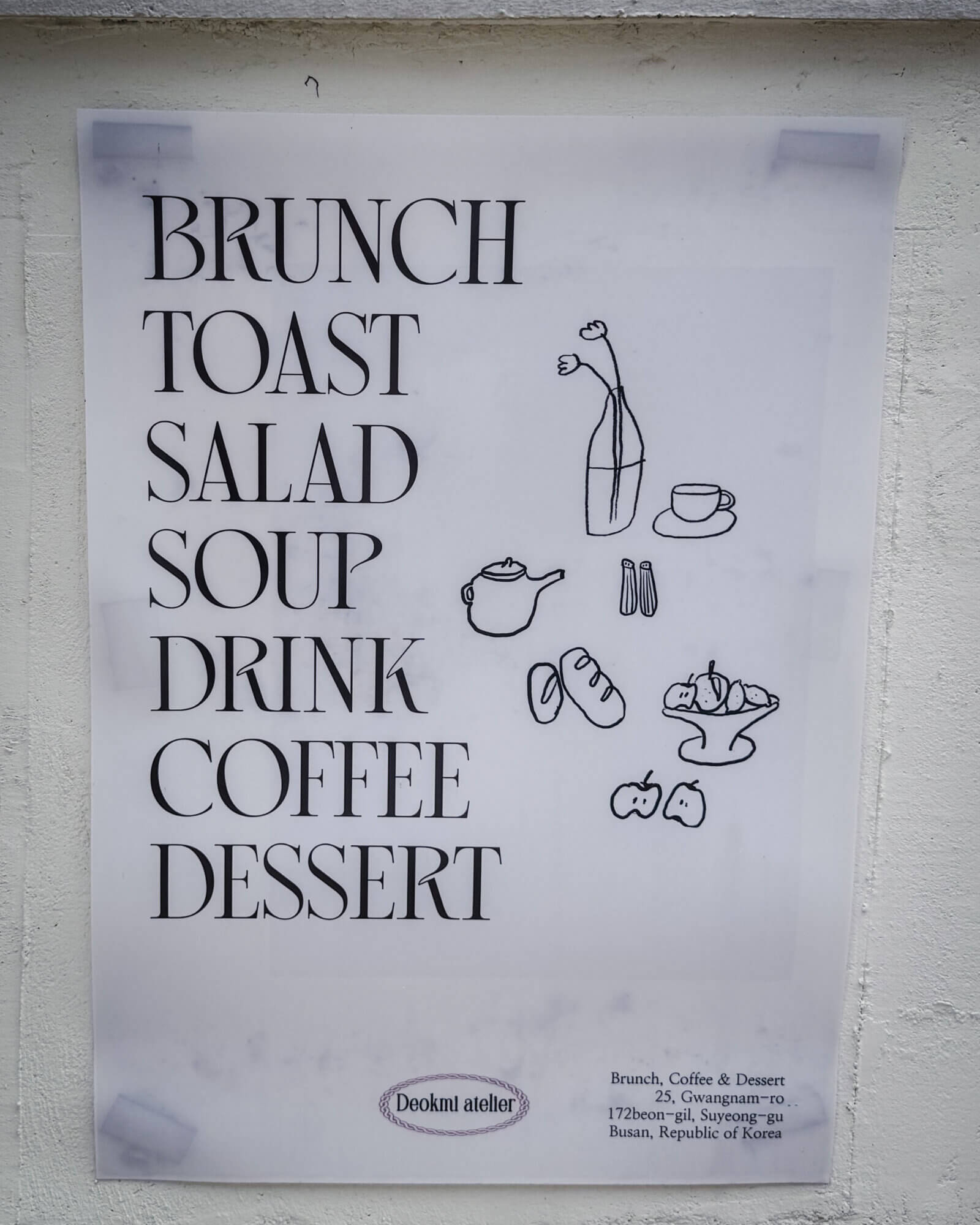
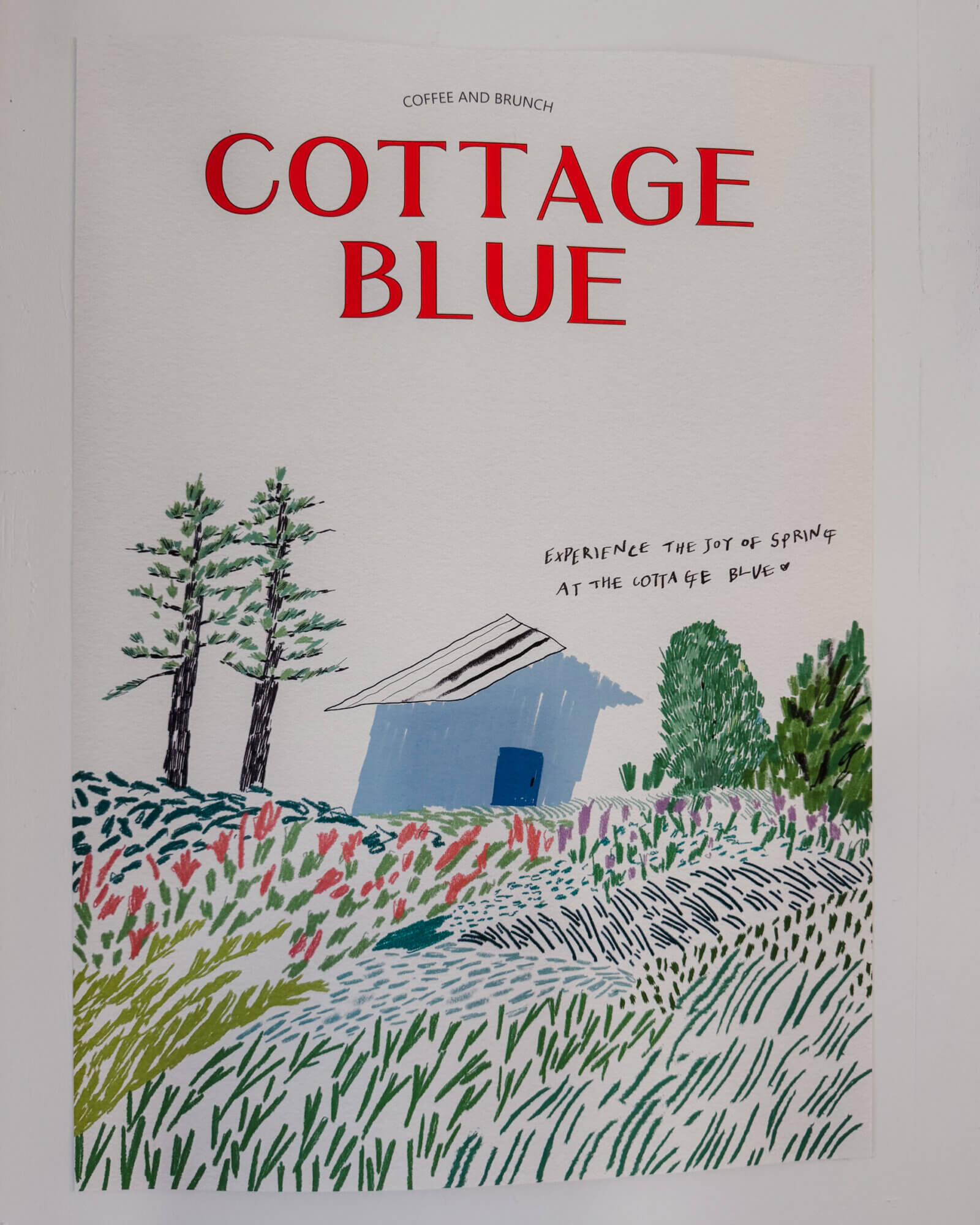
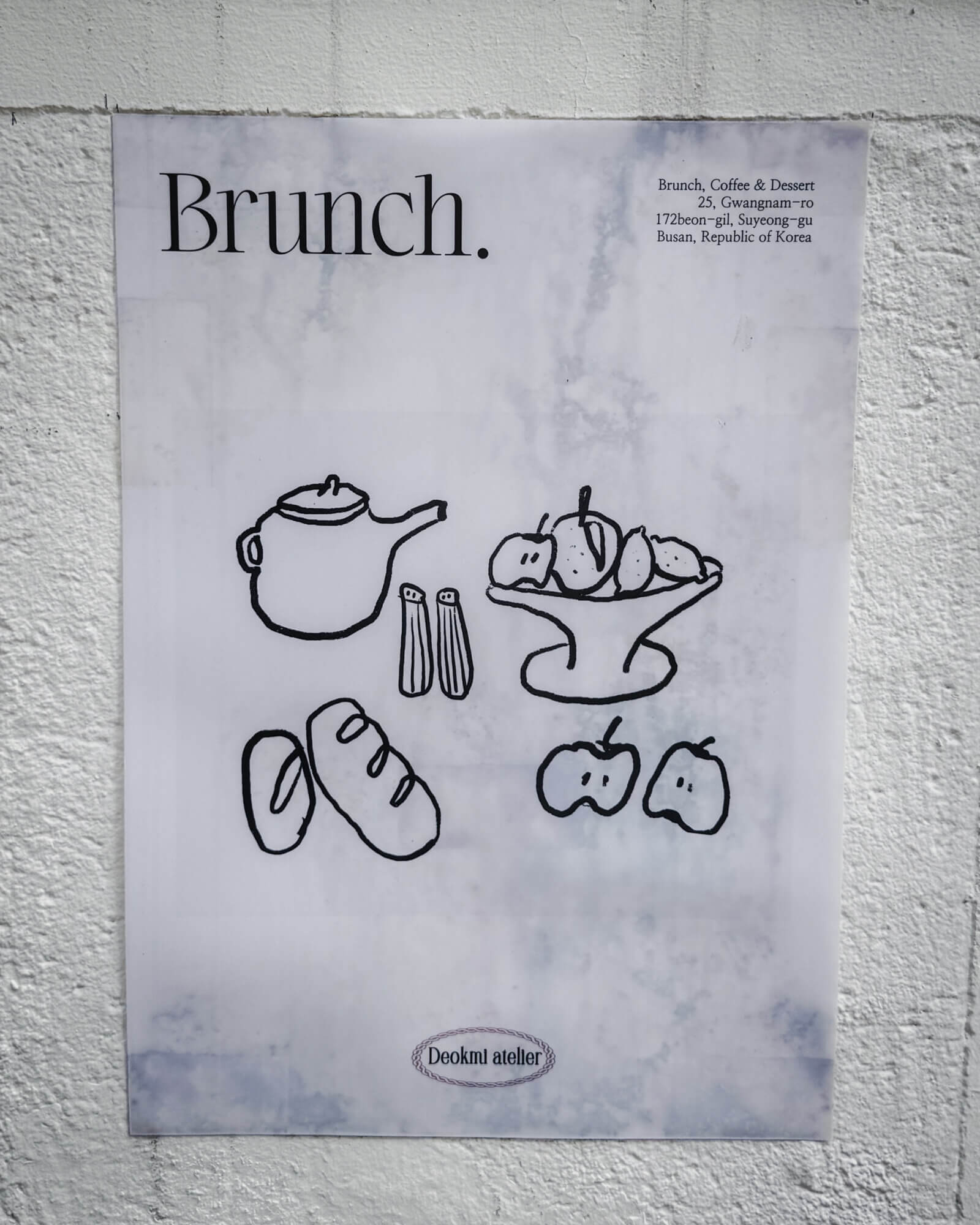
I really liked how the typography and layout complements the ugly drawings – makes me miss designing posters:

photo of a poster from a brunch place

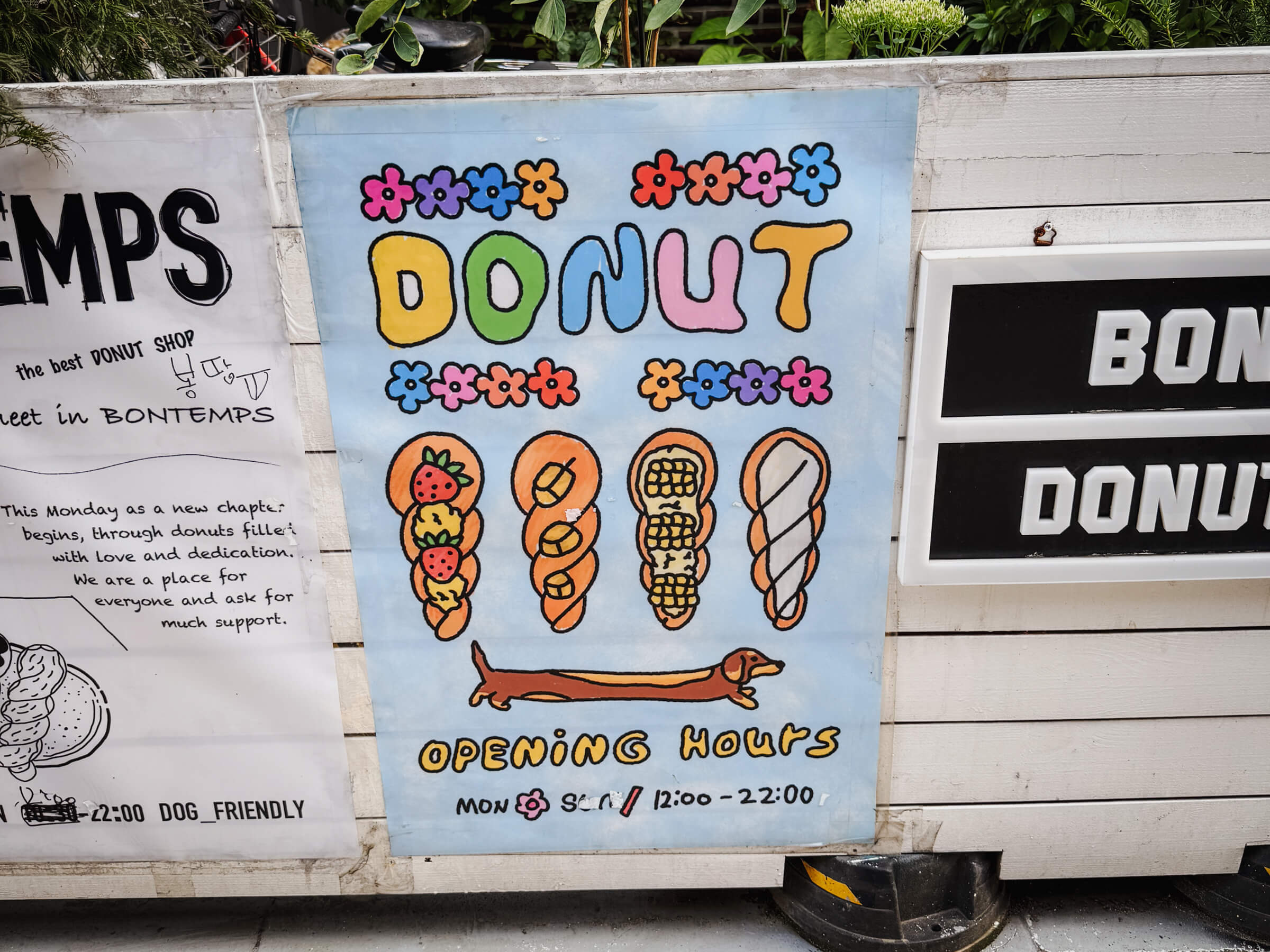
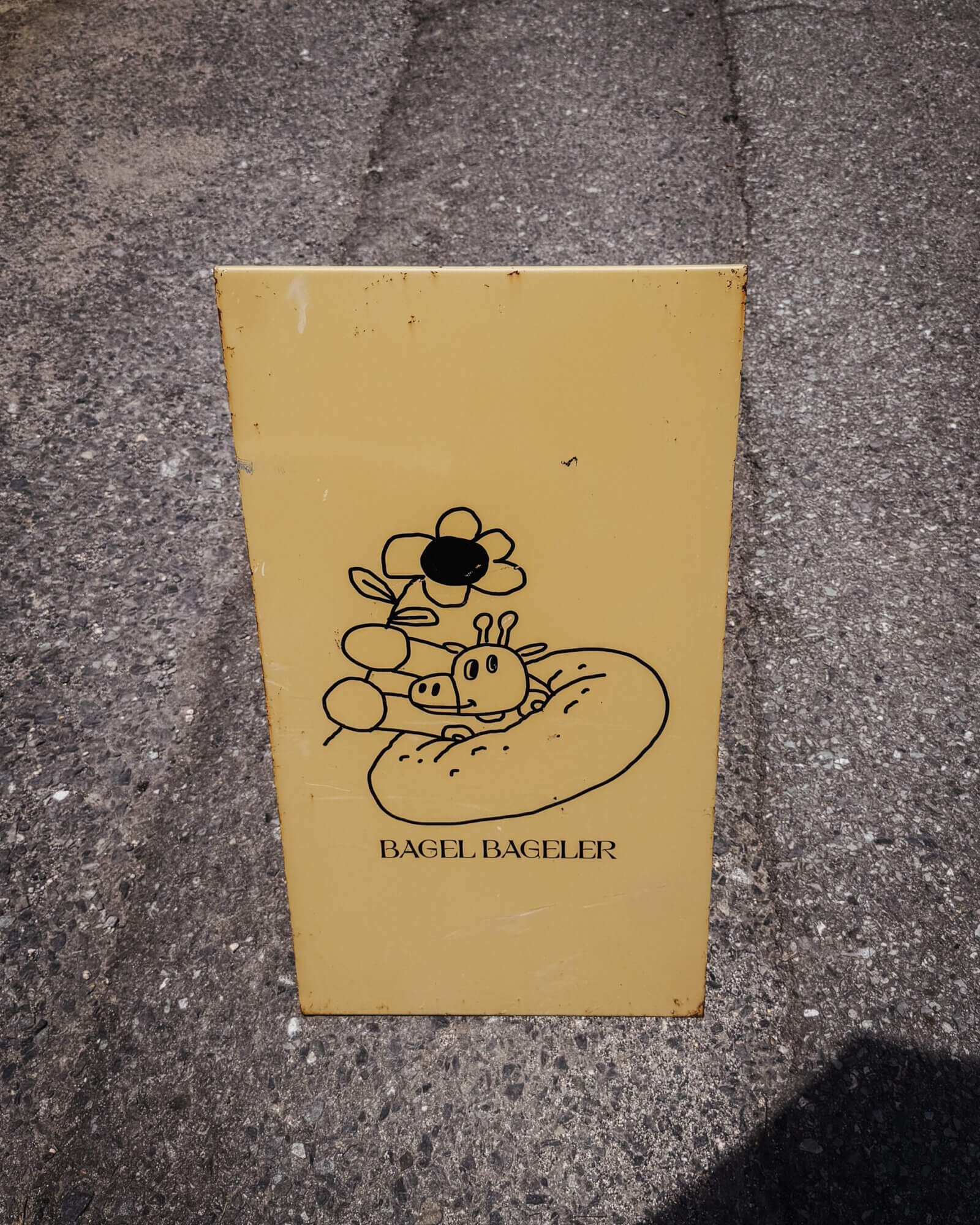
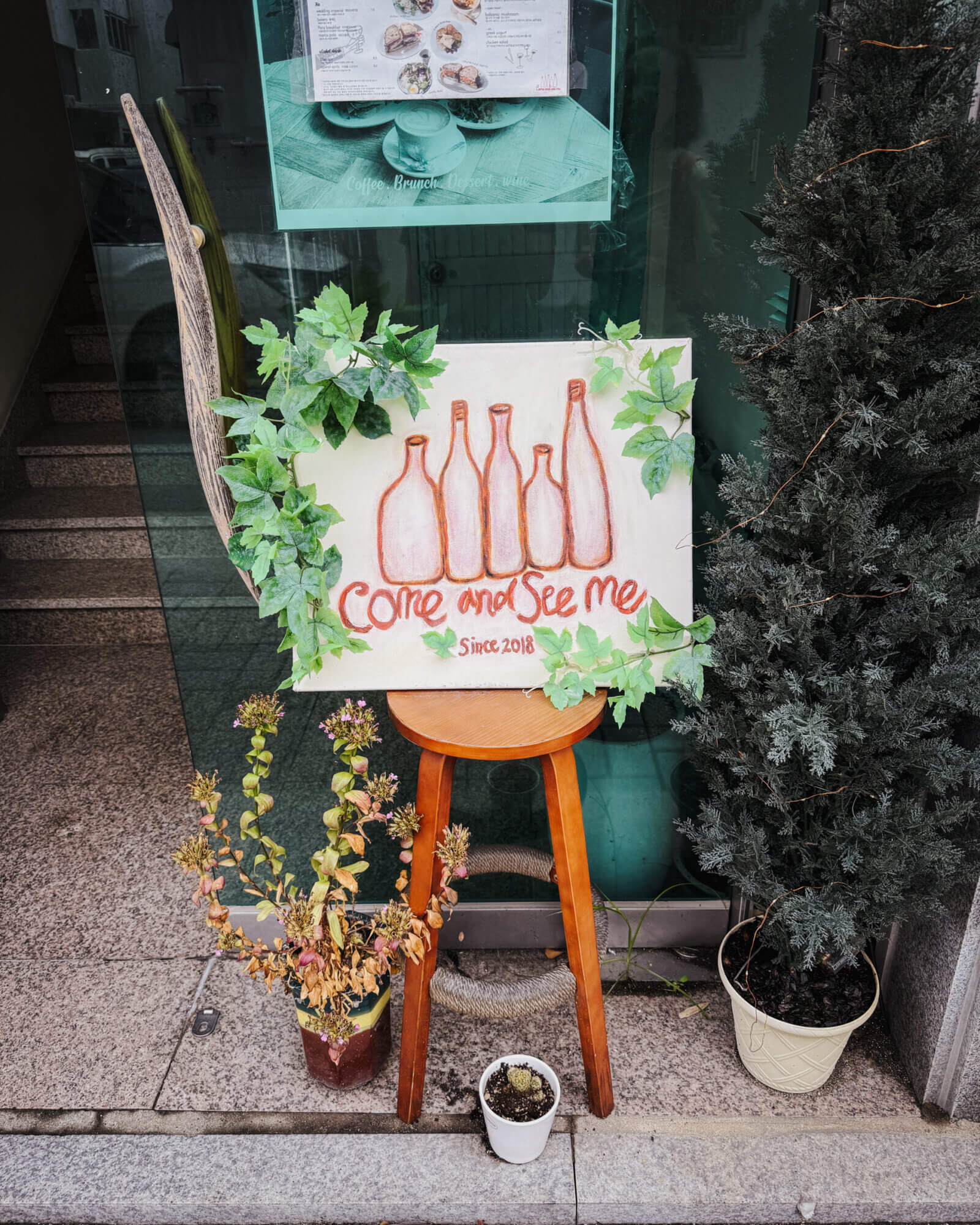
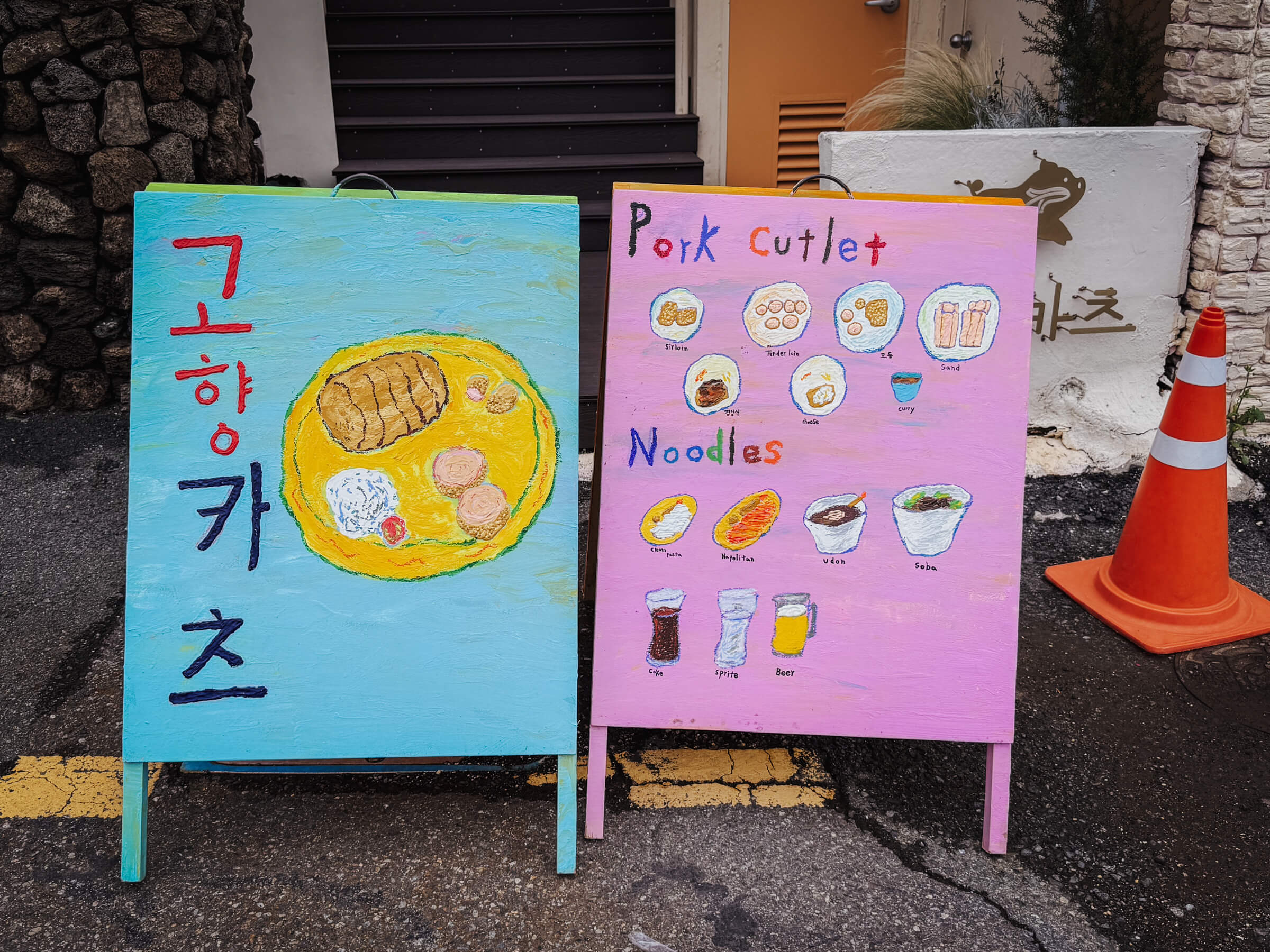
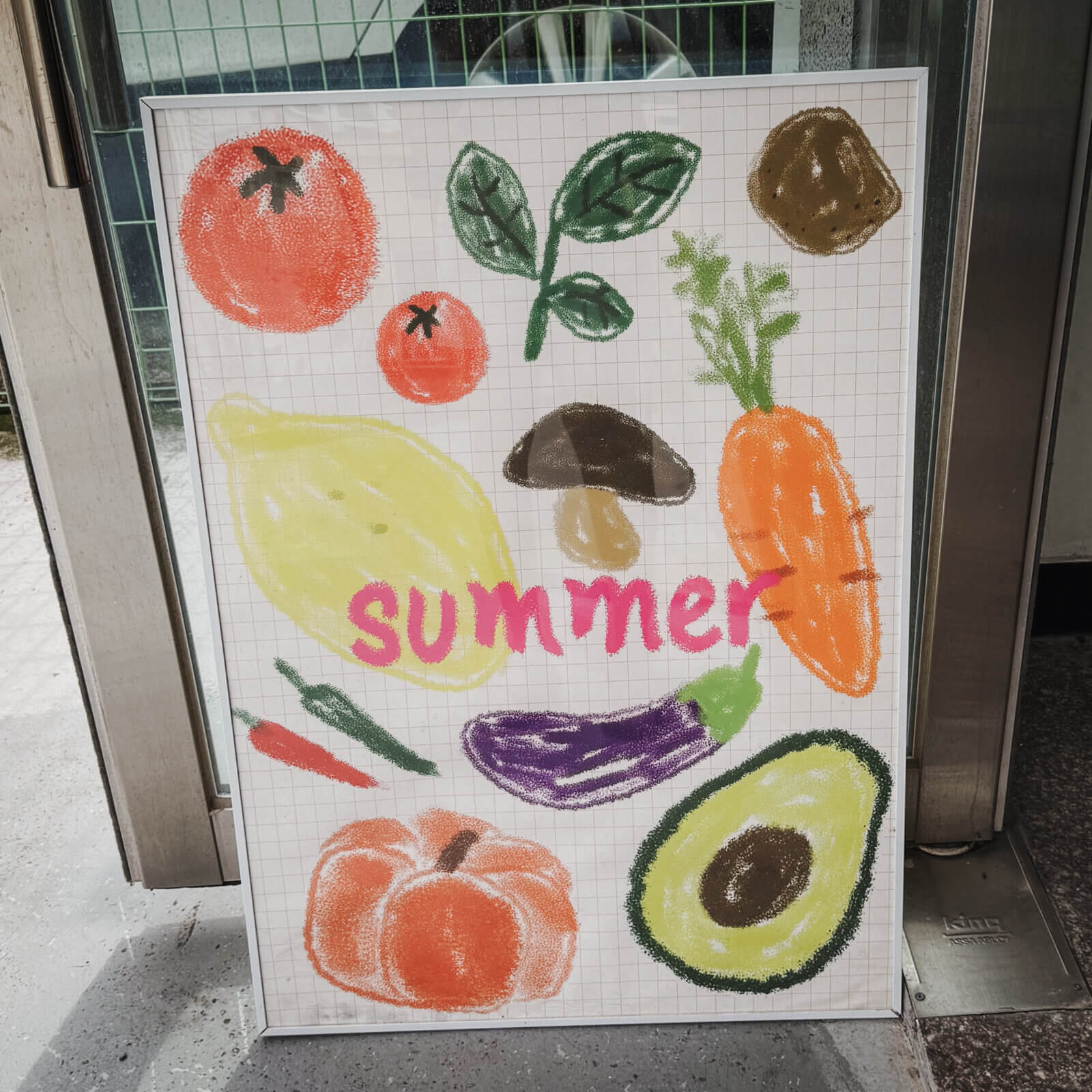
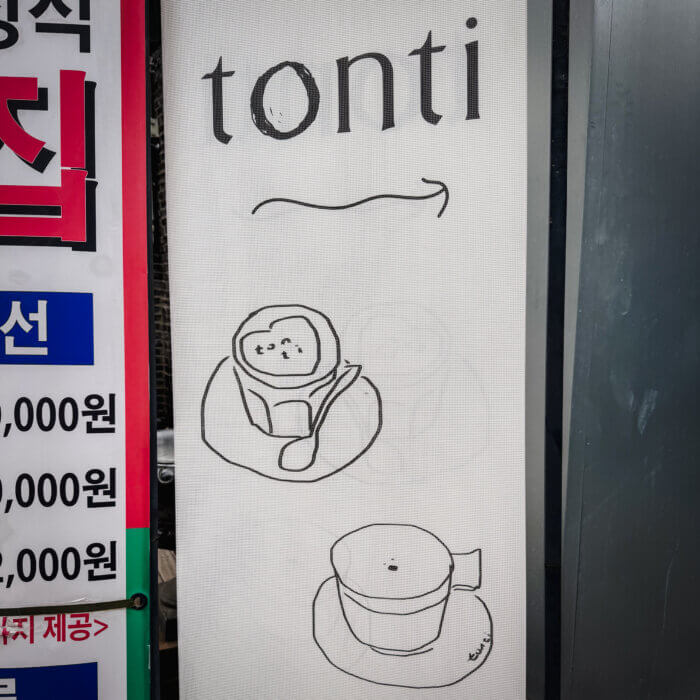
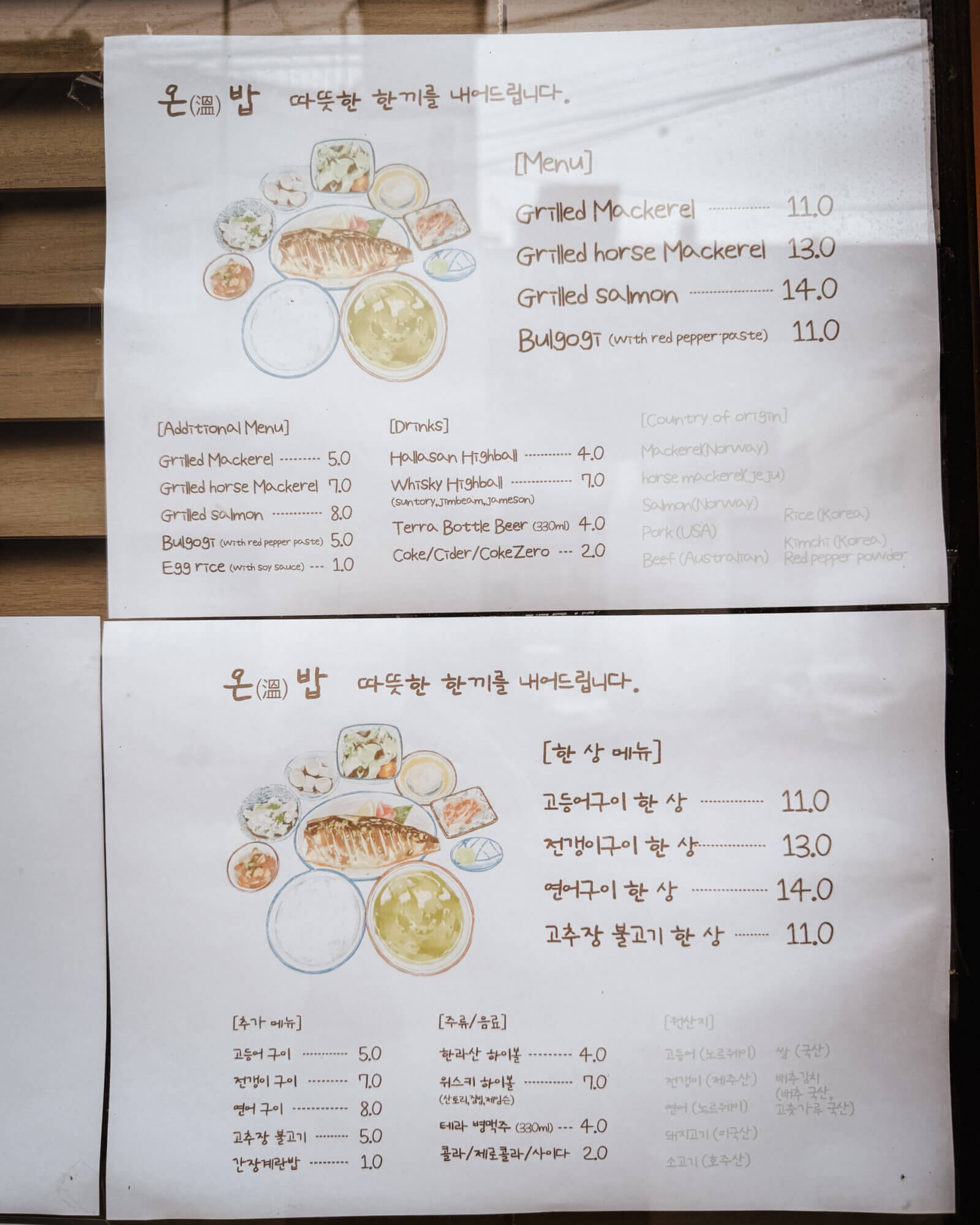
I think it was very interesting for me that many restaurants are opting not to use any food photography but they opt for illustrations in their branding, marketing materials and menus.

photo of a poster of a bakery
photo of a signboard from bagel bageler
photo of a handdrawn signboard
photo of a hand-painted restaurant signboard and menu

The illustration styles are pretty varied:

photo of a restaurant poster

Are they saving on photography cost, or is it opting for a form of simplicity, in a rebellion against the polish?

photo of a menu presented with illustrations
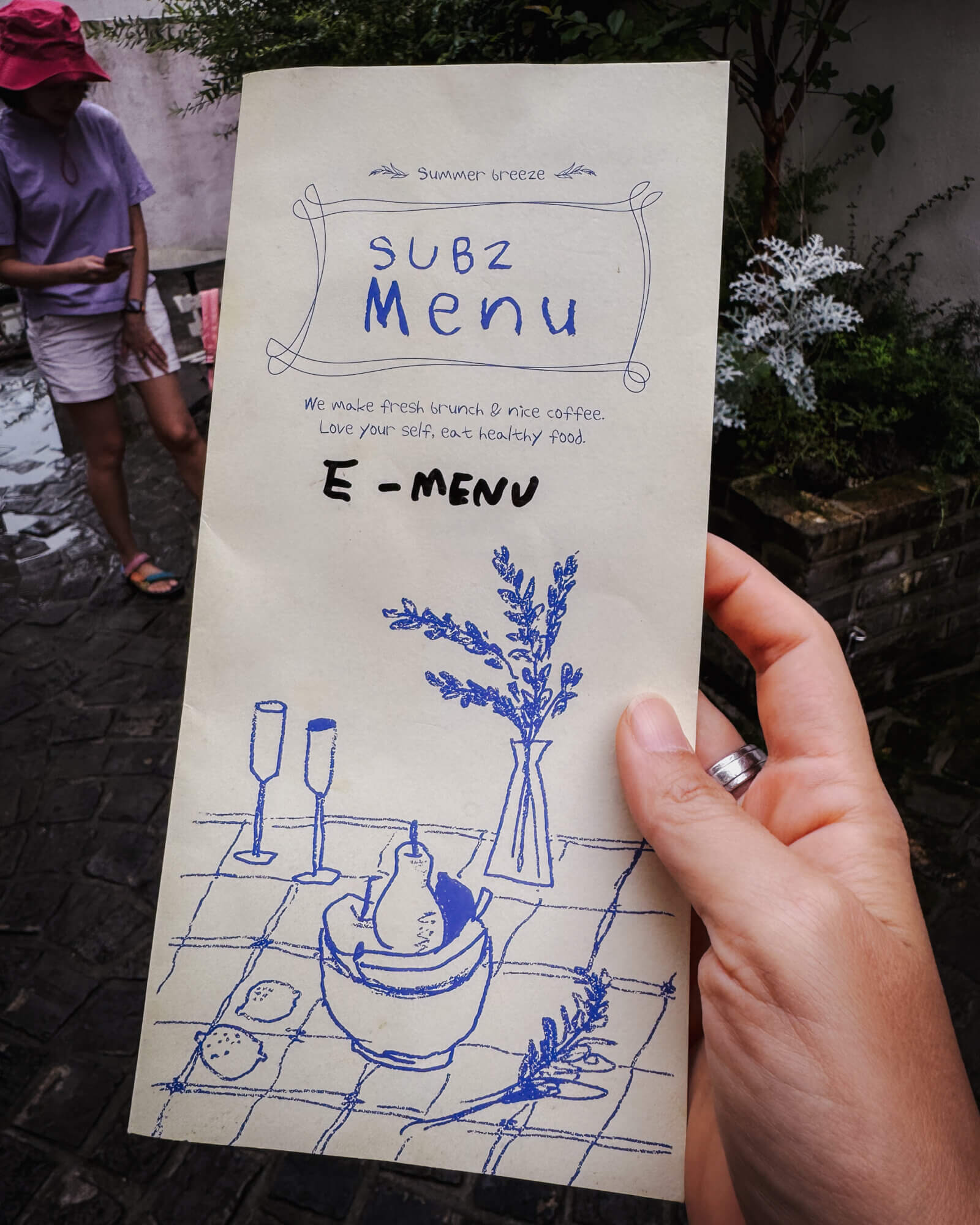
photo of a menu from cafe subz
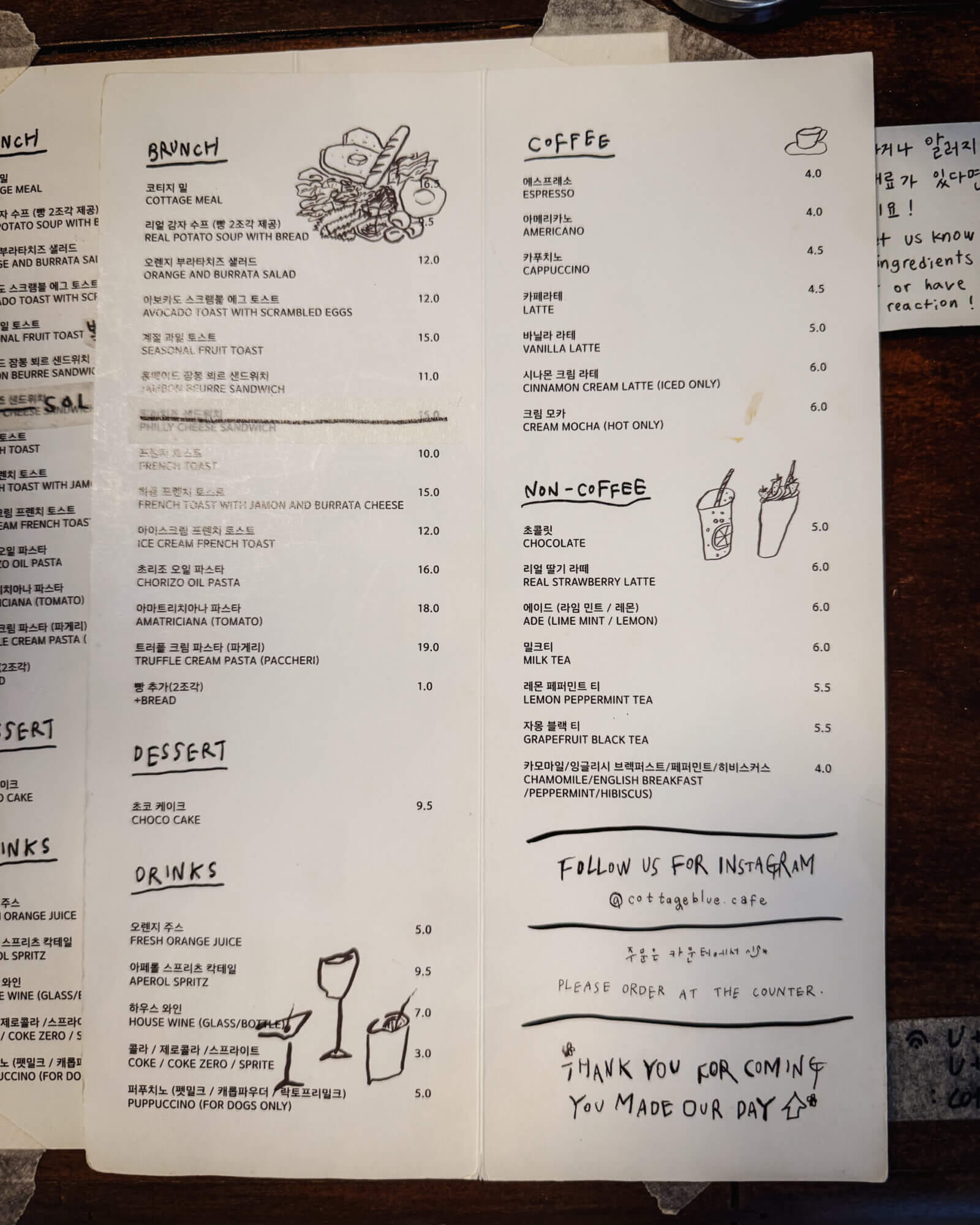
photo of a cafe menu

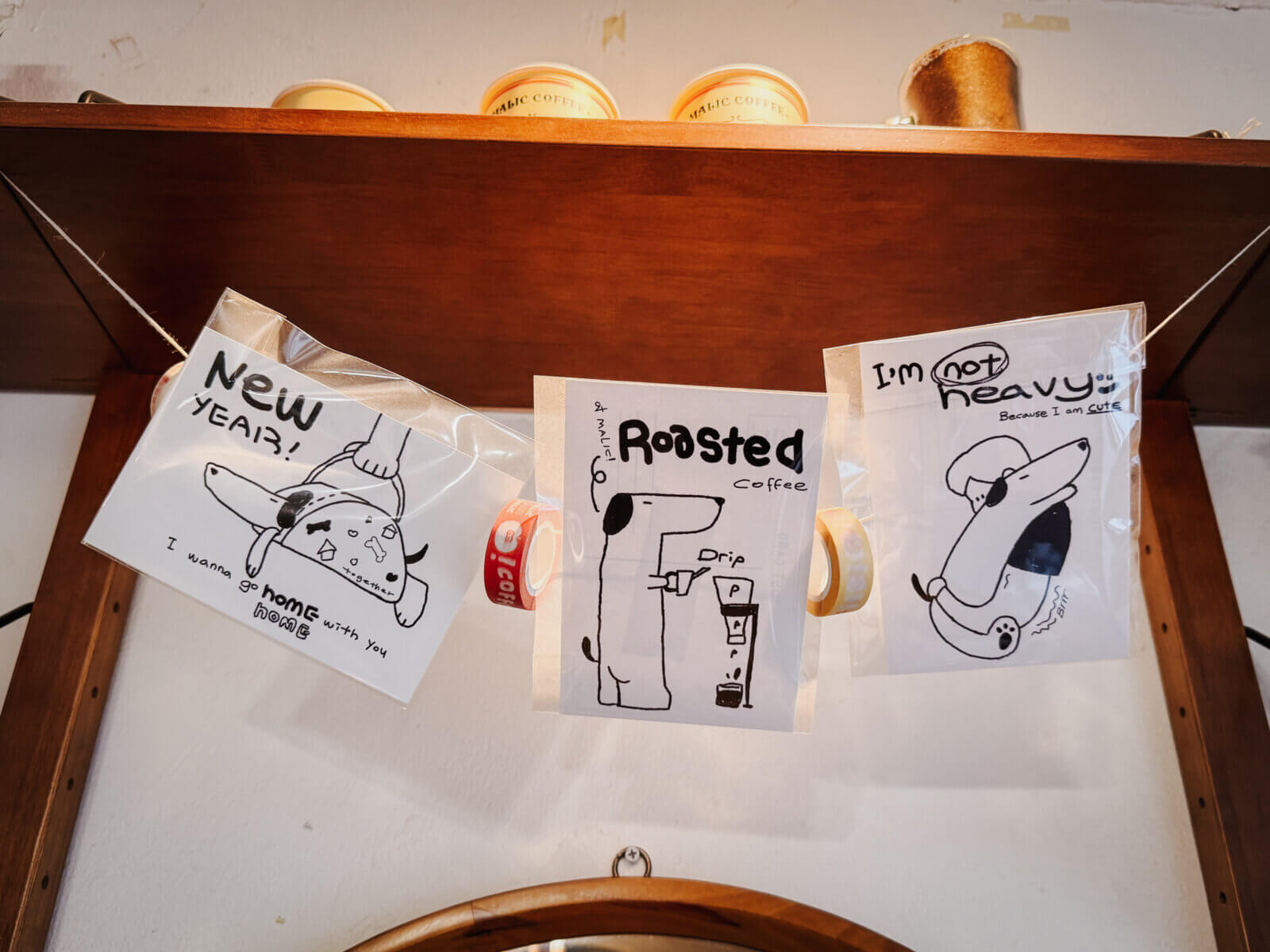
Many cafes also sell merchandise like postcards, washi tapes, and they often give out stickers for free (which my partner is a big fan of).

photo of postcards and washi tape from a cafe

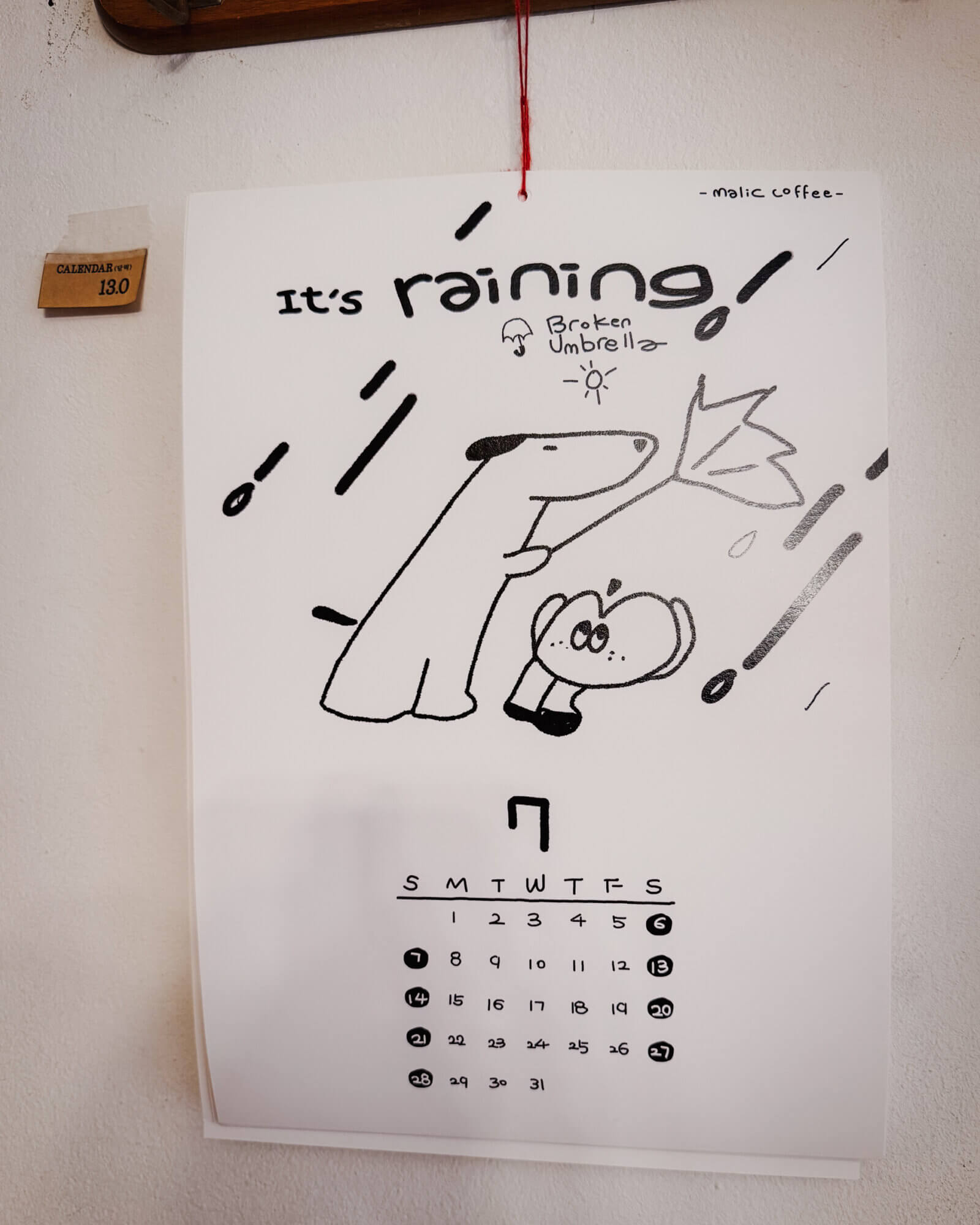
This cafe even has a similarly drawn calendar – makes me wonder if the cafe is just a front for the art:

photo of calendar from malic coffee

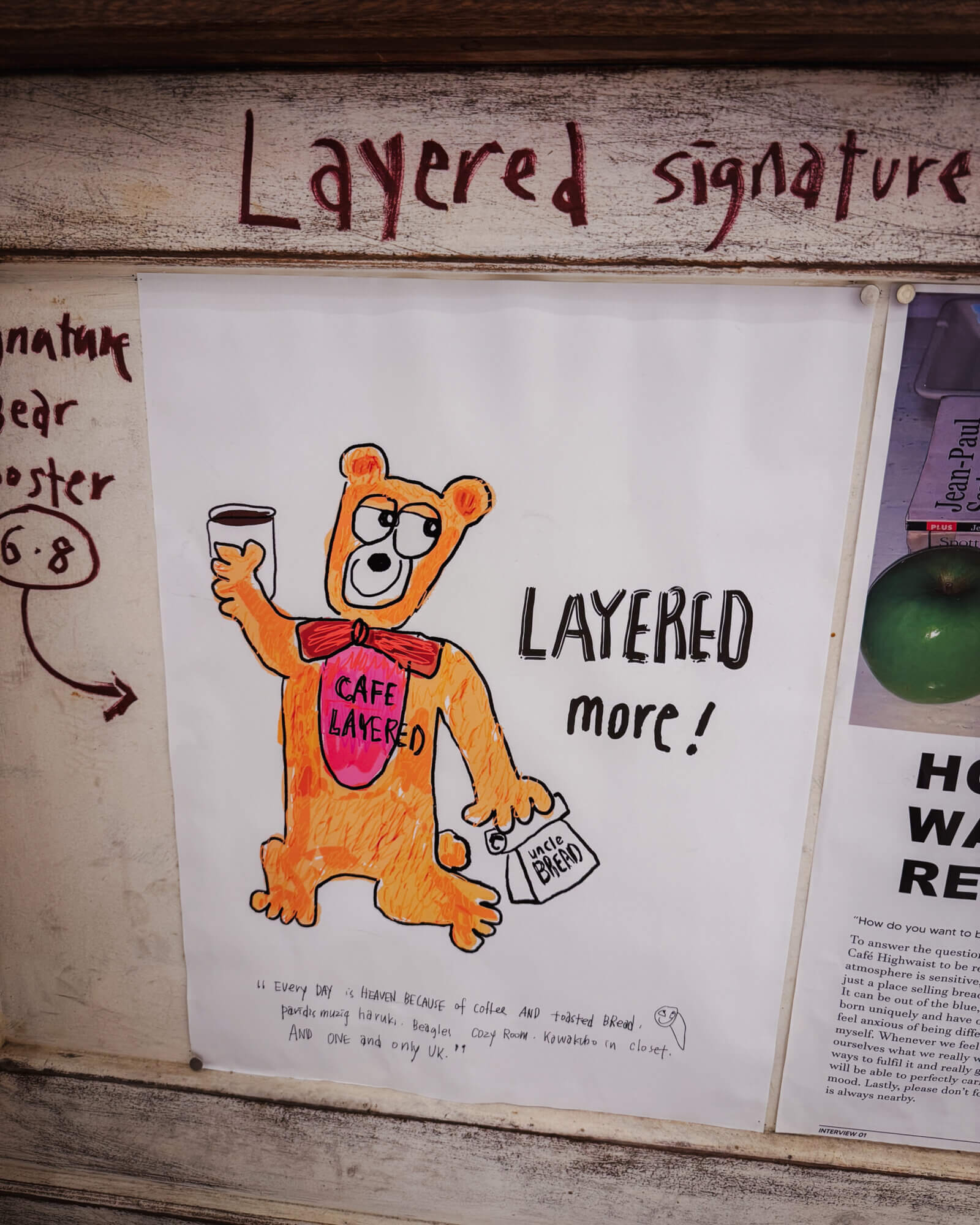
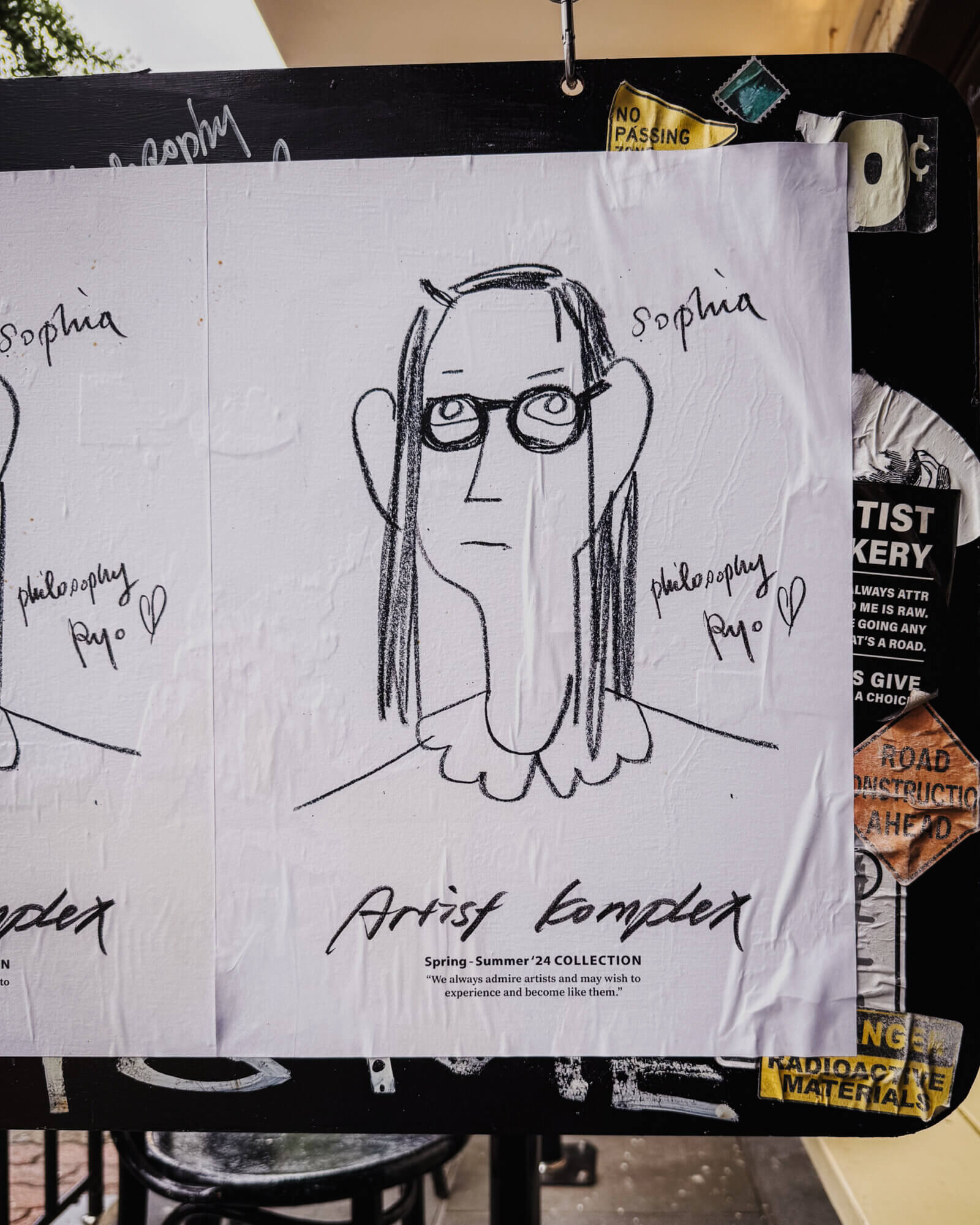
One of the most popular bakery cafe groups in Seoul owns London Bagel Museum, Cafe Layered and Artist Bakery, and they all have a similar aesthetic:

photo of a poster from cafe layered
photo of a poster from Artist Bakery

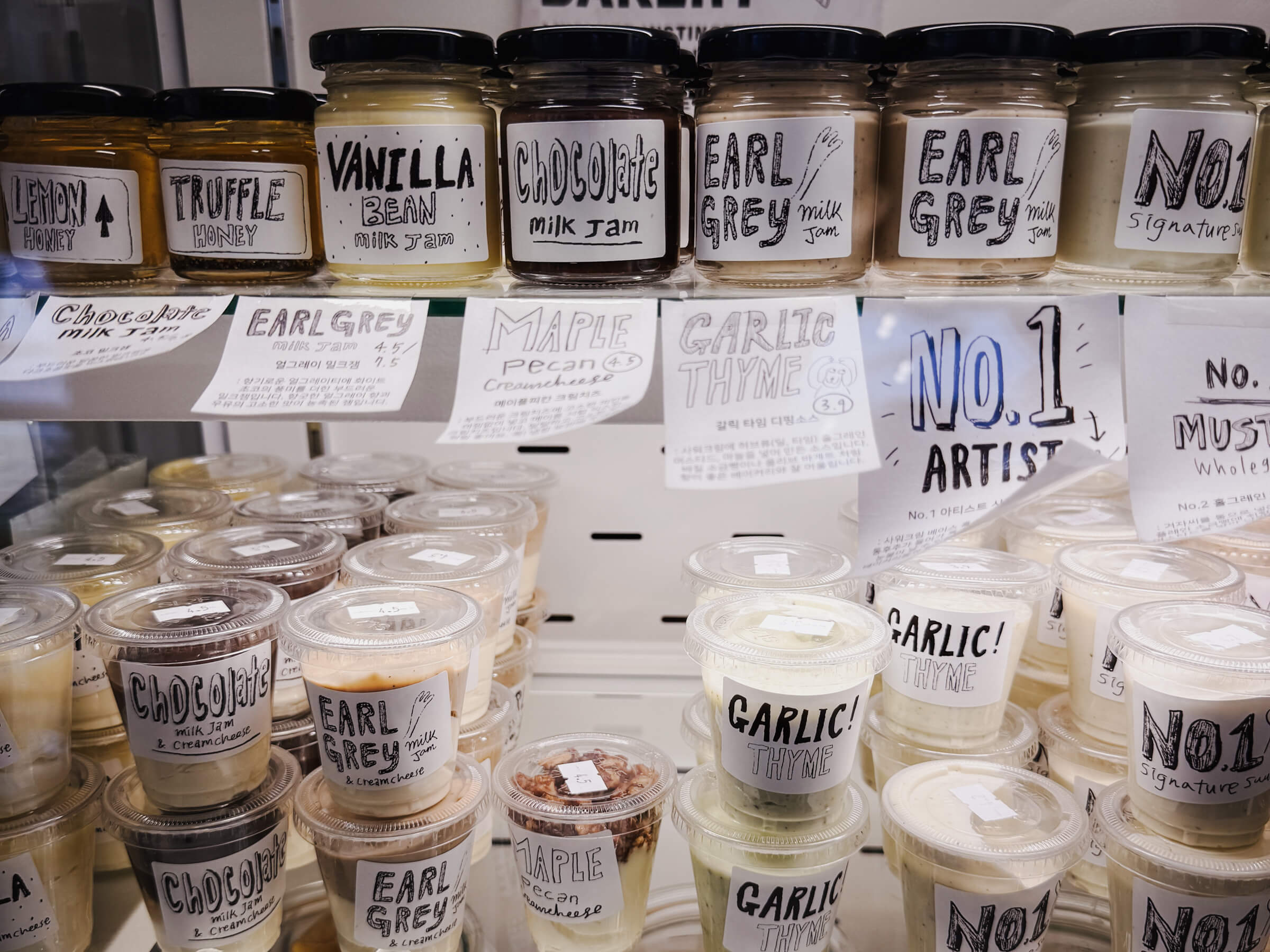
Love thee typography for their labels:

photo of bread spreads from artist bakery

The resident artist seems to be also the founder. Visiting the cafes is an experience in itself, on top of the food (which is pretty good but I wouldn’t say it is mind-blowing). How does one combine taste with business acumen?

“Until now, I had never experienced the energy or vibe felt in a cafe, but here I felt for the first time that there was ‘density in the space.’ Even though I had never worked in F&B before, I was so shocked that I thought, ‘I want to change my job.’” – (translated quote) Lee Hyo Jeong

Density in a space. Even though it is a translation, but what a phrase and concept. What is it that makes going into a space feel like a delight, like going into a candy store? These bakeries are literally dense, even in the way they display their food.


This style of drawing/art extends to merchandise they sell in stationery stores:

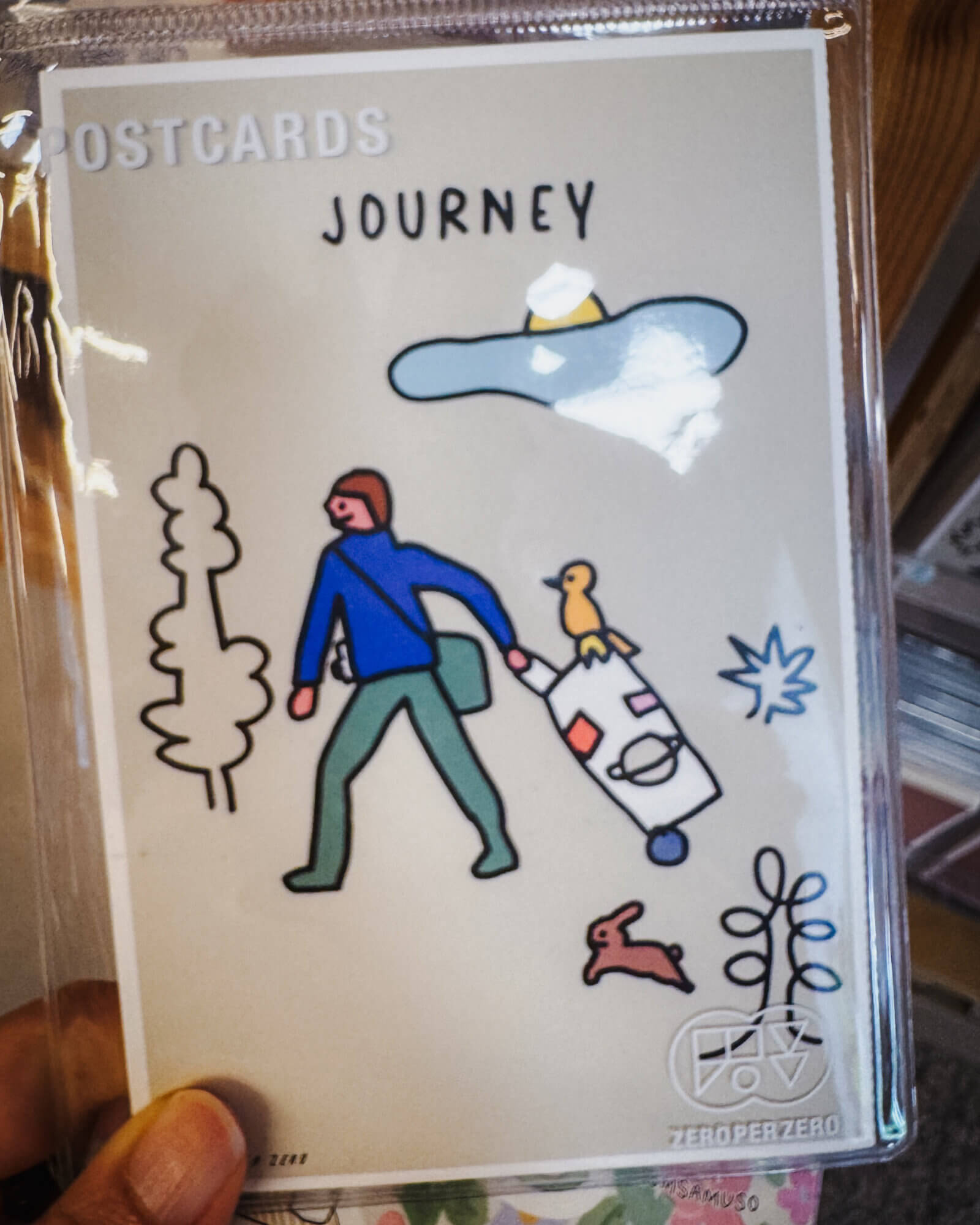
photo of a postcard set
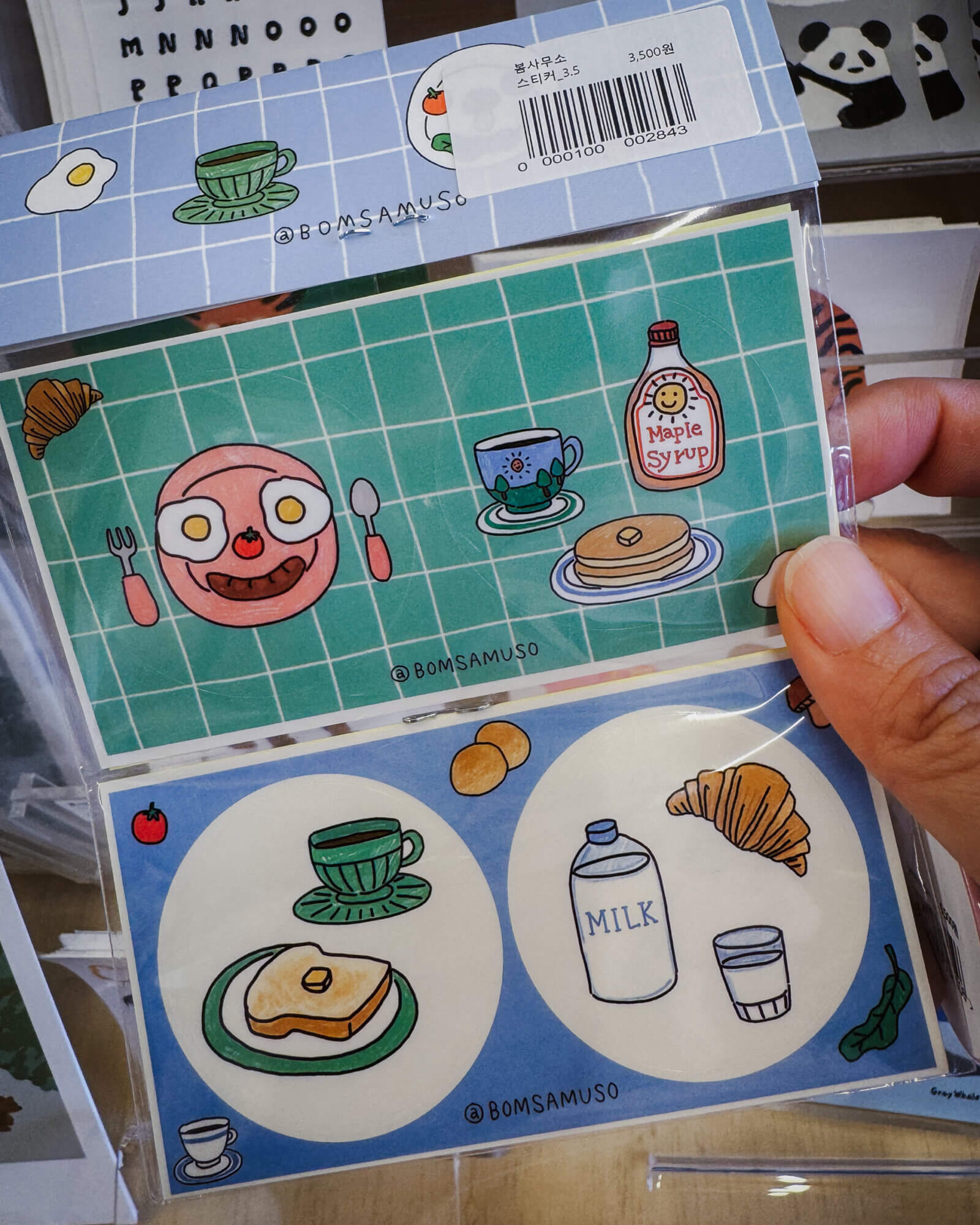
photo of a sticker set

The abstracted drawings almost makes me feel annoyed because they look so simple that it makes us feel anyone can do it.

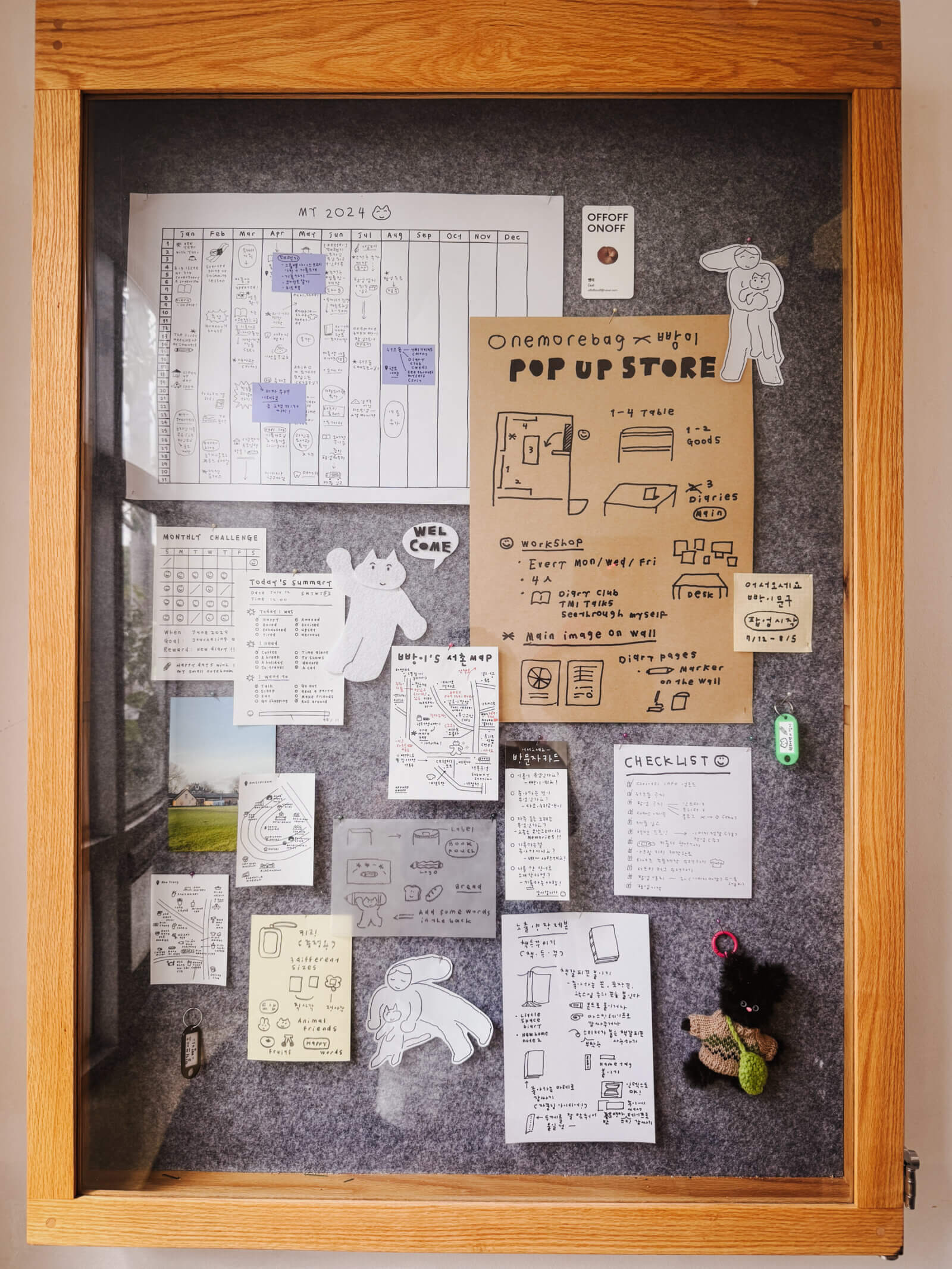
photo of a notice board at a stationery store
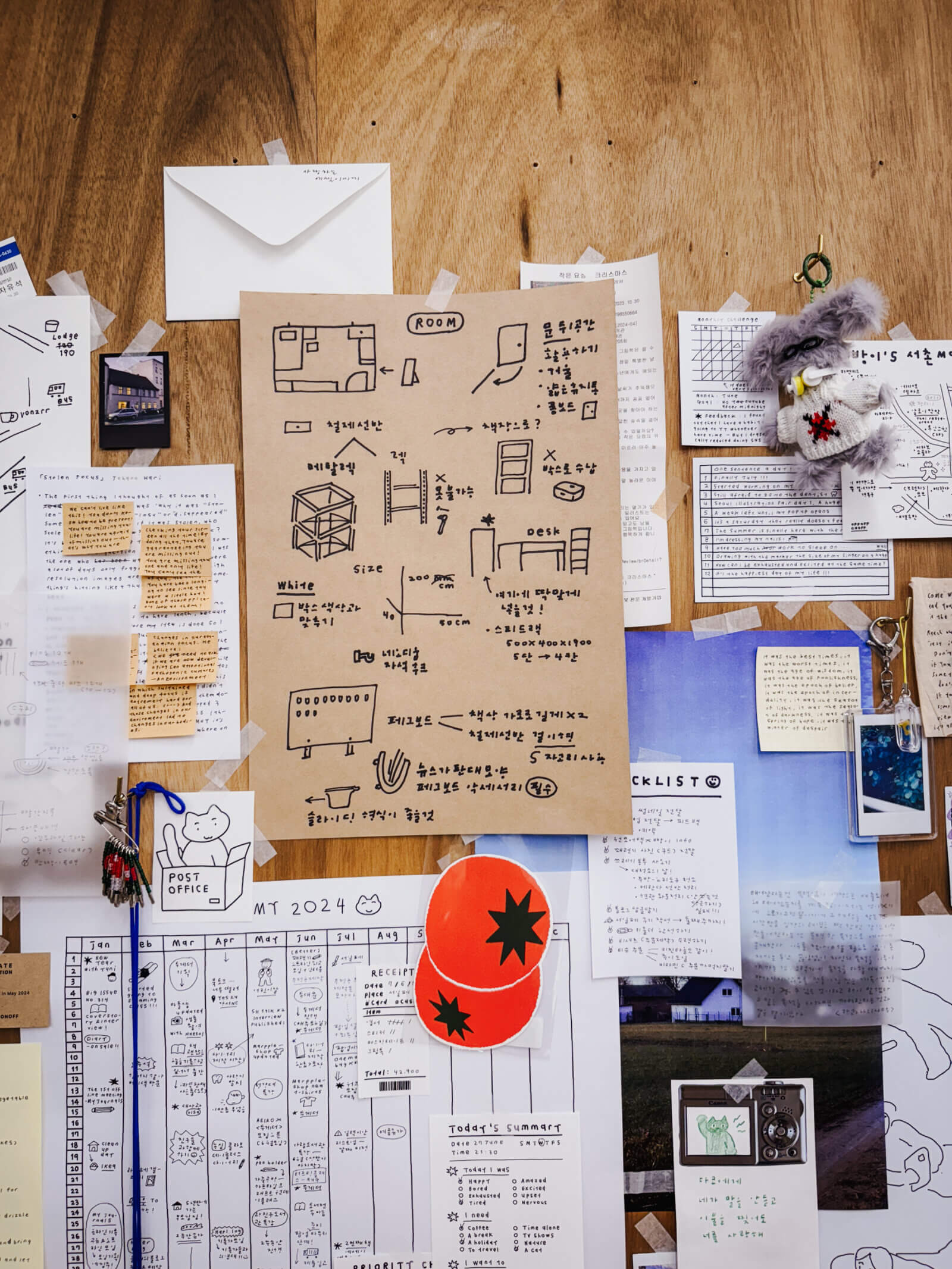
photo of a poster of a stationery shop

But I feel like these are like those zen paintings with a lot of white space. They look deceivingly simple but there is an essence that is difficult to articulate. Or maybe it is just me, because I tried doing it and they look rubbish. My partner has also tried and she is too much of a perfectionist to go against her instincts, for now.

I love these though. I think it renders a sense of comfort that is difficult to find in this world nowadays. It reminds me of Hundertwasser, who proclaimed that straight lines will be the downfall of humanity.

Though I think most of these drawings are not that easy to emulate, I do think they carry an encouraging spirit: that anyone can be an artist, art doesn’t have to be only about precision, technique and symmetry. Do you feel encouraged after seeing these?

I personally feel inspired after seeing them.

temporary amnesia

Travel enriches me in many ways. Apart from novelty and discovery, new surroundings help me to temporarily forget things that usually weigh me down. Certain familiar things back home trigger uncomfortable feelings in me. I guess that is why I had a multi-year respite when I moved to SF for a while. For that few years, I could forget who I was and what made me, and I experienced a never-before lightness in my being.


I am not sure why but I don’t tend to forget traumatic memories. This morning I woke up from a semi-nightmare — semi because it was not that scary, just dreadful — that I was going for an exam and I was feeling a lot of anxiety about being unable to remember what I was about to be tested for. It has been more than 20 years since I last had an exam, and I am still having dreadful exam dreams. When I woke up I was so relieved I was not actually having an exam, and that I don’t have to experience another exam for the rest of my life involuntarily.

When I was younger I had thought most people had similar anxieties like me. But no, somehow the typical response is to deny and forget. My triggered memories and sensations are disabling for me. I don’t believe words can adequately describe what it is like to be haunted permanently until to a point of perpetual depression and paralysis. I cannot escape or disengage from my mind, so I have to seek out distractions. And when distractions no longer work, I try not to let these sensations destroy me. I have realised with age that they will probably follow me for the rest of my life, and it would be better for me to learn how to tolerate living with them than to hope hopelessly that they will disappear.

But I am not there yet. I feel like I am constantly drowning, struggling to breathe. Travelling makes me feel better because my brain is too busy to bother me, yet it concurrently makes me feel worse because I know I am escaping from something. That something could be plenty of things, and one of them is definitely my self. I don’t like being an escapist. Like most people I would like to be someone whom I am not: I would like to think of myself as a person who readily embraces truth and reality. But the more I age the more weight I bear and become aware of, so I am slowly realising that being a hypocrite and learning to be good at compartmentalising is key to my own survival. This makes me understand other people more: why they would prefer for things to be swept under the carpet. This world is simply not easy to survive in, the human psyche can be too inhospitable to inhabit.

I am trying to learn to be more compassionate to myself — the fact that I am writing something like this is proof that I am not harbouring a normal existence but a tortured one. Why would anyone write and think like this if they could help it? To think and then write convolutedly is a compulsion that overcomes me. I wish I am someone who can write about my bright and sunny day but here I am writing about my dark and dreadful mind. The only thing I can offer to you and my self is the attempt to honestly articulate who I really am, because there is nothing else I seem to be good at. Words are not enough, but at the very least they let me attempt to build a bridge between the abstract darkness within me, my conscious self, and the world that surrounds me. Who knows what will happen if I just let it build up within myself?


I wish to forget my self, even if it is temporary. The weight of my mind is difficult to bear. If I am lucky I get to indulge in temporary passions and hobbies, to just bring in a tiny bit of freshness to my existence instead of feeling claustrophobic in my chronically heavy self. I used to be a purist, thinking distractions are cop-outs. I must learn to live with myself, with the discomfort, with the pain. But now perhaps the more important thing is to survive, even if it means I have to play tricks with my own mind and cut off some parts of my self.

Will this bite me in the ass some day? I don’t know. All I know is that I live with plenty of regrets, but yet I know I can only make choices I am capable of in that moment. If I can be a better person and have a wider emotional capacity things would be radically different. But now that I am older I am less deluded about the person I am and who I can be. I am someone who simply has very little capacity to live and to love. There is just so little life force in me, so much unwillingness, fear and sadness.

I don’t even know why I am built like this, as though my existence has been an evolutionary mistake. Instead of striving towards life, I dread it.

gyeongju, the city of beautiful tombs

Spent a few days in gyeongju. I knew there were going to be tombs, but what I didn’t expect was them to be everywhere, not just concentrated in one area. I didn’t know tombs can be so picturesque. There are restaurants and cafes popular just because they offer a good view of these tombs.

photo of tombs in gyeongju

According to wikipedia: “Gyeongju was the capital of the ancient kingdom of Silla (57 BC – 935 AD), which ruled about two-thirds of the Korean peninsula at its height between the 7th and 9th centuries, for close to one thousand years.” Which makes the tombs around one to two thousand years old. Pretty surreal.

photo of starbucks in a hanok

Gyeongju was chosen as one of our destinations because people on reddit kept saying it was one of their favourite cities – see social media is actually useful. It is confusing to see modernity housed in traditional architecture. Out of the tourist area there are regular buildings – except that just when we least expected it there are again some tombs and ruins. I can no longer tell which are actual ruins and which are reconstructed.

photo of coffee place, one of the best coffees in gyeongju
photo of tombs in gyeongju
photo of woljeonggyo bridge
photo of Donggung Palace

I am not that into history, but I appreciate seeing artefacts of humanity. How different people of different times lived, and how they died. Being from a very built-up dense city like singapore, I enjoyed peering into the distance anywhere at gyeongju and seeing majestic mountains.


A few people have commented that the photos I share are very different from the parts of the world they live in, and that is why I love the internet, and also why I share these photos. I too, enjoy seeing a world different from mine, through your eyes. So I hope to bring a little of my world, to you.

what we pay for wanting to be healthy

We are in Gyeongju now, a place full of cute hanoks and rolling green hills that are actually tombs which are thousands of years old.

photo of the tombs in gyeongju

The weather has been rather unpredictable: searing hot sun for a moment, and then torrential heavy rain. This morning we almost had to plead with a restaurant owner to sit outdoors – they asked if we had a reason, and my partner responded that we are covid cautious, so they relented. Unfortunately it started raining very heavily less than 15 minutes after we were seated, so they had to cancel our order even though the food was already being prepared.


We have had to tell people we are “covid cautious” several times whether we are travelling or in Singapore, though we are not sure if they actually understand what we mean. Most of the time it is to justify a seemingly unreasonable request to them – like wanting to sit outdoors in the hot sun where nobody wants to step out of the comfortable air-conditioning to serve us. Once in Singapore we told a restaurant server we want to sit outdoors because we are covid cautious, and they became unreasonably angry. The word “covid” has become like an unspeakable word, and people like us who would still like to avoid the virus have become social pariahs.

That a virus is airborne and therefore indoor-dining is high risk shouldn’t be too difficult to understand even for people without a science background. But it somehow is. Even for people who understand it they don’t want to understand, because it would mean acknowledging the fact that we are now constantly being surrounded by something that can easily disable us.

Nothing much has changed since omicron arrived, the variant that caused a pandemic that is too contagious to control. Waves are still high now, one after another, while hospitalisation rates are still high in many countries. The virus never really went away. But somehow because we are tired of it we are now pretending it is over, and it is now safe to do anything because it is “endemic”. Somehow the word “endemic” has changed to become a word that means harmless.

After living in a generation that seemed to go from strength to strength in terms of knowledge and science, I am now witnessing an actual rapid decline. It feels unbelievable.

My partner and I are now being treated as weird people, because we wear masks, don’t dine indoors, and we don’t dine with family or friends. Recently I have a fellow covid cautious acquaintance who hung out with a group of close friends after they insisted they “recovered” from a recent infection. Sadly, now the acquaintance’s family member is now positive with covid. Imagine reading countless studies that show that the virus is systematically damaging, then trying really hard to protect themselves by making so many lifestyle tradeoffs for years, only to get infected because a friend they trusted let them down. People also don’t know asymptomatic spread is a thing.

Doing the right thing in this society can be a very lonely endeavour, and it doesn’t only apply to covid cautiousness. I am glad I have a partner doing this with me and she’s actually more cautious than me, so she’s always assessing the risk for us. I used to joke a lot that I would be a nun if not for my partner, but in this climate I don’t think even being a nun would be feasible for me, because I doubt monastics are covid cautious.

I’ve also been called “bonkers” on facebook by an acquaintance because of our very public covid cautiousness. This person hardly interacts with my stuff but saw the need to tell me I’m bonkers. I am not alone in being treated this way, evident with the stories shared by fellow covid cautious people.

Why are we the ones regarded as bonkers when we are the ones following the science, and that we want to do our best to protect our health? Why do we live in a society where mask-wearing is so triggering to people?


Thankfully for us the heavy rain lightened after a while. We tried to takeout food from a few restaurants but they don’t do takeout at all. Felt really discouraged – just because we are careful about our health we had to spend an hour trying to look for food. I guess there is always the convenience store, and some zero-covid people may feel we deserve this because we are travelling unnecessarily. What a strange space to occupy: pariahs to the average people because we are moderately covid cautious, pariahs to the zero-covid people because we are travelling.

I told my partner we’ll take a last shot at one final restaurant before giving up. What a lovely surprise when we saw sheltered, beautiful out-door sitting:

photo of my partner sitting outdoors to dine at a restaurant in gyeongju

Despite the difficulties of being covid cautious while travelling, I am still rather grateful to be able to travel. Yes we mostly don’t get to choose what to eat, instead we are directed by the places that have outdoor seating and are kind enough to let us actually dine there.


my partner sitting outdoors at a restaurant that didn't actually allow outdoor dining but had seats used as props

^This is an example of a restaurant that had outdoor sitting but they are more like props. The server said no when we requested to dine there, but someone came out and gave us the go-ahead. Most of the time we have had to ask several restaurants before we can actually find one, so we are always glad to be able to actually sit down and eat.


But I love the experiences that can only come with travelling. The awkwardness of the language barrier, the grace that is being shown despite all the communication difficulties and misunderstandings, the challenges that come with navigating and being in unfamiliar environments.

In Singapore I feel half of my consciousness is being shut off due to the familiarity and the fact that Singapore can be driven from one end to the other in less than an hour. We are constantly trying to experience our country with renewed eyes, but we cannot overcome our subconscious being in auto-pilot mode.

I don’t feel like I have many reasons to live – unlike many people I don’t particularly like chasing goals or even having a purpose in life. But I love my partner and when I am not existentially depressed I like to feel that my consciousness is expanding. Travel is something that consistently enriches my soul – it adds colours to my dull existence.

the beach

I’ve had an affinity with the beach since I was young. Every time I had the opportunity to take a vacation, it would almost always be the beach. My younger self would spend hours alternating between tanning in the sun and taking a dip in the waters.

The first time I attempted to travel alone, it was also at the beach. Back then I was a night owl – I would work till 8am in the morning, then head to the beach and sleep. In between my drowsiness I would spend hours in the sea just floating. In the vast ocean, the heaviness that seems to haunt me everywhere I go would seemingly melt away.

photo of haeundae beach
photo of some elderly people sitting on the rocks, soaking their feet in the water
photo of a person sitting alone on the rock near a mermaid statue

My current self prefers being in cities. I’ve been deprived of stimulation because of the pandemic, so every time I travel I want to immerse myself in colours, sounds and sights.

But for my partner’s birthday we decided to be in busan, a city that is also known for its beaches. I am used to the laid back vibes of south-east asian beaches, so the beaches of busan felt strangely foreign to me. I like that even as we age we can still accumulate new experiences and sensations.

My heart rate variability (hrv) went through the roof (increased an average of 20-30ms) on all the mornings I spent sleeping near the beaches. My partner told me it is because the beach has a ton of negative ions, and they are good for health. I thought she was bullshitting me but it turns out again she was right.

In the mornings we would see plenty of old folk walking along the waters. Do they know about the benefits of negative ions and grounding? The beach is traditionally known to be a place for healing. Sometimes I think our ancestors know more about health than us.

photo of a couple of elderly ladies walking along the beach
photo of a lady sitting on a bench on the beach
photo of an elderly lady walking along the beach

Most of the days we were there the weather was foggy. Despite the gloom people still played and enjoyed themselves at the beach. Being a perpetual grinch I don’t really know how to enjoy myself anymore but I do like to witness other people having fun.

photo of a kid building a sandcastle at the beach
photo of people playing at the beach

Recently I remembered that it was my partner that indirectly inspired me to take on photography, and it has become such a meaningful expression for me. I don’t do it as often as I would have liked back home, because it is difficult to see beauty in familiarity. But when I travel I see beauty everywhere. Everything is interesting to me. I often lament that I can drive from east to west of singapore in an hour, and I am always envious of my friend who told me she would drive from slovenia to italy in 2 hours just to go shopping in ikea.

I like taking photos of photographers. I would like to believe there is a commonality between all of us – people who would lug around a heavy camera (okay mine is not that heavy comparatively) so we can have a shot of capturing something that would astound us.

photo of a photographer at the beach

As I go through my photos I keep realising what is astounding to me is not jaw-dropping views, but just scenes of everyday life. I am self-admittedly misanthropic, but travelling makes me love the world.

photo of the ocean

The morning after we left the beach, my heart rate variability dropped like a cliff.

screenshot of hrv4training going through the roof then dropping off like a cliff

This makes me think deeply about my body’s relationship with nature, and how disconnected and disassociated I am. I have forgotten what it is like to be a beach bum, how I used to spend hours truly doing nothing.


Even while travelling I feel perpetually anxious, weighed down with a sense of dread. I think I have very flimsy boundaries between my self and the world – everything seems to affect me very deeply, and I don’t have the capacity to compartmentalise like everyone else.

It seems to get worse as I age – I don’t know if it is me ageing or if the world is getting worse or both. It is probably not going away, and I have to figure out how to exist while having all these feelings and sensations.


I guess this is a strange post. I wanted to write my regular sunday post and publish these photos as well, so I did both without considering too much if they belong together. I think to be able to publish is a rare and precious thing that cannot be taken for granted, so I just wish to do whatever I can in this moment, because sometimes I feel it truly deeply: this current moment is the moment I have, and I am not sure about the next.

happy birthday to my favouritest person

Every year on our birth days we’ll try to make a trip overseas – Singapore is about 50km from east to west so we can’t do any local travelling. Travelling is vital to us for the growth of our minds and souls, and it feels exceptionally meaningful to be in a different frame of mind provoked by an entirely different space.

Today is my partner’s birthday, and we are at Gwangalli beach, Busan. My partner tends to leave the travel planning and decisions to me, so I thought being near a water body would be good for us.

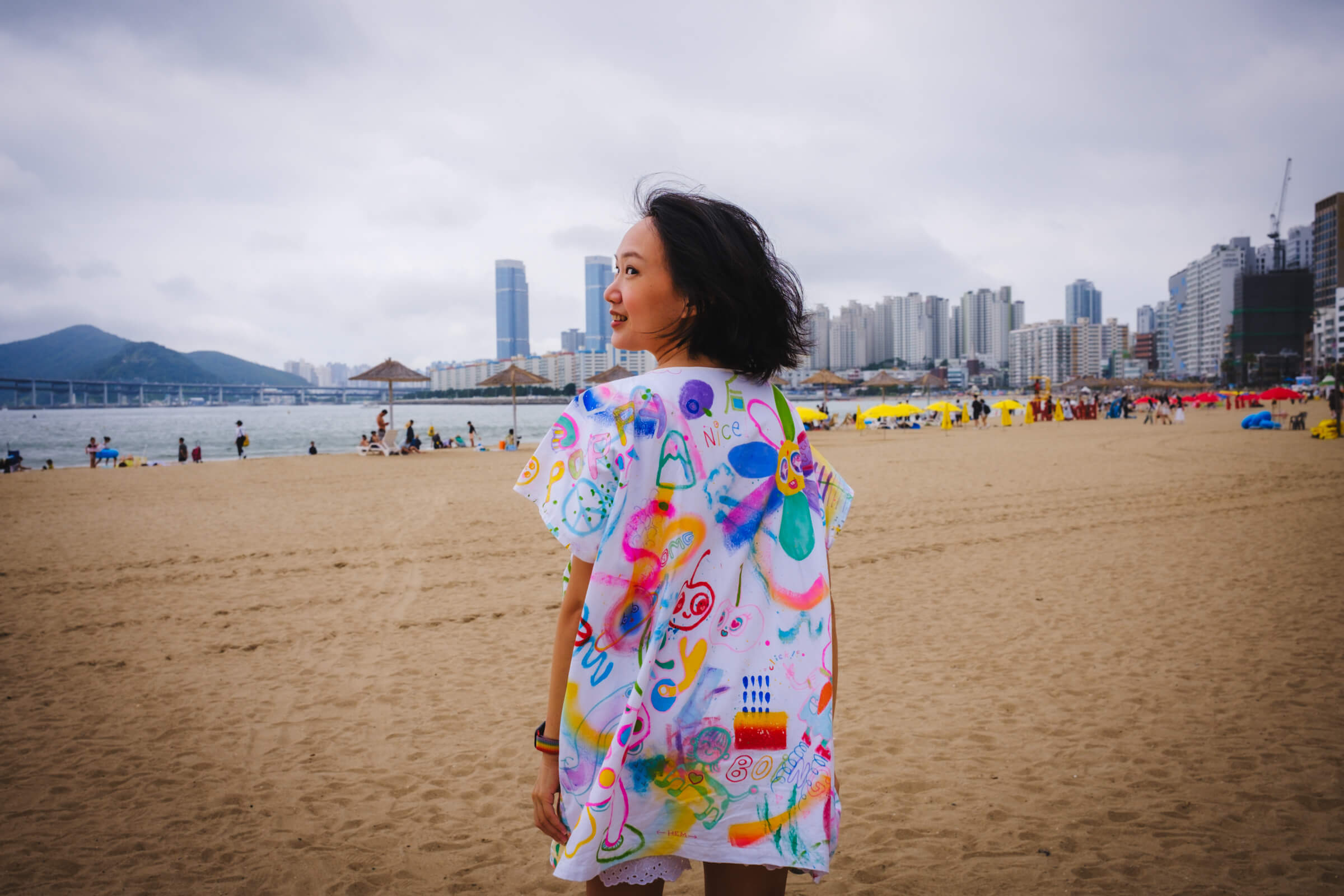
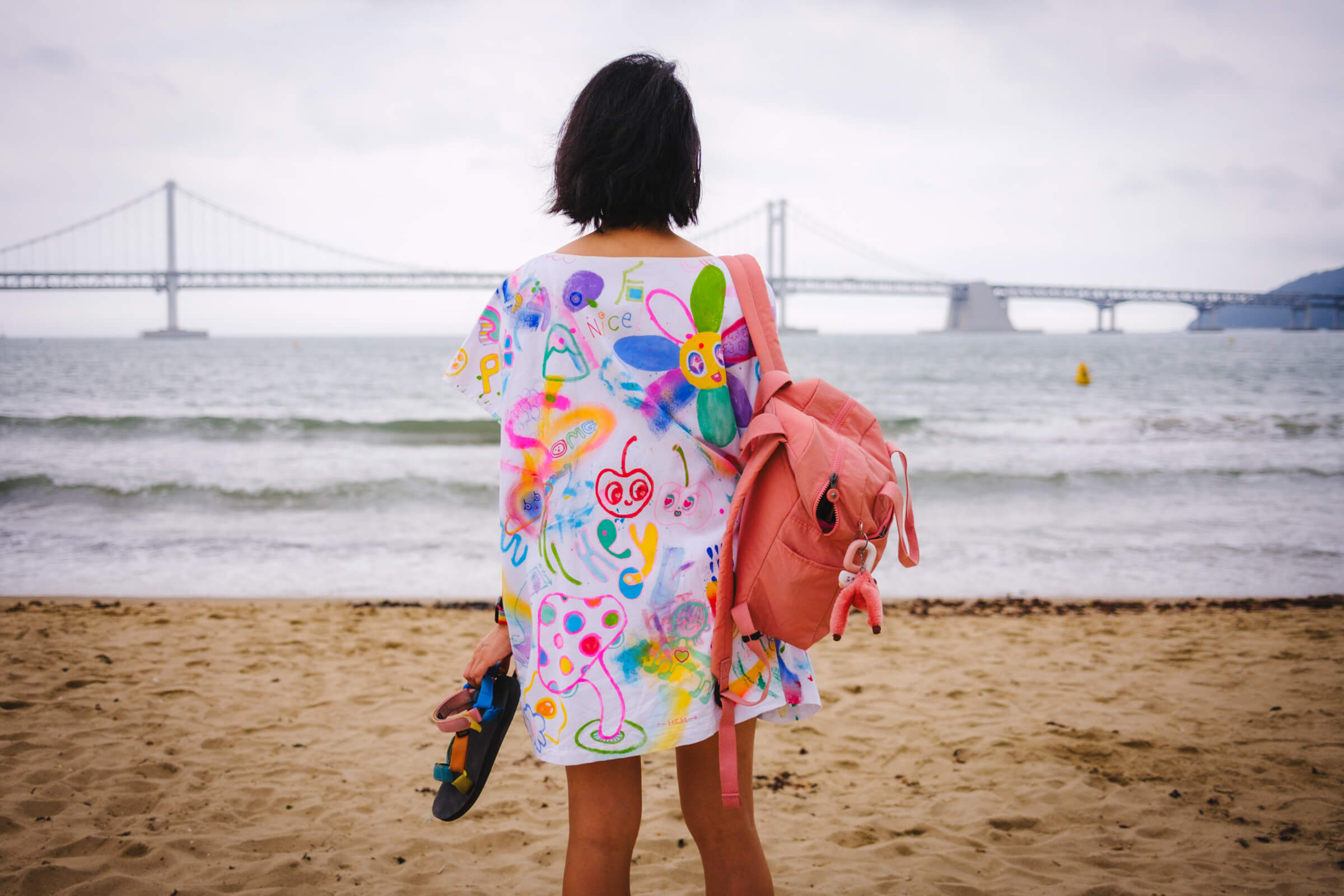
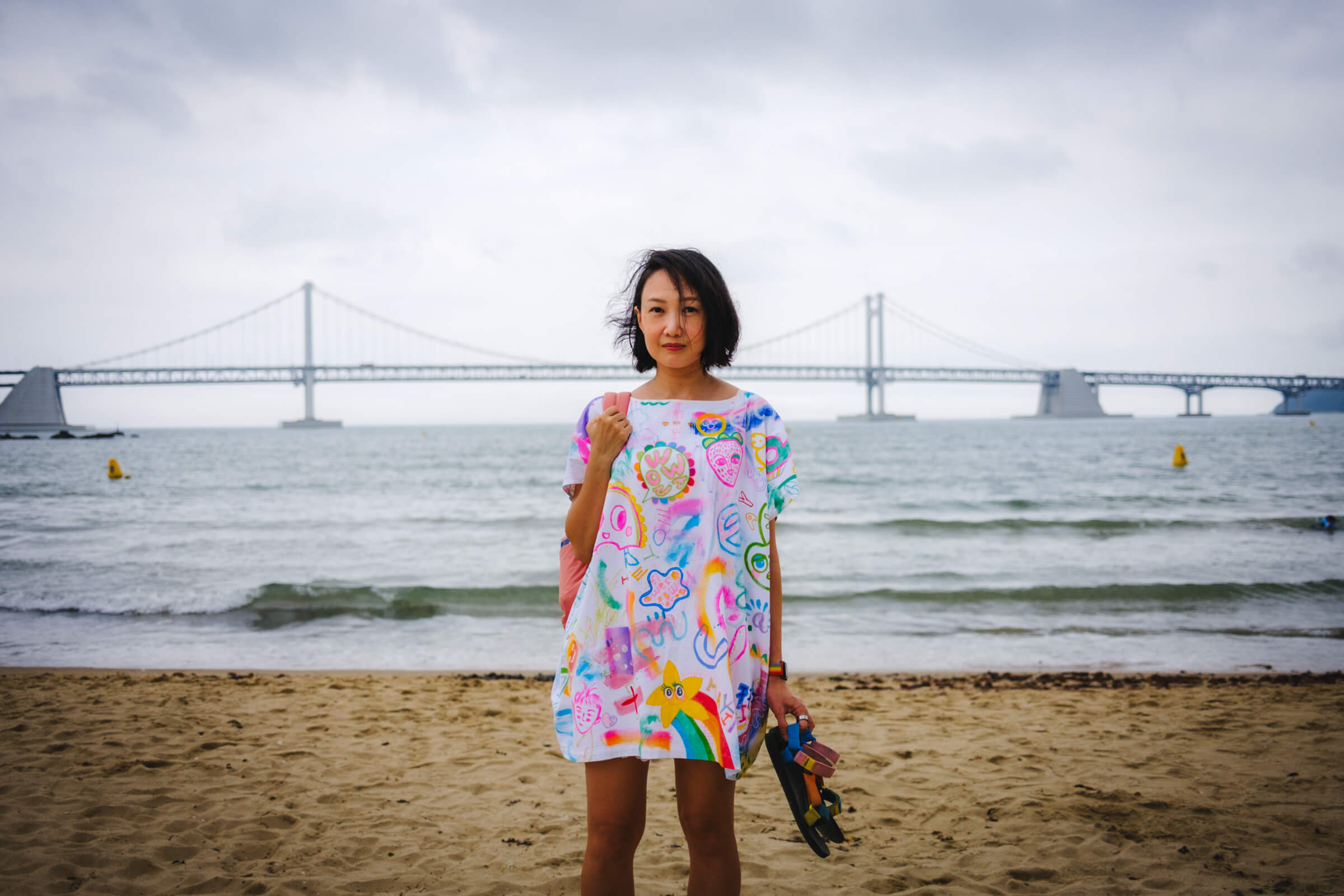
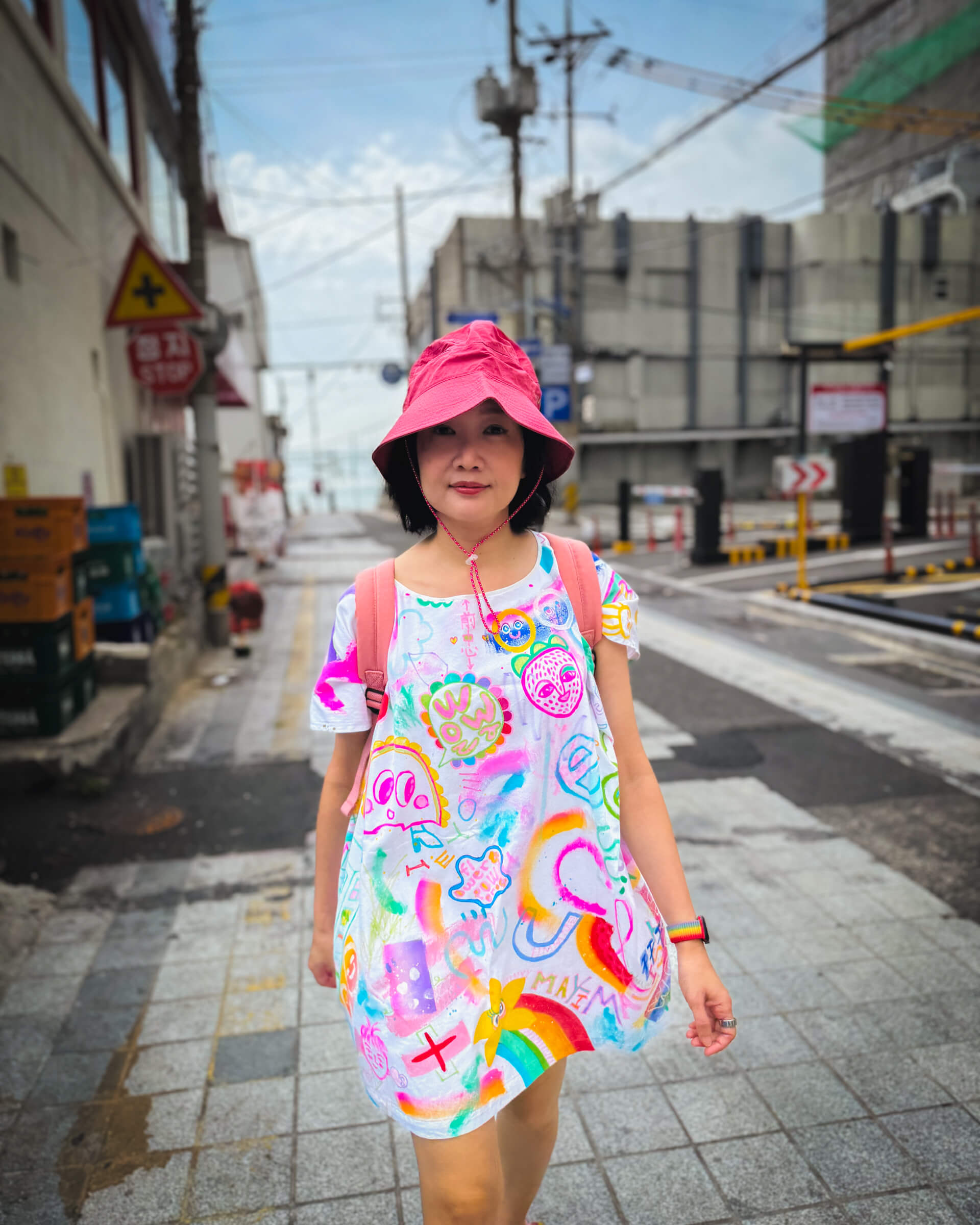
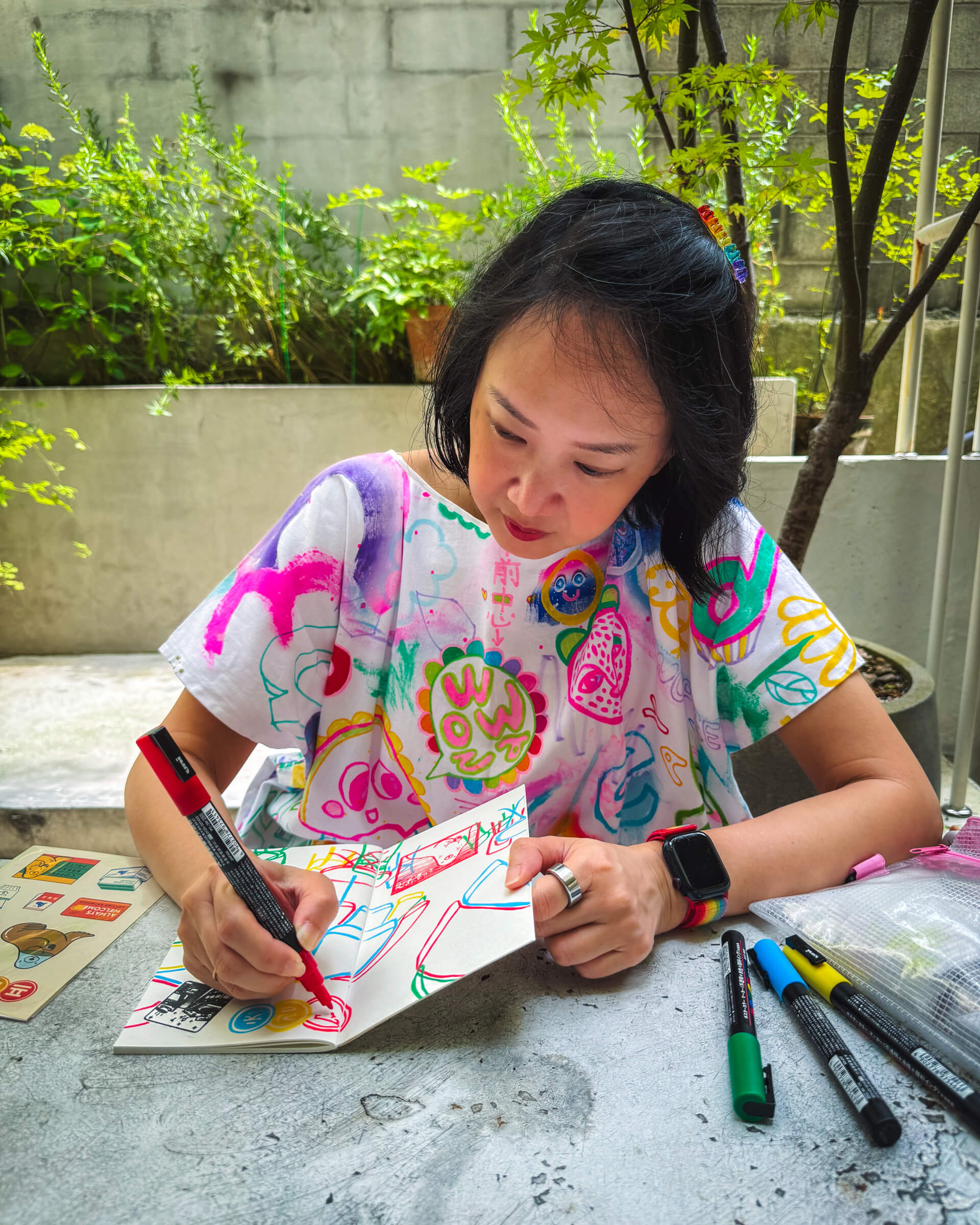
She wore a zero-waste dress she had sewn and painted herself with fabric markers, so I took a few portraits of her around the beach:

photo of my partner at the beach on her birthday

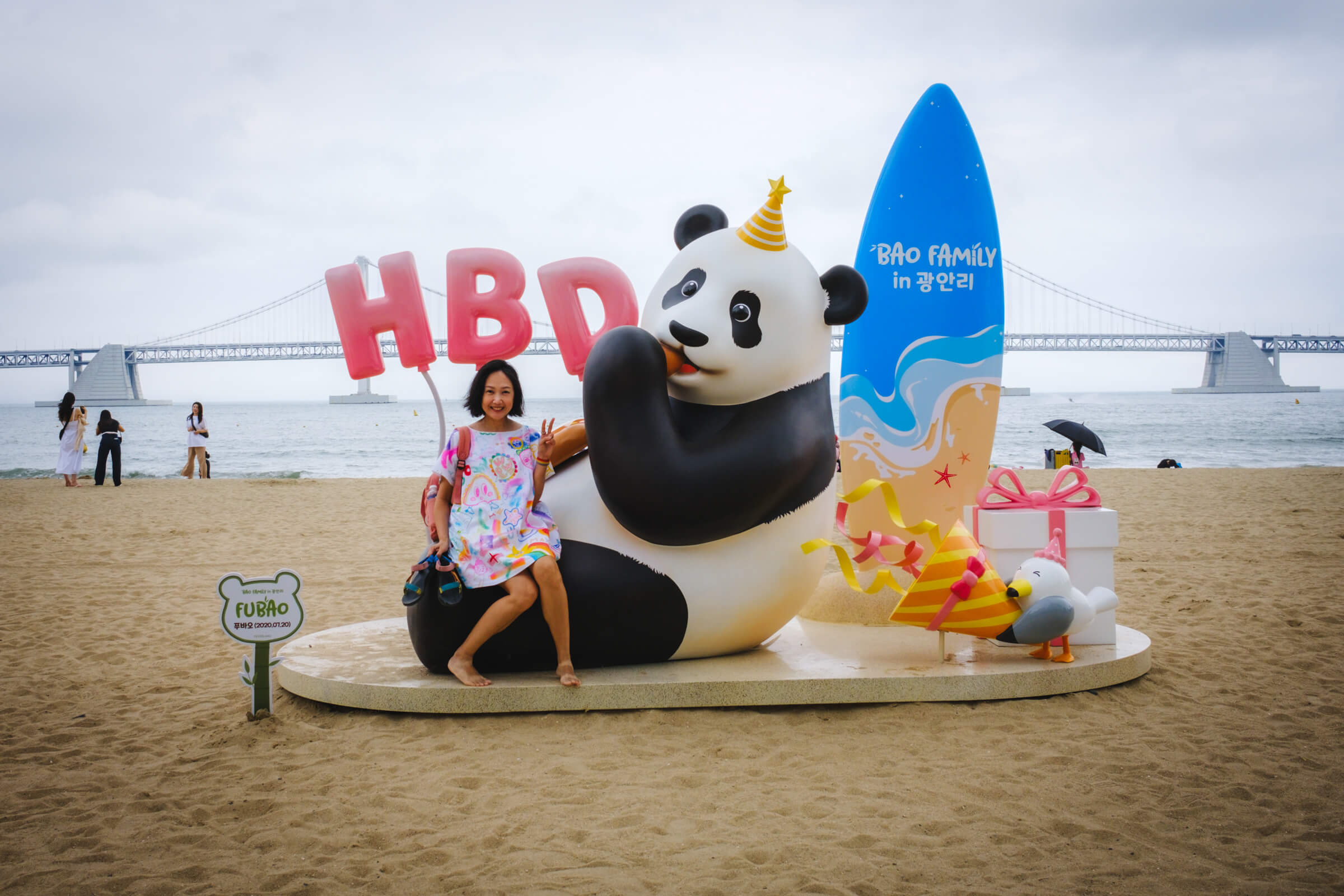
Busan happened to launch a panda “character zone” (I don’t actually know what this means) at the beach. The pandas are real pandas gifted by china, and the koreans are very attached to the them. Uncannily the pandas’ birthdays also happen to fall in july:

photo of my partner posing with a "happy birthday" panda installation at the beach

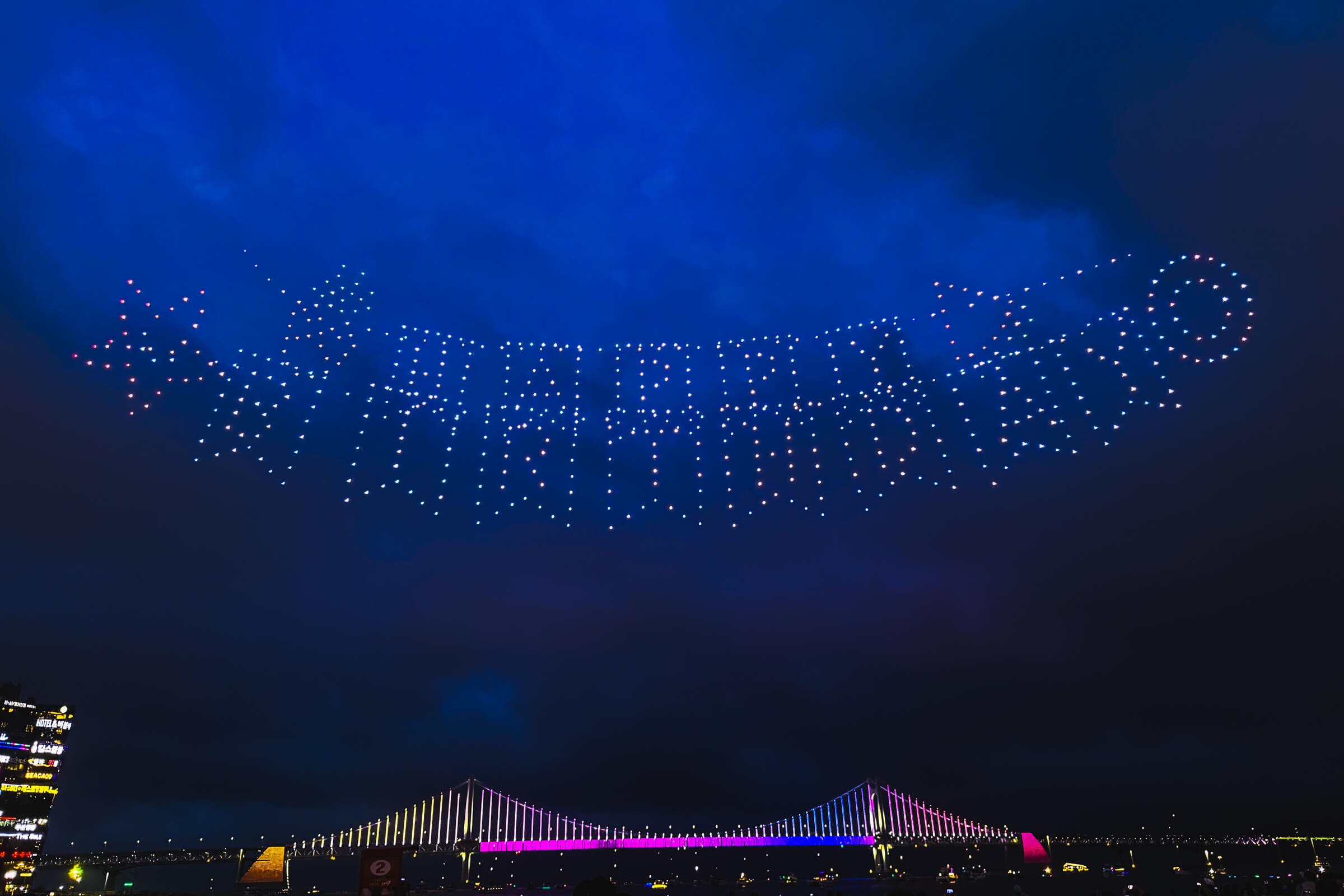
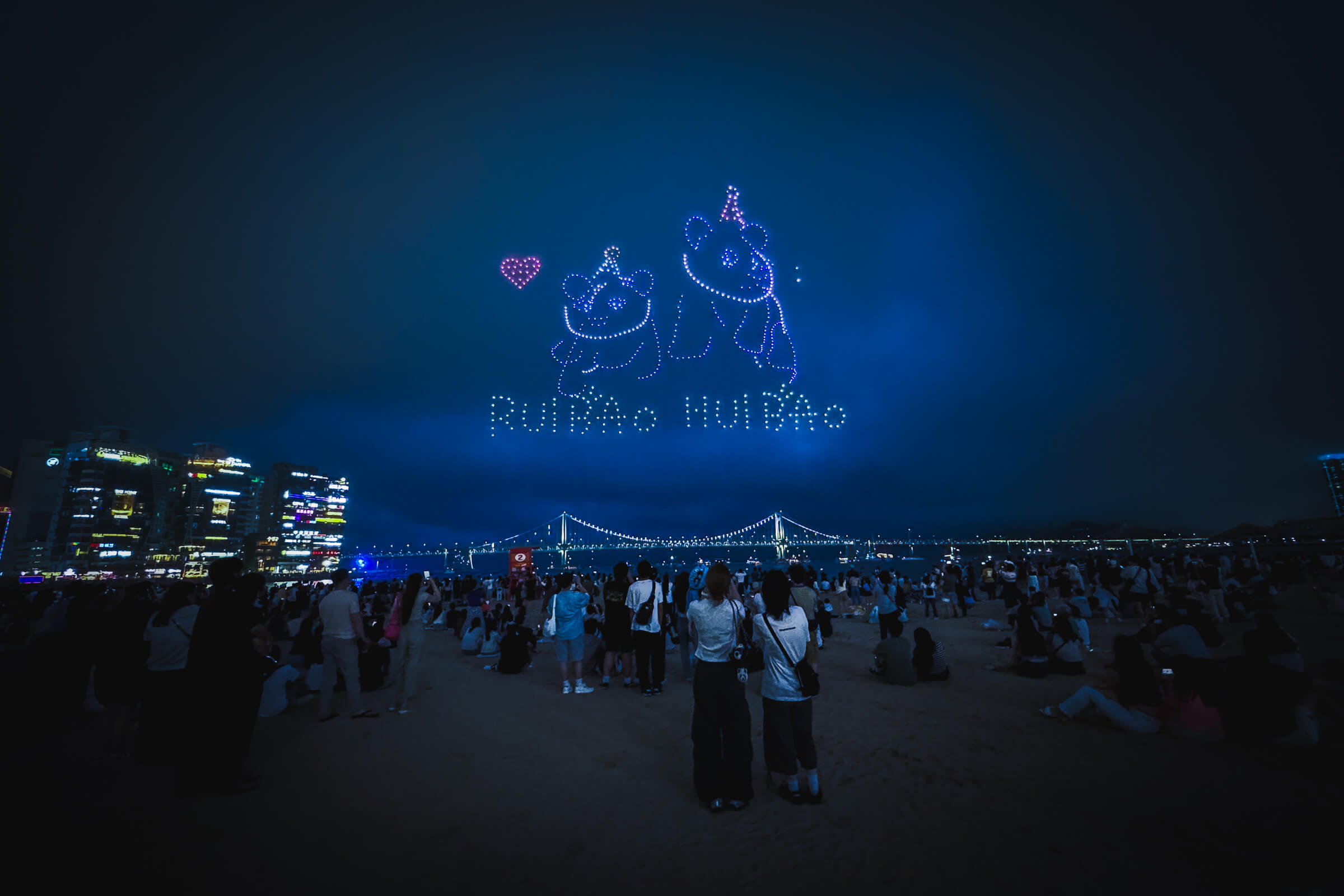
So we were unexpectedly treated to a drone light show featuring the pandas last night, and a “happy birthday” message was displayed:

photo of a drone light show making a "happy birthday" formation
photo of a drone light show making a formation of two pandas
candid photo of my partner walking on the street
photo of my partner drawing

I have written so many words for my partner, so it feels almost redundant to repeat them. But in love and life what existed in a previous moment should not be taken for granted that they will exist now, much less tomorrow.

I would like to give my thanks for her being born 44 years ago on this day, she is my muse, my inspiration, my partner, my world. Because of her I have learnt to be more of my self, and I got to experience a quality of love I had thought was impossible. Without her I wouldn’t be the person I am now, and I wouldn’t have ever known I was someone who can be loved to such a depth.

I love witnessing her existence and expression, her relentless quest to break her creative boundaries, that her appetite for creativity is indefatigable. She is a person that never requires discipline, because such is her zest and enthusiasm for making things. I may never be like her, but at least I know such an existence is possible, and that serves as an inspiration for me endlessly.

I feel like words can only convey superficially how I think and feel about her, so I hope the pictures can better express how much I adore her.

my experience on starting exercise from zero

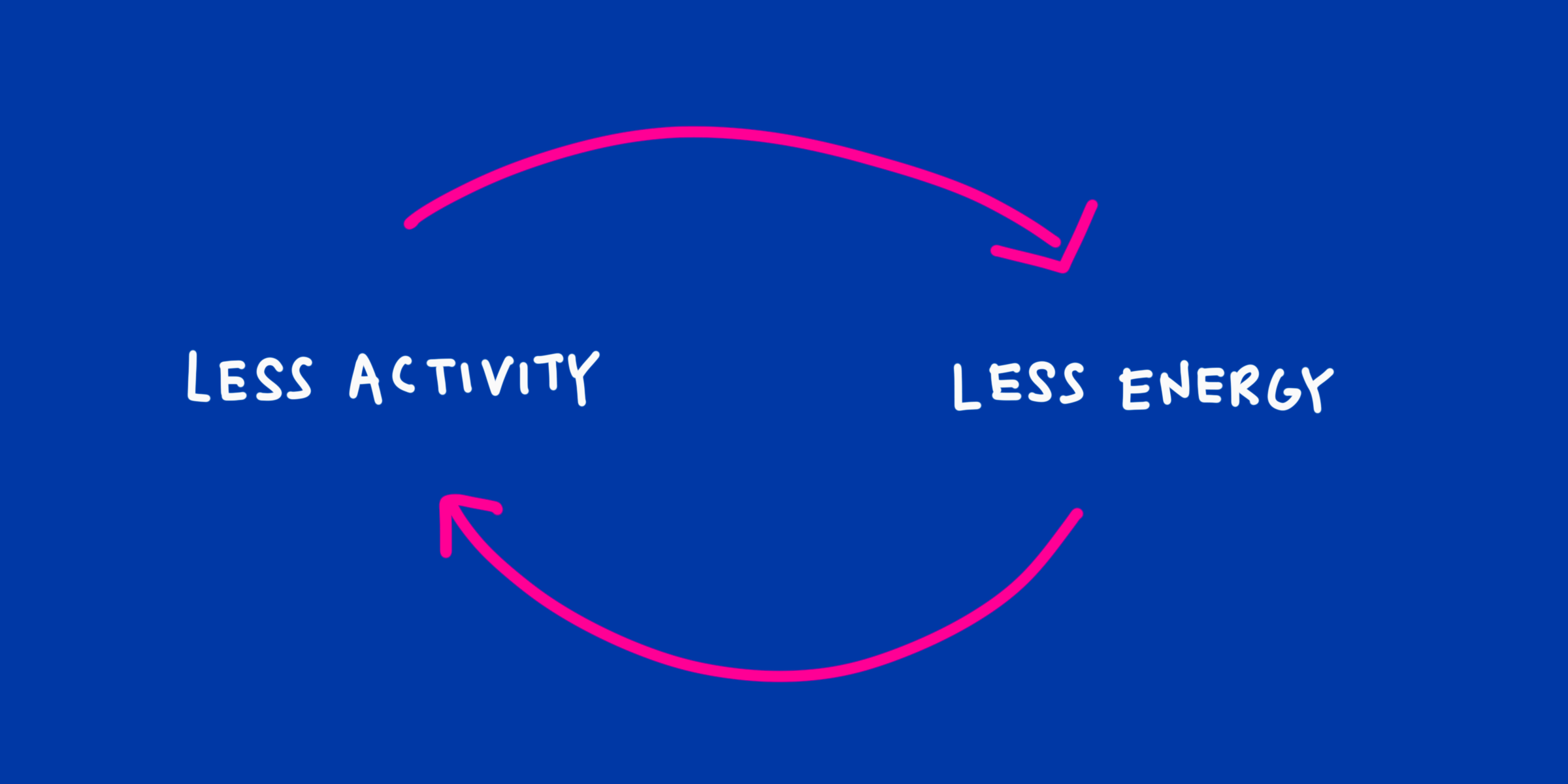
I don’t know if people know this, but I used to be extremely sedentary and I hated any form of physical activity. Only upon hindsight I realised it was probably related to a combination of factors which included adhd, depression and diet. Back then, I didn’t know that activity breeds energy. So the less active I was, the less energy I had, the more I didn’t want to move, becoming a downward spiral. 

illustration of the vicious loop between less activity and less energy

Maybe it wasn’t so surprising that I got chronically ill. I only started to exercise because I felt like I had exhausted every other means to get better. Imagine not exercising for my entire life and then only getting into it as a 30ish year old. I had many stops and starts throughout the last decade or so, and only in the recent 1-2 years I am at a point where I can’t imagine not exercising because I have now experienced what it is like to have a moderately functional body.

I had made many mistakes along the way, so I thought I could share some thoughts on what I would have done instead if I was starting from scratch:

[caveat: This post does not apply to people who are experiencing post-exertional malaise (PEM), because exercise can be harmful for them.]

baby steps go a long way

I tend to be an extreme person, but now I realised I was simply very dysregulated. Every time I started a new aspirational fitness routine I would be very “aspirational”. Instead of using a couch to running program, I would just head out of the house and run like I am racing for my life. I remember going out for one of those runs and getting so winded that I couldn’t catch my breath for a very long while. Didn’t warm up, didn’t know what electrolytes were, didn’t know anything about the aerobic system. The fatigue that came after was crushing and affected me for days. I didn’t run after that experience. I tried a few years later, the same thing happened and again I stopped. And when I stopped I didn’t just stop running, it just turned me off any other forms of exercise.

If I were to redo it all over again I would just start with walking. Like go outside and walk around my block for five minutes.

The first time I made a sustained effort towards running, I started at 1km. I probably should have done couch to 5k but I am not very good at following instructions (adhd) so thankfully after multiple false starts I learnt how to start small.

the importance of understanding our psychology

What I’ve learnt over the years is to see my brain as almost a separate entity. It is not me or my friend. It has its own needs, desires and mechanisms which have nothing to do with what I desire. Our brains really likes to feel rewarded and doesn’t like to suffer. This is not their fault but an outcome of evolution. Our brains like to make us feel good in order to make us do something more (like procreation), and it makes us feel bad so we don’t go out there and get killed (like touching an open flame).

So to make exercise a sustainable routine it has to feel rewarding, or else we simply won’t do it again. Motivation comes from hormones and neurotransmitters which comes from the brain feeling rewarded. This is not something we can control mentally with a thought, it has biological basis.

To make our brains feel rewarded we need to feel a sense of accomplishment. So start small like five minutes, and slowly increase the time. Give our selves a pat on the back even if it is five minutes, because what actually mattered was that we decided to do it, and we did it. Anything is better than nothing, even if we decided just to stand up for a second after a long sit. 

The key is to remember that we will only continue doing it if we feel rewarded. Don’t start using terms like grit, discipline and willpower to think of our selves. In my opinion this is setting our selves up for failure. We have to work with our brains, not against it. People don’t realise this, but there is a accumulated cost when we keep forcing our selves to do something. It will have a stressful hormonal effect on our nervous system, and one day without knowing why we may feel burnt out.

Each session should feel easy and manageable. It is important to avoid burnout because once we feel burnt out we’ll probably not return to it for a very long while, if ever. It can be very difficult to overcome our brain and body’s adverse reaction to the activity that caused our suffering.

do something fun

The easiest thing to do is to try to find something fun, like something we actually like to do and it wouldn’t feel like too much work to start. For some people this means rock climbing, surfing, cycling, roller-blading. Activities that are typically not regarded as exercise works too, like dancing, gardening, street photography. The goal is to simply be more active than we were, not to become an athlete. 

do something easy

The next easiest thing is to do something that wouldn’t require equipment and too much start up costs, like walking. 

If getting out is too difficult, try to walk-in-place while watching tv. My partner started doing this first and I really avoided it because I probably have adhd and walking-in-place feels so difficult. But I read some research that says even just a short 15 minute walk after a meal can improve glucose metabolism, so I started to walk-in-place too, especially if the weather got too hot for outdoor walks. 15 minutes felt like forever, but now I can walk 30 minutes without feeling too frustrated. Watching a compelling tv show can distract from the tedium of the walk.

If we’re out we go window shopping in an air-conditioned mall for at least 30 minutes. It doesn’t matter if it is slow as long as we keep moving. Every attempt to move matters.

recovery days and pacing

I used to be obsessive with daily streaks and once ran 60 days every day rain or shine or even when I had a migraine. Now I know that was dumb of me and I was lucky that I didn’t get injured or become more chronically ill than I was. Our body is not a machine and needs time to recover, especially if we are new to that particular activity. If we’re used to being sedentary, even a 15 minute walk could feel exhausting. 

For strength training the advice is to stop when we feel like that are a couple more lifts left in us. This is good advice for almost everything in life actually. Society likes to tell us we have to always try to go beyond our limits in order to grow, but this often does not take burnouts or injuries into account.

That is why in my opinion it is important to learn how to do something small and manageable consistently versus going all out for something and then never feel like doing it again. It is an important life skill, but I was never taught this.

If it becomes too fatiguing we will start dreading it. So we have to develop the intuition to pause when we are still feeling good. This is not easy to practice because naturally we want to continue doing something when we are doing it well. Perhaps the easier thing to do is just to set small time increments. From 5 minutes to 6. Once a week to twice. Something realistic and reasonable for our selves. Schedule recovery days, it is too late when you actually need one.

I also use hrv4training to tell me when I truly need to recover. Sometimes the body accumulates fatigue even if we do our best to avoid it. 

make it part of a routine

This is also part of understanding our psychology. As mentioned don’t rely on willpower or decisions to do something. It will gradually become easier if it is part of our day, like brushing our teeth. I go out for my exercise as part of my morning routine after I finish writing my morning pages. After meals if we are home we just automatically get up and walk 30 minutes in front of the tv. There is less of “do I want to”, but more of “this is something I do after I do this”. 

But it is important to develop the capacity to know when not to push our selves too hard. For me I didn’t use brute force to make myself do any of those things, but they gradually became something I wanted to do because of the benefits they bring. But even if I wanted to do them, there can still be considerable inertia. Making it part of my routine takes away the decision paralysis. 

learn the science of the activity

It took me several attempts to run, and I only started to enjoy it when I discovered zone 2 running. I didn’t know running is something that can be enjoyed, and I didn’t know I could be someone who can enjoy running.

Through learning more about the aerobic and anaerobic systems I realised it was not a good idea to run all out at the get go for the entire run. Since my fitness was so bad when I started I couldn’t run all the way, so I was accidentally doing intervals. Later I tried to run continuously for as fast as possible, and it was a torture. I wasn’t training my aerobic endurance, I was training my mental endurance – to not give into the discomfort. I didn’t know there is a health cost to running at such high intensity continuously, especially for new runners.

But now I’ve learnt to run slowly, and running has become more effortless, meditative and enjoyable. I don’t care about setting PRs (personal records), I only care about improving my aerobic fitness (because aerobic exercise breeds mitochondria which breeds energy).

So there is value in learning about the science behind the exercise, instead of training blindly. 

involve other people

I don’t like group activities, but I can see that it can be a powerful motivator for some people. Join group activities if it is an incentive to make our selves more active. The socialising that comes along the way can be fun and engaging (definitely not for me). Some people like park runs, social dancing, gym classes (do consider some level of covid cautiousness like wearing a mask if the environment is not well ventilated). In Singapore there are free exercise classes in public community spaces (here’s also a list of other free stuff for singaporeans). If money is not an issue, something like classpass can be fun to try everything under the sun. 

Once as an unfit person, I went for a free event that guided us to walk 30+km across the length of Singapore. It hurt me for days after, but it became a lifelong cherished memory with my close friend. Now almost a decade later, I can go, “do you remember that crazy time we walked 30km+ in the hot sun” with her. Another time, I went for a herp walk with another friend. Again it hurt me for days – these events remind me how unfit I used to be and how far I’ve come along – but I got to learn a plethora of new things about Singapore’s reptiles and in the process I got to meet some amazing people. I am not social anymore now but I cherish these memories. I didn’t go for these things because I was interested in them, but I wanted to hang out with my friends.

I did however, get a personal trainer when I started strength-training. It was only 3 sessions but I experienced enough to gather the courage to continue on my own. Getting trainers is something people can consider if costs are not an issue. For some people it is just easier to follow along.


why I wrote this

Honestly, I thought this would be a short easy post with bullet points, something easy for me to write on a psychologically difficult week. But here I go again, writing this longwinded post with 2000ish words. 

I had the idea to write this while on my run – running often gives me time to think because it is one of the rare times I am not facing a screen – I was thinking how enjoyable and important running is to me now, and I had this flashback when I used to really hate it because it felt so bad. Then I had a series of flashbacks to the days when I really avoided moving. Not only did I not exercise, but I avoided anything that requires physical energy. My past self would not believe that my current self would exist some day. 

I only started exercising regularly around age 35 (am 43 as of writing this), prompted by my unceasing migraines. It was not an easy journey, but I feel like it could have been made way easier if I knew what I know now.

Exercise has become such an important part of my life. Without it I may not have kept my health and sanity. This is also one of the biggest reasons why I remain covid cautious: my only infection last year derailed so much of my fitness and gave me glimpse of what it would have been like with long covid because I experienced high heart rate with just minimal exertion for a long while (it still happens when I am too stressed). I cannot imagine not being able to run or lift weights, especially when so much of the world is depressing. It is the only time of my day when I can mentally chill a bit and take a break from the prison of my own mind.

Maybe one person out there may be like my past self, believing that it is too daunting to start. That it seems like this huge leap to make. Or they are always seeing the already-fit people tolling the virtues of exercise when exercising was not an issue for them to begin with. So I am writing this from the experience of a former very sedentary always tired person. 

I am not saying “you can do this because I can” because I truly dislike that since every one has different circumstances and baselines; I am saying if you have the idea to start, these may help. 

A lot of these may seem obvious, but it certainly wasn’t obvious to me, and I could have shortened my journey quite a bit if I knew these before I started.

what a physical notebook provokes

I’ve been a digital-first person for as long as I can remember. Typing words on a keyboard onto a screen had always felt more intuitive than moving a pen with my hands. Even before the computer’s arrival into my life, using my hands made me feel clumsy. So I have never related to people who liked sketching or writing ideas with pen and paper more than using the computer and the mouse. 

But I am not sure if it is part of ageing or something, in the past few years I’ve begun to seek out analog experiences. I have also started to find the idea of filling up physical notebooks and sketchbooks romantic. Maybe it is a response to the over-digitalisation of our lives these days.


I didn’t like writing notes in physical notebooks because I am not the type of person who would transcribe or even ocr the physical notes into digital text. I am also not the type of person to systematically review physical notebooks, which is the point of having them in the first place. I still strongly prefer storing my notes digitally – if I remember to write them – so I can perform search and database queries on them, and I use mechanics like “on this day” to review them.

A while ago I came across this youtube video titled, “A notebook to save you from infinite scrolling & boredom” – yes I know it is click bait-y but my curiousity got better of me. Watching the video gave me the idea that it could be meaningful to have a handwritten book of my favourite quotes. I like saving quotes from all over the place but they tend to disappear into a black hole. Some of these quotes have an effect of reawakening me whenever I come across them again, like this one:

Non-action is already something. There are people who don’t seem to do very much, but their presence is crucial for the well-being of the world. You may know people like this, who are steady, not always busy doing things, not making a lot of money, or being engaged in a lot of projects, but who are very important to you; the quality of their presence makes them truly available. They are contributing non-action, the high quality of their presence. To be in the here and the now—solid and fully alive—is a very positive contribution to our collective situation.

Source: by | link

I store some of these on this website, but the same issue happens – I forget to review them. But with a physical notebook, I can use it like how some people use Marcus Aurelius’s Meditations: flip it randomly to see if something jumps out at me whenever I feel I need a pick-me-up. I may forget to do it, but having something physical that is shelved right in front of me is more obvious than a piece of text buried deeply in a website. 

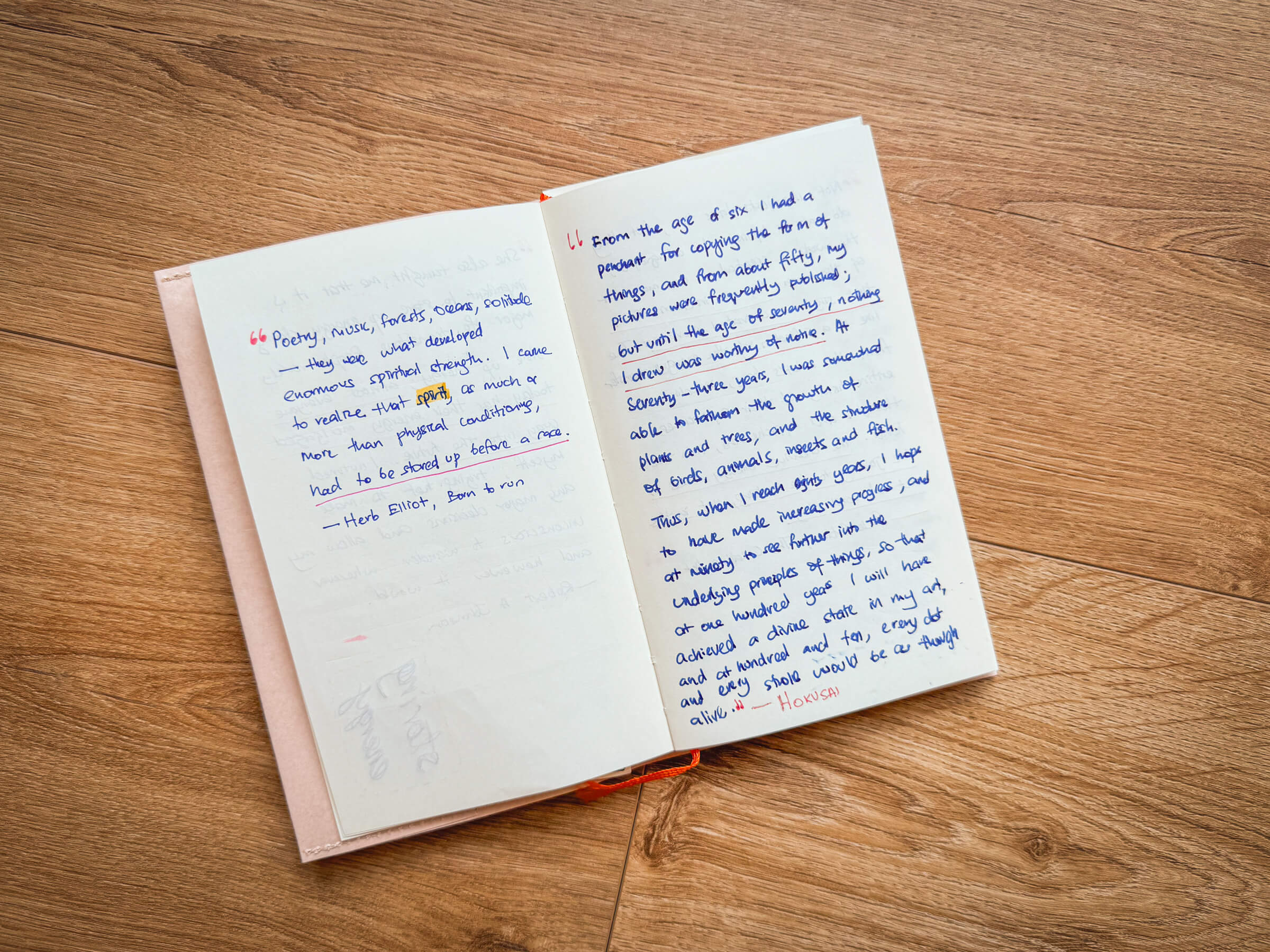
So I started writing some of my favourite quotes in a notebook:

photo of my notebook containing some quotes

I didn’t understand why buddhist monks copy scriptures, but through the process of writing in my notebook I think I know why. The act of copying something, rewriting it down, makes an indent on the mind. Through the mere act of copying: the power of the quote – why it had affected me so deeply – is regenerated again. 

(Bonus: my handwriting actually got better progressively.)

Once I came across a beautiful quote online, and it actually turned out to be a poem, so I started writing down poems in the notebook too. One of my favourite poems is Mary Oliver’s Journey, which a very kind friend (thanks Corey) had transcribed for me before I left SF. Copying it into my notebook made me feel some of the sensations I had felt during that time, all the way back in 2015. The poem is still very relevant to me now, in the context of these times.


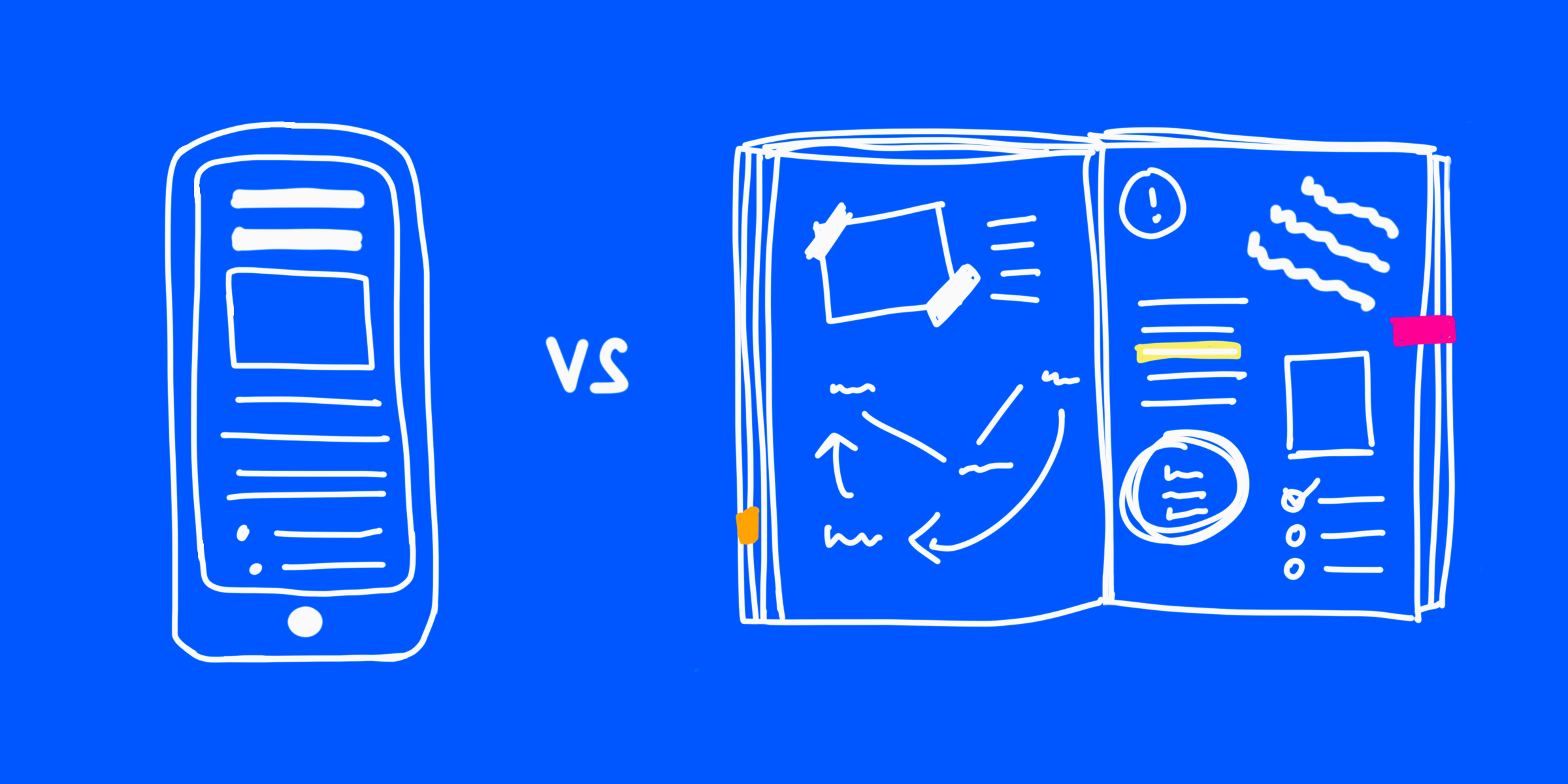
There is another thing about this I find it difficult to articulate. Consuming digital notes is mostly scrolling linearly. We can make them interactive by linking it to each other, etc but it still requires linear scrolling most of the time (unless you use some mind/concept mapping tool or some wonderful interface where you can lay out your notes like cards across the screen or something). 

However, we can be very deliberate about how we want to place the text across a notebook with facing pages. We can place accompanying sketches or illustrations anywhere we want on the spread without technical considerations of a software, we can use whatever pens, inks, paint, crayons, scraps we want. As a former graphic designer, I find that potentially fun and more provocative. How can I use the potential of a page spread to provoke my mind when I encounter it again? Most of our digital notes are endless columns of homogeneous text due to technical limitations. We can do a ton to spruce them up, or even have handwritten digital notes on tablets these days, but they lack the dimensions, textures, spatiality and smell of physical media. There is also something magical about flipping physical pages.

digital illustration of the display of text on a mobile device versus a physical notebook

I feel like this is a new avenue of exploration for me (yes I know I am very late to the game). Apart from quotes and poems what other notebooks can I have? Another youtuber had a notebook just for the jokes they write. I’ve started a notebook where I write my transient unimportant thoughts, but I have yet to develop an instinct which makes me notice them in the first place. 

I think life seems to pass in a whirl, but in reality there is so much going on. Externally there is so much that move and inspire us, but we tend to forget them. Internally our interior worlds are always generating interesting thoughts, feelings, imagery. Sometimes the magic happens when our interior and external worlds intersect. It is important for me to be in a position where I can capture more of these, to be more conscious of reality and life. Most people don’t pay attention or place value to their thoughts, but I find them to be so interesting. I am always semi-sleepwalking, and the presence of physical notebooks and sketchbooks around me reminds me that every moment is an opportunity to slip into a creative existence.

when goodness is not so good

Last week I briefly wrote that the push for humans to be good is a net negative for this world. There were a couple of comments asking me to elaborate, so I am writing this post in response.

I think this is a very complex topic and I am not confident of articulating my personal sentiments in an accurate manner. My apologies in advance if I sound incoherent. But I wish to try. I can always write a better version in future. Internet words are not set in stone.


First of, we need to define what is “good”. Right off the bat this becomes problematic, because the goalposts of what is “good” tend to shift as times and cultures change. Religious people will refer to their religious texts, but as an atheist I don’t believe they are the source of truth.

But let’s assume they are the source of truth. I still think that this is a net negative effect for the world. We make people study those texts, make them adhere to those rules non-negotiably, shame and guilt them when they are unable to comply. What happens next? Some people develop unhealthy psychological complexes due to repression, others develop self-hatred because they think having human desires are evil, some others use the texts as a weapon to harm other people. We could say that the texts are not at fault, the problem is how people are interpreting it. But if human beings are not able to absorb, express and share something in a healthy manner, should we question whether our psyches are suited to co-exist with something like this?

I believe human beings are naturally rebellious. Unlike many I see this innate rebellious nature as a positive thing. It is because we rebel that is why we improve and discover new information about the world and our selves. If we accept status quo we would still be animals living in trees and caves. We discovered fire – instead of recognising it only as danger we learnt to harness it. We are meant to explore, experiment, and question.

But in this world, we tell people and kids they have to be unequivocally and unquestionably “good”. There is no why, no discourse, no framework. We have to be “good” no matter what, or else we will disappoint, or be condemned. The result is a large number of people has become terrified of being perceived as “bad”. In my opinion, this has numerous negative repercussions:

  • We wear masks to hide our selves because we don’t want anybody to know we are “bad”.
  • To cope we develop unhealthy coping mechanisms: alcohol, shopping, addiction, workaholism, disassociation, becoming emotionally unavailable, developing toxic traits without being conscious of it, etc.
  • We judge and shame others who are not able to be “good” the way we define it.
  • Society is generally harsh to people who make mistakes because they are “bad”, and “a leopard cannot change its spots”. Hence we are also harsh to our selves when we make mistakes, and some of us believe we are irredeemable.
  • We have become unwilling to pursue our desires or personal happiness because it is “selfish”. In turn we also tell people they can’t pursue their happiness because it is “selfish”. If and when we do pursue our own happiness we are often guilty about it.
  • Because there is some underlying belief that it is bad to pursue our own happiness, some people remain in their unsatisfying lives. We are missing out on so much human potential, so much more that could have unfolded if people were less miserable within their lives.
  • We believe it is okay to walk around dripping unhappiness as long as it is for the “greater good”. A small example of this are couples who need to divorce but don’t for the sake of their children, without knowing they are causing their children more trauma by modelling unhealthy relationship behaviours.
  • Some people develop saviour complexes and harm the communities they were trying to help.
  • Don’t we all know the non-profit person who made their employees work with below-average pay and long working hours because they are “saving the world”?
  • We obey, even if and when we are abused.
  • We try to be kind and gracious even if people take advantage of us and overstep their boundaries. Hence, we become toothless when it comes to standing up for our selves and our rights.
  • We strangely idolise abusive people like Elon Musk because in our own fight to be “good” we have lost our personal power, so we admire power.
  • We don’t feel whole because we don’t learn to integrate our shadows, instead we spend copious amount of energy trying to suppress them. Hence we get mid-life crises when we suddenly wonder what is the whole point of life trying to become someone we are not.
  • We unconsciously harm people around us because all of that unhappiness trying to be someone else will find its way up to the surface and leak, if not explode.
  • We don’t see the ways we are being righteous is actually hurting other people who may not share the same values. Sometimes it causes other people to die.
  • Everyone has their own definition of “good” so we fight each other over it, and it is okay to kill someone else if they are “not “good”.

The above examples demonstrate that if we truly want to do no harm we have to examine the narratives and blindspots that surround the concept of goodness.


There is some part of our selves, whether you call it a soul or a psyche, that doesn’t like self-betrayal. Somehow this part of our selves knows when we keep lying to our selves. This continuous lying becomes a form of deep repressed anger. We think we can soothe that anger by winning. Winning a war, a promotion, a business, a person. But winning often comes at the expense of someone else being a loser.

Then there is the question of free will, if it exists at all. All of us like to believe we are free to decide, without being conscious of the biases, conditioning and neurological wiring we possess. If we are not truly free to decide, then how meaningful is it to judge people on their “goodness”?

Just to be clear, this is not about religion. Atheists can have harsh judgments on other people too, and have their own narrow definitions of what is good and what is bad. I guess I am trying to express that life is complex, and by telling people they have to be a good person whatever good means in their religion or society is compressing our human depth into something simplistic and small.

A lot of buddhist/zen philosophy is about breaking out of this dualistic/binary thinking. But even this ancient philosophy about practicing the middle way has turned into modern variations about virtue and hell.

I believe in being practical and realistic, to meet people where they are. Human beings are neurotic, in my opinion. We cannot help but be neurotic, because we probably had to do a ton of ugly shit in order to survive this far. Imagine the trauma all our ancestors had to go through, killing predators, fighting wars, escaping enemies. We have survival instincts built-in, we are territorial and competitive, we have desires and ambitions. We have these impulses for a reason, it is how we have evolved. We can’t just sweep them all under the carpet, pretend they don’t exist, and “be good”.

We are also inevitably creating an unequal world where some people are exploiting the powerlessness of “good” people, who are told to turn the other cheek when slapped. Is a world full of oppressed, fearful, unhappy people a healthy world?


We should get to know our selves. Why we are the way we are biologically and evolutionarily, and figure out a way to exist so we can stop lying to our selves. If we keep lying and repressing, there will continue to be repercussions. Things that are buried are never dormant, they are always haunting us in every living moment.